Periclean Scholars induct Class of 2018

Periclean Scholars induct Class of 2018

With a focus on Zambia, 32 freshmen will spend the next three years taking classes that culminate in a project of social change as part of a program aimed at developing in students a deep sense of global citizenship.

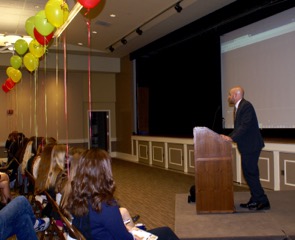
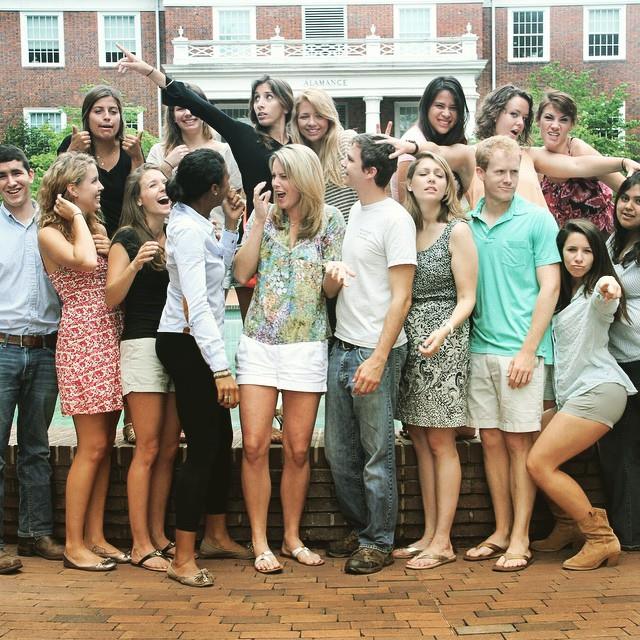
Professor Tom Arcaro addresses the Periclean Scholars Class of 2018 at an induction ceremony on April 16, 2015.

Elon University’s Periclean Scholars celebrated their newest members on April 16 when faculty leaders inducted students from the Class of 2018 into the program’s ranks.

Thirty-two freshmen representing a variety of majors were welcomed by Professor Steve Braye, a faculty member in the Department of English who will mentor the cohort as they focus their studies on the African nation of Zambia.

The Periclean Scholars program at Elon University is committed to raising the level of civic engagement and social responsibility of the entire university community and to developing students with a deep sense of global citizenship and commitment to the common good. Students who become part of the Periclean Scholars program take a series of courses culminating in a class project of global social change.

The ceremony included charges from representatives of each of the three standing classes of Periclean Scholars, comments

Dan Baum, executive director of the Redwoods Group Foundation addresses the Class of 2018

from founding director Professor Tom Arcaro, and inspiring words from special guest speaker Dan Baum, executive director of the Redwoods Group Foundation.

At the ceremony, Elon junior Morgan Abate from the Class of 2016 was announced as the Periclean of the Year. Abate, currently on a semester abroad in Ecuador, Skyped into the proceedings.

Among the members of the Class of 2018 is Chace Blackburn, sister to Taylor Blackburn, a member of the Periclean Scholars Class of 2011.

“In my memory this is the first time we have had a legacy inducted into the program,” Arcaro said.

Among the majors represented in the new cohort are biology, cinema and television arts, public health, business, strategic communications, human service studies, international studies, finance, exercise science, marketing, environmental studies, psychology and policy studies.

Inductees included the following students:

  • Andrew Adair
  • Mary Alice Allnutt
  • Matthew Balzano
  • Chace Blackburn
  • Lindsey Clemmer
  • Elizabeth Conley
  • Elliot Eisen
  • Sydney Epstein

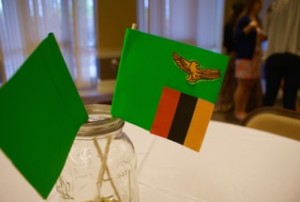
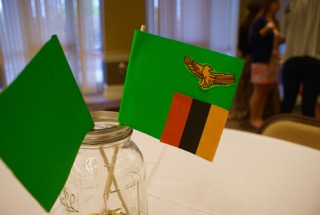
    Flags  Zambia
    The flag of Zambia
  • Jamie Fleishman
  • Daniela Hernandez
  • Margaret “Meg” Hinote
  • Jordan Hunter
  • Mercedes Kent
  • Bethany Lake
  • Hanna Macaulay
  • Courtney McKelvey
  • Jenna Merchant
  • Katherine Milbradt
  • Sandra “Kate” Pearce
  • Samantha Perry
  • Kayla Pieri
  • Adrian “Ian” Pomeroy
  • Elizabeth Reeve
  • Tate Replogle
  • Madison Sirabella
  • Micaela Soucy
  • Sydney Spaulding
  • Rebecca Suprenant
  • Isabella “Max” Warburg
  • William Wetter
  • Abigail Williams
  • Madeline Yih

“Don’t raise money for the future – do something for the now”

“Don’t raise money for the future – do something for the now”

[Note:  This post is part of an ongoing discussion about what it means to be a humanitarian activist.  See here for another post by Morgan and here, here and here for posts by the director of the Periclean Scholars, Tom Arcaro.]

By Morgan Abate, ’16 (from Ecuador)

How do you feel, Elon? You’re posting photos of ElonTHON, of you standing and dancing for hours for those who cannot – namely those who are being treated at Duke University Children’s Hospital. I commend the organization for raising more than $180,000 – which translates to about $160 fundraised per dancer.

In my three years at Elon, I have never participated in ElonTHON. When I heard about it in the fall of 2012, I told myself I couldn’t do it because it was nothing like the real THON with which I grew up. Where I grew up, outside of Philadelphia, Pennsylvania State University’s THON was part of the culture of the entire state.

When it came to choosing a college senior year of high school, you thought about attending Penn State mostly for THON. Students spend a whole year fundraising. They spend 46 hours on their feet. The money they raise goes to the families of the Four Diamonds Fund who cannot afford their children’s medical care.

Several weeks before Penn State’s THON, on Feb 2, 2013 at around 9 am, I got a call from my dad. In the two minute conversation we had, my life changed. My brother had been diagnosed with acute myeloid leukemia the day before, and had been admitted to the Children’s Hospital of Philadelphia that morning.

Social media blew up. Everyone in my area knows my family (with four kids at different schools with different friends, everyone knew or had heard of my family), and the hashtag #prayersforMason was trending for a day in Philly. Next thing I knew, I had friends at Penn State texting me during THON, telling me they were dancing for my brother, dressed in orange.

That spring semester was the ultimate challenge for me. I couldn’t go home. My family’s life revolved around a hospital. My sister spent so many school nights at CHOP that she’d fall asleep in class. My brother was confined to a bed, Skyping into class and dealing with chemotherapy.

Now, part of the money that ElonTHON – any Dance Marathon for that matter – raises goes to research. Supposedly that research is looking for a cure to cancer or to at least improve treatments. Well, my mother is a pharmacist. Back in the early 1980s, she had an internship mixing chemo drugs. When my mom looked at the components of my brother’s chemo, she just laughed. The chemotherapy he was getting through an IV contained the same drugs that my mom had mixed three decades ago.

So that money goes to research, right? Meanwhile, Duke University researchers, who write grants to get money for their research, recently announced a potential breakthrough in the treatment of brain cancer.

It may sound harsh, but I’m not sure I agree with the idea that dancing and fundraising money will eventually lead to a cure. Scientists in labs and hospitals around the world receiving aid from governments will lead to the cure.

When the money goes to families who need to pay their bills, though, that’s a different story. It’s part of why I support Penn State’s THON so much. Their money goes to the here and now. On top of that, I know what it is to receive a little extra money when life is chaotic. All of the driving from Philly and back adds up in gas money. And to Johns Hopkins and back. Even the hotel we’d stay in Baltimore at had rates for Hopkins families. That makes a difference. Then there’s all of the food my brother and sister had to buy because my mom and other brother were at the hospital and my dad was out of town.

But there’s something better than fundraising and donating money.

Donate time. Donate blood. Donate bone marrow.

I saved my brother’s life because I sucked up my fear of needles. At the same time, there was no way I wouldn’t have done it. All the money in the world wouldn’t have helped him at the exact moment he needed it. But my bone marrow did. And he’s been in remission for almost two years now.

People need solutions now. Yes, the money might go to helping the masses in the future, but what about those now? Would you donate money if you heard a loved one was dying? Or would you take every test possible to see if you could donate something of yourself?

My sister has pushed past donating money, past this “slacktivism” if you want my view of it. Instead, she donates blood once a month and platelets every two weeks. She switched her career path from veterinary medicine to nursing. She volunteers at Children’s Hospital in Philly as a Bedside Buddy, a role in which she plays with and distracts kids to give the parents a much-deserved break. I remember music therapists coming to my brother’s room and me begging him to do it. Things like that are what make a difference in the now.

So go sign up for the blood drive at Elon. Volunteer at Duke Hospital. Write cards to the kids. Arrange a “Be the Match” event and register yourself. See if your dog can be a therapy dog. If you’ve done these things – great! But don’t just dance and raise money. There are kids suffering now who need a miracle, and you can give it to them.

Class of 2016 April 7th class notes

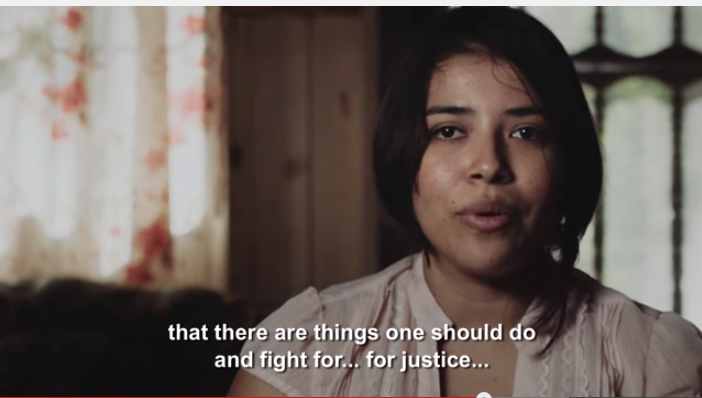
First, we spent about 10-15 minutes in small group discussion about the homework for today, which was to watch an 18 minute documentary along with an accompanying article about the dangers that journalists are facing in Honduras. We then reconvened to discuss our thoughts. We talked about the large role that the government is playing in the violence in Honduras, in addition to the influence that transnational organizations are having on conflicts. Furthermore, we discussed the phrase, “Latin America as America’s backyard” and how that might relate to aid and service work. More specifically, the language and rhetoric that is used to reference aid is usually paternalistic or assertive in nature.

Screen Shot 2015-04-07 at 11.11.28 PM

We were also able to have a quick Skype conversation with Erin Luther, one of our class members who is currently abroad in Spain. She relayed some of her experiences there such as playing soccer with locals and information about her classes. She also discussed the differences between learning Spanish there and in Argentina. She found that she was more accustomed to Spanish in Argentina because she took a language class that informed her of common phrases and customs in the language.

After our Skype with Erin, we had committee updates and I think the class is pleased with the progress we are making. The LUPE committee has decided to help LUPE become a 501C rather than applying for grants. They are also planning to attend the next LUPE board meeting, trying to schedule a dinner with Blanca, and are looking into opening the El Centro fitness classes to LUPE.

The Elon Summit committee is also making a lot of progress. Aidan is in contact with the Moseley Center, and has reserved several locations. There has also been a date set for the Summit: February 20, 2016! The Summit is titled, “People, Planet, Profit,” the general programming is complete, the email is ready to be sent to potential organizations, and the budget is finalized. Additionally, Savannah submitted a Fund for Excellence grant to help fund the Summit.

We are also looking forward to Cookies-to-go-go this week, our largest fundraising event. Lexi reported that we have over $100 in orders currently, and Isabel is handling the advertising and social media. We discussed logistics for the fundraiser such as kitchen locations, cooking supplies, and the need for a social media blast.

cookies

We reserved announcements for the end of class, where we discussed the Induction ceremony next Thursday and the need for each member of our class to be present. We also voted on a t-shirt design. Finally, we split up into committees to catch up and finalize any plans for the upcoming week. Summit in Honduras committee is planning to talk with Maggie soon, as she recently responded to our emails. Dr. Arcaro stopped by the class to remind us of the induction and inform us of the speaker, Kevin, who has been with Periclean since 2007 and knows the program very well. We are looking forward to the induction and Kevin’s speech. Dr. Arcaro also relayed that the newest class has 33 very promising and enthusiastic students being inducted. We are excited to welcome them!

Video featuring the Comprehensive Rural Health Project (CRHP), partner of the Class of 2012

Video featuring the Comprehensive Rural Health Project (CRHP), partner of the Class of 2012

Take a look at this video and learn about how sustainable and culturally sensitive change can happen.

https://www.youtube.com/watch?v=wX4p-7p765Y&sns=em

The seed for the Periclean Scholars program was planted in 1990 when I first met Raj and Mabelle Arole, founders of CRHP in Jamkhed and saw first hand the products of their vision.

Project Pericles National Conference

IMG_3692

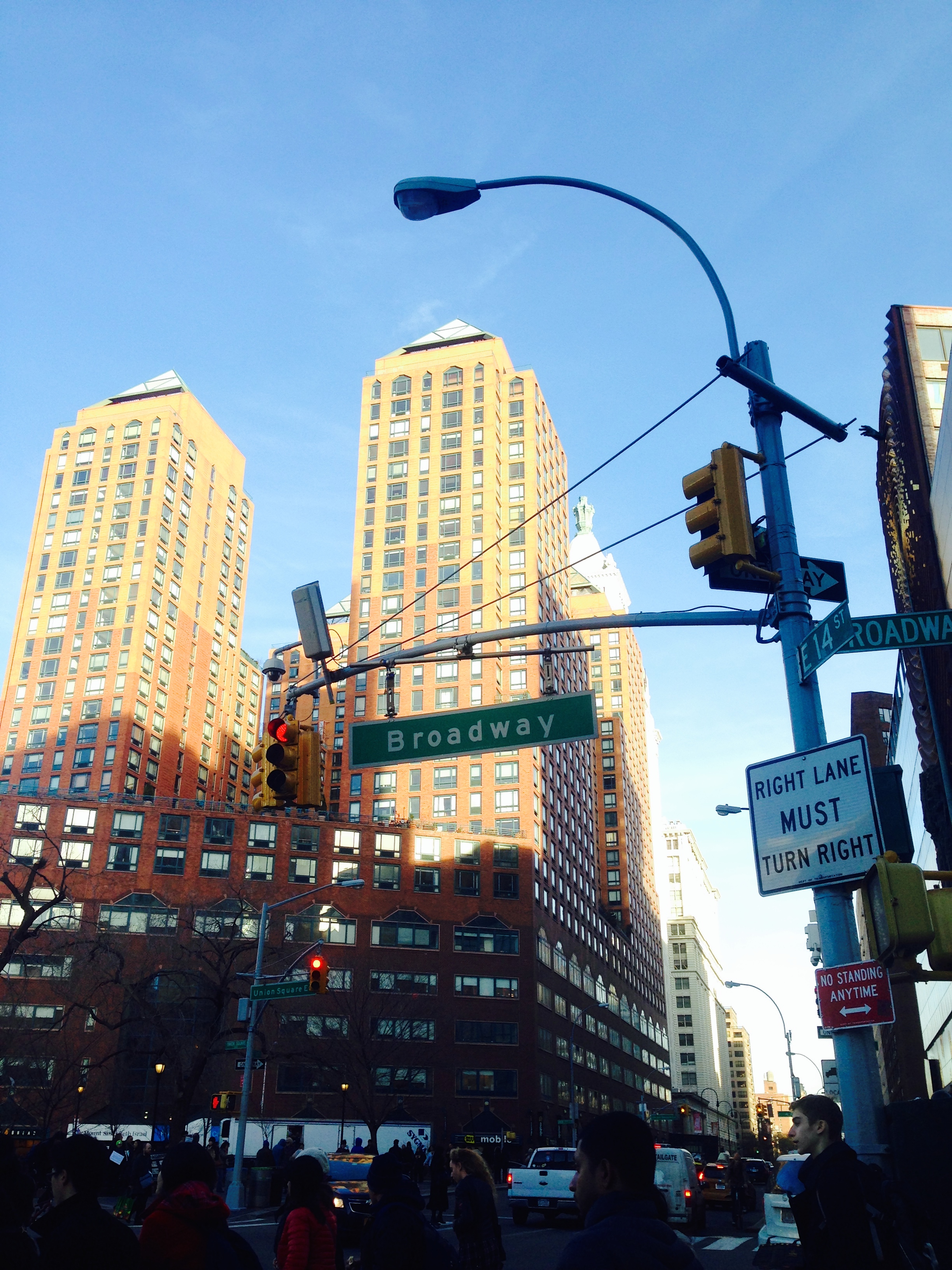
Last weekend, Dawson and I had the opportunity to represent Elon at the 2015 Project Pericles National Conference in New York City. Project Pericles is the national umbrella organization for Periclean Scholars, and two students from each Periclean campus (along with many advisors) were present.

The conference was hosted by The New School in Brooklyn, and ran all day Thursday and Friday. An annual event, the conference included panel discussions, workshops, and networking sessions centered on civic engagement and creating social change. The final round of the Debating for Democracy Letter to an Elected Official competition was also held, during which the 5 final teams presented their case to a panel ofIMG_3688 judges and the winning team (Rhodes College) was selected. This competition is how we were originally connected with the conference, as Dawson and I wrote and submitted a letter about foreign aid accountability and transparency over Winter Term in our course taught by Dr. Arcaro, SOC 370.
We stayed at the Seafarer’s International House (which was just a short walk from The New School conference location) and roomed with a student from another college. This gave us the opportunity to meet some great students and learn about how Periclean operates at other universities. One of the major differences we noticed was the structure of the program, which was much more centered around community service at many of the other universities.

We participated in four 1 ½ hour panels over the course of the conference, which included the following: Social Action Panel; Media and Millennials Panel (featuring a journalist from the Washington Post as wellIMG_3704 as Ben Smith, Editor in Chief of Buzzfeed); Climate Change Panel (featuring several scientific experts, the founder of ioby.org, and a representative from the U.N); and a panel about the Role of Non-Profits in our Democracy, which featured leaders of several prominent NYC-based non-profits.
The panels were undoubtedly one of our favorite parts of the conference, as we were able to hear form experts in a variety of fields that were so passionate about their work. After the climate change panel I had the chance to speak with Erin Barnes, who is the founder of ioby.org—a crowd resourcing organization that empowers individuals to pool resources in order to make lasting change in their local communities. “Ioby” stands for “in our back yards,” and was founded with the idea of changing the world one community at a time. We thought this organization was really cool and could be a great resource for Periclean or other community projects.

On Friday the conference ended at 2:00pm, after which we split into small groups to visit one of 5 nonprofit organizations around NYC:

IMG_3709
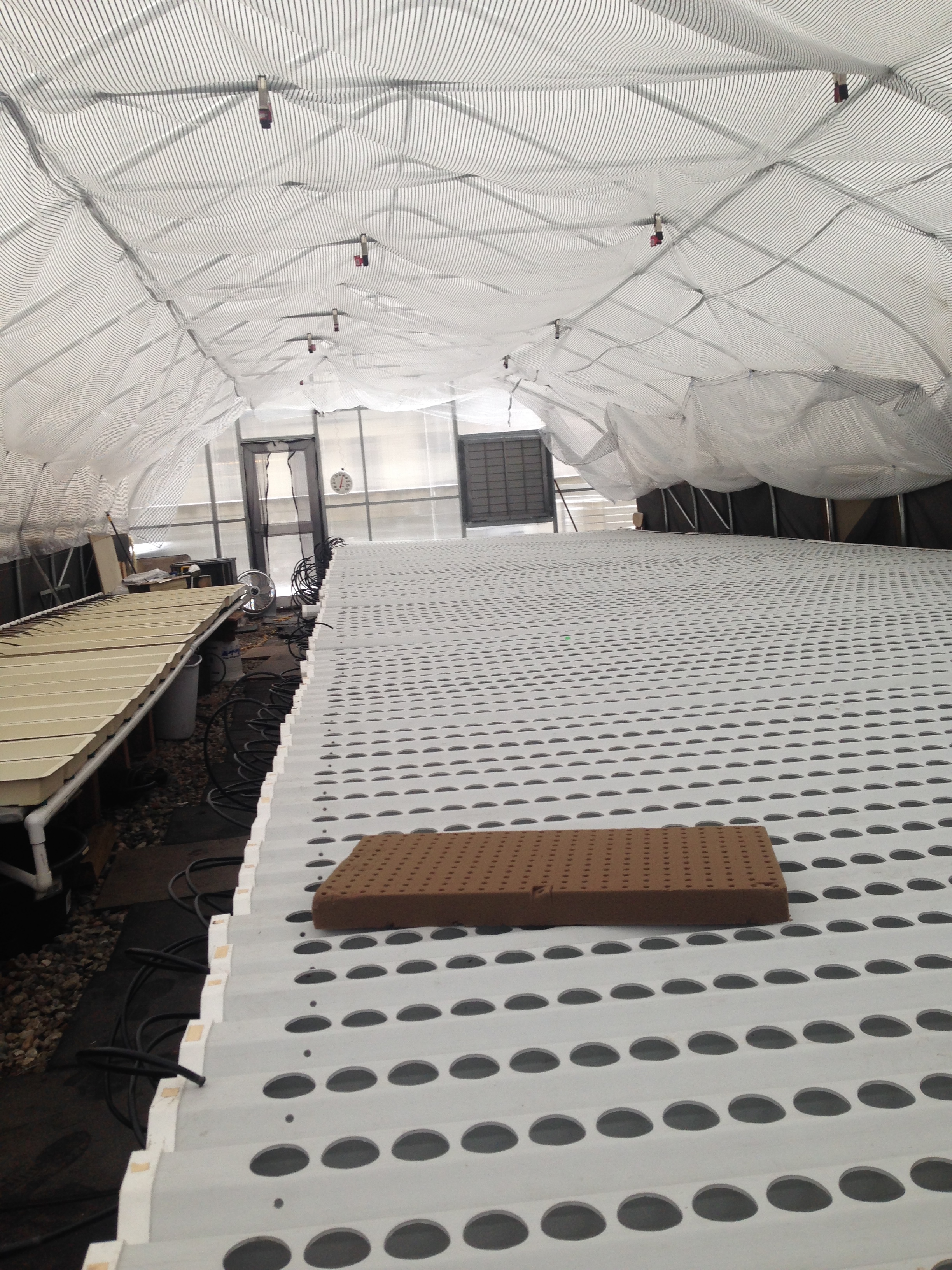
Inside the Harlem Grown greenhouse

Dawson and I chose to visit Harlem Grown, which is an awesome organization that empowers kids to grow their own food through urban farming, while emphasizing healthy eating and leadership development. The program leases several small plots of land around Harlem from the city, which it then converts into vegetable gardens that the kids are responsible for cultivating after school. In the winter, the kids meet at the Harlem Grown headquarters (inside), where they learn about nutrition, budgeting, and planning their gardens. Tony Hillery, who is the founder/director of Harlem Grown, led us from The New School to Harlem and showed us the entire operation–from the greenhouse, to the gardens, to the organization’s new headquarters several blocks away. It was a really informative experience and Mr. Hillary was one of the most passionate people I have ever met. Check out the website to learn more!

IMG_3711
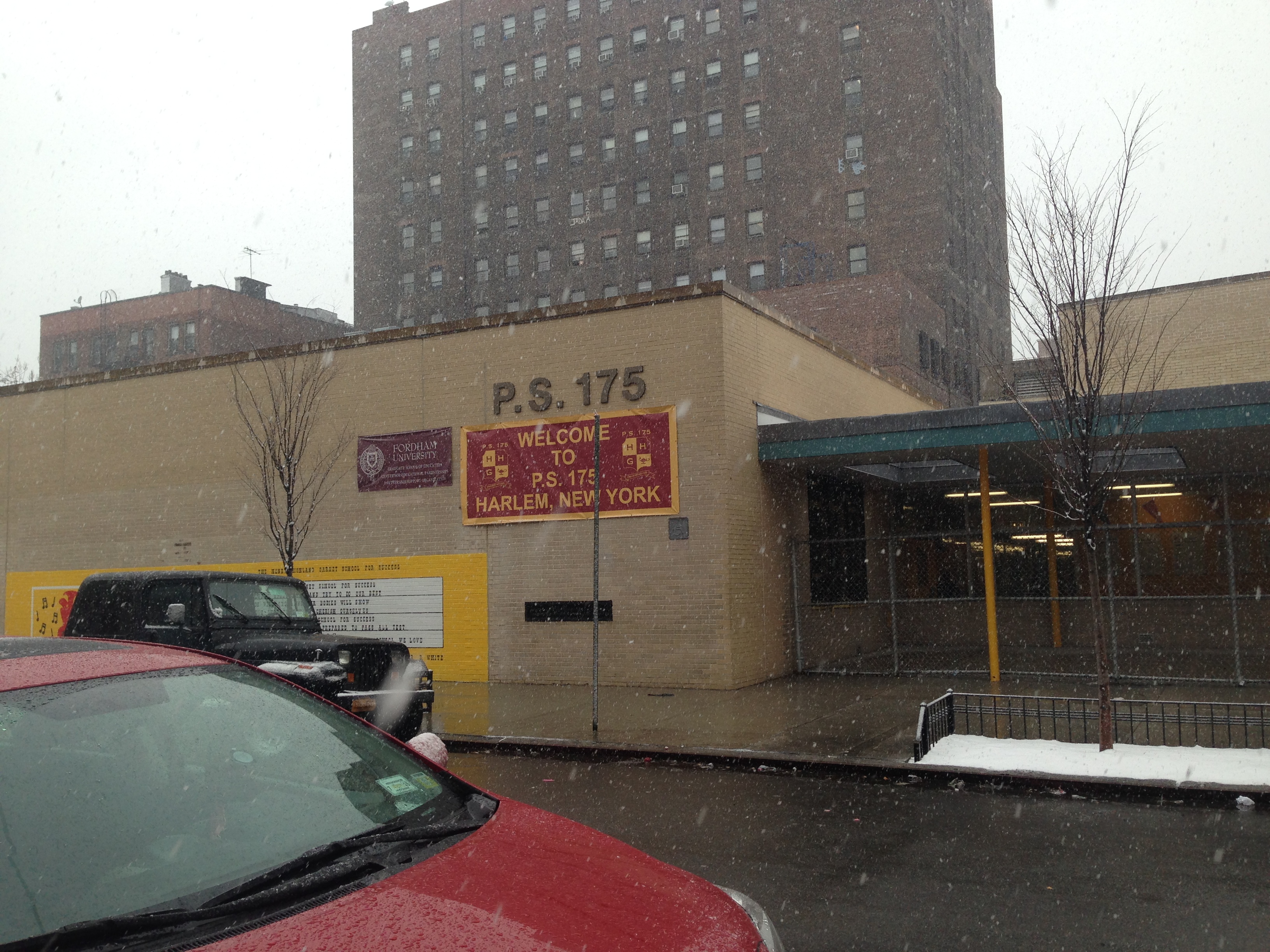
The school across the street from Harlem Grown.

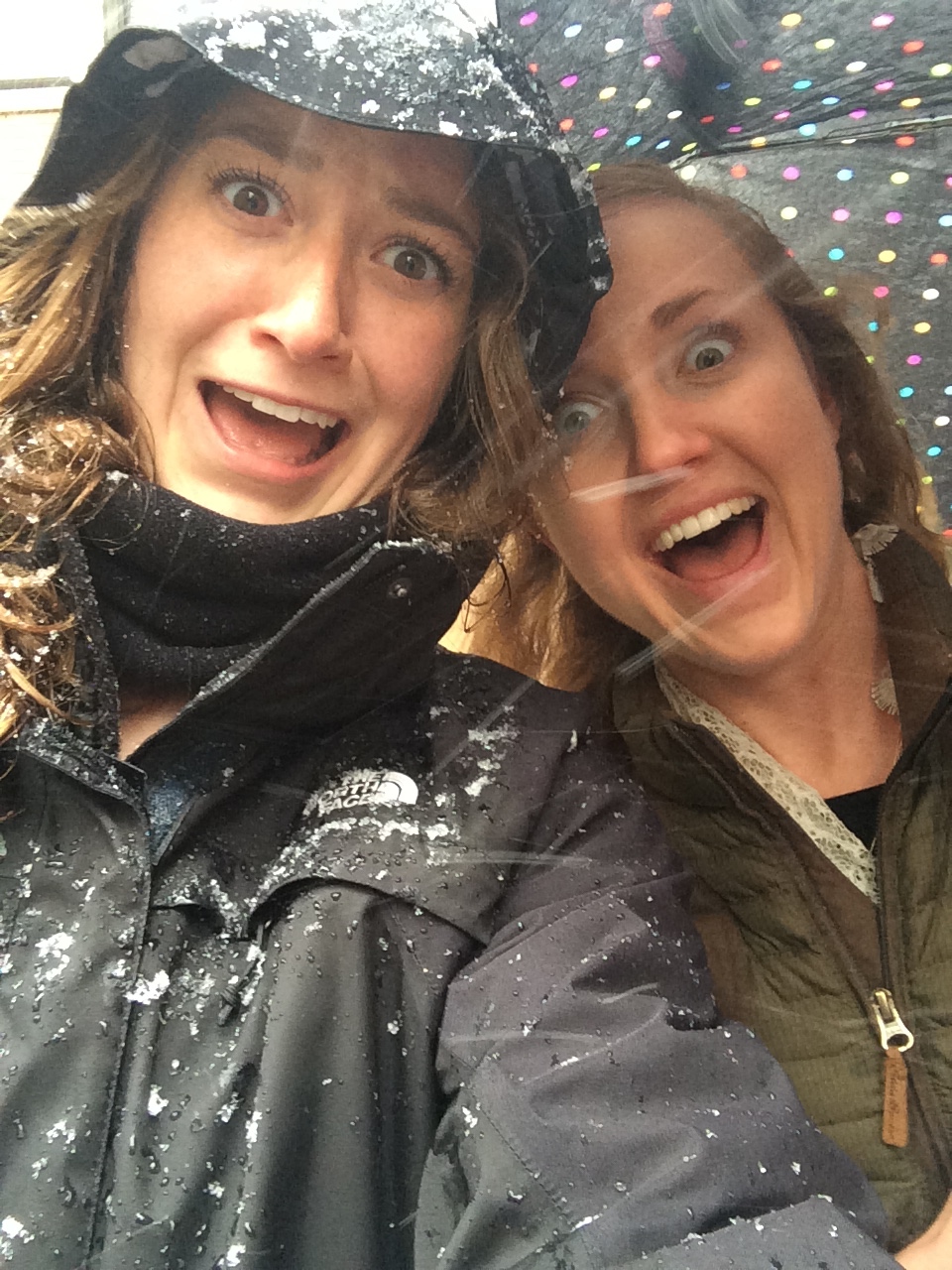
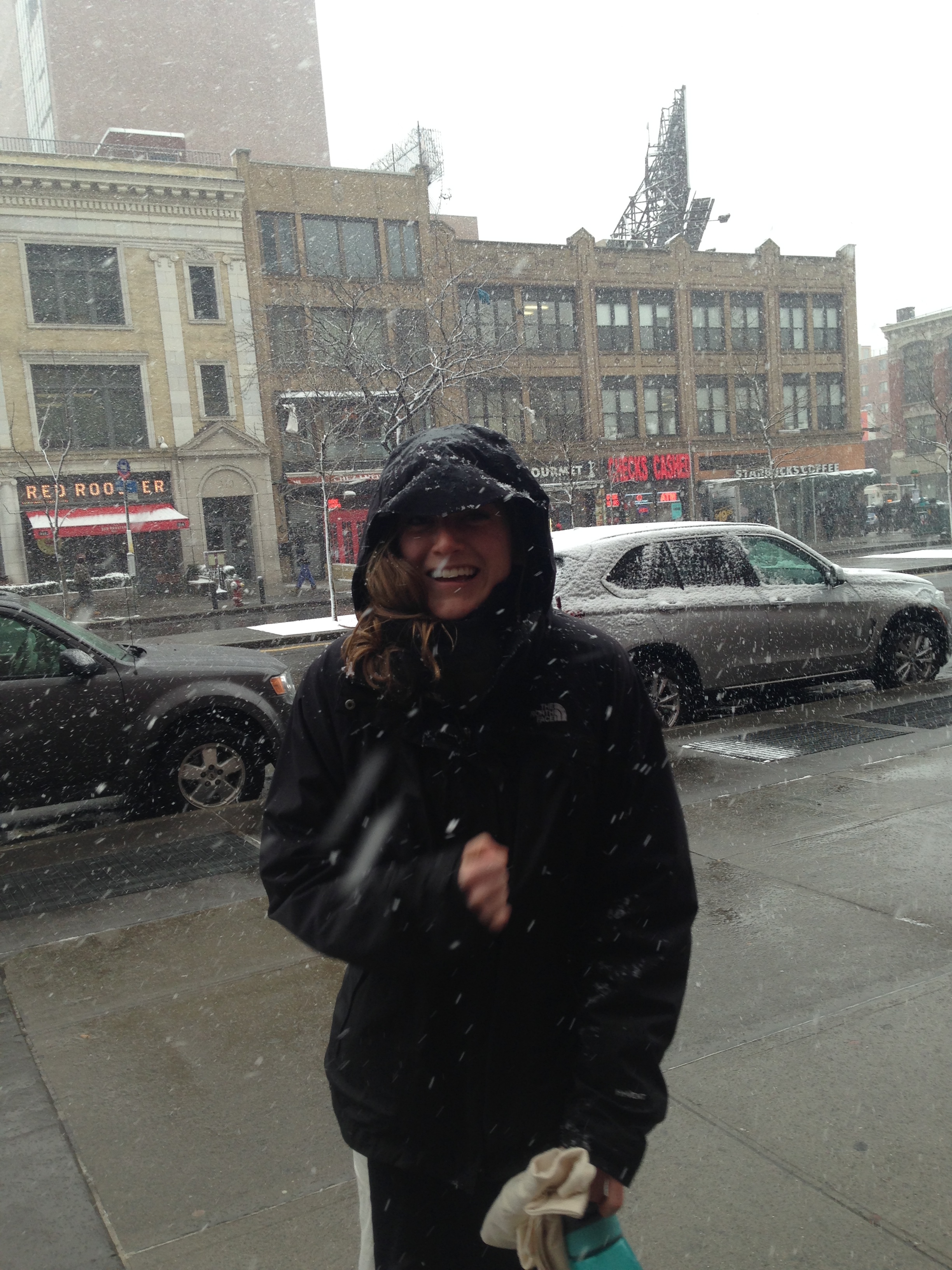
Also: it poured snow all day long on Friday while we hiked around NYC, and we had 5 inches of IMG_3714accumulation by 7:00pm. It was a very cold (and eventful!) welcome to the first day of spring! IMG_3715

We left NYC early on Saturday morning after a whirlwind trip, but it was a positive experience and a great opportunity to learn more about Project Pericles and civic engagement at large. Please reach out if you have any questions or if you might be interested in attending next year’s conference…we’d love to share our experience with you more!

IMG_3725
Snowy NYC

This past week… (3/17)

This past week the class of 2017 made a lot of goals for the upcoming semester. We are all hoping to continue our learning of Namibia and find contacts as well as a potential project. In order to keep us on track, we created accountability partners within our own class. Each pair is responsible for keeping each other in check, ensuring that we continue to move forward on developing a project. We are continuing our committee work by having scheduled weekly meetings outside of class and also began creating ideas for fundraisers as well as delving into the plans for the upcoming induction of the class of 2018. Additionally, we made a plan for us all to share potential focus ideas or contacts with each other by the end of spring break with a hope of starting to narrow in on our focus. Till then, happy spring!

Slacktivism?


Slacktivism?


This is a spin off post to the one I did on “voluntourism” as I continue the process of reflecting on what doing  “good” in this world means.


saviors and survivors“In contrast to those who suggest that we act as soon as the whistle blows, I suggest that, even before the whistle blows we ceaselessly try to know the world in which we live — and act. Even if we must act on imperfect knowledge, we must never act as if knowing is no longer relevant.” (p. 6)  Mahmood Mamdani in Saviors and Survivors:  Darfur, Politics and the War on Terror (2009)


Expanding the definition
The common use of the term “slacktivism” is of fairly recent origin, and the most common definition is ‘action taken via the Internet in support of some social cause but requiring little effort.’  There has been some interesting research on the term and broad coverage in the online press.  One of the major questions asked is can slacktivism lead to activism.

Good question, that.

There is no lack of clarity that it is a pejorative term, unlike the more neutral (for the most part) term ‘voluntourism.’  My definition of slacktivism is a bit broader and includes Internet based action, of course, but also includes behaviors in daily life such as buying a pair of Tom’s shoes and claiming oneself as an activist.

In an interview for a story that appeared in the student magazine The Edge I referred to some of the Elon students participating in the annual Elonthon fundraiser as ‘slacktivists.’  That generalization is clearly not true for everyone involved, and I know that the key organizers do their level best to thoroughly vet the partnering organizations.  That said, there are many who participate in the event that I had in mind when making the comment.  In reaction to The Edge story one of the past organizers contacted me via email.  Here is, in part, what she said, “Majority of students who come to Elonthon for the Greek “points” likely get very little out of it, and while I wish I could make all of them serve others from an authentic, compassionate place, that’s sadly the sleepy way they float through life. What our exec board does try to do is put them in a place that will create an inner shift, while also making at least a small impact.”  No one wants to have a pejorative term applied to them or to any activities or organizations to which they are connected.  The reality is that in the case of some behaviors the label “slacktivist” seems to fit.

Pericleans as “slacktivists?”
Year after year the Periclean Scholars program is fortunate to attract from among the first year class some of the most dedicated and passionate students at Elon.  The women and men who get inducted into this program typically have long histories of service work through their churches, high schools, athletic teams and community civic organizations (Boy and Girl Scouts, for example).  Many (most?) of these new inductees see the Periclean Scholars program as an extension of work they have been doing in many cases for years.

One of the main goals of our program is to have Periclean Scholars -both individually and as a Class-  ceaselessly probe deeper and deeper into the nature of aid and development work in general and partnering in particular, constantly learning how to mindfully differentiate between partnering and patronizing, between “good” and “bad” aid.  In previous posts I have discussed a wide array of ideas and perspectives on this topic, most recently posting on “voluntourism.”

This winter term I taught SOC 370 Being and Becoming a Global Citizen. I developed this course four years ago and it has allowed me not only the luxury of reading and then teaching from some very seminal works in this area. Perhaps even more importantly I get to read the thoughts of the scores of students whom I have had read and respond to this material.  The content we cover in this class is a direct outgrowth of the questions raised by the very existence of the Periclean Scholars program whose overall goal is to put into action the part of the Elon University Mission statement which says, “We integrate learning across the disciplines and put knowledge into practice, thus preparing students to be global citizens logowoborder
and informed leaders motivated by concern for the common good.”

The video below was created by Dawson Nicholson and Laura Orr, students in SOC 370 Being and Becoming a Global Citizen this past January term.  Both are members of the Periclean Scholars Class of 2016.  What they produced was in response to the charge to look more critically themselves and at Elon students in general with regard to their activism.  I think the message of this video is one that should be heard by many. It reflects my broader definition of “slacktivism.”.

https://www.youtube.com/watch?v=zpwPAGm8eQM


Final thoughts
It is the responsibility of everyone connected with our program -Pericleans past and present, Mentors, and Director and Associate Director- to continue the “process of reflecting on what doing  ‘good’ in this world means.” Never are good intentions alone sufficient, and quick, un-researched “feel good” actions are the antithesis of what it means to be a Periclean Scholar.

Finally, those connected with our program need to constantly embrace the responsibility to be a positive influence in this regard to friends, family and others, ever passing on the lessons we have learned as our program has developed and deepened.


Post Script  Look here for some suggestions on how to redirect “slacktivists”


Addressing relational poverty

Addressing relational poverty

Pericleans -alumni and current- have a responsibility to ceaselessly increase their knowledge about global social issues not only specific to their country of focus but as well about those impacting all humanity.

One of the of the issues that cuts across all nations of the world is that of poverty.

For those of you who are not yet familiar with the term “relational poverty” (or ‘RP’ as some are calling it) I strongly encourage you to visit this informational web site.  After exploring this site your Class might consider discussing this concept and looking into the sponsorship possibilities.  You might even want to take the screening test yourself.

Below is a one of the sad stories you will see on this web site.  Be prepared for an emotional journey.

map-on
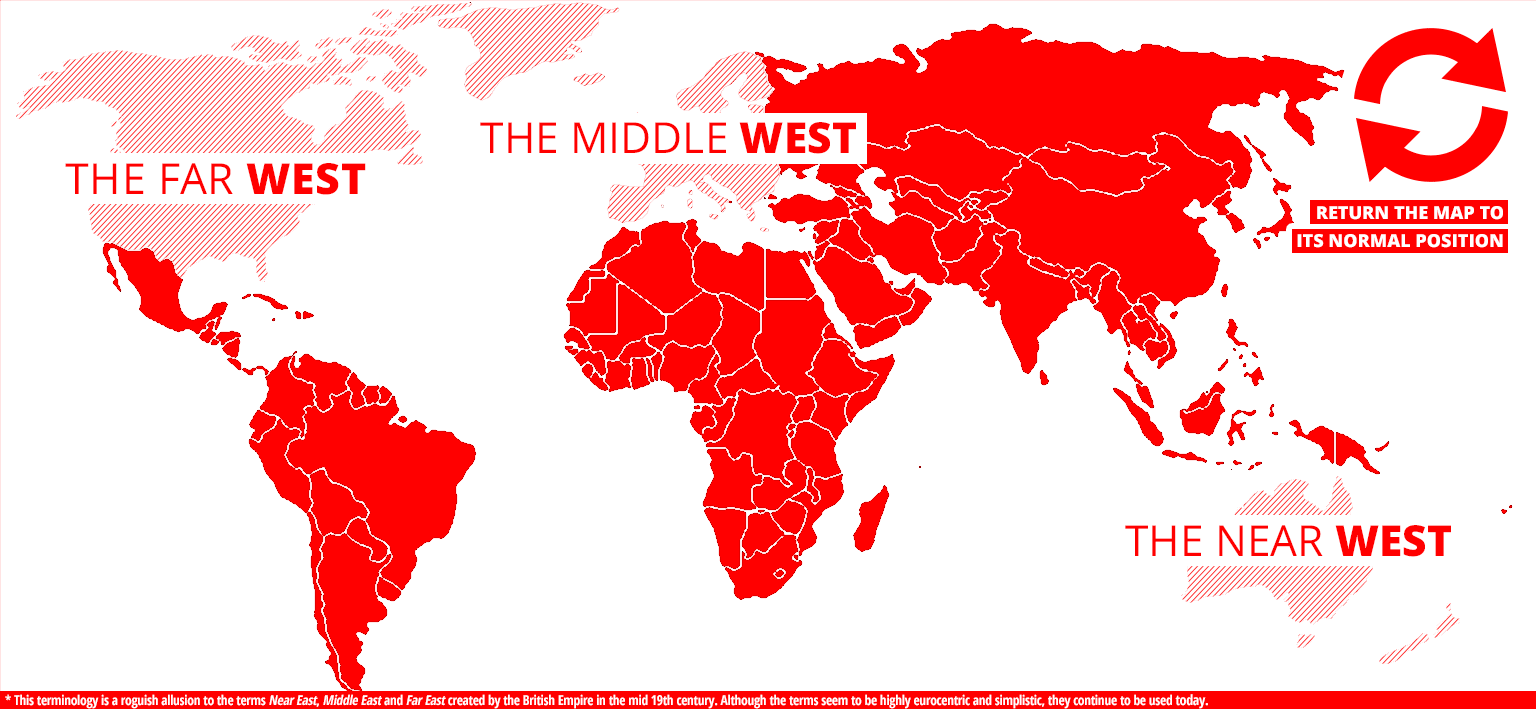
Elon University is located in the Far West.


Class of 2016: Looking Ahead

This week the 2016’s really focused on where our class is going and what we are moving towards. Representatives from our class recently had a discussion with one of our partners, Hope for Honduran Children, to develop some feasible initiatives for us to start working on. She supported our idea of a scholarship fund for some of the boys living in her transition home and gave suggestions of funding the transportation of school supplies or donations of laptops and internet access. Our class was really excited about all of these ideas and already have a committee working to decide which of these initiatives would be the most feasible and, ultimately, the most beneficial to the boys in Honduras.


Discussions with our partner also led to us asking a very important question: if given the opportunity to go to Honduras during winter term 2016, should we go? We discussed what type of aid we want to be doing and who would really be benefitting from our going down there. If we go to Honduras, we want to be utilizing our skills to help the people we have been working for, rather than merely touring the country. We recognize that going there may really be most beneficial to our own personal development, which is not necessarily a bad thing. We also found that it could benefit the Periclean Scholars program as a whole because we would gain on-the-ground knowledge and experience that we could share with subsequent classes, improving their projects. This discussion really forced us to reflect on our years with Periclean and look to the future for our class. We will be keeping this discussion in mind moving forward with our initiatives and projects.

As a class, we are furthering our partnerships with Summit for Honduras and LUPE. We are volunteering with LUPE on saturdays teaching ESL classes for local Latina women. Additionally, our class is taking steps in planning our campus summit to be held next year. There are a lot of great things in the works and the class of 2016 is already seeing progress as a class this semester!