’16s: Hitting the Ground Running

This past week, the Periclean Class of 2016 has been making strides towards having a very productive start to our senior year. We have each decided our individual SMART goals, which include what literature we will read, what types of writing we will do, how we will connect with our partners, and how we will contribute to the pan-Periclean community. Similarly, each committee in our class has met, discussed the group goals for the semester as well, so we’re organized and ready for the next few months of hard work.
Currently we are deciding for which large project of Hope for Honduran Children we will choose to fundraise, and how to raise that money. We are also solidifying what our other partnerships will look like this semester, or how exactly we will be involved. For example, the committee for our local partnership, Latinoamericanos Unidos Para la Esperanza, is working with the organization to create an ESL curriculum to make the program more sustainable. Also, the People, Planet, Profit committee is looking for vendors and speakers for the February 20th business summit.

We’re ready for this new year of progress, community, and learning!

Return Excitement

At this point in our Periclean careers, we have come to expect that our best-laid plans will fall apart the most and our smallest plans can become our greatest accomplishments. From each of these we have become more resilient and become better through self-reflection.
Our first day back was no exception. We were thrown right back into discussions of our partnerships, both locally and in Honduras. Our committees got right to work with planning and feasibility discussions. But to set the tone for the day we began no other way than with some imparted wisdom from none other than Dr. Tom Arcaro himself. Dr. Arcaro led with updates ranging from the exciting news that our Periclean Winter Term class has been approved as an upper level GST to the reforms to the class syllabi and our class identity. In terms of the Syllabus, Periclean is moving towards a more formal tone and inclusion of 9 core principles, with each class embodying a theme:
• Sophomore Theme: letter writing to elected officials
• Junior Theme: grant writing
• Senior Theme: putting it all together, organizing SURF sessions for producing research and arguments
After this update on the Periclean program at large, we came back to our committees and the work of each of the 4 groups: Summit in Honduras, Hope for Honduran Children, LUPE, and People, Planet, Profit

Summit in Honduras
Updates from each were shared from the Summit in Honduras committee regarding our recent separation from our partner and the address of communication, next steps and alternative projects.

Hope for Honduran Children
We are working towards a feasible project with the NGO and partner, proposition of a transition home expansion project and sustainable sponsorship of sending a Honduran student to Elon for a semester. The class will reflect and decide the following class.

L.U.P.E.
Casey and Anna have developed an ESL class in which students can volunteer at LUPE and have created an incredible pre-planned lessons guide for these volunteers. Way to go ladies!! The committee attended a board meeting for the program and relayed passionate excitement along with many ideas for the programs future including summer camps and their own space. The committee will continue to focus on grant writing and youth development.

People, Planet, Profit
The committee has been hard at work on both programming as well as outreach. The event blurb has been included in the Spring Cultural calendar and 2 grants from the Love School of Business and Fund for Excellence Grant have been awarded! Additionally, registration and event media has been in the works including a live website and promotional materials.

It has been an exciting first day back and with so much to accomplish and work toward this year, we are eager to return to our commitments as Periclean Scholars in our Capstone year.

The world needs globally minded, civically engaged and socially responsible citizens. The world need YOU!

Take a look around this ‘ball of confusion‘ and what do you see?

  • In Yemen right now over 80% of the total population is in need of humanitarian assistance, most severely food insecure.  The impact, as usual, is most dramatic on the very young and very old.
  • Since 2011-back when you were in high school?- the crisis in Syria began and is now “the biggest humanitarian crisis of our generation” with 10 million displaced, neighboring countries overburdened by the long-term influx of refugees, and no end in sight for those suffering every day.
  • The refugee and IDP camps near Dadaab, Kenya currently hold 350,000 people.  These camps, established indaaaab the early 1990’s, in some cases are the only home some of the residents have ever known.
  • Global climate change is real and accelerating.  The impact of unusually severe weather patterns all over the planet continue to be a central cause of food insecurity as crops fail due to droughts.
  • Here on campus and all around the United States blacks and African-Americans seek racial justice.  Our social and political climate can be polarizing.
  • In each of your countries of focus there are many organizations and individuals that are working overtime on addressing various human needs, not the least of which is, simply, to live a life of dignity.

So, what should be your reaction to this (very incomplete) list of our global community’s ills?

First, don’t be overwhelmed.  The human spirt is strong and when a Periclean Class finds ways to maximize the human potential in each of its members amazing things can get accomplished.  And that should be your renewed goal for this semester:  learn about each of your Classmates and make it your goal to help provide the ferment that will bring out their best.  Indeed (to paraphrase an inspirational athlete, Steve Prefontaine), we have the gifts of each other, this program and all of the resources of Elon University, and to give anything less than our best is to sacrifice those gifts.

Dr. Lambert has said in many different venues that the world needs Elon graduates.  As Pericleans, your explicit goal is to be exemplars of the ‘global citizens’ mentioned in our University mission statement.  To wit,

We integrate learning across the disciplines and put knowledge
into practice, thus preparing students to be global citizens and
informed leaders motivated by concern for the common good.

Your Mentors -Steve Braye, Carol Smith and April Post- are amazing, talented and deeply passionate professors who have chosen to devote this portion of their professional lives to you and your Class.  Join them and your Classmates in their efforts to make this a sensational year as we all contribute to the ‘common good.’

Peace, love and Periclean!

Tom Arcaro, Director


Welcome back to Periclean!

A note from the director

All Pericleans,

Welcome back to the new school year!

I hope that you all had a good change of pace in the last couple months and that you are now ready to re-engagepericlean logo with your Class with a renewed sense of purpose, a sharp focus and an ever deepening level of devotion to the mission of your Class and to our Periclean ideals.

Please take the time to read through the following numbered points and mark your daily planner accordingly.

  1. Information As was announced last spring, Dr. Mat Gendle is now the Associate Director of Project Pericles at Elon and also the Mentor for the incoming Class of 2019 with a focus on Sri Lanka (also the country of focus from the Class of 2011). Mat already has begun making a very positive contribution to the program and I know you will all welcome him aboard and help him spread the word about Sri Lanka and his Class of 2019. As Mat begins his duties I want to take moment to thank Prof April Post, Class of 2016 Mentor, for her service as the previous Associate Director. April is an exemplary Mentor and was an equally effective and helpful Associate Director.
  1. Action Hosted by Dawson Nicholson and the 2016’s there will be a Pan-Periclean mixer in the Periclean room (202 Global Commons) Wednesday, August 26th from 4:00-5:30. Come and reconnect with members of your Class, Mentors and the Directors.
  1. Action We will begin our bi-monthly Steering Committee meetings on the first week of classes from 4:00-5:30 on Thursday, August 27th. We will meet in GC 202, the Periclean room. One task for your first Class meeting will be to elect/select Class representatives for SC. The Mentors are meeting on alternate weeks.
  1. Update/Action I am inviting all Pericleans to celebrate Mexican Independence Day 2015 -Wednesday, September 16- by helping organize a campus screening of the new teaching video entitled “Galeano Vive! Painting a Zapatista Teacher.” The Class of 2008 partnered with Schools for Chiapas and the EZLN and through the Periclean Foundation continue their support. More details to come, but save that evening.
  1. Information I want to come to a meeting of your Class as early in the semester as possible. Please work with your Mentor to determine a date soon.
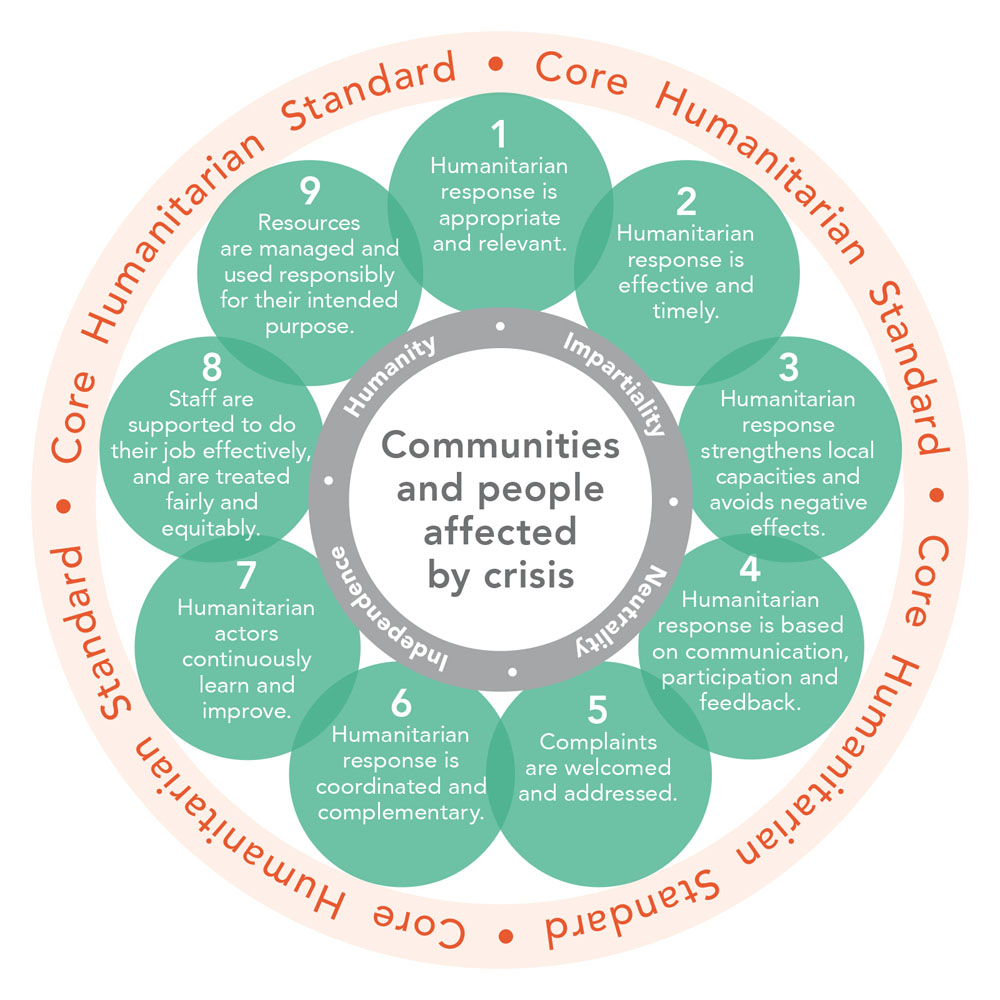
  1. Information/Action Though each Class is still responsible for making their own syllabi, it has been agreed that there will be some common elements in all Periclean courses. As part of this initiative and to insure that our program functions according to the highest international humanitarian standards we will begin using theCHS_Diagram_small Core Humanitarian Standard on Quality and Accountability. Read here for more. Your Mentor will have more about your syllabus for this semester on the first day of class next week. Please send a final copy of your syllabus to me, Associate Director Mat Gendle and to Program Assistant Catherine Parsons by Friday, September 11th.
  1. Action Continuing a tradition started by the Class of 2011, I am again asking that each Class produce a video ‘elevator speech’ that describes their Class mission. These videos will be screened as part of the Celebrating Periclean Scholars event to be held in October (date, time and venue TBA). If your Class needs any technical assistant, please let me know.
  1. Action All Pericleans are invited to the Community Connections event on September 1st. This year Community Connections will focus on the issue of improving race relations, a topic relevant on campus, certainly, but as well in your countries of focus.
  2. Information  A Periclean Scholars Summer Summit was held this past July. Here (Periclean Summer Summit) are the notes (taken by Kelsey Lane, ’17 –Thank you!)
  3. Action/Information  The social media committees will be asking you to begin/continue supporting our Facebook, Twitter and Instagram accounts.  Updates coming soon.

Please know that my door (GC 210) is always open to any Periclean. I look forward to meeting everyone in the newest Class of 2018 and reconnecting with all of the ‘17’s and ‘16’s as well.

Yours in service,

Tom Arcaro
Director

Vetting Potential Partners- Advice from and to Periclean Scholars

The important process of vetting
In our work as Periclean Scholars we are often faced with the challenge of critically evaluating Non-profits, NGOs, and generally any aid program in another country. This task, necessary for establishing an open and authentic partnership, is challenging for many reasons. It can be hard to know where to begin in evaluating an organization, what criteria to measure and how to access the right information. It can also be hard setting standards. What issues are passable or necessary given the nature of aid work and what issues should be considered important enough to exclude the possibility of a partnership? Our class developed a partnership questionnaire in response to this challenge, which can be found in Mapping Our Successes: The Periclean Handbook, but that document does not show the entire process of evaluating an organization.

There are three general categories our Class deemed were critical in evaluating a non-profit when considering a partnership: internal structure, finance, and programming. The first category concerns itself with how decisions are made and how challenges are responded to, as well as the makeup of the power-structure and the decision-making hierarchy of the organization. The second category is concerned with financial sustainability. The final category, programming, has to do with how target communities are identified and communicated with, as well as how programs are designed, implemented and assessed. Because potential partner organizations come in all shapes and sizes, it’s very difficult to establish standards or criteria with which to evaluate. Instead, our Class identified, as discussed below, several key considerations and warning signs for each category.


Internal Structure
The vast majority of Non-profit organizations has a board of directors, usually comprised of around 12 individuals who guide the organization, decide it’s goals, and advise the director. The board is usually comprised of some funders, some members of the organization (such as the director, the founder), and a financial officer. A great sign for any NGO is if a member of that organizations target community is part of the board. In fact, the most successful and determined NGOs are started by communities that want to help themselves and have multiple community members on their board. It’s important to communicate with as many board members as possible; these people know everything there is to know about the organization and are usually willing to share their opinion. Talking only with a director or founder can sometimes result in optimistic information; board members are generally less involved with the challenges of running the organization and can give more honest opinions.

It is also important to find out the responsibilities of the director, how they delegate tasks and how they make decisions. A good director will communicate closely with their board and staff about challenges and decisions, and will take everyone’s input into consideration. A definite red-flag is if a director makes all or most decisions independent of any input. Directors often spend most of their time fund-raising, coordinating with staff about projects,  and designing new projects or modifying existing projects. If they aren’t doing all of this with the well-informed feedback of the board and the target community, that’s a red flag. Another thing to look out for in a director is a white-savior complex or a MONGO complex, you can read about those in a blog post by our program Director Tom Arcaro.


Finances
When inquiring about finances, it’s important to get some key numbers. To get a good grasp of an organization’s finances, find out their annual costs of operation, their annual income, and the size of their endowment. The annual income should obviously be larger than their costs, but it’s important to understand also what an organization’s sources of income are. Is this organization relying on donations? Are most of the donations large or small, reoccurring or one-time? If an organization gets most of it’s money from small, one-time donors, that can be time consuming and it is a red flag for sustainability. Donations can be a great way to raise funds, but grants are better. Many organizations work annually off of the money from multiple grants that they reapply for continually, once an organization satisfies a grant’s requirements once it is a good bet that they will satisfy those same requirements when reapplying. A sustainable, successful and healthy organization will know where it’s funding will come from for years in advance. A good sign is if an organization has a grant-writer on staff, you can ask that person how successful the organization has been at applying for grants. If an organization is putting all of its effort into small-scale donation-based fund-raising, that’s a red flag. Below is a link to a site where you can find, at the least, a 501c3’s annual revenue and expenditures, sometimes you can even find information on their board, impact metrics and some external reviews:

www.guidestar.org


Programming
There are two critical components to effective aid/development programming: critical research and community input. If only one of those components is considered, you’ll end up with partially effective programming at best, and harmful or toxic aid at worst. Critical research must be done to understand the history of aid programming targeted at a given issue in a given demographic community. This research can steer program development in the right direction, it can show us what has succeeded and what has failed, and sometimes it can even show us why. Critical research can also key us in to the systemic causes of a certain issue; for example, perhaps a well-building program isn’t a good solution when a textiles factory up-stream is polluting the groundwater. However, no matter how much research is done, no program should be seriously considered without the critical feedback and input of the target community. In my experience, cultural insensitivity, or rather blatant cultural ignorance is the cause of most failed aid. Ideally, the target community is involved in program-development from the brainstorming stage; they know what issues harm them the most and what solutions they are willing to adopt. Furthermore, a community that has ownership and creatorship in a program is immeasurably more likely to put in the work to maintain that program in the event that the non-profit has to become less involved.

So, when communicating with a potential partner NGO/non-profit, ask about why they implement programming in the way that they do, and ask how they developed the program. In any case, if you hear phrases like, “we/I couldn’t stand to see the suffering, so we had to do something”, avoid that organization like the plague. There’s actually two things wrong with the above language: first, there’s a savior complex implied, this organization was motivated by pity and likely has egoistic motives; second, they focused more on the problem than the solution, and that leads to programming that merely eases the detectable symptoms of some problem instead of addressing the root causes(someone should do a case study on how many orphanages it takes to eliminate childhood poverty, or maybe I’m just thinking of the start of a really morbid joke). Also, when asking about programming, the more community involvement an organization actively seeks the better.

Assessment
The last major consideration with programming is an organizations metrics for measurement. A metric for measurement is how an organization determines the effectiveness of their programming. This can take many forms, quantitative or qualitative, and is entirely dependent on the type of aid being delivered. What’s important here is that critical metrics are in place, and that the organization isn’t throwing money at a problem and hoping for the best. A good organization measures the number of individuals it reaches and the amount of money spent on each person/community. The best organizations start with the goal to improve or reduce some easily measured condition, such as #individuals facing malnutrition, and then measure that metric constantly and revises it’s programming to achieve the best results. When quantitative measurements aren’t possible, unbiased and impersonal qualitative feedback is necessary.


Conclusion
These considerations are far from exhaustive, and may not be completely applicable in all cases. Hopefully though, this gives you a starting place when considering how to vet a particular organization. Remember, whatever organization you partner with becomes a reflection of the Periclean Scholars, so make sure that you hold them to those standards we strive to attain ourselves while knowing that they face the same real-world challenges we face. If an organization presents with some red flags, tell them. It can be socially challenging, but if we want to help the communities of our target countries it means helping these organizations get better as well. If an organization is unwilling to or unable to address the issues you find in the vetting process, you must decide whether to design your partnership in a way that avoids the dangers implicit in those red flags or if it is better to avoid a partnership. This can be a challenging decision, but it is important to take it seriously enough that you experience the frustration of challenge.


Author: Christian Gilbert, Periclean Scholars Class of 2016

Teensandtwenties.com Article– Current Issues in Social Justice—Economic Inequity

Bethany Stafford Smith

Periclean Scholars Final Writing Assignment: Teensandtwenties.com Article

Current Issues in Social Justice—Economic Inequity


A growing issue in not only the United States, but also the world, is the inequity that falls across us all. In the words of Russel Brand, “When I was poor and I complained about inequality, people said I was bitter. Now I’m rich and I complain about inequality, [and] they say I’m a hypocrite. I’m beginning to think they just don’t want inequality on the agenda, because it is a real problem that needs to be addressed.” The growing inequity in the United States is a complex issue that our country is unsure how to address. It has lots of contributing factors, which makes it harder to approach. The reason it matters now is because it has worsened significantly in recent years, especially the last decade. The longer we allow this issue to worsen, the more difficult it will be to fix.

Here are a few mind-blowing statistics:

-The top 20% of US households own more than 84% of the wealth, and the bottom 40% combine for 0.3% of the wealth (Fitz 2015).

-The top 3% held 54.4% of all wealth in the US in 2013, up from 44.8% in 1989. The bottom 90% held 24.7% of all wealth in 2013, down from 33.2% in 1989 (Leubsdorf 2014).

-Lower socioeconomic status generally results in less positive health outcomes and less access to health care; obesity has a greater incidence rate within lower socioeconomic demographics (Obesity Action Coalition 2015).

– The gap between the rich and the poor is widened by many different things including but not limited to: unpaid internships, college, globalization, technology, current tax rates, and capital gains (Shemkus 2015).

This concerns everyone because with statistics like these, it is quite obvious that if things continue to go this way then a small percentage of the country will control the entirety of the United States, leaving the rest of us without hope or opportunity. This cycle is self-perpetuating, the money goes to politics, which continues to increase the power of wealthy individuals, making more policies that only benefit the wealthy, and so on. Programs in our country will become increasingly privatized, resulting in decreased access for all but the super rich.

The economic recession that occurred from 2007-2009 and its effects may seem to be gone, but they are not completely absent from our day-to-day lives. Some lingering effects of the recession have caused an increase in pay for those who are already of higher socioeconomic status, and a decrease in average salary for those who are of less affluence (Leubsdorf 2014). Let’s bring back the ability to work towards the American dream! Let’s bring back hope to have bright futures, no matter what family you were born to, and what neighborhood you live in. Sounds like a good idea, but how?

As there are many aspects to this complicated issue, a multitude of programs, policies, and people would be necessary to stop the widening of the economic gap. Even more programs are essential if we would like the reverse the gap. We could start by pressuring our local governments and state senators to reallocate more funds in the government’s budget to go towards education. This would be impactful because of the way most public education systems currently work in this country. Generally, the schools who score better on standardized tests are given more funding, and the schools that score lower on the standardized tests get less money. Fewer funds mean fewer teachers, fewer programs, and fewer opportunities for these schools to improve. But wait, how does that make any sense? Don’t we need to give more money to the schools that are struggling? The answer to that is yes, but without radical improvements to the public education system, especially in low scoring schools, the opportunity gap will continue to expand. Education offers all the ability to be empowered. By robbing those of lower socioeconomic status a good education we are invalidating Thomas Jefferson’s quote from the American Constitution, about every citizen “having a right to life, liberty, and the pursuit of happiness.”

Humans of New York, or HONY is a prime example that shows you can help people by doing what you love. Brandon Stanton, the man behind it all, regularly comes up on my Facebook feed photographing a cute elderly couple, a small child, or an eccentric artist. Instead of only photographing random New Yorkers, he has also recently created philanthropic projects. Stanton advertised Mott Hall Bridges Academy (MHBA), a public school that needed more than a little bit of hope. He shared many stories from people who attend or work for MHBA, and in doing so he tells a culmination of this group’s stories. Stanton helps put a name and face to every statistic about the underserved. While raising awareness about the situations of these people, and sharing their stories- be it inspirational, heartbreaking, or awe inspiring- he is also raising funds to help their communities. HONY’s efforts have raised almost 1.5 million dollars to give inner city school children the opportunity to attend college. I think that giving a voice to the people who are so rarely heard by the population is not only extremely important, but it can have powerful effects and offer opportunities to those inherently have fewer.

Another way you can personally get involved is to volunteer with programs in your local community that help the underserved. There are many ways to get involved and help others; you can find opportunities to help others on your own or you can join a group whose purpose is to help. Elon University has a program called Periclean Scholars, a group of students who work together to create sustainable change for many underprivileged parts of the world. For example, Periclean Scholars class of 2016 volunteers with a program every weekend called LUPE, Latinos Unidos Promoveindo la Esperanza. The class of 2016 Pericleans work with LUPE showing them how to read and write in English. This helps empower the members of LUPE in a country where they do not yet speak the native tongue, and results in them having more control in their daily lives. Periclean’s English lessons allow them to feel like their voices can be better heard. Education is highly important to closing the economic gap, it allows for better communication among all citizens of the United States, especially to those who hold positions of power. Periclean Scholars not only help locally, they support other countries around the globe.

Providing resources and education to all, facilitates a more level playing field where all US citizens can cooperate, work together, and truly be heard. Decreasing inequity in the United States would benefit the greater good because equal opportunity is the stepping-stone to enabling everyone’s ability to contribute to society. In closing, remember that volunteering and speaking out are two of the many things you personally can do to help close the economic gap! Every little bit of help and volunteerism makes a difference and brings our country closer to equity.


References

Fitz, N. (2015) Economic inequality: It’s far worse than you think. Scientific          American. Retrieved from             http://www.scientificamerican.com/article/economic-inequality-it-s-far-      worse- than-you-think/

Leubsdorf, B. (2014). Fed: Gap between rich, poor americans widened during recovery.    The Wall Street Journal. Retrieved from http://www.wsj.com/articles/fed-gap-            between-rich-poor-americans-widened-during-recovery-1409853628

Obesity Action Coalition (2015). Obesity statistics. Retrieved from           http://www.obesityaction.org/educational-resources/obesity-statistics-fact-sheets

Shemkus, S. (2015). Why the gap between the rich and poor is widening. Salary.com.        Retrived from http://www.salary.com/why-the-gap-between-rich-poor-is-    widening/slide/2/
16’s Class Notes 05/05/16

Week 12: 05/05/15

Submitted by: Dawson Nicholson (mnicholson3@elon.edu)

Absent: Anna, Erin R, Isabel, Juliana

  1. Announcements:


  • Review writing assignments in groups.
    Offer constructive feedback on the forms. Save these drafts and turn them in with your final draft due next week.

  • Updates from committees:


  1. LUPE: Grant they are working on this summer. ESL class materials are prepared. Have a class at the beginning of next semester about teaching English classes. Casey here over the summer and will help do classes. Kerianne and Christian might also be available for the summer. Will try to meet with LUPE before the end of the semester.
  2. H4HC: Waiting to hear from Bill Burress about the student coming to study abroad.
  3. Summit in Honduras: Skype every other week. Needs help with marketing. Doing assessment of current online status.
  4. Summit: going to start contacting businesses. Summer plans to work on a website. Add businesses to website.


  • Parking Lot
  • Should we move class next Tuesday so that people can participate in the rally at 4:30? → Yes going to the rally
  • Dinner for Finals: Savannah and Caroline Thursday May 14th 6pm, big nice room in Global

  • Announcements and discussion:


    1. Need someone to write the class resume from fall 2014 and spring 2015. Could be considered a writing project. Megan Griffin will work on with Christian.
    2. Plans for the final exam period on Thursday, 5/14, from 6-9. Supper from where? Who will organize? Oral reflection time. Will be held in Global room 20X beside our normal room.
    3. Update on Stoles
    4. Update on Admissions Scholarship meeting
    5. Next version of Mapping Our Success → cookies to gogo write up (Lexie has it YAY!)
    6. Need someone to go to steering committee 4-5 for Dawson: Ashley will go
    7. Lexie needs to know if we have an updated logo to put on our shirts (flags from 2016-2019’s)
    8. Suggestion for Summit: Kevin Trepani instead of Tesla. Or Dan Baum from the Redwoods Foundation.
    9. Please go ahead and order the t-shirts. But FIRST send the design to Tom Arcaro for approval.
      1. ALSO idea!-Get some additional t-shirts to use for fundraising or gifts. Jenna
    10. Get a “Mapping Our Success” book
    11. Class next week/Racial reconciliation rally (Abby)
    12. Matt Gendle is the new associate director
    13. ESL-Whiteboards- Erin L
    14. Need volunteers for ESL class
    15. Need a volunteer to go to meet Dr. Manring on Friday at 10 am


  • Assignments for week 15, 5/12/15 (FINAL CLASS) (Please let April know if you think we need to have other assignments added.)


    1. Due date for individual writing assignment that you chose. Bring all previous drafts and final version and clip together.Start wrapping up your projects for this semester. Have a plan for when you will get them all finished. Writing, reading, talking to people, etc.
    2. Start working on your final written reflection. Prompt is posted to Moodle and is due after finals electronically.

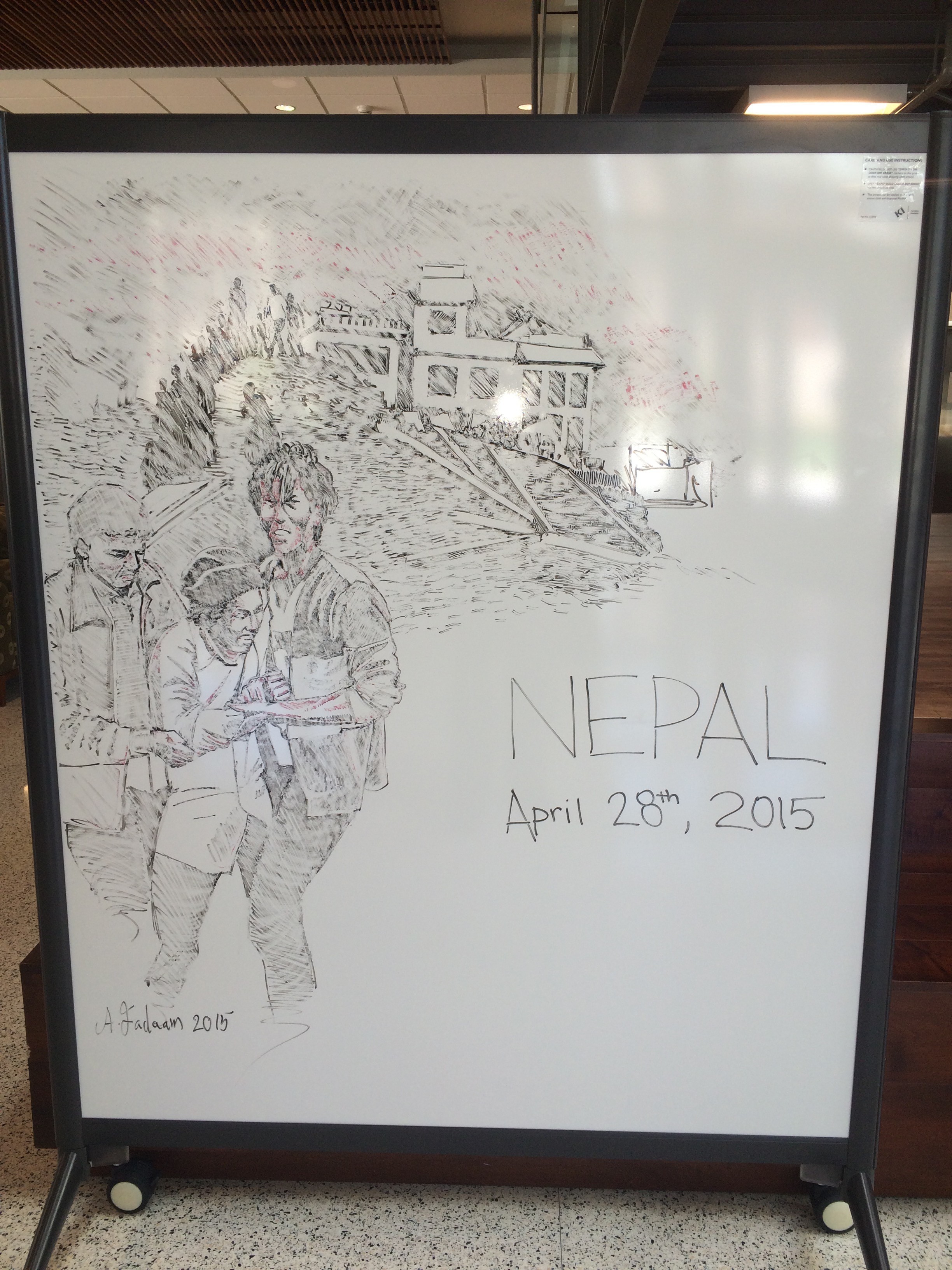
Regarding Nepal and Balitmore

A Note from the Director:

First, Nepal.

In response to the humanitarian crisis in Nepal, *yes* we should all care and *yes* we should all act in a mindful and compassionate manner in reaction to this crisis.

If you have the impulse to donate money please do so only after you are certain that the organization to which you divert your funds is ready to receive and make effective use of these funds. My personal ‘go-to’ is MSF -Doctors Without Borders- but there are other very effective organizations.

Just as we all need to practice caveat emptor (buyer beware) we need to be equally vigilant in practicing caveat donator (giver beware).

That said, I am reminded of how Paul Farmer described the 2010 earthquake in Haiti as “acute on chronic.” Kathmandu is not Port-au-Prince, but there are many parallels. I argue that as Pericleans, chronic poverty and marginalization of the poor should be our constant, baseline focus. Our giving -best done in the context of partnerships- should be thoughtful, intelligent, well researched and proactive rather than emotional, media driven and reactive.


Just this (so far) about Baltimore

“Until the lion learns to speak tales of hunting will always favor the hunter.” (Ewe-mina/African proverb).  

My reaction to the recent events in Baltimore is much the same as with Ferguson and Staten Island.  I am saddened that the gap between what is and what ought to be regarding race relations in the United States is so wide and appears not to be narrowing.  As a sociologist I have a sense of the myriad underlying complexities, and I know that the media can do no justice to these, offering only one dimensional views that tend to reinforce rather than tear down stereotypes.  

As Pericleans we have a responsibility to lead informed discussions and help raise the level of discourse in our classes and indeed al over campus and beyond.  


Class of ’17, April 28 Update

We are ecstatic at the progress our class has made in this past year.  Yes, we may have had a period where things were not getting done, but we are back and better than ever!  This past class, we had Dr. Moore speak to about Ecology Action and all things biointensive.   He has been farming and working with Ecology Action for a long time and is also the Vice President of the Ecology Action Board.  He was able to give us reasons on why biointensive is good: designed to develop organic matter, for diet based on water efficiency, for better water infiltration using deep soil preparation (x4 water stored in ground), for multicropping.

The fact that Namibia gets about 25+ inches of rain annually was brought up, but we have options.  We can educate, and find people to take on the project in Namibia.  There are many roles that go into the project, so even if some of us can’t be trained as an educator there will still be things to do.

After, we took a tentative vote, and it was vastly shown throughout our class that this would be our focus in Namibia. What do we do now as a class? We will work to make the end of this semester a fun but productive discussion on how we go about the next two years and beyond!!!

Peace, Love, Periclean

Maria & Devon

Class of ’17 update April 21

Congratulations again to the new class of Periclean Scholars that was inducted last Thursday! Our class is really excited to meet everyone and see what they accomplish in the next few years. This week, we continued our conversation about potential partnerships as we heard from Dr. Moore about Biointensive, a sustainable method of farming. Because this method functions on a small budget and needs minimal land, it will work well in Namibia. It involves deep soil preparation, composting, intensive planting, companion planting and has a high calorie yield. As a class, we are leaning towards sustainable farming (using the Biointensive method) as a project. Dr. Moore is a great resource, and we will really benefit from his wisdom in this area. At this point, we need to continue focusing on research and finding a partner in Namibia.

We concluded class by setting goals for next week, which include meeting with our accountability partners and our mentees. Several members of our class are also attending a presentation by Danielle Nierenberg, Food Tank President and Co-founder in honor of Earth Day. This coincides with our project idea due to her focus on sustainability!

Peace Love Periclean

Shay & Courtney