This past week, the Periclean Class of 2016 has been making strides towards having a very productive start to our senior year. We have each decided our individual SMART goals, which include what literature we will read, what types of writing we will do, how we will connect with our partners, and how we will contribute to the pan-Periclean community. Similarly, each committee in our class has met, discussed the group goals for the semester as well, so we’re organized and ready for the next few months of hard work.
Currently we are deciding for which large project of Hope for Honduran Children we will choose to fundraise, and how to raise that money. We are also solidifying what our other partnerships will look like this semester, or how exactly we will be involved. For example, the committee for our local partnership, Latinoamericanos Unidos Para la Esperanza, is working with the organization to create an ESL curriculum to make the program more sustainable. Also, the People, Planet, Profit committee is looking for vendors and speakers for the February 20th business summit.
We’re ready for this new year of progress, community, and learning!
Over the past two weeks, the class has been reading Letters Left Unsent by author J. In preparation for class we answered a list of questions to begin thinking about the information in the book, and how it applies to us as individuals, and more importantly to the Periclean Scholars program. One action point that came out of this discussion was to learn more about non-western aid, because all of the books we’ve read and projects we’ve studied have come from western-minded people. The most important portion of the talk was discussing how we could use the advice and knowledge that J. offers on international aid to be smart about making decisions for our future goals.
This week we also decided which committees would remain in place this semester, and what the best way is to keep abreast of all of the long term and more immediate work for the class. We finalized the decision to have three umbrella committees: the money committee, events committee, and steering committee. The money committee will include both the former finance and fundraising committees. The events committee will split up into task forces for specific events when the need arises. The steering committee remains the same, with two representatives of the class acting as liaisons between the pan-Periclean steering committee and the class. This new structure, which we decided was best for this semester, will help us more efficiently use our time, and maximize class time.
An important part of the new syllabus revisions is the idea of accountability partners or groups within the class. This will give us more ownership over our work and help us hold each other to high standards academically and otherwise in our work. An example of how we plan to implement this is having discussion groups for books and other academic work to share perspectives readings and documentaries.
Our last big discussion for the week also related to the syllabus and how we plan to structure it this semester. It was decided that we would keep a similar syllabus to the past semester, updating the goals and objectives, expectations of the students, those not enrolled in the class, and those studying abroad. Overall it was a very productive week, and we made some important decisions on how we are going to organize ourselves this semester.
Workshop on Gang culture and prevention with Allen Blue:
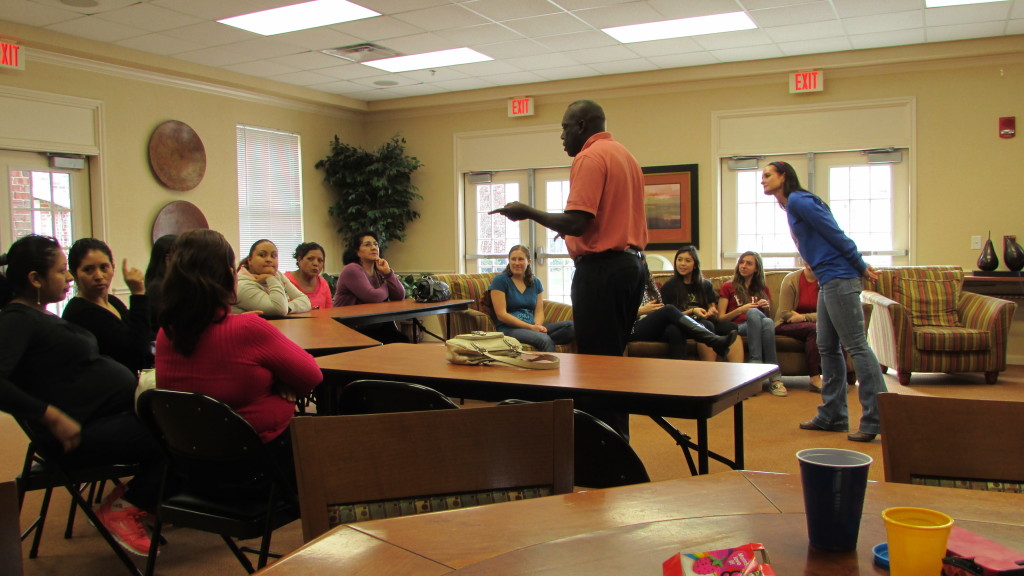
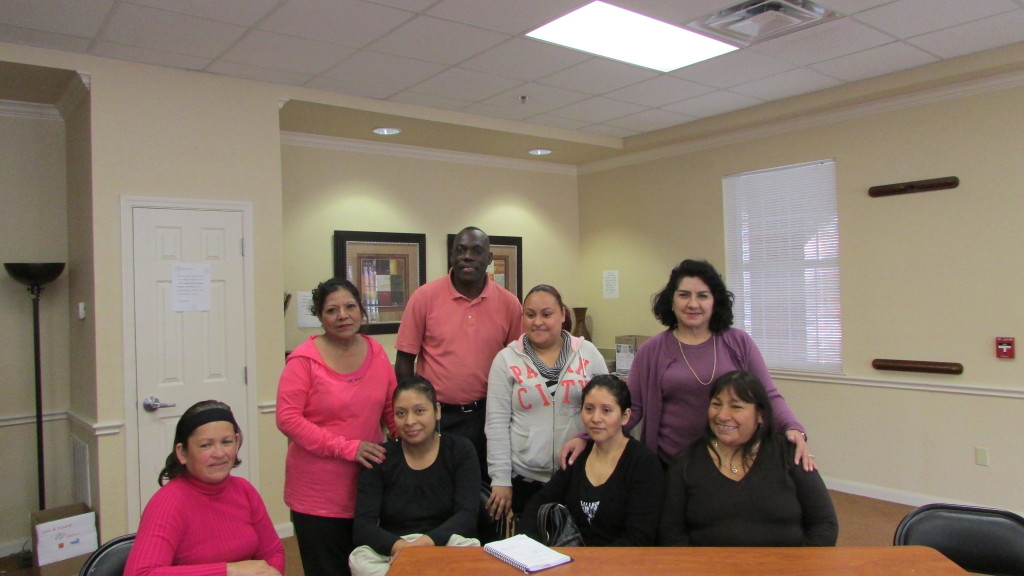
Friday afternoon, Hogares Sanos had the pleasure of having Allen Blue to come and speak on gang-violence prevention. This was a great chance for us to spend quality time with the woman of Hogares Sanos. The meeting was very successful, and Allen Blue was a terrific speaker (and Professor Post was a great interpreter!) with tons of energy that kept the crowd entertained and laughing. We hosted seven mothers at the event, and one child. The mothers listened while a few of us entertained the small boy with play dough and coloring books.
An important topic that was brought up during the discussion was about taking measures to prevent gang-violence starting early on in childhood. Mr. Blue made a great point by saying that children need to be able to make the right decisions, and that means preparing them early on. Parents have their children’s undivided attention from ages 1-6, and they need to be careful about forming a good bond, and making good impressions on them. Children are very impressionable during this stage, and once children hit about 10 or 12 the become more preoccupied with their friends. Mr. Blue went on to say how its important to pay attention to your child’s behavior and what they wear, giving examples of different symbolic clothing and fashion that could be signs of gang influence.
Afterward the attending members of Hogares Sanos and Allen Blue had the chance to share conversation over a healthy snack of fruit with cheese and crackers.
Now we plan to compile a list of instructions and contacts for the women and their families, in case they or their children ever need to talk to someone or need help avoiding this gang culture.
Last week has been filled with great progress! We have continued to work through out feasibility projects, analyzing and deciding which partners and what subject matter we want to pursue! These presentations looked at feasibility in terms of our timeline in Periclean Scholars, the accessibility of the various projects and contacts, what we would do in the partnership, and the projects’ sustainability.
The first presentations discussed partnering with our contact Cargill, a food packing company that Dr. Arcaro and Professor Post visited over the summer in San Pedro Sula, and ¿Vos qué harás por Honduras?, which is a grassroots social movement that is attempting to empower and inspire Hondurans to better their communities through taking positive action. We then looked into working with various organizations that deal with water issues, food and sustainable farming projects, and numerous avenues to working with education issues. Both Cargill and ¿Vos qué harás por Honduras? are viable options for our class to discuss in more depth, and the other three possible areas of focus, water, food, and education all have presented numerous possibilities for partners and projects to be pursued and researched further.
The next set of presentations focused on social justices within Honduras, including access to health care, child labor and worker’s rights, and some interesting microfinance options that have our class thinking about how we can potentially use the money we already have in our Periclean bank account. A for-profit business called Tegu, which sells magnetic block toys to kids and provides jobs for Honduran workers in Tegucigalpa, could provide us with opportunities to work on reforestation issues, education, or worker’s rights as well. Tegu’s model was a fitting model with which to end our feasibility studies with, because it is a sustainable model, which creates jobs for Hondurans, puts money back into the Honduran environment, and also donates money to a school that gets children in Tegucigalpa out of working in a trash dump. This school has fresh water, meals provided, computer labs, and a stable campus—it encompasses most of the issues our class has thus far been interested in.
Going forward, our class has a series of difficult decisions to make. Our feasibility studies helped us learn more about the issues and did spawn numerous project ideas, but it’s one thing to brainstorm and it’s another thing to agree on something. At the very least, we’ve learned a lot when looking at models like Tegu, Hope for Honduran Children, Cargill, and more, in terms of creating a sustainable project that we hope to model.
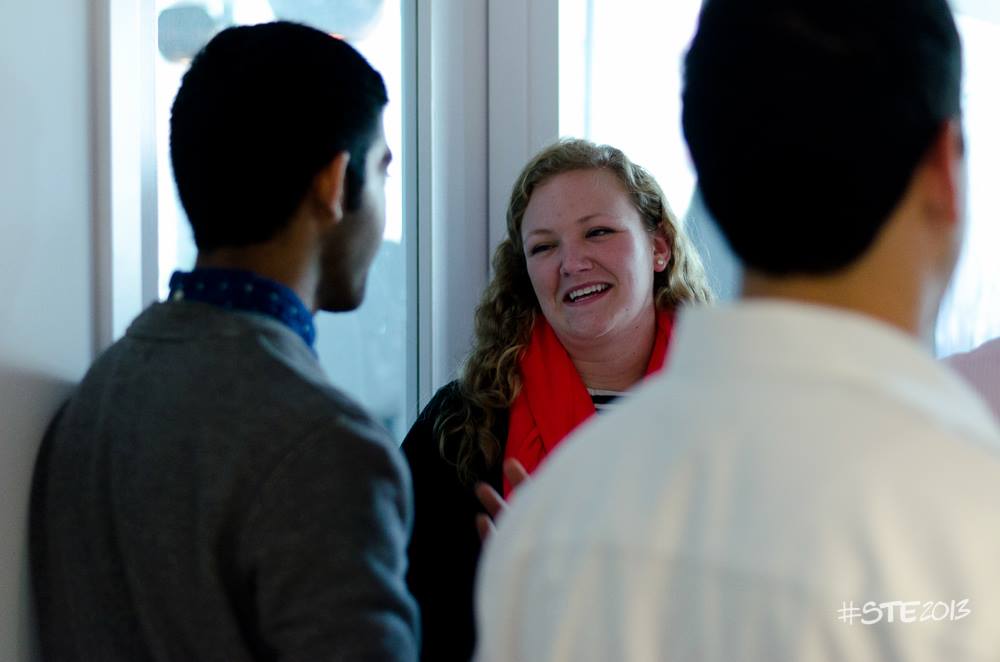
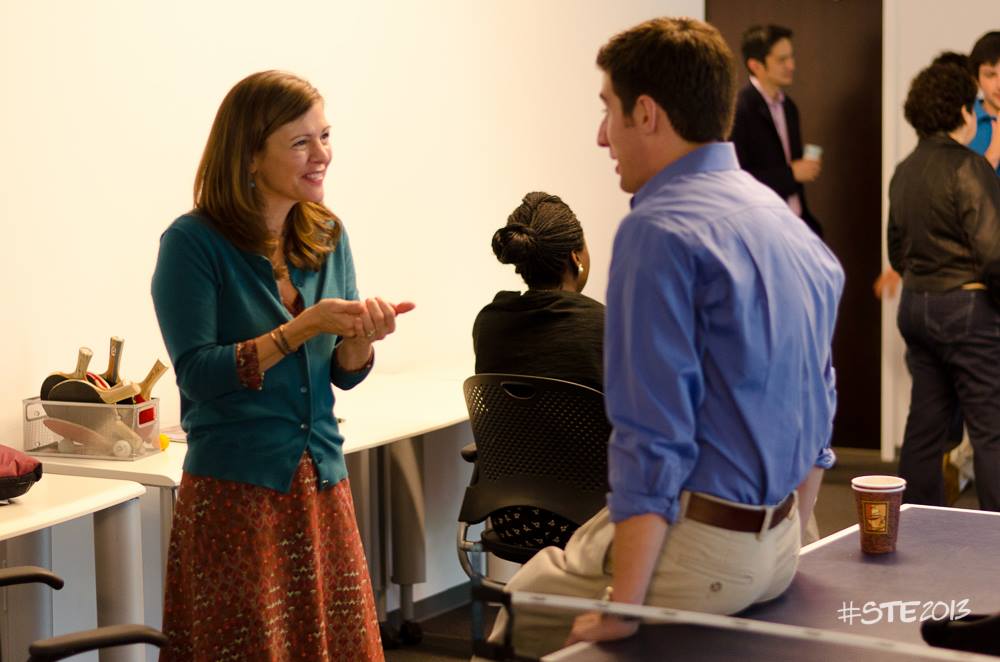
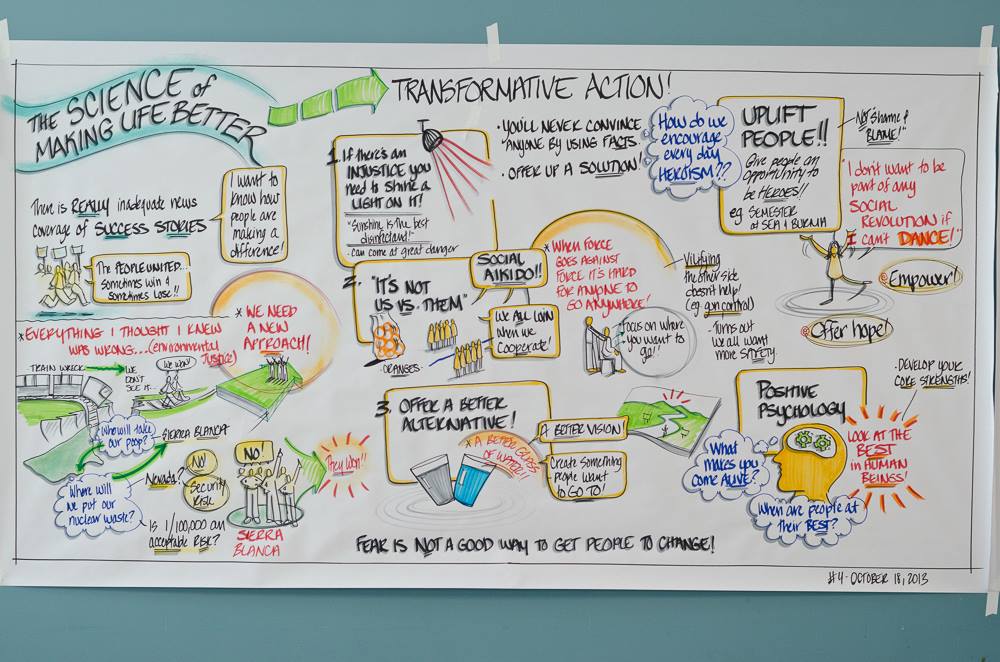
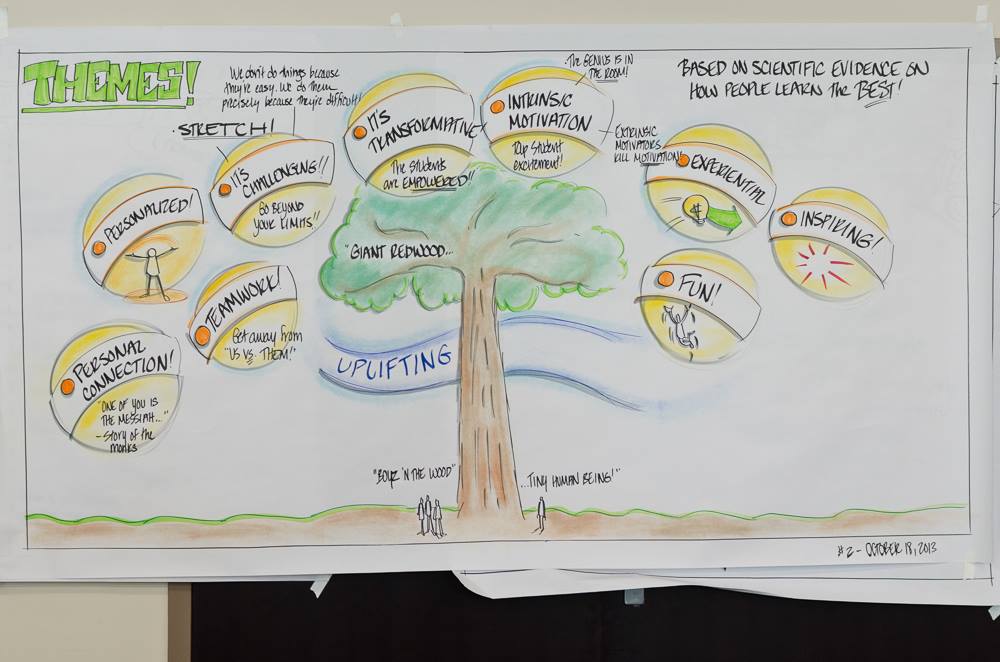
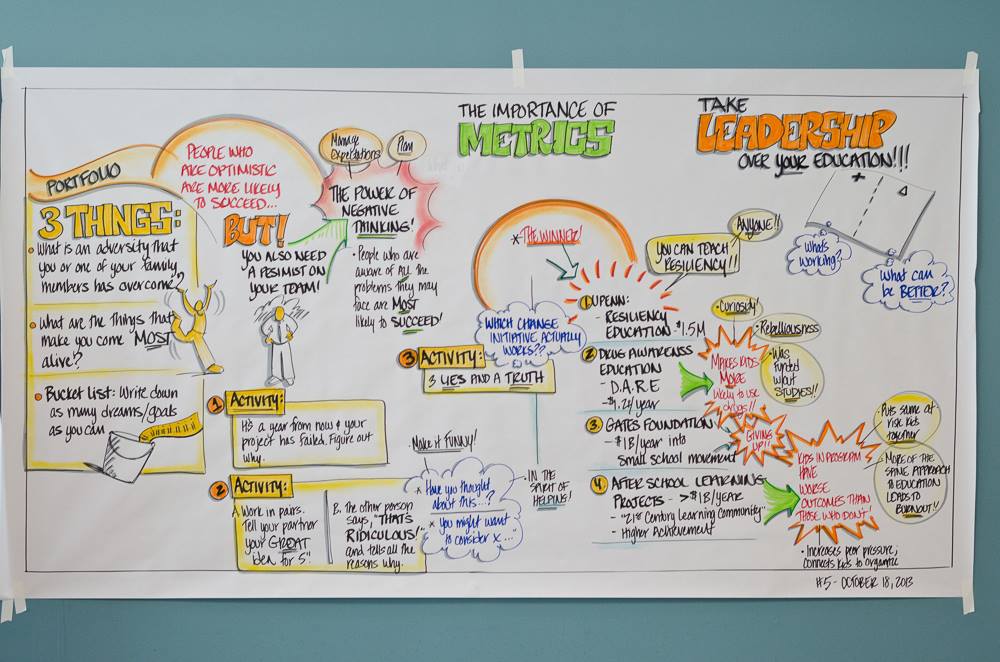
This weekend, three members of the Periclean Class of 2016 had the opportunity to attend the Summit for Transformative Action in Raleigh, NC. We spent three days in eye-opening, life-changing workshops, sessions, and lectures, discussing best practices for social entrepreneurship, civic engagement, and collaborative group work. We learned about effective methods for facilitating group collaboration and participated in activities to develop our own personal leadership and confidence. Saturday evening several Pericleans joined us for a networking party to meet some of our new colleagues and enjoy trapeze performances and a participant talent show at Cirque De Vol, also in Raleigh. This was truly a life-changing summit and we are so thankful for having had the opportunity to participate and meet amazing people. We’ve attempted to capture some of the best take-aways from the weekend below–we hope you enjoy!
Take Away Tools
Throughout the weekend, we participated in a variety of icebreakers, team builders, and other activities geared toward improving creativity and group culture. We’ve summarized a few tools below that we’re planning to use with our class and that we hope that you will find useful in your group work in Periclean–and beyond!
-Failure activity
Instructions: Take an hour, walk around outside and see how many times your group can fail! Ask ridiculous questions of complete strangers (without endangering yourself or harassing anyone, of course) and reflect on what you accomplish and what you fail!
Goal: Realize that failure is not necessarily a bad thing. It gives you knowledge and experience, and allows your next attempt to be better.
-Deep connections
Instructions: Find a partner (someone you don’t know well) and ask each other questions like “What is your favorite memory?” and “If you could invite anyone in the world to dinner, who would it be?”
Goal: Create a deeper relationship, which allows for more constructive conversations in the group as well as individually. Once having this conversation with just one person, a person is more likely to have similar conversations with other people.
-Speed dating networking
Instructions: Spend five minutes with someone and tell them your biggest dreams for yourself or your project.
Goal: Get to know others on a deeper level and be inspired by the great ideas and thoughts of the people you speak with.
-Improv exercises
Instructions: Each exercise is different and can be facilitated easily. One example is: Find a partner (someone you don’t know well) and assign each person to be either person A or person B. The first round of the exercise, Person A says either “You are a ____.” or “You have a ______.” Then person B must speak for around 3 minutes creating a story to explain the statement that person A gave person B. Afterwards, the roles switch and each pair does the exercise again, so that each person gets to experience both sides of the exercise.
Goal: To broaden the comfort zones of the people in the group and teach that in group discussions nothing is wrong- Don’t say “no”, say “yes, and…”
-Negative & positive thinking
Both negative thinking and positive thinking are essential tools when planning a project or finding partners. Positive thinking is important to decision making because everyone needs to feel comfortable in the group environment. There needs to be an engaged atmosphere where everyone is comfortable sharing their thoughts and all ideas are accepted. Negative thinking comes into this process once the idea had been shared and the group points out what obstacles will be faced with that idea. Although the word “negative” may have a specific connotation that invokes the thought of something bad, negative thinking does not mean that the idea is disregarded, it simply means every possible problem with the idea is evaluated.
Connections
Perhaps the most valuable part of the conference was having the opportunity to network with an incredible collection of people–from students at other universities to professional social entrepreneurs and program developers. We made a number of contacts with students, entrepreneurs, and professionals who have worked in Honduras in agriculture, fair trade cooperatives, and in a variety of other spheres. We also had the opportunity to connect with Duke University’s Director of Latin American Studies–an absolute wealth of information about the entire region– and an Ugandan social entrepreneur who gave us valuable advice about coping with corrupt governments. Other entrepreneurs provided us with ideas for improving our civic engagement and exciting opportunities for collaboration in the future. We were also excited to bump into a few friendly faces, including the director of Haiti Hub, a partner of the Periclean Class of 2015, and Jennifer DeSimone, a member of the Periclean Class of 2007–the first class to work with Honduras! Jennifer collaborated with Dr. Arcaro to provide us with this incredible opportunity–we are so immeasurably grateful to her! We look forward to nurturing our connection with Jennifer and the many other wonderful individuals we had the good fortune to meet this weekend.
Future Plans
We have started contemplating how we want to use the information we have been given and have started making plans as to how we will implement it in our group and in possible projects. We want to maintain and develop the relationships that we have started to build with others who have similar goals, so that we can learn from their mistakes and successes. We especially want to foster the relationships that we made with people who have connections to Honduras, who can help us find partners and give us insight into what strategies may work and others that have been tested and failed. They can add more perspectives to our projects and will no doubt be invaluable resources as we move into a certain topic or region of the country.
Another idea that we have been forming is to create a civic engagement or social entrepreneurship consortium in the triad area that will bring together these types of people to connect, network, and share ideas and experiences. Directly related to our Periclean group, we are working on finding a class period, and possibly a Pan-periclean event, that we can facilitate and use the themes and exercises from the workshops to illustrate the concepts we discussed at the summit.
-Erin, Nick, and Caley
Speed Dating NetworkingSpeed Dating NetworkingTRAPEZE!Transformative ActionEffective TeachingMetrics

 Follow