Hydra Theory 101

Significantly updated 4-26-21


“My intent has been, is, and will continue to be, that those who read my works shall think and meditate upon fundamental problems, and has never been to hand them completed thoughts. I have always sought to agitate and, even better, to stimulate, rather than to instruct.

Neither do I sell bread, nor is it bread, but yeast or ferment.”
Miguel de Unamuno

More thoughts on the Hydra: Hydra Theory 101

Preface
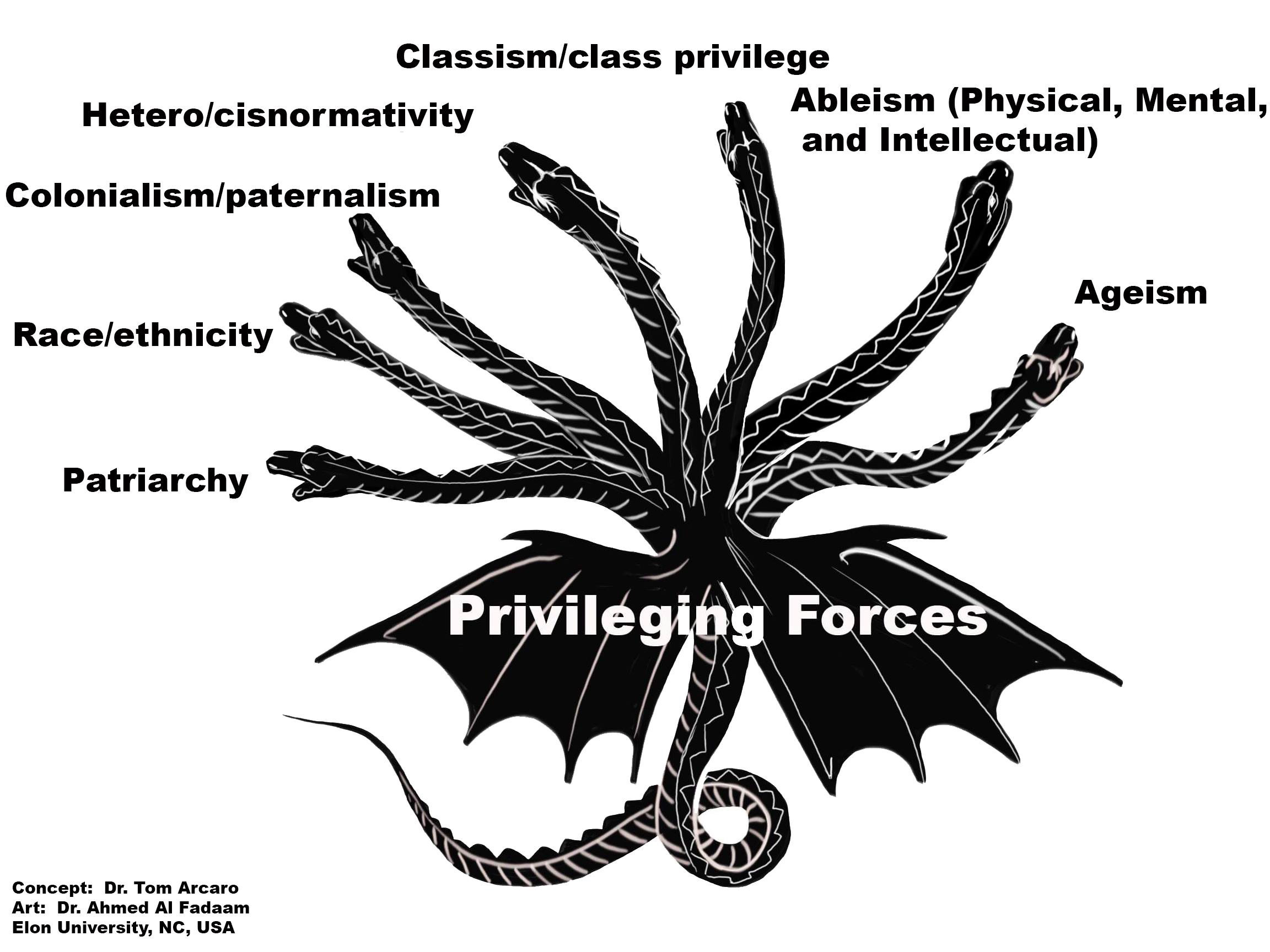
Humanitarians in all contexts need to be mindful of how privileging forces come in to play in virtually every interaction, person to person or organization to organization; within one’s organization or between the home organization and the affected populations. Awareness of cultural context is paramount, and understanding the Hydra is a useful tool. Standard training for any humanitarian includes defining and identifying examples of ethnocentrism. ‘Ethno’ means group and thus ethnocentrism is seeing everything from the value system and perspective of one’s own group or culture. Just as you will be hard pressed to be an effective humanitarian being ethnocentric, the same goes for being myopically centered in other ways. Think now of the heads of the Hydra.

Probing deeper with more questions
The Hydra analogy can be useful and discussions should always be grounded using practical examples that resonate on both the personal and organizational level. That said, I think there is a place for ‘Hydra Theory 101. Here are some additional thoughts and questions related to privileging forces, each a good point of departure for a deeper understanding. To be clear, all of the short explications I add to each is barely scratching the surface of what could be more deeply explored. [See here for all Hydra related posts.]

Racism the most significant privileging force?
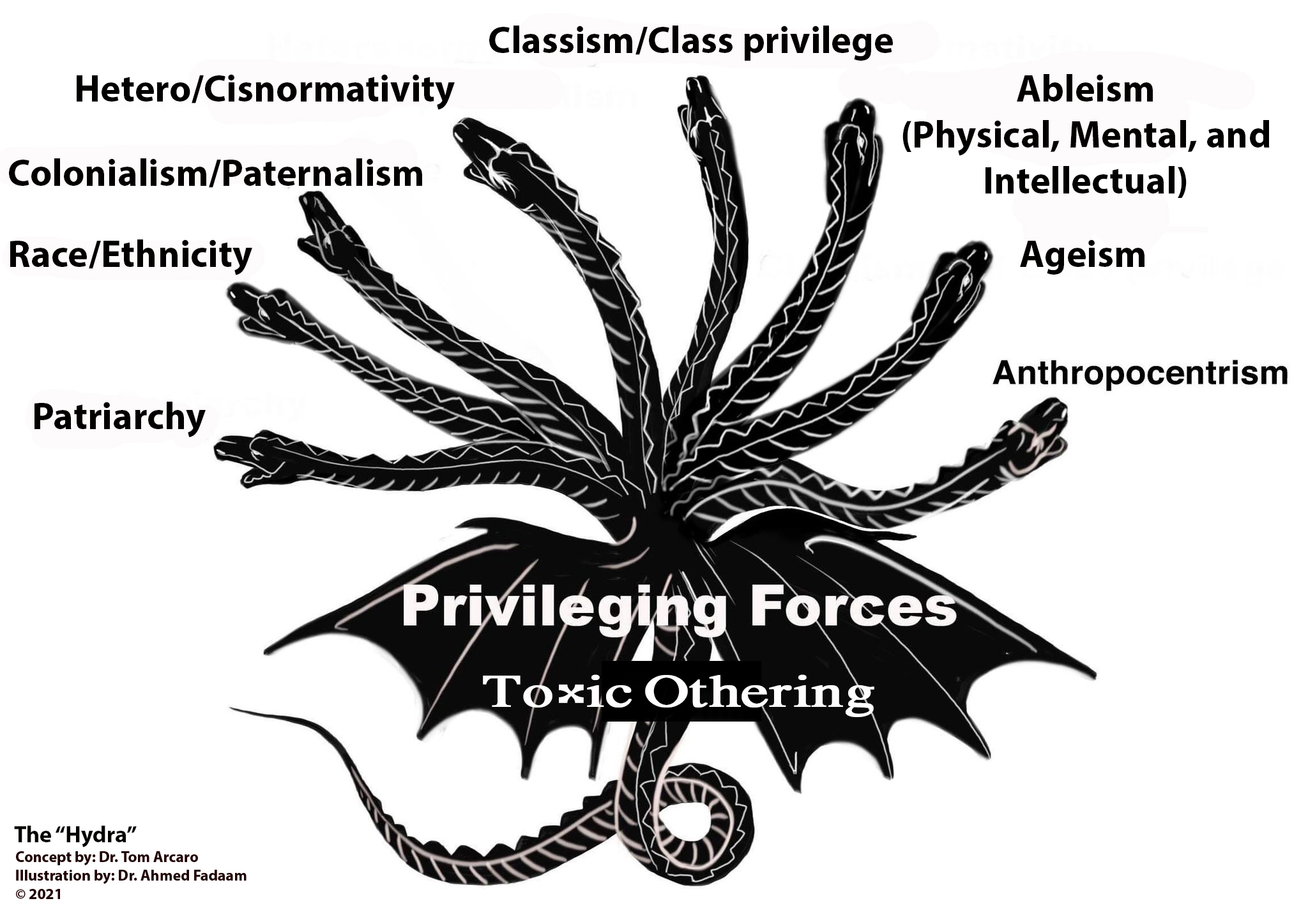
Granted the basic fact of the complex and powerful intersectionality of all eight forces, each is unique.  As they are depicted in the image of the Hydra, each head is the same size, inferring equivalent danger and harm. But can that be true? Certainly in this time of #BLM it be argued that racism and the xenophobia it gives rise to is far more powerful than most of the other privileging forces? But what about the other forces? Which is worse, sexism of racism, and by what measures? Can ableism be put next to classism in terms of harm?

What factors are involved?
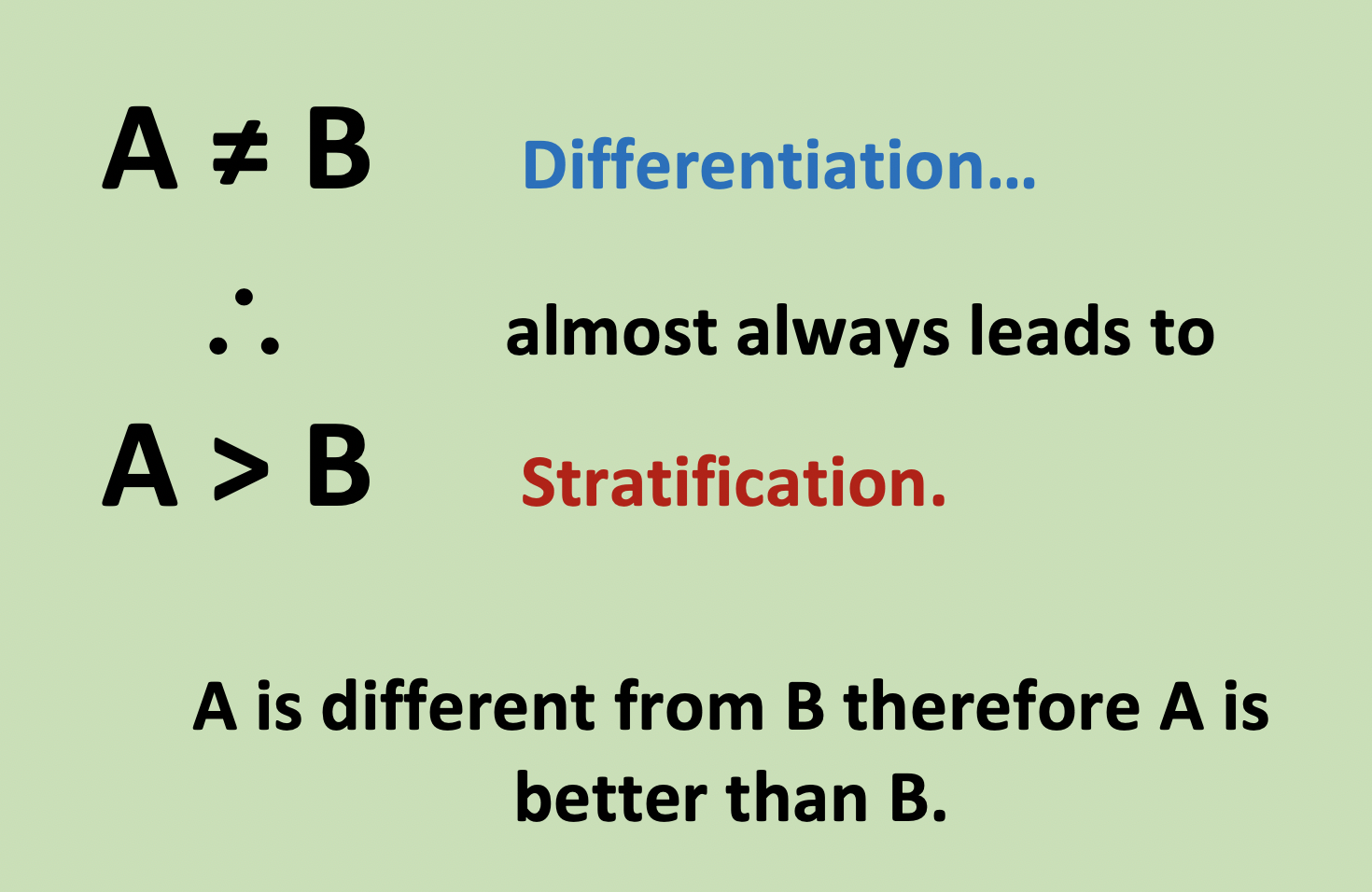
Elsewhere I have argued that differentiation almost always deteriorates into stratification. Within the framework of sociocultural evolution it is not until recently, that is about 6000 years ago, that humans began to organize them selves into non-nomadic states. Prior to that we lived in much smaller groups mostly characterized by and egalitarian way of life. With the rise of agriculture and the domestication of animals and plant materials came this new form of social organization. It is in this context that all of the heads of the Hydra became much more virulent, and the transition from differentiation to stratification happened time after time. At the macro level a long view of world history indicates that many forms of differentiation resisted any such transition for tens of thousands of years, with perhaps hetero/cisnormatity and anthropocentrism being two examples. Anthropologists describe many cultures which functioned very well rejecting the concept of gender binary and which lived with an ethos that humans were are part of nature, and needed to respect other life on the planet.

On a more micro level, during face to face interaction for example, some differences in privileging statuses can remain benign for long periods only to degenerate into toxic othering. With rare exceptions, people have some privileged statues in most social interactions relative to the others present. Indeed, one can on both sides of the othering dynamic. The array and complexity of relative privileging statues increases exponentially as the number of participants increases. Every interaction has the possibility of being a microaggression1, intended or, more frequently, unintended. How does the flow of interactions become impacted by harmful comments (verbal or non-verbal)?

On both the macro and micro levels, under what circumstances are these processes accelerated? Remain inhibited?  Avoided all together?
Which are easier to grasp?
Are some of the privileging forces more obvious to the typical observer and hence easier to grasp than others? Do most people even accept the premise of anthropocentrism?I think it is good to ask if the groups of individuals who are likely to be marginalized have their voices heard and under what conditions. Do most people even accept the premise of anthropocentrism, for example?

Religions normalizing and institutionalizing privileging?
Are some privileging forces more deeply woven into our major religions than others, for example sexism and heteronormativity? Certainly in their most fundamentalist forms all three Abrahamic religions appear to support racism, sexism, and heteronormativity at least as interpreted by the Taliban in Afghanistan and evangelicals in the US. Both seem quite certain that women and non-heteronormative people need to be treated as inferiors. That said, the Abrahamic religions originated based on ideologies of love and compassion. How is it that the baser emotions of hatred and fear and come to dominate the fringes in our modern cultures?

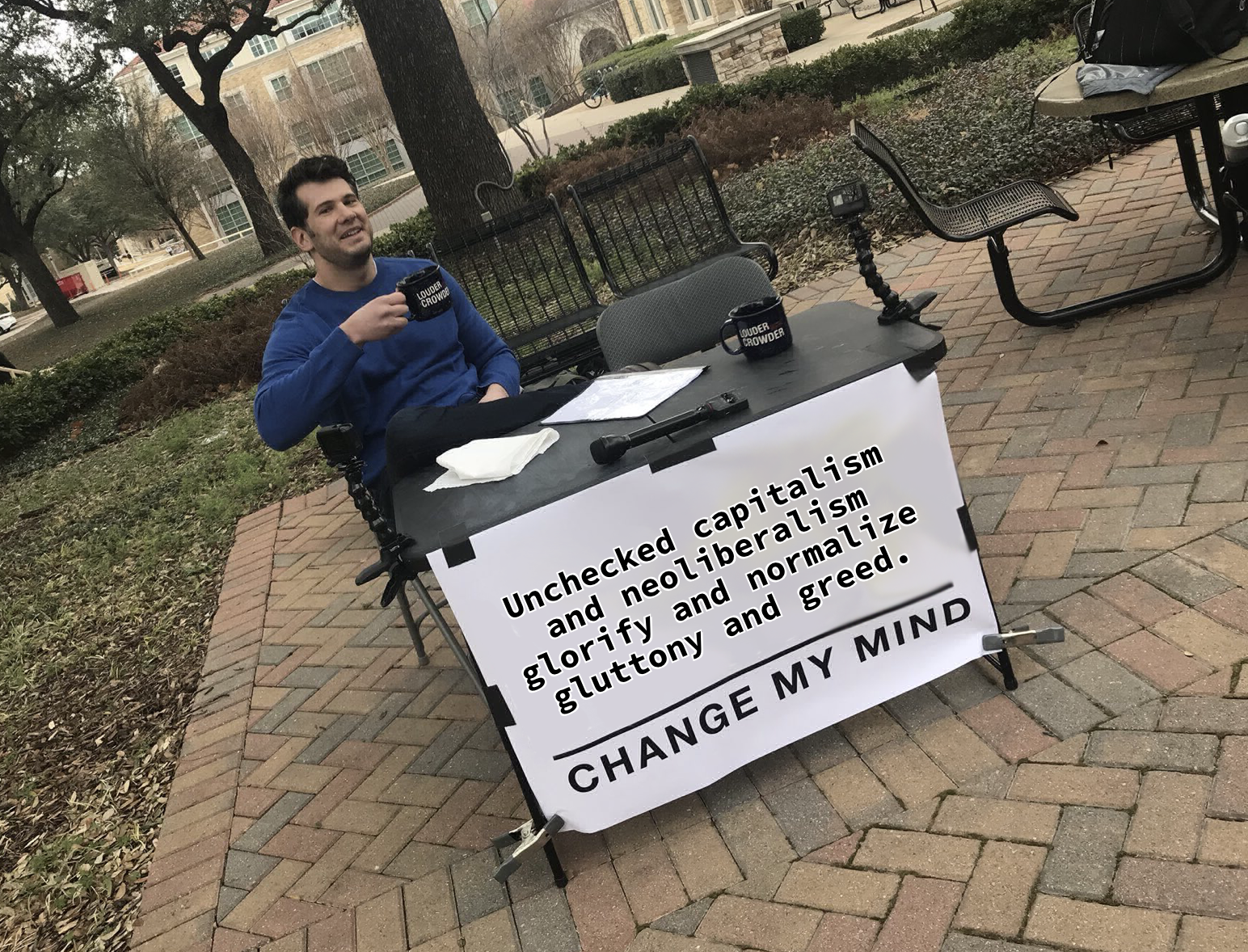
Unchecked capitalism and neoliberalism fuel the Hydra
And now we have to address the elephant in the room and ask the question, ‘Are some of the forces exasperated by and/or understood more easily relative to the forces of capitalism and neoliberalism than others?’ My cards on the table, I do believe that unchecked capitalism and neoliberalism have glorified and normalized gluttony and greed. We live in an absurd world where one person has more money than anyone could use in hundreds of lifetimes. Neoliberalism is in ideology based on the assumption that a free market is efficient in proportion to levels of government regulation: less control, more freedom and efficiency. A free market, unhindered by governments or governmental regulation, will be able to organically identify and then find ways to monetize the satisfaction of all human needs. Capitalism is the economic system which drives the neoliberal agenda. Neoliberalism may indeed be the idea that swallowed the world.

I have written in some detail that all of the heads of the Hydra have in common the act of ‘othering’, and that social differentiation -any differences humans may have- almost inevitably degenerates into stratification where one group justifies dominating the other.  All of the ‘isms’ represented by the Hydra are made possible by othering and the subsequent justification of the domination of one group by another.
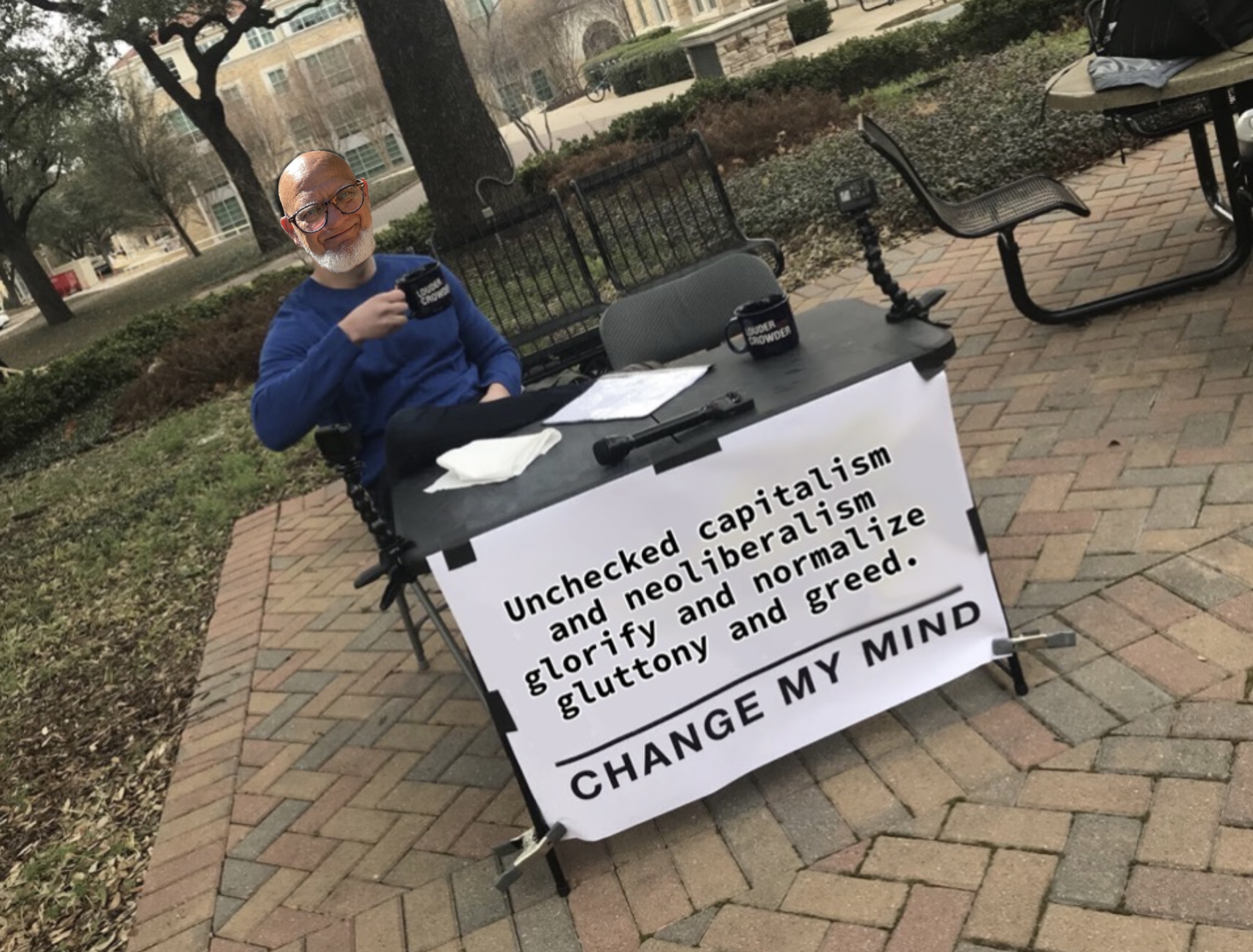
If othering is the heart of the Hydra then perhaps capitalism and neoliberalism are the food, the fuel.

Let’s go through each of the eight heads of the Hydra and imagine how capitalism and neoliberalism make them more toxic, more dangerous.

  • Patriarchy: Does capitalism support the patriarchy? Can feminism and capitalism coexist? How do patriarchy and capitalism jointly reinforce the oppression of women? These are just a few of the many questions that must be asked, and there are scores of scholars, past and present, doing just that, most answering with a strong affirmation that capitalism contributes to sexism.
  • Racism: Some argue that racism and capitalism are conjoined twins.  The North Atlantic slave trade is just one example; there are countless others. This is worth extensive discussion and is indeed the premise of countless books and articles.
  • Colonialism/Paternalism: A recent article in The Guardian “The Invention of Whiteness: the long history of a dangerous idea” does a very good job sketching out how ‘whiteness’ was invented and then used to justify racism and its place in the rise of the colonial powers. William Easterly’s The Tyranny of Experts (see chapter 4) is an earlier  description of same. The research on this topic is copious, compelling, and a must read for anyone wanted to ‘decolonize’ the humanitarian sector.
  • Hetero/cisnormativity: The argument that Queer Oppression is Etched in the Heart of Capitalism is not uncontroversial, and there is a rich (albeit somewhat recent) range of discussion on this topic.
  • Classism/class privilege: Well, this one speaks for itself. Charles Darwin and Karl Marx had much in common but nothing more significant than the fact that they both articulated fundamental algorithms. Biologist Theodosius Dobzhansky argued that “Nothing in Biology Makes Sense Except in the Light of Evolution.” In that same vein and following the lead of the economic determinism articulated by Marx, I will argue that nothing in society makes sense except in the light of capitalism. This of course includes all of the damage done by the glorification and normalization of gluttony and greed.
  • Ableism (physical, mental, and intellectual): As I write this there are waves of critique aimed at the United States for hoarding of vaccines. Disasters -in this case a global pandemic- always hit those on the margins the hardest, especially physical or health related events. That Covid has been horrific for those who are disabled is not in question. Capitalism is based on a myopic quest to maximize profits, and hence have both an economic and ideological interest to exclude workers based on perceived disability.
  • Ageism: Linked to ableism, ageism is woven into the very fabric of modern capitalism where workforces value youth. Capitalism profits from making us fear aging.
  • Anthropocentrism: We are on the brink of environmental collapse. The climate crisis is real and is causing increasingly frequent extreme weather events which generate the need for a humanitarian response. The recent Zoom meeting of global leaders is likely to yield more talk than action largely because the mantra of capitalism is to protect jobs at any cost. Our mentality of exploitation is driven by our quest for ‘freedom’ from oppressive government interference, the very core philosophy of liberalism. Destruction of the planet will proceed apace if there’s a buck to be made. Convince me otherwise.

Each of the above discussions is worth having in more detail, of course, but I think my point has been made: the heads of the Hydra are all fueled by capitalism and neoliberal ideas.

Additional questions to consider:

  • With respect to intersectionality, are some forces more salient than others, i.e., have more multiplicative properties?
  • Are some of these forces more culturally universal than others? Indeed, as our world becomes more globalized and homogenized by transnational trade, communication, and media consumption I will argue that toxic privileging forces exist in varying degrees in all world cultures.
  • People can have privileged statuses, of course, but so can organizations. Does an INGO based in the Global North have more sway in, for example, a cluster meeting?
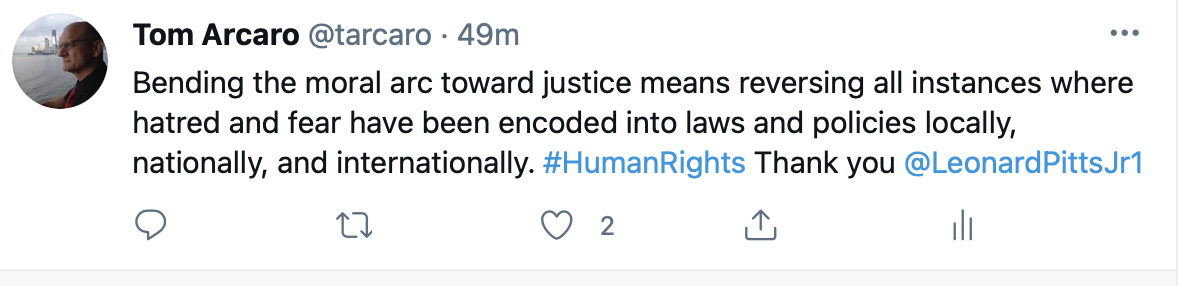
  • By taming these individual heads I mean ‘bending the moral arc’ by changing behavioral norms, instituting policies, passing and enforcing local, national, and international laws, and other proactive measures. Which heads are easiest to tame and which are the hardest? Related, do (for example) passing laws related to one head make change relative to the other heads easier? Doing anti-sexism laws impact laws related to racism or vice versa, for example?

Hydra Theory 101
I started this post with a quote from my favorite philosopher, Miguel de Unamuno. He said, “Neither do I sell bread, nor is it bread, but yeast or ferment.” And that is exactly what I am offering here, an invitation to press to its edges this Hydra metaphor. From these abstract ideas and challenges I suggest we now turn to something more straightforward.

A group exercise using the Hydra
Below is a group exercise which may help individuals deepen understanding of the Hydra’s privileging forces. This exercise can be used with everyone from young undergraduates to seasoned humanitarians. A facilitator will need to frame the exercise and act as a guide through the questions and subsequent discussion, taking notes as examples are given and points are made.

Noting your privilege: an exercise
Though not a high percentage of our overall population, globally there are many people who would be on the marginalized side of all seven (now eight counting anthropocentrism) heads of the Hydra. One can imagine a for example, an elderly, poor, blind, non-white, lesbian from the majority world (aka Global South). That point granted, the vast majority of people across the world ‘enjoy’ one or more privileged statues.

For this exercise identity all of your privileges. One by one describe a situation where you gained some benefit or advantage from each. Now consider the following questions:

  • Assuming you enjoy more than one privileged status, are there situations where you were not sure which
    privilege have gave you an advantage in a particular situation?
  • Were there situations when you realized in the moment that you were enjoying this privilege?
    Were there situations when you realized only later after reflection that you had enjoyed this privilege?
  • Do you think others in the situation who shared your privilege were aware of the fact that you were gaining advantage based on your privilege?  How do you think they felt?
  • Do you think others in the situation who did not share your privilege were aware of the fact that you were gaining advantage based on your privilege?  How do you think they felt?
  • In each situation, how did you feel about gaining advantages based on your privilege?
  • As you move through your day how common is it for you to go from a situation where you have privilege to one where you are marginalized?
  • To what degree were you aware that you could use your position of privilege to be an ally to others? What does it mean to be an ally?  
  • Describe a situation where you simultaneously were both privileged and marginalized.
  • What norm changes, new or revised policies laws, and/or additional enforcement of any existing or new policies and laws can you suggest that might defuse awkward, unfair, and/or marginalizing privileging asymmetries?

The facilitator can bring the discussion to a close by listing all of the major points made, highlighting particularly useful and relevant examples, and by underscoring the need to examine useful, practical and effective ways to encourage interactional patterns which minimizes the impact of these privileging forces and maximizes the chance for structural changes which mitigate the perpetuation of the negative impacts of these forces.

Identifying examples of taming the Hydra
Looking at this grid, participants are asked to contribute examples of actions which have helped ‘tame the Hydra’ and bend the moral arc toward justice. Examples can be from history or recent activities, and the overall goal of this exercise is to create a database of examples which may inspire others to act.
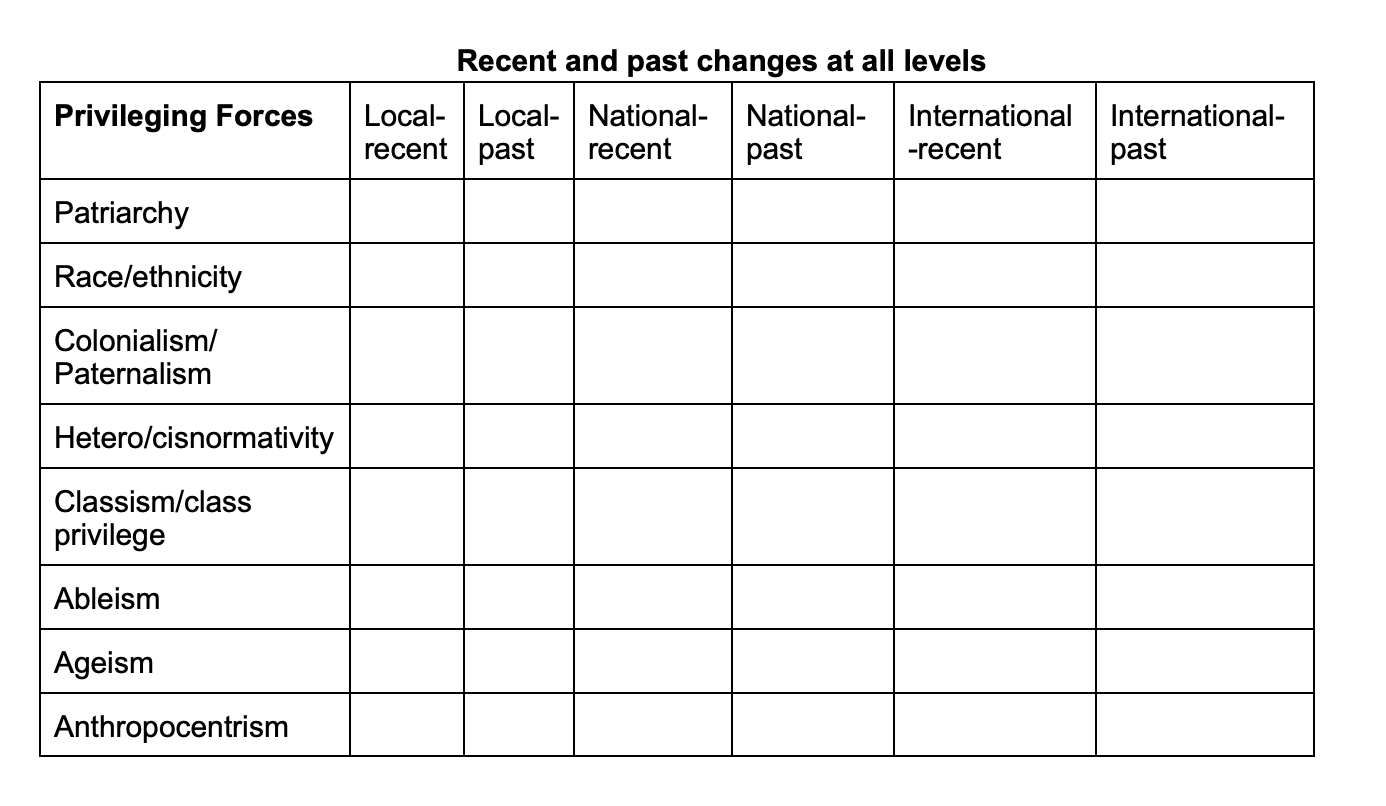
Here are some examples, mostly from the US. 

Patriarchy:  At the national leveling the US, Title IX states that “No person in the United States shall, on the basis of sex, be excluded from participation in, be denied the benefits of, or be subjected to discrimination under any education program or activity receiving Federal financial assistance.” This law had the intended impact, not fully realized at yet of literally ‘evening the playing field’ for female athletes in the US.

Race/ethnicity


1Microaggressions in Everyday Life (2nd edition 2020) by Derald Wing Sue and Lisa Spanierman explore microaggressions in the context of higher education in the US. Their insights are easily transferred to other settings and I think this book might be useful for those in the humanitarian sector.


Tom Arcaro

Tom Arcaro is a professor of sociology at Elon University. He has been researching and studying the humanitarian aid and development ecosystem for nearly two decades and in 2016 published 'Aid Worker Voices'. He recently published his second and third books related to the humanitarians sector with 'Confronting Toxic Othering' published in 2021 and 'Dispatches from the Margins of the Humanitarian Sector' in 2022. A revised second edition of 'Confronting Toxic Othering' is now available from Kendall Hunt Publishers

More Posts - Website

Follow Me:
Twitter

The Hydra just [yet] grew another head: Anthropocentrism

The Hydra just grew [yet] another head: Anthropocentrism

Working on the Hydra concept has been a journey. I have been constantly challenged to expand and explore this image from the very beginning. What I present below is the latest version of the Hydra, and this post continues the discussion started here in a blog post titled “A Code of Ethics for Privileged Anti-Othering Persons: the humanitarian imperative and Hydra revisited.” As a final note I wrote,

“My students have suggested that the Hydra needs another head describing our species’ anthropocentric perspective and the consequent destructive ‘ecocidal’ relationship we have with the environment. We ‘other’ the very natural world that sustains us and this has led us to the brink of a massive climate disaster, which has already exasperated humanitarian crises across the globe, mostly in the majority world. This impact is an example of environmental racism in action, and as such merits our immediate attention. Adding ‘anthropocentrism’ as an additional head to the Hydra may be in order.”

Below I discuss this new head, anthropocentrism, but I also add comment about how unchecked capitalism and neoliberalism fuel the Hydra. If toxic othering is the driving process of all the heads, these two political and economic forces are the fuel.

Climate change is creating more work for humanitarians
The climate crisis facing humanity is real, immanent, and will continue to cause with increasing frequency natural disasters that will necessitate response from the humanitarian sector. According to the Centers for Disease Control (CDC) there are approximately 400 natural disasters each year, many of which are responded to by emergency relief organizations. There is ample data indicating that weather events are becoming more extreme due to climate change, and this means more events like the cyclones that hit Mozambique in 2019 and 2021.

The climate crisis chronically exasperates the perpetual blurring between aid and development work.  This point is made by Seck (2007) in this Human Development Report report “Fighting climate change:Human solidarity in a divided world.” He states,

“…the fact that humanitarian assistance is rooted in a shared belief that there is a moral imperative to assist people in times of stress makes it a highly reactive field. However, as a survey of World Bank task managers indicate, the best way to address the needs of the poor in natural disaster projects is to ensure that prevention and mitigation programmes are developed to guarantee that their homes did not fall down in the first place.”

He goes on further to say,

“…risk reduction has gained prominence and is increasingly seen…as a critical component of sustainable development.”

Anthropomorphism: a new head
The Hydra is driven by the human tendency to ‘other’, and all heads of the Hydra share essentially the same definition (see here for definitions of all previous seven heads). So here’s a critical Hydra theory (CHT) definition:

Anthropomorphism is an ideology of domination and subordination based on the assumption that humans are the apex species on Earth and the use of this assumption to legitimize or rationalize the human centered domination and exploitation of all life, both plant and animal.

For most of our existence on the planet humans have lived as just another species; part of the ecosystem in much the same manner as all other life forms. Beginning about 12,000 years ago we began the process of domesticating animals, first sheep and goats and soon after other species like cattle and horses. Then, about 10,000 years ago, humans began to domesticate grains, pulses, and, later, various tree varieties (e.g., olive). The purposeful genetic manipulation of plant and animal species in order to maximize their usefulness for humans, not coincidentally, happens about the same time we see religions getting more dominant and complex and the emergence of deities believed in and worshipped by people across the globe.

The Abrahamic religions emerged about 2000 years ago and now dominate much of the world, particularly in the West and the Middle East. A look at two of these religions illustrate how anthropocentric assumptions were woven into their dogma. We are told both in the Qur’an and the Holy Bible that God created the ‘heavens and the earth’. Here is Gensis 1:26,

“Let us make man in our image, after our likeness. And let them have dominion over the fish of the sea and over the birds of the heavens and over the livestock and over all the earth and over every creeping thing that creeps on the earth.” (emphasis added)

Anthropocentrism is part of what I have called the ‘mentality of exploitation’, a set of assumptions about our relationship with nature giving license to humans to act in a way that has now created increasing climate change, massive extinctions, and grotesque environmental degradation. Taming this head of the Hydra will mean confronting deeply entrenched theological and political/economic forces. No small task, that.

Cure the disease and treat the symptoms
One humanitarian told me that doing his job was like ‘putting a bandaid on a cancer victim’, highlighting the all too true trope of the need to ‘drain the swamp’ as opposed to merely swatting at infinite mosquitos. Bringing sandwiches to the gates of Auschwitz is how Bernard-Henri Levy put it. As Seck argues, and I agree, the humanitarian sector and indeed all of us must be both proactive and reactive. Though he is referring to only responses to climate change related ‘natural’ disasters, I believe this is exactly the stance that must be taken regarding all humanitarian responses. The rub is the age old tension between humanitarian action and humanitarian advocacy. Humanitarian action is framed as apolitical, neutral. Humanitarian advocacy at times must be overtly political, taking sides.

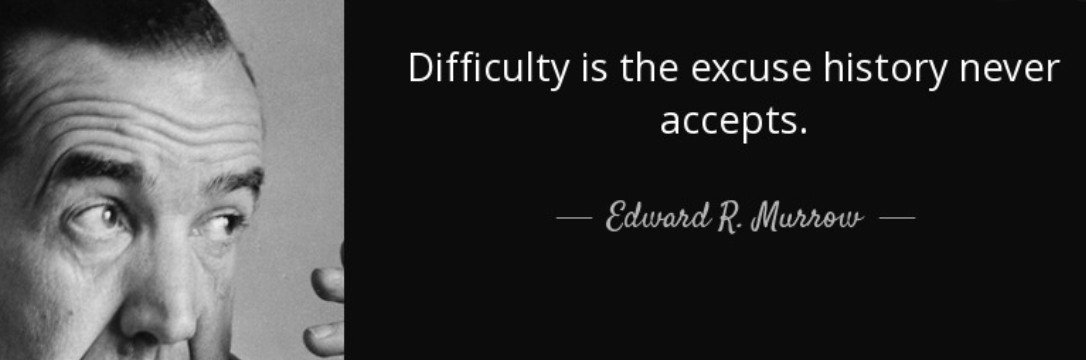
Our road ahead as 21st century humanitarians is fraught with such dilemmas, and we have no option but to dig in and openly address such issues. The words of Edward R. Murrow, an American journalist seem appropriate here. Indeed, “Difficulty is the excuse history never accepts.”

Post script
The Hydra now has eight heads, each representing a unique privileging force. Are there more to come? Having used this model in discussions with wide ranging groups and individuals I have not had any omissions pointed out to me.  That said, what do you think?  If you have a comment on the Hydra model -including suggesting another head to add- email me with your ideas.


Tom Arcaro

Tom Arcaro is a professor of sociology at Elon University. He has been researching and studying the humanitarian aid and development ecosystem for nearly two decades and in 2016 published 'Aid Worker Voices'. He recently published his second and third books related to the humanitarians sector with 'Confronting Toxic Othering' published in 2021 and 'Dispatches from the Margins of the Humanitarian Sector' in 2022. A revised second edition of 'Confronting Toxic Othering' is now available from Kendall Hunt Publishers

More Posts - Website

Follow Me:
Twitter

More Rohingya being moved to Bhashan Char is a win for national sovereignty

“Homo homini lupus [man is wolf to man]. Who in the face of all his experience of life and of history, will have the courage to dispute this assertion?

–Sigmund Freud Civilization and Its Discontents (1930)

More Rohingya being moved to Bhashan Char is a win for national sovereignty

Photo used with permission.

More Rohingya being relocated
Less than a month ago I wrote about the move of over 1600 Rohingya refugees being ‘voluntarily’ relocated from Cox’s Bazar to the small island of Bhashan Char. As I write this a second wave of 1,804 Rohingya have been transported to the island by the Bangladeshi navy. I put ‘voluntarily’ in quotations because there is reason to question how these families were chosen for the move.  The UNHCR has not been given access to key details about the move but has urged the Bangladeshi government to not relocate any refugees against their will.

Despite statements and pleas from the UN, ASEAN, and various humanitarian and human rights organizations, the Bangladeshi government is planning the relocation of up to 100,000 Rohingya to Bhashan Char in the coming months, ostensibly to ease the pressure on the existing refugee camps in Cox’s Bazar which now number nearly 1 million Rohingya. Just as they did when choosing to graciously receive the Rohingya genocide survivors, Bangladesh is a sovereign nation now taking action to address the complex problems in the camps.

Another win for national sovereignty
The 1648 the Peace of Westphalia ushered in the modern nation-state system in the west, and, ultimately, globally. One of its main tenants is that of national sovereignty, the idea that each nation-state is granted full control of its territory. Born as a solution to chronic wars, the emerging nation-state system slowly replaced an array of kingdoms, empires, and confederations.

Three hundred years later in 1948 the UN agreed upon the Universal Declaration of Human Rights, with an emphasis on Humanity as a whole. Drafted by a distinguished international  panel and approved by vote of the UN, this historic document remains the beginning point for most international human rights law.

In many ways I see the Universal Declaration of Human Rights as a historic moral high water mark motivated by, among other factors, the collective human angst generated by the horrors of the Holocaust. It was as if we, as humanity, realized that our species had the ability to rise above Freud’s warning, that homo homini lupus, man is wolf to man. Freud was right in that our history is darkly marked by countless wars and by unending and unimaginably cruel treatment of the marginalized other. Yet over time various agreements, treaties, policies and laws have been enacted both within and between nations that have functioned to slowly but surely ‘bend the moral arc toward justice.’1  Collectively these sociopolitical structural changes have positively impacted social norms. Perhaps we are taming our inner wolf.

The Universal Declaration of Human Rights had the potential of countering the ultimately toxic support of nationalism -and hence ethnocentrism and racism- embedded in the concept of Westphalian sovereignty. But it failed not the nations of the world but humanity itself, doing so by not confronting the inherent paradox that just as ‘man is wolf to man’ one nation is wolf to other nations.  By not confronting the sacred cow of national sovereignty this document ultimately allows for what is happening just now in Myanmar and Bangladesh.

Myanmar has been accused of genocide and is being tried in the international courts. Though ample evidence exists  that it acted and continues to act horribly toward religious and ethnic minorities, the best the international community can do is impotently shake its finger. Economic sanctions, as in other places around the world, make the lives of the poor worse but are no more than a nuisance to those in power.  International Court of Justice (ICJ) and UN mandates and urgings have failed to bring justice to the Rohingya.

Myanmar is acting as a sovereign nation. Bangladesh is acting as a sovereign nation. Both are acting the way they are despite pressure from transnational entities like ASEAN and the UN and from many human rights and humanitarian organizations such as Amnesty International, Human Rights Watch, and Fortify Rights.

Let me point our quickly that though I join together the nations of Myanmar and Bangladesh in the example above, they are far, far apart in terms of the degree of egregiousness. Myanmar is overtly genocidal where Bangladesh, in the case of relocating refugees to Bhashan Char, merely taking a reasonable -if questionable- action.

Beyond the nation-state model?
Can there be a time when the needs of humanity override the rights of nations?  Is it possible to add teeth to the ineffective rhetoric and action by actors like the UN and human rights organizations?

To be clear, I believe that nationalism is just thinly disguised ethnocentrism and that both, as Venn diagrams, overlap dangerously with racism and other forms of toxic othering.

Many have pointed out that in this age of globalization the nation-state system is little more than window dressing and that we have already gone back to a system of ‘kingdoms, empires, and confederations’, though this time more explicitly fed by money and power. These new entities are not really new. The heads on Hydra that is capitalism shape shift in name and form but remain the same in essence. The most powerful people in the world today are not the heads of state but rather corporate leaders and the super-rich.

There is reason for optimism. In many ways this shift is happening incrementally and is perhaps being accelerated by the climate change crisis we face as one planetary ecosystem, as one humanity. One notable example is the news from the city of Dayton, Ohio in the US. On December 30th the city leaders voted on the Dayton End Genocide Resolution, locally reported to be the world’s first municipal resolution condemning genocide and other crimes against humanity. This is one small but significant step in the right direction. I suspect the framers of this resolution know well about the genocide in Myanmar and the plight of the Rohingya.

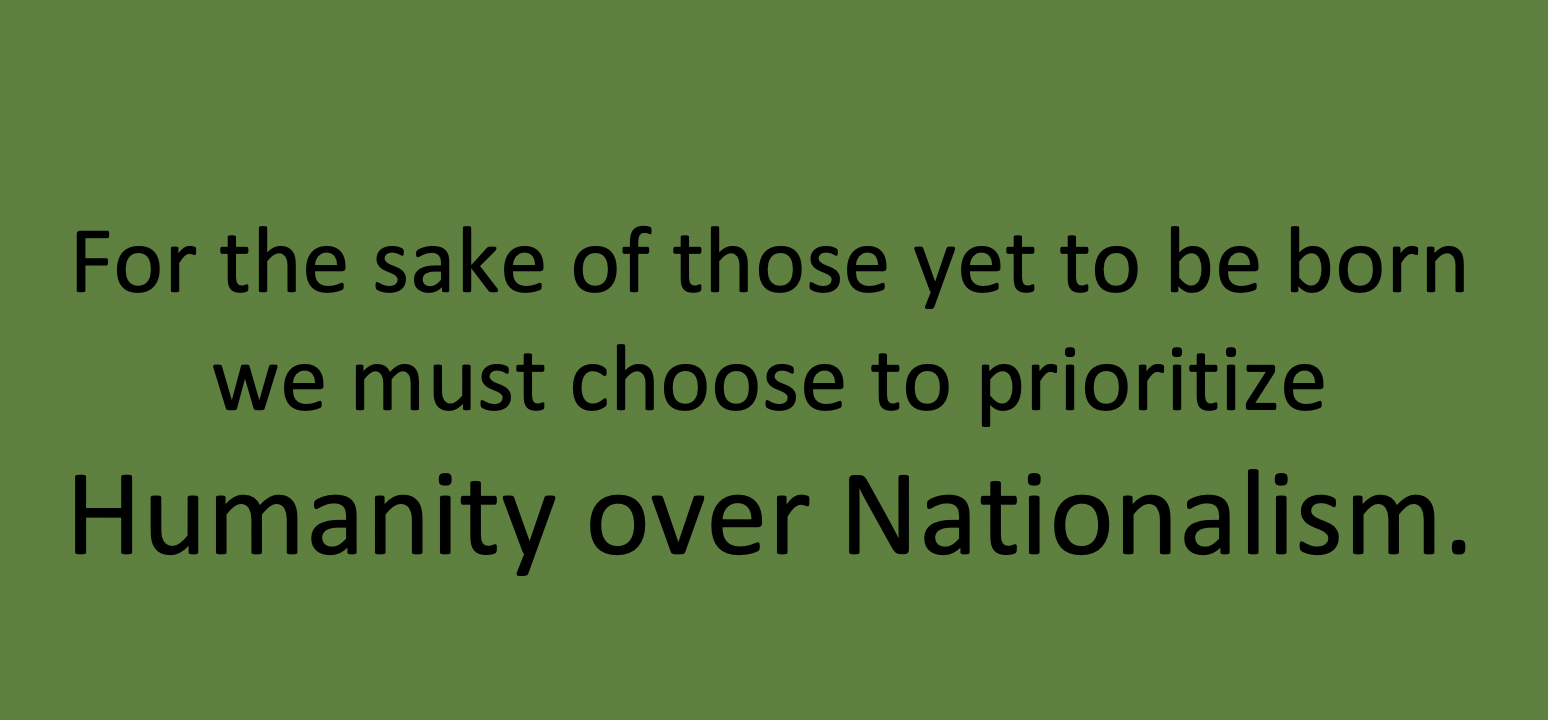
In the short term, I believe, the best that we can do as individuals is to continually use our voices, our actions, and our votes to urge our leaders -national, international, and other important actors- to prioritize humanity over nation.

I’ll close with reference to another social philosopher, perhaps even more misunderstood than Freud. In The Gay Science Friedrick Nietzsche refers to “We who are without Fatherlands”, and he critiques those who are nationalistic, who seek

“…to advocate nationalism and race hatred and to be able to take pleasure in the national scabies of the heart and blood poisoning that now leads the nations of Europe to delimit and barricade themselves against each other as if it were a matter of quarantine.”

To fully realize our potential as humanity -and that includes surviving the increasingly real global climate crisis- we must find a way to put humanity over nation and find ways to reverse the economic system’s tendency to pool wealth (and hence power) into fewer and fewer hands. That this paradigm shift must happen is obvious to many, but as in much of life the implementation step is tricky and difficult.

Back to Bhashan Char
I argue above that at base, the issues in Bangladesh and Myanmar have the same source, nationalistic motivations. The solution to many global problems is a call to reason, a call to recognize that nationalism frequently and toxically reverts to racism in various forms. Perhaps the global #BlackLivesMatter movement is humanity crying out, hoping to confront  the social and economic forces that have served only to divide us.


1  Steven Pinker’s The Better Angel’s of Our Nature provides some good examples and arguments answering the question posed in his subtitle ‘Why Violence Has Declined’.

2  What I am leaving out here is that the dominant force of global neoliberalism makes the job of prioritizing humanity over the nation-state nearly impossible. We must aggressively challenge the assumption that neoliberal policies and practices are pro-Humanity. They are not.

Tom Arcaro

Tom Arcaro is a professor of sociology at Elon University. He has been researching and studying the humanitarian aid and development ecosystem for nearly two decades and in 2016 published 'Aid Worker Voices'. He recently published his second and third books related to the humanitarians sector with 'Confronting Toxic Othering' published in 2021 and 'Dispatches from the Margins of the Humanitarian Sector' in 2022. A revised second edition of 'Confronting Toxic Othering' is now available from Kendall Hunt Publishers

More Posts - Website

Follow Me:
Twitter

More on the origin of the Hydra concept


On the origin of the Hydra concept
I have been teaching sections of Introduction of Sociology every semester for the last four decades. Over the years every course text I’ve used has had useful chapters on ‘Race and Ethnic relations’, Social stratification’, and ‘Sex and gender.’  Through trial and error, I have adapted various definitions of the many ‘isms’, but about a 20 years ago I began using this definition of racism:

Racism is an ideology of domination and subordination based on the assumption of the inherent biological and/or cultural inferiority of other groups and the use of this assumption to legitimize or rationalize the inferior or unequal treatment of this group.

About ten years ago I started testing my students ability to ‘connect the dots’ by giving them the definition of racism and then immediately asking for a good definition of sexism, and then classism. Most picked up on the connection quickly.

Sexism is an ideology of domination and subordination based on the assumption of the inherent biological and/or cultural inferiority of females and the use of this assumption to legitimize or rationalize the inferior or unequal treatment of women.

Classism is an ideology of domination and subordination based on the assumption of the inherent biological and/or cultural inferiority of poor people and the use of this assumption to legitimize or rationalize the inferior or unequal treatment of poor people.

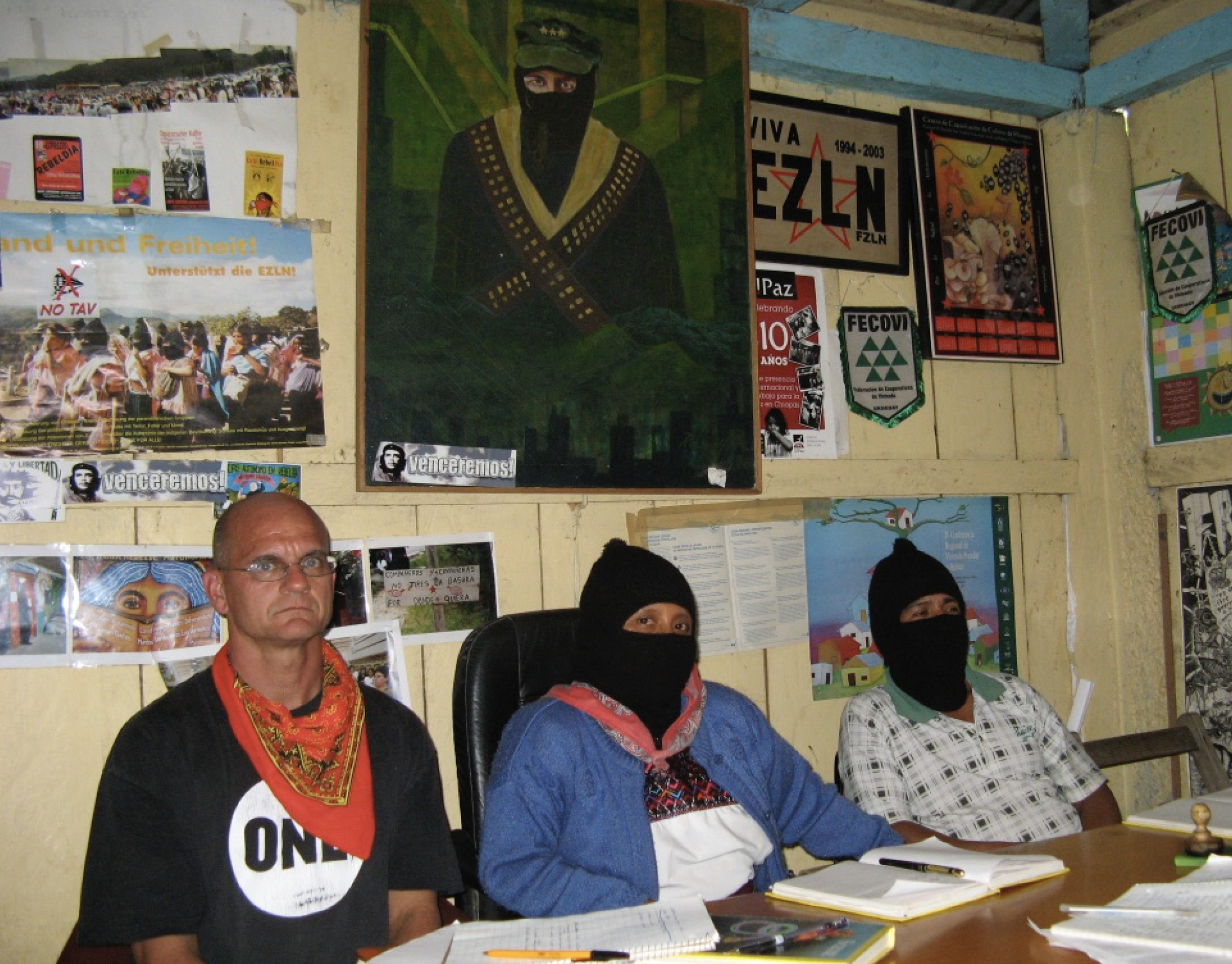
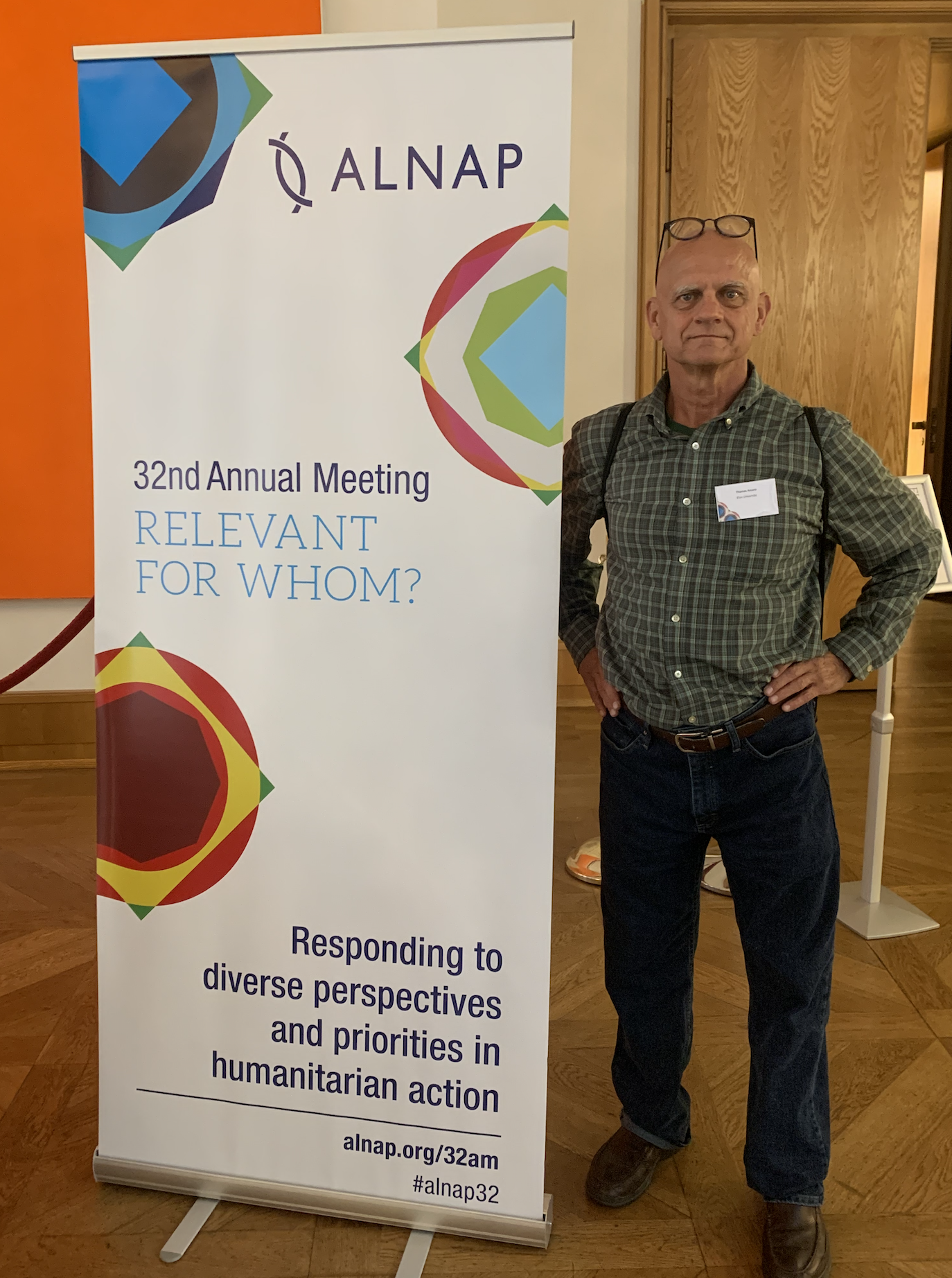
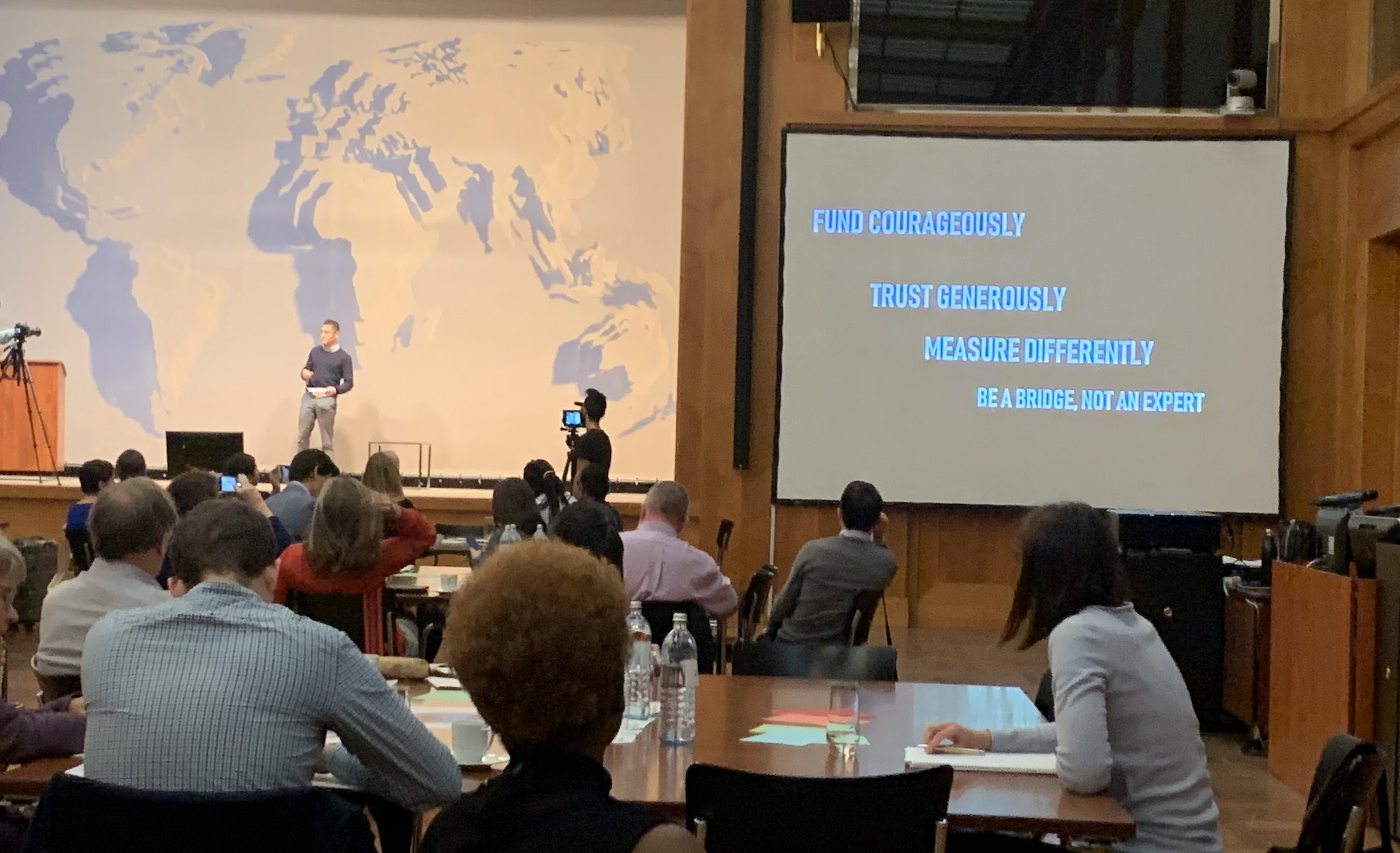
When I was invited to speak at the 2019 ALNAP conference about ‘privileging forces’ impacting how the humanitarian sector functions, I pulled an idea from Subcomandante Marcos of the EZLN. Marcos once again warned about the

Sitting with the junta in Oventic, Chiapas, MX

Hydra of capitalism and the rise of a virulent neoliberalism particularly in the West. I have had the honor of spending time in Zapatista territory and learning from these indigenous leaders. The EZLN movement remains strong after decades of struggle, and there are plans next spring for an EZLN party to travel to Europe to join with like-minded groups in the global and growing effort to confront toxic neoliberal ideologies.

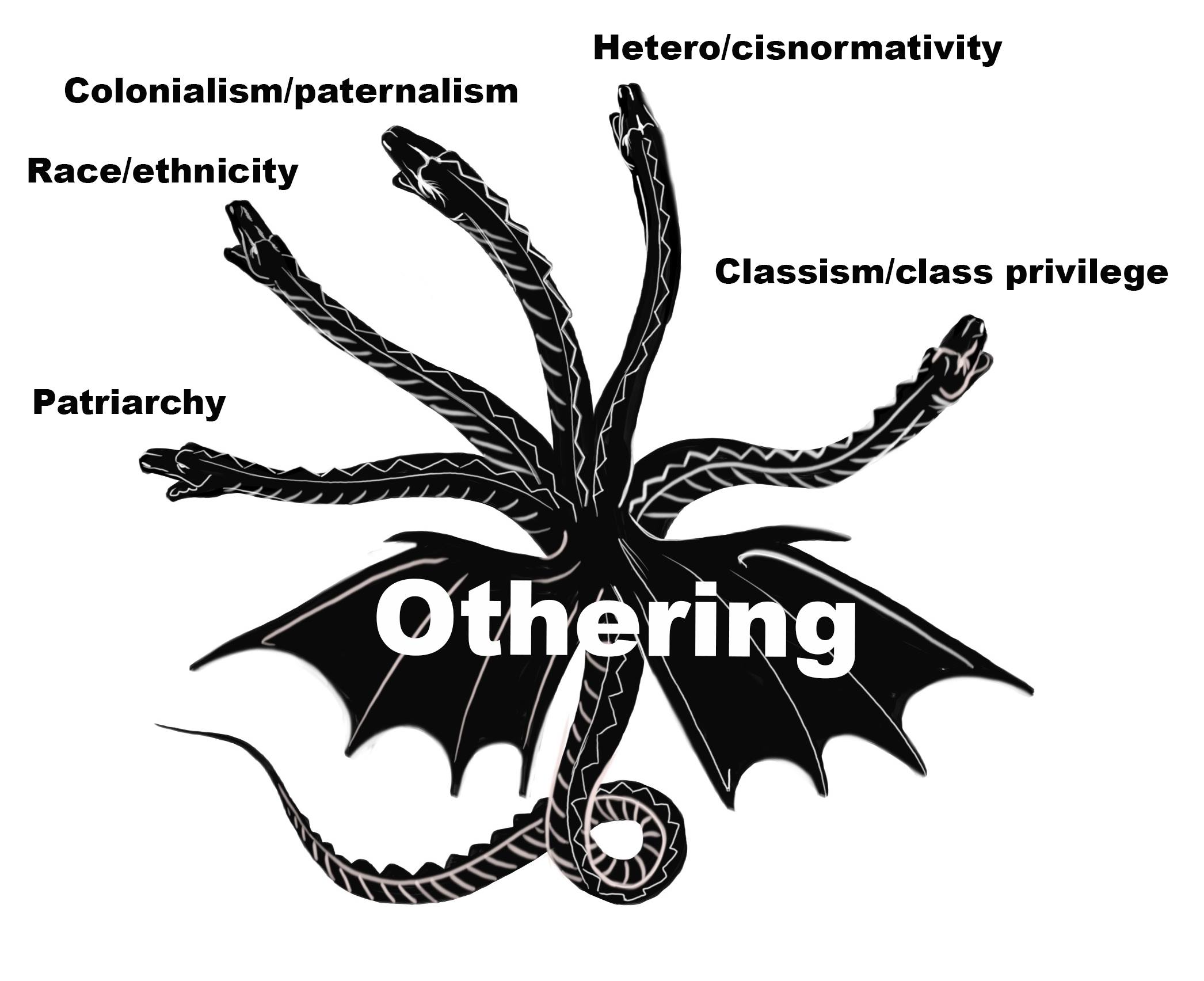
I asked my brother and collaborator, himself an Iraqi refugee, to drawn the vision I had in my head. Our original draft of the Hydra had only five heads, but during the ALNAP conference in Berlin I soon realized more heads were called for, and the first Hydra model was redrawn to include Ableism and Ageism.


Using my original definitional frame, here are the other ‘heads’ or ‘isms.’

Colonialism/paternalism is an ideology of domination and subordination based on the assumption of the inherent biological and/or cultural inferiority of peoples in the majority world and the use of this assumption to legitimize or rationalize the inferior or unequal treatment of these groups.

Hetero/cisnormativity an ideology of domination and subordination based on the assumption of the inherent biological and/or cultural inferiority of non-gender comforting/queer people and the use of this assumption to legitimize or rationalize the inferior or unequal treatment of this group.

Ableism is an ideology of domination and subordination based on the assumption of the inherent biological and/or cultural inferiority of differently abled people and the use of this assumption to legitimize or rationalize the inferior or unequal treatment of this group.

Ageism is an ideology of domination and subordination based on the assumption of the inherent biological and/or cultural inferiority of older or younger people and the use of this assumption to legitimize or rationalize the inferior or unequal treatment of these groups.

All of the above definitions need expanding and deepening, of course, but taken together they can serve to underline my critical point, namely all of these ‘isms’ are fundamentally driven by the same process; they all begin with one group othering another and then exploiting any asymmetry of power.

Key terms in the basic definition include

  • Ideology
  • Domination and subordination
  • Assumption of biological and/or cultural inferiority
  • Legitimize and rationalize inferior or unequal treatment.

An ideology is sometimes explicit and obvious, but oftentimes an ideology can be an array of background ideas that, when pressed, an individual may have trouble clearly articulating. Domination and subordination can take many forms ranging from subtle marginalization all the way to ‘ethnic cleansing’, pogroms, and genocide. Assumptions of biological and/or cultural inferiority are asserted by the dominant group and this frequently leads to the dehumanization And counteranthropomorphization of those in the ‘inferior’ group, and this makes any harmful actions seem legitimate or rational.

The Hydra metaphor seems useful, with may students frequently pointing out that ‘I had never thought about how all of these social justice issues were connected.’ I always ask each class of students to critique my definitions and this Hydra model, and their ideas are frequently challenging and useful. The Hydra continues to evolve.

Post script
Need a laugh? Here is a useful video exploring complexities of recognizing privileged statuses.

Then 2020 happened
Since returning from the ALNAP conference I have expanded on the Hydra concept in a series of blog posts, to be included in my forthcoming book “Hearing Voices:  Dispatches from the margins of the humanitarian sector.

Then 2020 happened. COVID-19 put the worlds into a social, psychological and economic downward spiral, and then George Floyd was murdered and #BlackLivesMatter took on massive, global importance. The Hydra needs a facelift, and in the next several days I’ll post more about this.

Tom Arcaro

Tom Arcaro is a professor of sociology at Elon University. He has been researching and studying the humanitarian aid and development ecosystem for nearly two decades and in 2016 published 'Aid Worker Voices'. He recently published his second and third books related to the humanitarians sector with 'Confronting Toxic Othering' published in 2021 and 'Dispatches from the Margins of the Humanitarian Sector' in 2022. A revised second edition of 'Confronting Toxic Othering' is now available from Kendall Hunt Publishers

More Posts - Website

Follow Me:
Twitter

A Code of Ethics for Privileged Anti-Othering Persons: the humanitarian imperative and Hydra revisited

A Code of Ethics for Privileged Anti-Othering Persons: the humanitarian imperative and Hydra revisited


Humanitarianism started off as a powerful discourse; now it is a discourse of power, both at the international and at the community level.” (p. 190)

–Antonio Donini “Humanitarianism, Perceptions, and Power”

In the Eyes of Others (Abu Sada, editor; 2012)


Overview
Below I expand on previous posts related to the humanitarian imperative, the ‘privileging forces’ Hydra, and the  quest for global social justice. Studying and engaging with humanitarians all over the world has provided me with a broad base of insights, and I especially thank those from the majority world (aka Global South) who have so patiently offered me their thoughts, feelings, and opinions.

The recent reemergence of a surprisingly inclusive #BlackLivesMatter movement both here in the US and around the world has many talking frankly about systemic racism and toxic white nationalism, and these conversations have generated action. One perhaps not insignificant example of change is the fact that NASCAR, the auto racing organization most popular in the US Southeast has recently banned confederate flags at sanctioned events. These flags have long been a racist symbol and commonly found in abundance at NASCAR races. This change was initiated by one Black driver and then embraced by the policy makers in NASCAR. A second and related example is that Mississippi appears to be on the verge of changing its long divisive flag, deleting the confederate flag embedded in the upper corner.

Within the humanitarian sector there are #BlackLIvesMatter conversations being held. Here is the statement by MSF-USA describing racism as a public health crisis. MSF International’s position is similar, admitting that the organization had ‘failed to tackle institutional racism’, but noting that, “We get a lot of ‘all lives matter’ reaction from colleagues from different parts of the world. … Context is everything.” The deep intersectionality between racism and colonialism embedded within the humanitarian sector needs very close scrutiny and eventually aggressive action at every level, especially within the UN organizations and ‘big box’ INGO’s like World Vision, OXFAM and others. The seriousness and scale of this self examination and policy change must be even more progressive and soul-searching that was done in reaction to the OXFAM (and others) #MeToo crisis.

The Hydra
Last October [2019] I attended the ALNAP conference in Berlin, a mixed gathering of humanitarian practitioners and academics like myself who have studied and commented on the humanitarian ecosystem. There I used the metaphor of the mythical Hydra, a multi-headed monster, to talk about how all of the privileging forces that serve to oppress those marginalized all over the globe, almost always the object of humanitarian actions. The underlying fuel to keep the Hydra alive and active is the toxic and pervasive process of othering which inevitably leads quickly from differentiation (A ≠ B) to stratification (A ≠ B therefore A > B) and using any power asymmetry to justify the ‘isms’.

Many are now learning both old and new lessons about how deeply racism is baked into the US (and global) culture, and most are seeking ways to directly and productively join the movement toward true racial justice. JLove Calderon and Tim Wise offer this statement in an article titled, “Code of Ethics for White Anti-Racists

“We are persons classified as white in this society. As aspiring anti-racist allies/collaborators, we seek to work with people of color (and follow their leadership) to create real multiracial democracy. We do not fight racism on behalf of people of color, or as an act of charity. We oppose white supremacy because it is an unjust system, and we believe in the moral obligation to resist injustice.”

This statement, all of it, spoke to me, and I immediately related it to the lessons I have been learning while listening to humanitarians from the majority world. Without using the phrase, they critique the ‘white savior complex’ and voice support for a humanitarian perspective. Read here what some of the respondents said on our survey of humanitarians from the majority world and for further observations about the ‘white savior complex.’

Over 30 years ago Kimberle Crenshaw presented us with the conceptual tool of intersectionality. In this 2017 interview she reflects,

“Intersectionality is a lens through which you can see where power comes and collides, where it interlocks and intersects.”

Humanitarian principles and intersectionality are a critical topic as efforts to make structural, permanent change regarding all privileging forces multiply and matures.

So, with deep gratitude to Calderon and Wise, I offer here a “Code of Ethics for Privileged Anti-Othering Persons”, addressing all seven heads off the Hydra.

We are persons classified as privileged in our global society. As aspiring anti-patriarcal, anti-racist, anti-colonial, anti-hetero/cisnormativity, anti-classist, anti-ablist, and anti-ageist allies/collaborators, we seek to work with people differently privileged (and to follow their leadership) in order to create a more just world where all humans have pathways to dignity. We do not fight these privileging forces on behalf of those marginalized, or as an act of charity. We oppose privileging forces because they create unjust systems, and we believe in the moral obligation to resist injustice.

The fact that these privileging forces are woven deeply into the fabric of all modern global cultures and that they ‘interlock and intersect’ with each other makes confronting them difficult.  Like a cancer, these privileging forces infect all institutions of the social system, none are sparred. Religion. Education. Sport and leisure. The economy. Family. Government. Military. Media. Entertainment. All are infected, and all, again, ‘interlock and intersect’ to synergistically and effectively maintain structures of marginalization and oppression. All must be seen as mutually interdependent. In addition, the economic determinists will point out that an amoral -and hence, I argue, immoral global capitalism works synergistically with the heads and the othering body of the Hydra.

Embracing a “Code of Ethics for Privileged Anti-Othering Persons” means understanding that one simultaneously may be privileged and marginalized. For example a queer Black male from the minority world, aka Global North, enjoys male and Global North privilege while enduing heternormativity and racism. Privilege always depends upon the social context currently inhabited and can change even moment to moment.

Humanitarian imperative and bending the arc
For me, the humanitarian imperative begins with the assumption that all human lives have equal value, and every human deserves a life marked by dignity and access to basic human rights. Those who commit to humanitarian values must aggressively fight all of the systemic ‘isms’ represented by the heads of the Hydra.  Cutting off one head is not only futile but impossible; as per the myth of the Hydra it will only come back as two. Hence the body of the Hydra, fed by toxic othering, must be the focus of our attacks.  That means a comprehensive and coordinated effort to address all systemic misuse of power certainly by individuals but even more importantly by institutions wielding power, clearly including the humanitarian sector itself. Ultimately, since human nature -albeit the the darker parts- produced the Hydra, the Hydra must be tamed and transformed, not killed.

In previous posts I have used the language and imagery of defeating the Hydra, not by lopping off each head but rather by fataly attacking the Hydra’s body. Defeating the body, the toxic engine supporting and perpetuating each of the heads, seemed a logical action point. Upon reflection, I must admit that my manner of framing the solution –
killing the Hydra- was perhaps yet another example of toxic masculinity emerging from my imagination. Taming rather than killing reflects perhaps a more feminist -and humane- approach. Indeed, I would have done well reading more by and about bell hooks (and others) who articulated long ago the a feminist model of conflict resolution which advocates the “…deconstruction of unequal power relationships in societal structures.”

Not only is taming the better goal it is, looking more closely, the only way forward that pays attention to the fundamental fact that we cannot ‘change human nature.’ The evolutionary psychologist will tell us that how our brain works is, in large part, based on our evolutionary history and that our basic emotions are deeply wired into our brains, specifically located in the limbic system. We can’t eliminate fear, a basic emotion, but we can, as President Kennedy argued, work toward a gradual evolution of human institutions.

My previous thinking was wrong, misleading, and borderline mysognistic. Taming, not killing the Hydra must be our goal.

Another shortcoming in my previous thoughts on the Hydra was too little attention to what it means to ‘deconstruct unequal power relationships.’ Bending the moral arc toward justice means identifying and then reversing all instances where hatred and fear have been encoded into norms, policies, and laws on all levels, locally, nationally, and internationally. This includes, of course, all of the organizations and bureaucracies in which we learn and work. This work demand a close reading of [all] local, national and global history sometimes made difficult by racist resistance. The 1619 Project is a good model for a deeper examination of how racism has permeated US history.

Though our illustration above implies otherwise, some heads of the Hydra might well be seen as far more important than others.  To wit, racism impacts most of the people on this planet, and thus must be confronted with full measure of effort. That said, the fight against systemic racism need be anchored in rooting out power misuse allowing for all forms of toxic othering.

How can this be accomplished by an underfunded humanitarian industry designed mostly to respond to natural and human made crises? There is no quick or easy answer to that, but I do suspect that Donini (quoted above) is right: humanitarianism is a discourse of power. One very important step in understanding and then changing toxic power arrangements is to listen to and work with those who have been marginalized by misuse of power.  Those who are multiply marginalized (especially women of color) have much to teach, and it is our job to listen and to follow their lead, always demanding an inclusive scope of both understanding and action.

One such voice is Namati. Established seven years ago, Namati.org is a global legal empowerment movement.  From their web site: “Namati means ‘bending the arc.’ With leadership from those most impacted, we will bend the arc of history together.”  The current #BlackLIvesMatter movement is a necessary and vital part of bending the ‘moral arc of the universe toward justice.’1

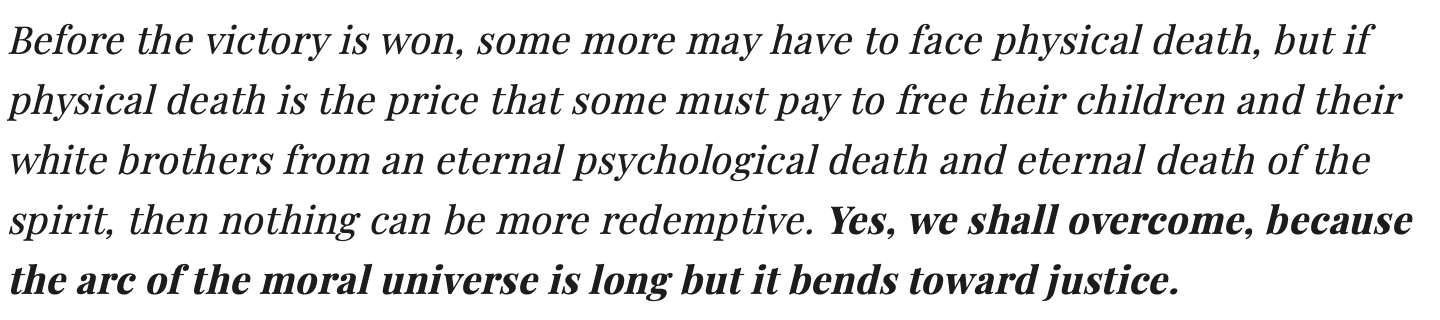
This phrase has a long history, with President Barak Obama borrowing it from Dr. Martin Luther King, Jr. who adapted it from abolitionist minister Theodore Parker. Parker said,

“I do not pretend to understand the moral universe. The arc is a long one. My eye reaches but little ways. I cannot calculate the curve and complete the figure by experience of sight. I can divine it by conscience. And from what I see I am sure it bends toward justice.”

Bending this arc is a long process, and one that takes constant, coordinated effort. Gains won must be aggressively preserved or they can be lost very quickly. The Namati organization has it right: legal changes are key in bending the arc. But it must be

Rev Dr ML King, Jr. “I Have a Dream” speech

stressed that structures within all other social institutions must be altered as well. Humanitarians have great potential and responsibility as ‘arc benders’ and, as stressed one more time, demands accepting leadership ‘from those most impacted.’

Understanding interconnected and baked in privileging forces and then responding to the humanitarian imperative is hard, complicated, and a long term commitment. But is a commitment mandated by our devotion to the cause of justice for all. This mandate includes, well, inclusion, and we must act on the fact that all of the heads of the Hydra are fueled by othering and hate.

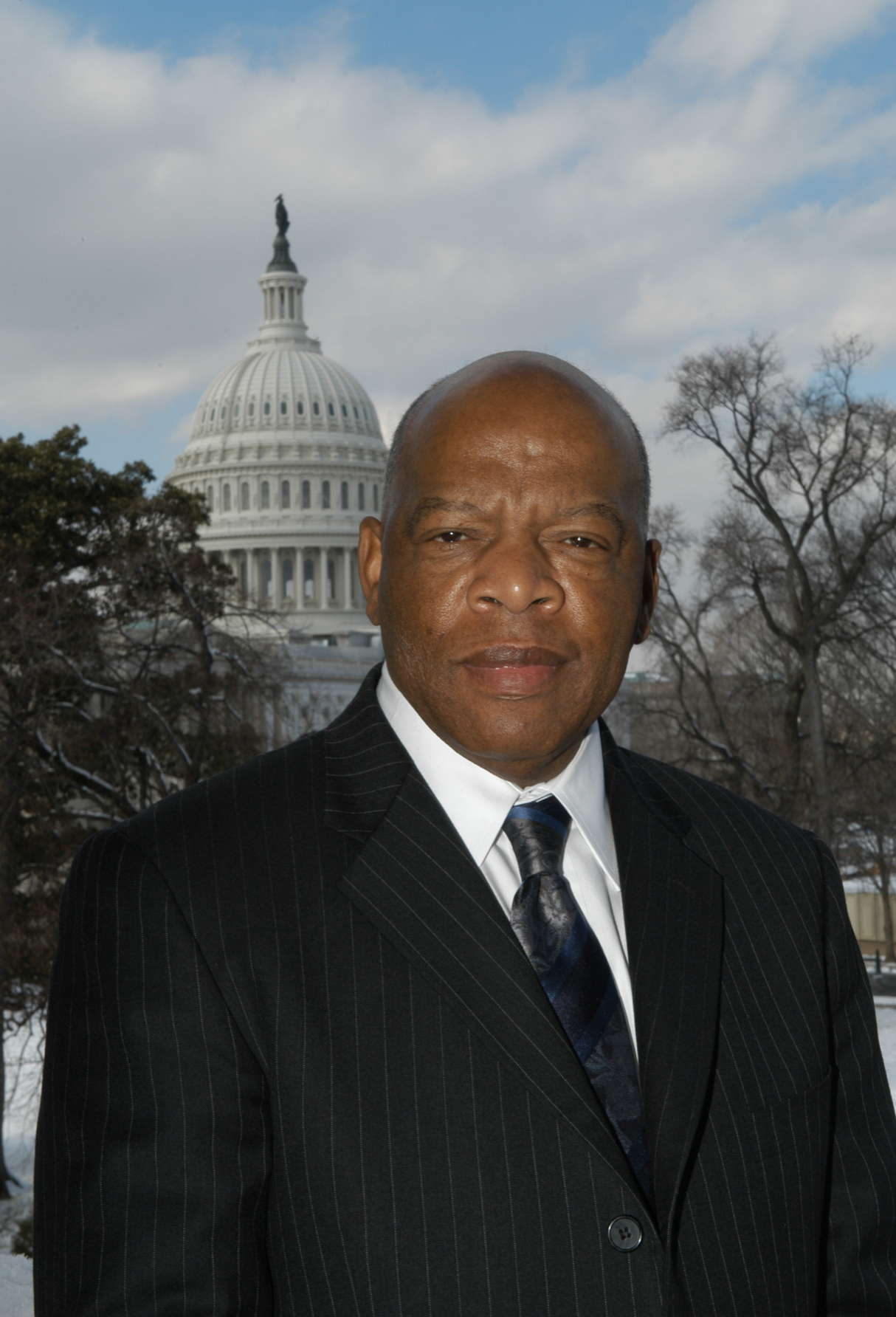
In the words of the late John Lewis, champion of civil rights, we must “Continue to build union between movements stretching across the globe because we must put away our willingness to profit from the exploitation of others.” The title of his posthumously published editorial is “Together, You Can Redeem the Soul of your Nation” but I feel he would approve of this re-statement: “Together, we can redeem the soul of humanity” so that it adds a call to action for those subscribing to the “Code of Ethics for Privileged Anti-Othering Persons” discussed above. To “redeem the soul of humanity” and to bend the moral arc of the universe toward justice means confronting, challenging, and changing some near-sacred social structures.  Focused social change is never quick nor easy, and we must be willing to make “good trouble” to make this happen.

A broader perspective?
Are we bending the arc?  It might not seem so if you look only at the last six months or even 60 years. What if we look at the last 6000 years?  According to Steven Pinker there has been steady progress toward a more ‘civilized’ world.  He argues in his 2011 book The Better Angels of Our Nature: Why Violence Has Declined that as a species we have become progressively less violent and cruel to others, that world cultures have slowly become more intolerant of violence in the family, and within and between peoples.

Justification for othering comes from many sources through history, and in one section focuses in on the Abrahamic religions. Pinker writes,

“The scriptures present a God who delights in genocide, rape, slavery, and the execution of nonconformists, and for millennia those writings were used to rationalize the massacre of infidels, the ownership of women, the beating of children, dominion over animals, and the persecution of heretics and homosexuals. Humanitarian reforms such as the elimination of cruel punishment, the dissemination of empathy-inducing novels, and the abolition of slavery were met with fierce opposition in their time by ecclesiastical authorities and their apologists. The elevation of parochial values to the realm of the sacred is a license to dismiss other people’s interests, and an imperative to reject the possibility of compromise.”

The humanitarian reforms that Pinker meticulously details over many chapters are actions that bend the moral arc. They have had a cumulatively powerful impact, creating at least a less overtly violent world and a best a more just and moral humanity.

Let’s push Pinker a bit. I’ll grant his historical observations, but question whether in this 21st century the pendulum may be swinging back. It is possible that the net actions of humans in the last 20 years have undone much of this ‘positive bending’ of the moral arc? Have greed and gluttony been so thoroughly normalized and glorified in our global culture that even the better angels of our nature cannot purge them?

In 1940 -80 years ago- at the very end of The Great Dictator Charlie Chaplin gives an amazing and passionate speech saying that “greed has poisoned men’s souls” and calling on humanity to reject those motivated by greed and who pedal fascism. According to many social critics unchecked capitalism and neoliberalism in the last 80 years have served only to further ossify toxic values serving only the ultra rich. Though Chaplin’s speech champions the resilience and morality of the human spirit, there is current evidence that fascism may have again been embraced by those in power in many parts of the world.  Saudi Arabia under Mohammed bin Salam. Myanmar under Aung San Suu Kyi. Russia under Putin.  Brazil under Bolsonaro. And, yes, perhaps, the United States under Donald Trump.

I’ll offer that an antidote to the poison of fascism is to embrace the “Code of Ethics for Privileged Anti-Othering Persons” I presented above. Those of us, like Charlie Chaplin, who believe in the power of humanity have a moral duty to resist injustice in all forms.

Final note
My students have suggested that the Hydra needs another head describing our species’ anthropocentric perspective and the consequent destructive ‘ecocidal’ relationship we have with the environment. We ‘other’ the very natural world that sustains us and this has led us to the brink of a massive climate disaster, which has already exasperated humanitarian crises across the globe, mostly in the majority world.  This impact is an example of environmental racism in action, and as such merits our immediate attention. Adding ‘anthropocentrism’ as an additional head to the Hydra may be in order. [See this for an update.]

As always, if you have any comment or feedback please contact me at arcaro@elon.edu.

And yes, I will be watching the movie highlighting the work of humanitarian Paul Farmer “Bending the Arc” when it is released and share my thoughts.


1This section on bending the arc toward justice is an edited version of what I previously posted here.

Tom Arcaro

Tom Arcaro is a professor of sociology at Elon University. He has been researching and studying the humanitarian aid and development ecosystem for nearly two decades and in 2016 published 'Aid Worker Voices'. He recently published his second and third books related to the humanitarians sector with 'Confronting Toxic Othering' published in 2021 and 'Dispatches from the Margins of the Humanitarian Sector' in 2022. A revised second edition of 'Confronting Toxic Othering' is now available from Kendall Hunt Publishers

More Posts - Website

Follow Me:
Twitter

A day for voices to be heard

A day for voices to be heard

Image created by Tallia Scott, Elon ’06 @werd_assissin

A day of protest
Today, Tuesday, June 16, 2020, is a day of protest at Elon University intended to hear and amplify the voices of the many black students/parents, black faculty/staff, black alumni, and allies of this university. I support and stand with all who join the #BlackatElon virtual protest.

The image on the left, created as a visual representation of this protest, is powerful. The acorn in the center is a long used representation of Elon. ‘Elon’ is the Hebrew word for oak, and this one small seed can grow into a mighty and lasting figure. The yellow flame represents the Elon mascot, the Phoenix which rose from fiery ashes, and the clenched fist is a long used and respected symbol of unity, resolve, and power.

This protest centers on these messages:

Black Voices Matter. Black Experiences Matter and Black Lives Matter.

This protest is part of a part of the current national Black Lives Matter movement, and this movement is just the most current manifestation of the struggle for racial justice in the United States that has been unfolding for many generations.

Here is the voice of one black Elon alumni, a woman I an honored to call a friend, who has gone on to do great humanitarian work around the globe.

Read her words once, then again, and again:

“It has been a hard couple of months and I feel guilty being over here even as I know the work I do makes an impact. Everything is amplified right now. But it was only a matter of time before people began to realize the time for begging people to pay attention and playing a respectability politics game to avoid being seen as ‘divisive’ wasn’t going to be enough. I’m increasingly realizing, through the haze of many tears, that committing to love and rage is more necessary than ever in the face of ignorance and apathy. Committing to trouble the already troubled waters is necessary in order to foster significant change and heal. Our existence is already a target. Our bodies are already seen as disposable. If that’s going to be the way of it, I’d rather put myself right in the path to act rather than stand on the sidelines and wait for someone else to clear the way.”

Her words are a 2020 iteration of those wrote by Dr. Martin Luther King in his 1963 ‘Letter from Birmingham Jail‘. The urgency in her words are infectious, I hope literally so.

Bending the arc?
The #BlackatElon virtual protest is part of a long standing effort to help create a more just world for all. Here’s one global connection that I think has deep relevance.

Established five years ago, Namati.org is a global legal empowerment movement.  From their web site: “Namati means ‘bending the arc.’ With leadership from those most impacted, we will bend the arc of history together.”  This Elon protest, one of countless others not only in the United States but as well around the world, is a necessary and vital part of bending the ‘moral arc of the universe toward justice.’

This phrase has a long history, with President Barak Obama borrowing it from Dr. Martin Luther King, Jr. who adapted it from abolitionist minister Theodore Parker. Parker said,

“I do not pretend to understand the moral universe. The arc is a long one. My eye reaches but little ways. I cannot calculate the curve and complete the figure by experience of sight. I can divine it by conscience. And from what I see I am sure it bends toward justice.”

Bending this arc is a long process, and one that takes constant, coordinated effort. Gains won must be aggressively preserved or they can be lost very quickly. The Namati organization has it right: legal changes are key in bending the arc. But it must be stressed that structures within all other social institutions must be altered as well.

The black students/parents, black faculty/staff, black alumni, and allies taking part in this protest have a clear goal: to change the very structure of Elon University, and to provide a model for other institutions of higher education for such change.

Through many kinds of protests, confronting the deeply baked in systemic racism in the United States is happening in all 50 US states and around the world. This social movement is different because it fundamentally recognizes that all of the heads of the Hydra of ‘privileging forces’ are fueled by the demonstratively anti-humanitarian process of ‘othering’.

I’ll have more to say soon, but in the meantime you can contact me here.


Tom Arcaro

Tom Arcaro is a professor of sociology at Elon University. He has been researching and studying the humanitarian aid and development ecosystem for nearly two decades and in 2016 published 'Aid Worker Voices'. He recently published his second and third books related to the humanitarians sector with 'Confronting Toxic Othering' published in 2021 and 'Dispatches from the Margins of the Humanitarian Sector' in 2022. A revised second edition of 'Confronting Toxic Othering' is now available from Kendall Hunt Publishers

More Posts - Website

Follow Me:
Twitter

Humanitarian voices in Sittwe, Myanmar

“What do we want?  Justice. Equality. Peace and freedom.”

–Kyaw Kyaw, Rebel Riot


Humanitarian voices in Sittwe
I recently talked with a humanitarian working in Myanmar, and we chatted about some recent events in the local poetry and music scenes that give reason for cautious hope. He forwarded a link to some graphic, compelling, and highly political videos recently produced by Turning Tables Myanmar.

From their web page:

Turning Tables Myanmar works to empower marginalized youth by providing the means to process and express their hopes, dreams and challenges, through the Creative Arts of music and film. We strive to address the root causes of inequality and provide support to a wide range of challenges in Myanmar from gender-based violence, tribalism, extremist groups, youth in urban slums and the communities in which they reside.

The five videos, under the umbrella title “Transition This”, are all extraordinarily well done and each has its own unique message. Taken together they provide a graphic but overall positive glimpse into how youth in Myanmar are struggling to find meaning and hope in the face of chronic conflict.

The final video titled “Meiktila” is by Darko. His offering is exquisite and is a hypnotizing and hauntingly beautiful comment on religion, war, and our common humanity.

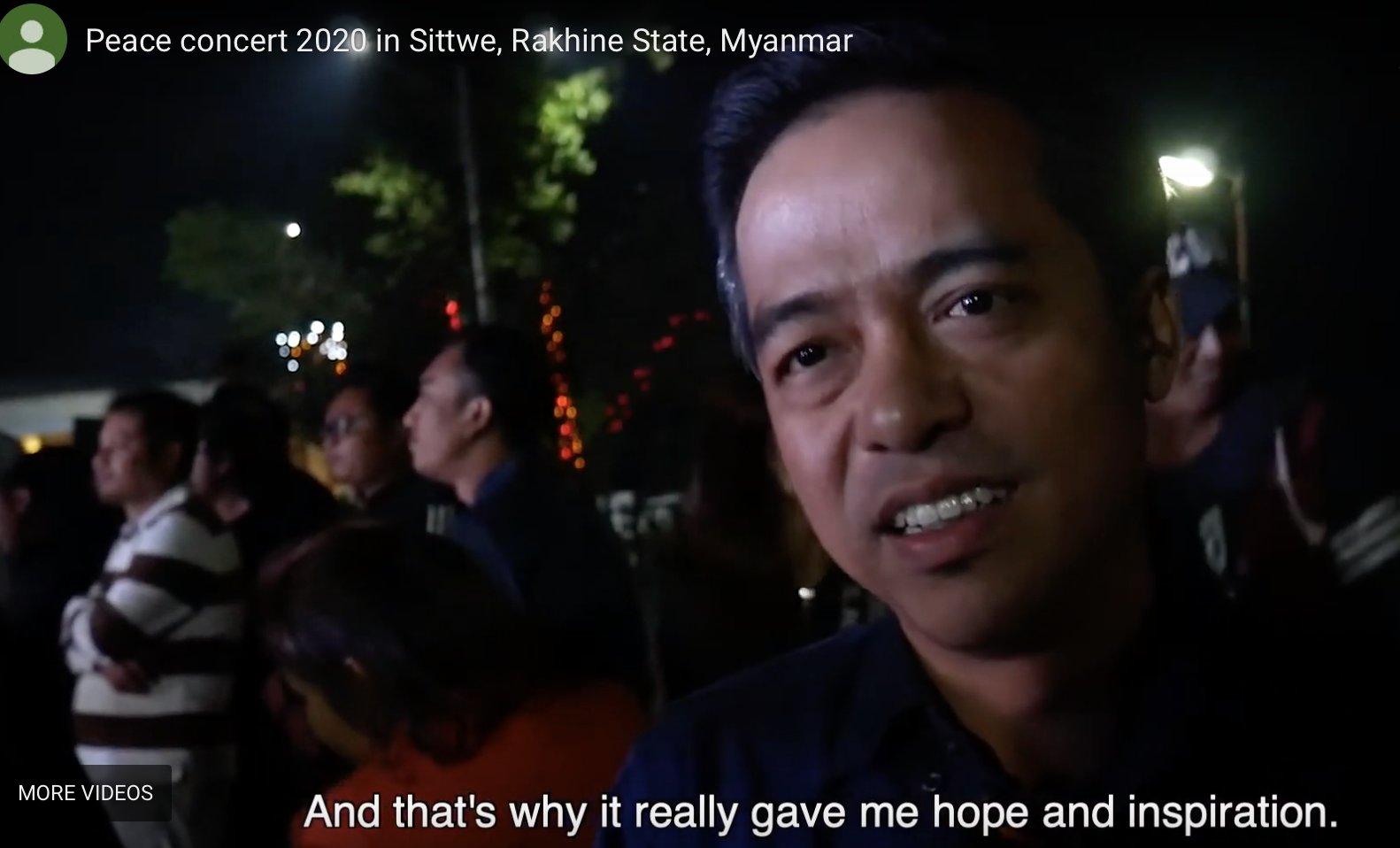
Peace concert in Rakhine
One of the most volatile regions in Myanmar is in the state of Rakhine (formerly known as Arakan) whose capital city is Sittwe. A few days ago there was a peace-themed music concert in Sittwe, and one of the bands that played was Rebel Riot, a Burmese punk band founded in 2007. Their song “Genocide” is an ‘in your face’ and uncompromising calling out of the Myanmar military. Here is the context.

The International Court of Justice will not have a final ruling for months of even years regarding the genocide case against Myanmar.  Despite the 23 January ruling by the ICJ imposing provincial measures on Myanmar to prevent further genocide and destruction of evidence, there is no doubt this nation’s history of religious and ethnic persecution against both Christian and Muslim minorities, the majority being ethnic Rohingya, is still an issue. There is a constant flow of bad news out of Myanmar, with religious and ethnic tensions erupting with disturbing regularity.

The hyper nationalism (read: racism) that drives this tension is seen not just in Myanmar.  Pro-sovereignty/isolationist nationalism movements drove Brexit in the UK, elected Donald Trump President in the United States, and has kept Benjamin Netanyahu in power in Israel, Bolsonaro in Brazil, and Modi in India. And the list goes on. These additional examples are real and important, but perhaps not nearly as acute as in Myanmar where those in power murder, rape, kill babies, and drive hundreds of thousands (in 2017 about 740,000) into refugee camps in neighboring Bangladesh.

Listening to the lyrics of the Rebel Riot song’s and the music videos produced by Turning Tables one gets a sense that this young generation is tired of the killing and wants a more inclusive Myanmar. My humanitarian contact in Myanmar said he felt there was an ‘opening’ for a grassroots change in the religious and ethnic divisiveness. He noted there are signs that many are fed up with the views of those in power voicing Buddhist ethno nationalism, particularly the military, and envisioned a world of peace. Muslins, Buddhists, Christians and others are coming together and are working to break down the toxic barriers created by another generation.  In the vernacular of my series of posts on the ‘privileging forces’ Hydra, they are calling out all mindless othering, especially that based on religion or ethnicity.

What is their message?
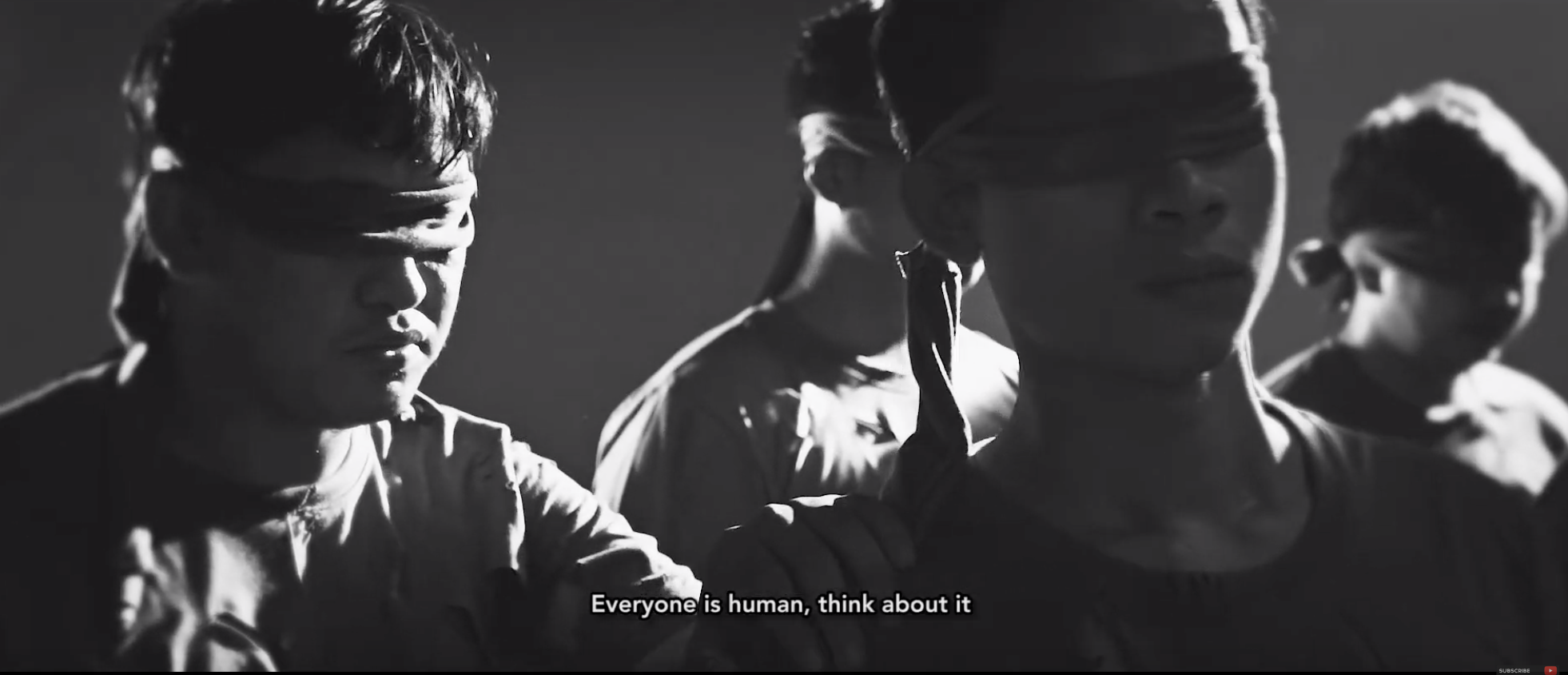
The image above is from the Transition This video “Number of Genocide – Last Days Of Beethoven“. The lyrics on screen read “Everyone is human, think about it.” A clear message.

At the beginning of their set Kyaw Kyaw of Rebel Riot says, “We are fighting against racism, sexism, any kind of discrimination. We want to make a new world together.” Another clear message.

Darko of Side Effect also performed at the concert. Here is what he had to say,

“Seeing Rebel Riot perform their song “Genocide” here today has changed my view of Rakhine people. I thought that song was culturally unacceptable here. The lyrics are hard to accept for Rakhine people. The words are pretty rude. I didn’t think the young people here would accept it. But when the song came on people here just accepted it.

I think Rakhine people are ready for a change. I underestimated the Rakhine youth. But now I understand that there are changes happening already.

And the young people are expecting these changes. This is the new generation. They are young they are open minded.

And that’s why it really gave me hope and inspiration.”

In short, their message is the same as we have heard from all major faith traditions and humanistic ideologies: we are all human and all of us deserve respect, dignity, justice, and freedom.  Humanity is better than the genocides driven by those who only lust for power and control. We can and want to overcome the darker angels of our nature; peace was the theme of this concert.

I urge you to watch all of the linked videos and, like me, become inspired by the messages. Defeating the Hydra means taking away the fuel that sustains its body and all of its destructive heads.  Defeating the Hydra means demanding love over hate, acceptance over discrimination, peace over war. It also means using whatever tools of expression you can muster including poetry and music.

If you have comments or feedback, please contact me at arcaro@elon.edu.


Tom Arcaro

Tom Arcaro is a professor of sociology at Elon University. He has been researching and studying the humanitarian aid and development ecosystem for nearly two decades and in 2016 published 'Aid Worker Voices'. He recently published his second and third books related to the humanitarians sector with 'Confronting Toxic Othering' published in 2021 and 'Dispatches from the Margins of the Humanitarian Sector' in 2022. A revised second edition of 'Confronting Toxic Othering' is now available from Kendall Hunt Publishers

More Posts - Website

Follow Me:
Twitter

Confronting the lie of civilization through poetry

[Minor updates 6-10-23]

“My words are taller than the walls put between Buddhists and Muslims. My words are stronger than the hatred designed for me…My words build bridges between ethnic communities. My words fight against injustice and ignorance. My words have no religion. My words are for humanity. My words know no borders. My words are for peace and harmony.”

-from the poem My Words by Rohingya refugee, Mayyu Ali


“Humanity is the only true nation.”

-Paul Farmer, co-founder of Partners in Health


“Whereas recognition of the inherent dignity and of the equal and inalienable rights of all members of the human family is the foundation of freedom, justice and peace in the world…”

-Preamble to the Universal Declaration of Human Rights


A measure of our humanity
According the the UNHCR there are over 70 million forcibly displaced people worldwide.  About double that number, over 140 million, currently are in need of humanitarian protection or assistance. If all of these people were a nation, it would be the 10th most populous in the world. How we respond to those in need is a measure of our humanity, and the humanitarian workforce is on the front lines of this response.

As a college professor teaching a class about ‘global social problems’, it is my job to learn about the challenges that face humanity and to help my students understand these issues. The global issues are many, ugly, complicated, and contentious, and it is at times difficult to remain optimistic.

Participants at the “Poetry for Humanity’ event held January 24 to 26 at the Goethe Institute in Yangon, Myanmar.

Hearing positive stories is always welcome, and when I learned about the recent “Poetry for Humanity” event in Yangon, Myanmar, I felt a glimmer of hope.  This three day event, sponsored in part by the ATHAN Freedom of Expression Activist Organization, is described here in a news article,

“Divided by hatred but united over the written word, Rohingya Muslim poets in Bangladeshi refugee camps joined Buddhist bards in Myanmar by video link as part of a groundbreaking poetry festival in a country reeling from genocide allegations.”

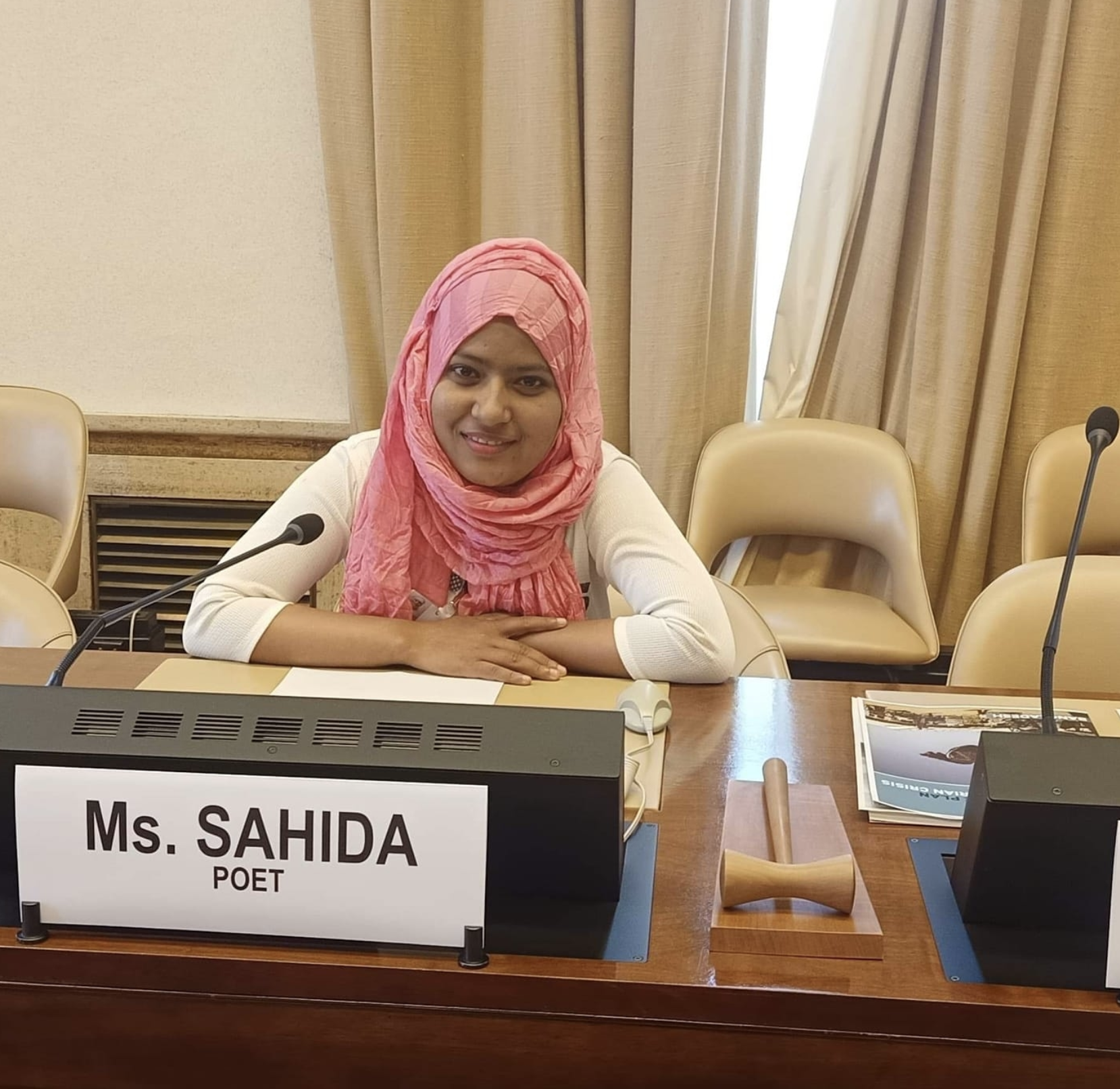
Over the last many months I have gotten to know two of the five Rohingya poets that presented at this event, Mayyu Ali and Shahida Win. Shahida’s poem “Unforgettable Dark Past” is powerful, describing the horror of genocide.

Here are some key lines from Mayyu Ali’s poem “My Words”:

“My words build bridges between ethnic communities.

My words fight against injustice and ignorance.

My words have no religion.

My words are for humanity.

My words know no borders.

My words are for peace and harmony.”


His words articulate an inclusive and humanistic vision, reflecting and echoing the sentiments of both Paul Farmer and the United Nations: we are one human family, with every human possessing “inherent dignity and … equal and inalienable rights.”

The lie of civilization
We cannot change human nature, but as one human family we can -and must- use our collective wisdom to work toward creating and sustaining social, political, and cultural systems (including laws, policies, customs, school curricula, and so on) which tamp down our more destructive and selfish urges.1  The toxic othering which feeds the Hydra must constantly and persistently be addressed on a multitude of levels, both structural and individual.

Examples of actions that have already taken been taken include the Universal Declaration of Human Rights and the establishment of the legal wing of the United Nations, the International Court of Justice. More acts are needed at both the international and nation levels, and, perhaps most importantly, at the local level.

The lie of civilization is that we are not. We are not civilized. Our global community is all too full of examples of grossly uncivil behavior. Although there continue to be loud voices chanting ‘never again‘ in response to the Holocaust last century in Europe, our global community watches right now as at least two acts with every appearance of genocide take place, one in Myanmar and the other in China. I must also point out that examples of truly uncivil acts are far too easy to find in my own nation, the United States.

The words of sociologist Theordor Adorno fit here,

‘“It would be advisable to think of progress in the crudest, most basic terms: that no one should go hungry anymore, that there should be no more torture, no more Auschwitz [or Gaza or Cox’s Bazar]. Only then will the idea of progress be free from lies.”

I have confidence that Adorno would be happy to modify the last sentence to read, ‘Only then will the idea of civilization be free from lies.’

One issue faced by humanity is that globalization is propelled forward by the algorithm of capitalism which inexorably amplifies and then feeds on our insecurities and on our fear of being judged by those around us.

We must work toward a world which does not normalize and glorify our baser tendencies such as hatred, greed, gluttony, and pride, and this means confronting the parallel Hydra of capitalism. We live in a world where there is no check on extreme wealth, with obscene pooling of money into fewer and fewer hands. We tend to confuse material and technological progress with becoming more ‘highly civilized’. I argue that to be truly civilized humanity must insure pathways to dignity for everyone, regardless of race, ethnicity, sexuality, gender identity, class, age, ability, and any other ‘toxic othering’ status markers.

Here are the wise (and perhaps with a note of sarcasm) words of an indigenous person commenting about money and more,

“Before our white brothers arrived to make us civilized men, we didn’t have any kind of prison. Because of this, we had no delinquents. We had no locks nor keys and therefore among us there were no thieves. When someone was so poor that he couldn’t afford a horse, a tent or a blanket, he would, in that case, receive it all as a gift. We were too uncivilized to give great importance to private property. We didn’t know any kind of money and consequently, the value of a human being was not determined by his wealth. We had no written laws laid down, no lawyers, no politicians, therefore we were not able to cheat and swindle one another. We were really in bad shape before the white men arrived and I don’t know how to explain how we were able to manage without these fundamental things that (so they tell us) are so necessary for a civilized society.”
― Lame Deer

Rohingya refugees in Cox’s Bazar watching the ICJ news on 23 January.

Good news on the eve of the ‘Poetry for Humanity’ event
On 23 January 2020 the International Court of Justice (IJC) issued this statement, informing Myanmar that it must take immediate measures to protect ethnic Rohingya against genocide.  A final decision on the case brought by The Gambia against Myanmar on the change of genocide may not come for months or even years, but this recent ruling by the IJC was seen as a victory by many refugees now living in Cox’s Bazar, Bangladesh.

As this good news came out, Rohingya families in Cox’s Bazar crowded around televisions, smart phones, and computers. The response to the news from the IJC was relief, joy and a sense of affirmation.  The world had heard their cries which had been captured so graphically in the poem Shahida Win read via Skype to those gathered in Yangon for the “Poetry for Humanity” event. Here are a few lines from her poem,


“And slaughtered all of Rohingya like animals

In Geneva, Switzerland speaking to UN officials.

Corpses in streaming blood
Criminals looted our properties
Set fire villagers to ash
The sight of burning we contacted
Heart-wrenching, difficult to forget

Rohingya poet Shahida Win

The lusted rapist armies
Gang raped Rohingya minor girls
Their screaming for help still echoing across Arakan’s sky
Yet reflecting into ears, difficult to forget”


Confronting the lie of civilization 
Shahida and Mayyu are confronting the lie of civilization through the simple yet powerful act of writing poems. The IJC is confronting the lie of civilization by affirming that genocide is wrong and must be stopped. These two forces, refugee poets and international courts, the quintessentially local and global, are working toward the same goal and represent what is best about humanity. They are working for a more civil world where each life holds equal value.

As we continue to imagine and then enact ways to confront the many ‘privileging forces’ of the Hydra let us be inspired by the words of poets.

Again, listen to Mayyu:

“My words are taller than the walls put between Buddhists and Muslims. My words are stronger than the hatred designed for me.”

Please contact me if you have any feedback, comments, or questions.


1This is the central message of Erich Fromm’s 1955 book The Sane Society


Tom Arcaro

Tom Arcaro is a professor of sociology at Elon University. He has been researching and studying the humanitarian aid and development ecosystem for nearly two decades and in 2016 published 'Aid Worker Voices'. He recently published his second and third books related to the humanitarians sector with 'Confronting Toxic Othering' published in 2021 and 'Dispatches from the Margins of the Humanitarian Sector' in 2022. A revised second edition of 'Confronting Toxic Othering' is now available from Kendall Hunt Publishers

More Posts - Website

Follow Me:
Twitter

4-10-4, positionality, and our status array

[Note: I have now written a series of posts that were inspired by my invitation to speak at the 2019 ALNAP gathering in Berlin. All can be accessed by clicking here; it may be best to read them in chronological order, so you’ll need to scroll down to get to the first one.]


Looks matter
In the 2016 movie Whiskey Tango Foxtrot Tina Fey plays an embedded journalist in Afghanistan. The phrase ‘4-10-4’ is used by a marine commander as he admonishes the Tina Fey character not to fraternize with his men. The ‘4-10-4’ phrase refers to the fairly old and misogynist trope that we rate each other on attractiveness, much more so males rating females than the opposite, and that this rating is done on a 1-10 scale, ten being highly desirable.

The commander’s point is obvious, that attractiveness is a matter of context, such that back in New York City a woman that would be rated a four, in Kabul would be rated much higher, even a ten by the US (and coalition) military personnel.

This is not a new topic among social scientists and other academics. That attractiveness -and particularly female attractiveness- is a factor in social interaction is the subject of Debrorah Rhode’s 2010 book The Beauty Bias: The Injustice of Appearance in Life and Law which spawned the term ‘lookism’.

A new and perhaps useful term.

Lookism refers to differential treatment based on physical appearance. Rhodes argues this is an overlooked form of discrimination in American society, and that it functions in the same manner as other major ‘isms’ like racism and sexism. Looks do matter.

This is most decidedly not just an ‘American’ thing; lookism is as old as our species in the sense that ‘beauty’ equates to fitness, and sexual selection as an evolutionary force is quite powerful.  To wit: global spending on beauty products is expected to reach USD 863 billion by 2024. By contrast, in 2018 only USD 28.9 billion was spent globally on humanitarian aid, orders of magnitude less than spent on beauty. Let that sink in.

Another Hydra head?
Have we identified another head on the Hydra?  Likely not.  As we look at the privileging factors, is seems logical to locate ‘lookism’ as a subset of Ableism. No credible data exists as to what degree ‘attractiveness’ or looks are a factor in the hiring and/or promoting humanitarian workers,  for example, but the number is certainly not zero.

Putting the attractiveness rating aside, let’s explore further the general principle that one’s status is a matter of context.

Can we use the 4-10-4 rating system with other statuses?
Allow me tell on myself with an illustration from my past. In the last 30 years I have been able to travel extensively through my university and for research. Early in my career I was able to travel to rural India. In the United States I am very middle-class but in the context of the places I have traveled in rural India I am extraordinarily wealthy.

Just driving into the village I go from a ‘6 or 7’ to a 10 (or 15), so to speak. Being seen as extremely wealthy (and by extension) powerful by others, in retrospect, felt good, especially for a person like myself who grew up in abject poverty. Could this artificial boost in social status phenomena be a factor in why some from the ‘global north’ get into the humanitarian sector or why, for example ‘global north’ tourists like to travel to exotic (read: global south) locations?

So, yes, I think we must consider the 4-10-4 phenomena as a part of understanding our status array and positionality. As humans who naturally want to feel good about ourselves we tend to gravitate toward social situations which put us into a relatively higher rating, be it physical attractiveness, social class, or any of the other statues linked to the privileging forces represented by the Hydra.


The take away for this post is that mental work done by most humanitarians in the course of a typical day is enormous, and part of that work is necessarily identity management and social context awareness. Above I have identified two of the Hydra heads (Ableism and Class) and argued how these statues are clearly a matter of context.  Being aware of one’s privileges takes constant work, but this is work that is critical as we deepen our efforts to confront the heads of the Hydra.


Tom Arcaro

Tom Arcaro is a professor of sociology at Elon University. He has been researching and studying the humanitarian aid and development ecosystem for nearly two decades and in 2016 published 'Aid Worker Voices'. He recently published his second and third books related to the humanitarians sector with 'Confronting Toxic Othering' published in 2021 and 'Dispatches from the Margins of the Humanitarian Sector' in 2022. A revised second edition of 'Confronting Toxic Othering' is now available from Kendall Hunt Publishers

More Posts - Website

Follow Me:
Twitter

ALNAP comments, Berlin 2019

ALNAP comments, Berlin 2019

[Note: I have now written a series of posts that were inspired by my invitation to speak at the 2019 ALNAP gathering in Berlin. All can be accessed by clicking here; it may be best to read them in chronological order, so you’ll need to scroll down to get to the first one.]

Reflections on what it means to be a humanitarian
Below are the comments I made as part of the ‘Jigsaw’ session at the October 2019 ALNAP conference in Berlin. These comments are an alternate version of the blog post I made about the conference theme of ‘Relevance.’

After I gave these comments, conference participants were separated into 5 large groups and each was charged with discussing questions related to one of the five privileging forces, later to report out to the larger group. Here are the questions for each group:

Patriarchy – How do we see patriarchy manifesting in the 10 dimensions of a relevant response?
Race and privilege – Which core beliefs currently present in the humanitarian sector should we question and why?
Colonialism and paternalism – What would it mean in practice to remove paternalism and colonialism from humanitarianism?
Heteronormativity and cisgendernormativity – What would it mean in practice to make humanitarian response more inclusive of people of diverse genders and sexualities?
Classism/ class privilege –How might our own class privilege and identity impact the relevance of humanitarian action we have witnessed or been part of?


Jigsaw exercise Arcaro comments

I’ll assume all in this room have wrestled with their own definition of the humanitarian imperative. In so doing you have also talked with the ghosts of Henri Dunant and Florence Nightingale in attempting to clarify basic humanitarian principles, namely humanity, impartiality, neutrality, and independence.  Recently some have suggested that these four principles need a 21stcentury update, and perhaps a special focus on relevance is in order as we imagine these updates.  In any case, all humanitarian principles, old or new, begin with the assumption that all human lives have equal worth. Given that premise, our challenge is to discuss the relevance of humanitarian aid, that is, how well our practices honor human needs in times of crisis.
 
Our question today is, “How can we better understand power and privilege so that we can maximize the relevance of our actions as humanitarians?” The first part of question, “How can we better understand power and privilege?” has been discussed in depth by anthropologists, sociologists, and political scientists since the beginning of those disciplines nearly 150 years ago, and these questions are critically relevant as we examine how the humanitarian sector has evolved and is now functioning.  To be clear, all humanitarians enjoy some level of power and privilege, and better understanding both our personal privileges and those of our organizations we can better move toward the optimization of our actions.
 
Numerous privileging forces exist in various ways around the world including within the humanitarian sector. Some of the more deeply rooted are Patriarchy, Race and privilege, Colonialism and paternalism, Heteronormativity and cisgendernormativity, and Classism and class privilege. By understanding both the history and the current manifestation of these privileging forces –and by considering that there may be other privileging forces that need to be described- we will be better equipped to address critical relevance questions.
 
A Hydra, the many-headed serpent in Greek mythology, is a good analogy here for ‘privileging forces’. According to mythology, this dragon-like beast is immortal, and when one of its heads is cut off two more grow in its place.  So it is with privileging forces, an ever-present demon humanitarians must fight that has many toxic manifestations. As humanitarians, this epic battle must be fought first in the service of relevance, that is, (to quote from Sophia Swithern’s ALNAP background paper), “… in line with the priority needs of affected people.” Finally, perhaps we should keep in mind that though fighting these demons individually is a natural impulse, perhaps the body of the Hydra should be attacked most vigorously. I am confident you will find the facilitators of the breakout sessions you are soon to attend are mindful that these privileging forces are all interconnected and even at times create a toxic synergy.
 
By exploring questions about each entrenched privileging force we can move closer to addressing the issue of relevance.

The Hydra is ancient; most of these privileging forces are as old as humankind.  By exploring questions about each entrenched privileging force we can move closer to addressing the issue of relevance. There are many important questions to be asked, but here are some examples.
 
Patriarchy: How are the needs of women being met by predominantly male decisionmakers?

Race and privilege:  How can ‘white’ humanitarians understand the needs of POC or the nuances of ethnic differences?

Colonialism/paternalism: How can donor entities primarily from the Global North respond to the real needs of those in the majority world?

Heteronormativity/cisgendernormativity: In a world dominated by heteronormativity how are the needs of people with diverse sexual orientation, gender identity, gender expression and sex characteristics being addressed?

Classism/class privilege:  Given at times extreme social class disparities between humanitarians and the affected community how are decisions and actions made less relevant by class bias?
 
Unless you are a LGBTQI+ woman of color from a poor background someplace in the majority world (Global South), at least one of these privileging forces applies to you. My guess is that more than one applies to most. In my case, all of these apply to me as a hetero white male from the US. Because they will hit close to home, the questions that will be raised today about power and privilege will be uncomfortable to discuss. From this discomfort we hope that honest insights will be shared and that we can proceed forward armed with ideas that reshape our awareness of privileging forces thus making our humanitarian actions ever more relevant.  I invite you to listen, learn, share, and challenge yourself and those in your session in the spirit of openness and a common search for growth.  From this discomfort we hope that honest insights will be shared and that we can proceed forward armed with ideas that reshape our awareness of privileging forces thus making our humanitarian actions ever more relevant.


The outcomes
When the ALNAP participants reassembled after their group discussions, they were asked to address these additional questions:

1. Which privileging force seems the most difficult to confront and why?

2. What one question should participants ask themselves as they continue on with the rest of this meeting?

3. Based on discussions from this exercise, what is one step that you as individuals and/or your organization        could take right now to make humanitarian response more relevant for affected people?

Our discussions were lively, and one theme kept reemerging, namely the need to not just hear but to listen to the voices from the majority world. One of most powerful of these voices was that of Arbie Baguios, who describes himself as a ‘Decolonial Systems-Thinker’.  His presentation at ALNAP focused around four pieces of advice for those in the donor world, namely

    • Fund courageously
    • Trust generously
    • Measure differently
    • Be a bridge, not an expert

Our work is ongoing and challenging, constantly demanding fresh perspectives and wise voices.

An updated definition
I wrote this for a book chapter 10 years ago:

Global citizens understand at a fundamental level that all humans are born with basic rights, share one planet and thus one fate and, further, embrace an ideology of human growth and potential based upon the assumption that all global citizens should work toward creating a global social structure wherein all humans are not only allowed to reach their full potentials –intellectual, physical and spiritual- but are actively encouraged to do so. But, that this fulfilling of human potential is done in such a way as to honor the fact that humans are only one species among many, and that we must live in sustainable harmony with all life forms on the planet.  Further, global citizens understand that just as they have certain rights as global citizens, this role entails an array of important responsibilities.

Based on my experience at the ALNAP conference and on my long term research into the humanitarian sector, I offer this aspirational definition of a humanitarian.

Humanitarians understand at a fundamental level that all humans are born with basic rights, share one planet and thus one fate. Those working in the humanitarian ecosystem embrace an ideology of human growth and potential based upon the assumption that humanitarians should work toward facilitating social structures wherein every human is not only allowed to reach their full potentials –intellectual, physical and spiritual- but are actively encouraged to do so in ways that place the highest priority on maintaining and enhancing the dignity of each individual, always aware of the complex array of privileging forces in which they and the members of the communities with which they work are enmeshed. Humanitarians keep in mind that this fulfilling of human potential must be done in such a way as to honor the fact that humans are only one species among many, and that we must live in sustainable harmony with all life forms on the planet.  


Tom Arcaro

Tom Arcaro is a professor of sociology at Elon University. He has been researching and studying the humanitarian aid and development ecosystem for nearly two decades and in 2016 published 'Aid Worker Voices'. He recently published his second and third books related to the humanitarians sector with 'Confronting Toxic Othering' published in 2021 and 'Dispatches from the Margins of the Humanitarian Sector' in 2022. A revised second edition of 'Confronting Toxic Othering' is now available from Kendall Hunt Publishers

More Posts - Website

Follow Me:
Twitter