Nobel Peace Prize recipient and defender of Myanmar’s genocidal actions
This is an important week This week there is a Brexit vote in the UK and impeachment hearings against President Trump in the US. These two events are consequential, to be sure, but perhaps no more so than what will be happening in the Netherlands.
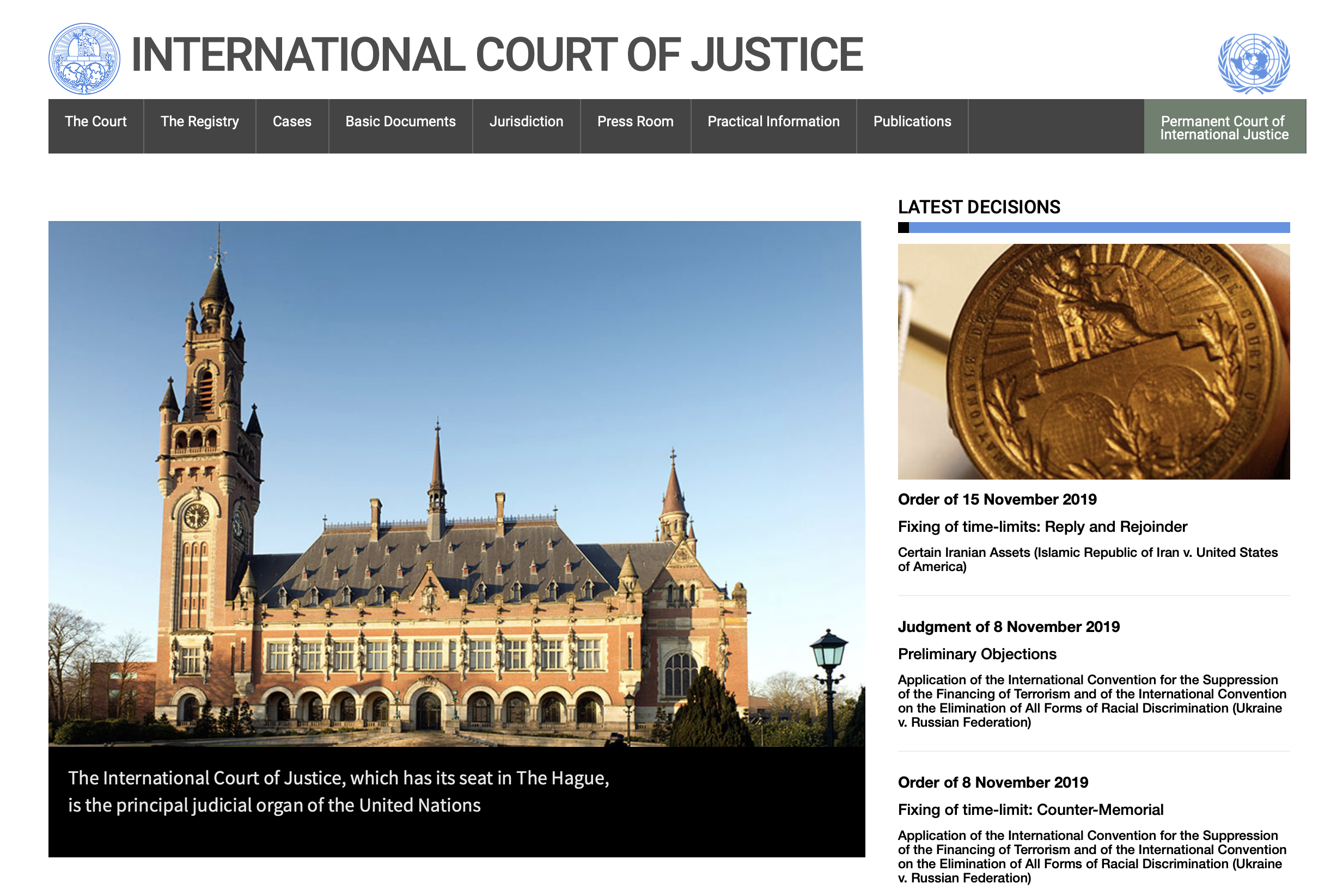
Brought up on charges of committing genocide by The Gambia, Myanmar goes on trail in front of the International Court of Justice. Heavy, somber, and immensely powerful words, those.
In anticipation of the hearing in The Hague, I spent part of this afternoon reading the 46 page document outlining Gambia’s case against Myanmar for the genocide against the Rohingya. It begins,
“In accordance with Articles 36(1) and 40 of the Statute of the Court and Article 38 of the Rules of Court, I have the honour to submit Application instituting proceedings in the name of the Republic of The Gambia (“The Gambia”) against the Republic of the Union of Myanmar (“Myanmar”). Pursuant to Article 41 of the Statute, the Application includes a request that the Court indicate provisional measures to protect the rights invoked herein from imminent and irreparable loss.
This Application concerns acts adopted, taken and condoned by the Government of Myanmar against members of the Rohingya group, a distinct ethnic, racial and religious group that resides primarily in Myanmar’s Rakhine State. These acts, which include killing, causing serious bodily and mental harm, inflicting conditions that are calculated to bring about physical destruction, imposing measures to prevent births, and forcible transfers, are genocidal in character because they are intended to destroy the Rohingya group in whole or in part. They have been perpetrated in manifest violation of the 1948 Convention on the Prevention and Punishment of the Crime of Genocide (the “Genocide Convention”).” (emphasis added)
Via the internet I will be watching the streamed proceedings, and I will be following the international media for news about protests and counter protests in the streets. My heart goes out to my many Rohingya contacts who I know will be watching as well -as much as possible, given the heavy restrictions on cell and wifi access. I am sure some will find a way.
The Hydra wants blood
There is much to say about the particulars of the Rohingya genocide case, but I want to address a larger issue, the fact that now, in 2019, humanity is still dealing with this grotesque phenomena. How is it that overt and extreme racism continues to be normalized among our ‘civilized’ nations? As I search for answers I am reminded of the words of Erich Fromm who, in his book The Sane Society, used the phrase ‘the lie of civilization.’ His point is simple but clear. Though we are more technologically advanced and are making ‘progress’ in terms of our control over nature, as a species were are getting less, not more civilized as in being more ‘civil’ toward each other.
The Hydra wants blood, and uses fear to induce those in power to orchestrate prolonged, systematic, and brutally effective pogroms, genocides by another name.
Social philosophers throughout history have grappled with the problem of human nature and our species’ tendency to fear others. Here now in the 21st century we are still incapable of controlling this base urge. And so the Myanmar military, the ‘Tatmadaw’ went full bore, enthusiastically, about the task of dealing with the ‘Bengali’ problem. The dehumanization of the Rohingya did not start with the 1982 Burma Citizenship Law, but the embedded privileging forces of race, ethnicity, and religion ultimately fed the Hydra the blood meal it craved. Not unlike Rwanda. Not unlike Cambodia. Not unlike Bosnia. Not unlike 1930/40’s Germany.
My point is painfully obvious. The logical extension of unchecked ethnocentrism, racism, and nationalism is genocide. And humanity has yet to figure out how to permanently blunt this deadly process. The Myanmar case before the International Court of Justice is a critical moment in the evolution of our ‘civilization.’
Read here for an op-ed on this topic that I co-authored with Zayed Jack, a Rohingya refugee living in Cox’s Bazar.
The decision
What the International Court of Justice judges decide, finally, will not be known for weeks or months. The facts, for most, are clear. What if something less than a full ‘guilty’ verdict is handed down?
Tom Arcaro is a professor of sociology at Elon University. He has been researching and studying the humanitarian aid and development ecosystem for nearly two decades and in 2016 published 'Aid Worker Voices'. He recently published his second and third books related to the humanitarians sector with 'Confronting Toxic Othering' published in 2021 and 'Dispatches from the Margins of the Humanitarian Sector' in 2022. A revised second edition of 'Confronting Toxic Othering' is now available from Kendall Hunt Publishers
Religion is arguably one of the most egregious ‘othering’ forces that has ever existed. All through recorded history people have been marginalized -and in countless cases murdered- because they were of the ‘wrong’ religion.”
“The normal and the stigmatized are not persons, but perspectives.”
-E. Goffman, Stigma, 1963
Prologue
As I write this, Myanmar’s Daw Aung San Suu Kyi and her team are preparing to respond to formal charges of genocide against the Muslim Rohingya at the International Court of Justice at the Hague. The world will be watching these proceedings, and we as a global community must continue demanding justice be served and the dignity of all humans is defended.
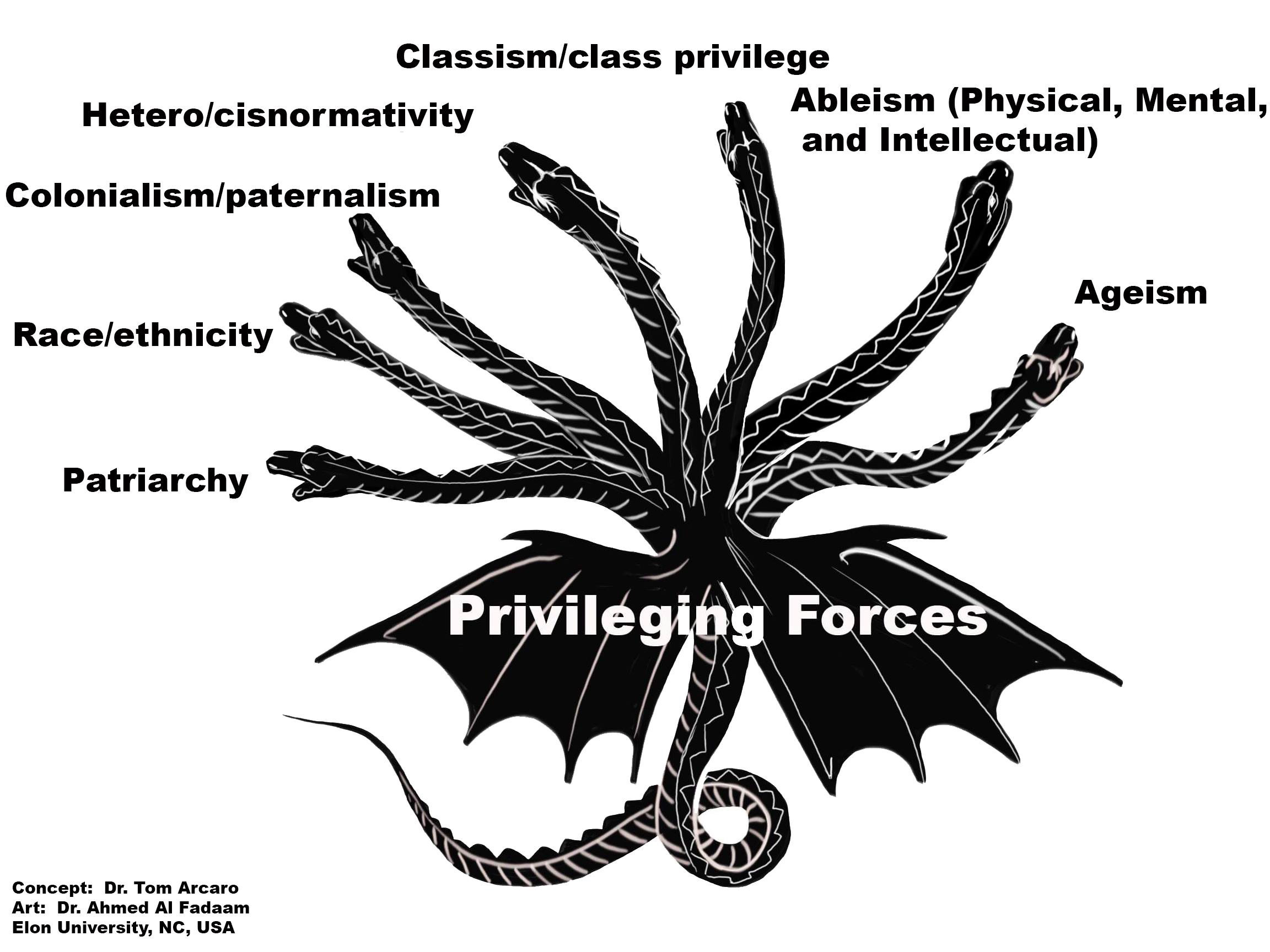
Review and context In a previous post I talked about both ascribed and achieved statuses, how these are tied to the process of othering, and the inevitability that this process leads to the rise of various ‘privileging forces’, namely, patriarchy, race/ethnicity, colonialism/paternalism, heteronormatity/cisnormativity, classism/class privilege, ableism, and ageism. My suggestion was that we should all be aware of the processes underling the generation and perpetuation of various ‘privileging forces’ that impact everyone on the planet.
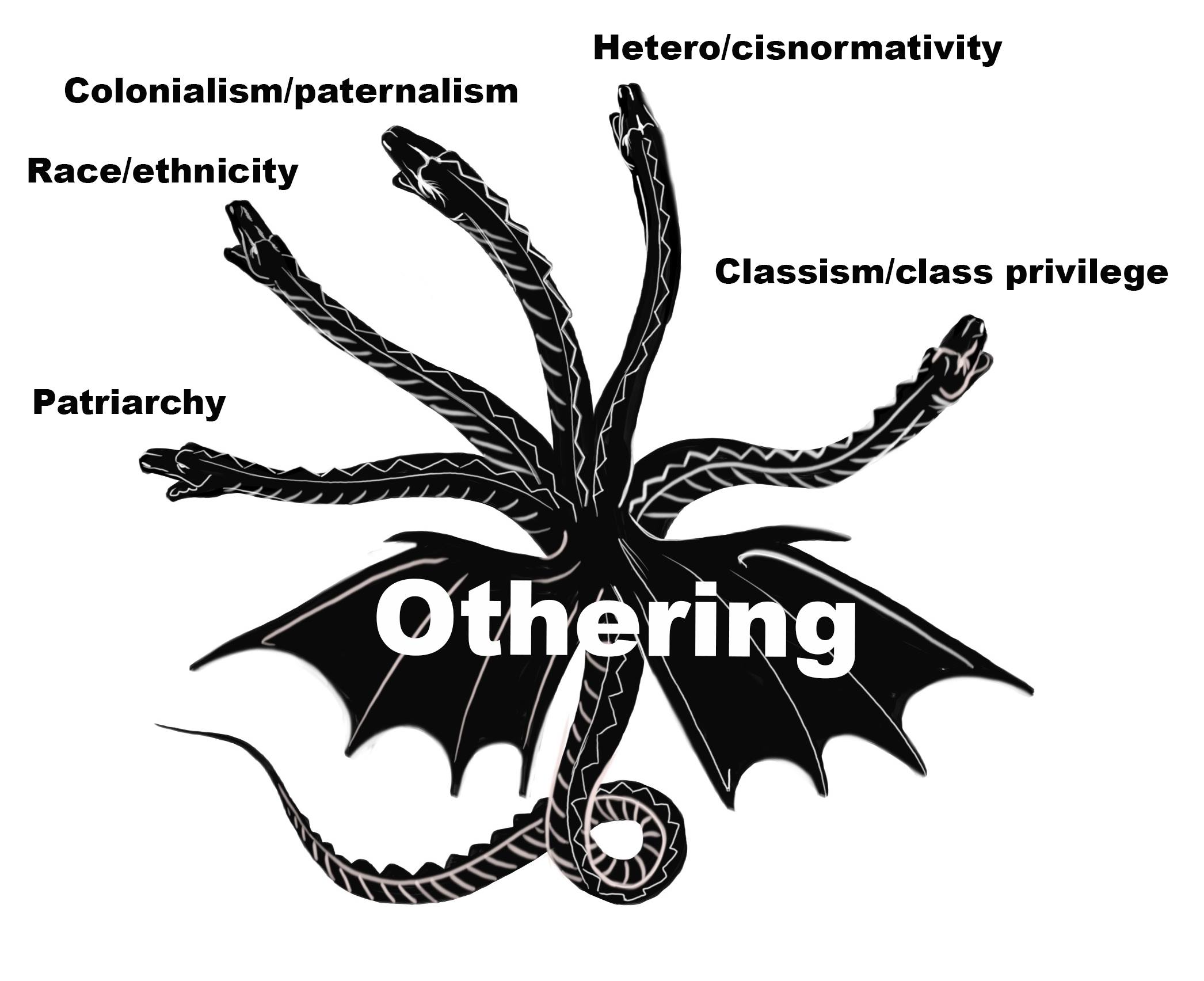
The Hydra image used to illustrate these forces, I argued, was a work in progress. Indeed, one of the most egregious and age-old tools of ‘othering’ is left out of this image, or at least not amplified properly. That force is religion.
As a sociologist I know that religion is a cultural universal, and that one of the most important elements of most humans self identity is their status vis-a-vis some faith tradition.
Where does religion fit into this drawing?
Muslim, Zoroastrian, Jew, Catholic, Hindu, Buddhist, Protestant, and the list goes on. Increasingly, to be inclusive we must also include the status ‘non-believer.’ Everyone has a religious status, that is clear, and that status impacts how the individual feels about her/himself, but more importantly, it impacts how the person is seen by others. At times, one’s status relative to religion becomes the master status, the one most salient.
Some statuses are obvious, like age and, in many cases, race. These statuses are apparent to everyone as soon as they see your face. Other statuses can be hidden, disclosed at will. One’s sexuality, for example, can remain private. The same is true for one’s religion, though at times a religion is presumed by ethnicity or other factors.
The gaping hole in the Hydra model: religion as a tool of persecution
Religion is arguably one of the most egregious ‘othering’ forces that has ever existed. All through recorded history people have been marginalized -and in countless cases murdered- because they were of the ‘wrong’ religion. The list of examples here is long, bloody, and full of hypocrisy. The Crusades. The holocaust. Use of the Christian Bible to justify slavery, racism, homophobia, and mysogny in the US and virtually everywhere else around the globe. Groups who misuse the Koran to perpetuate violence against all ‘infidels’: ISIS, Boko Haram, Al-Qaeda, Al Shabbab.
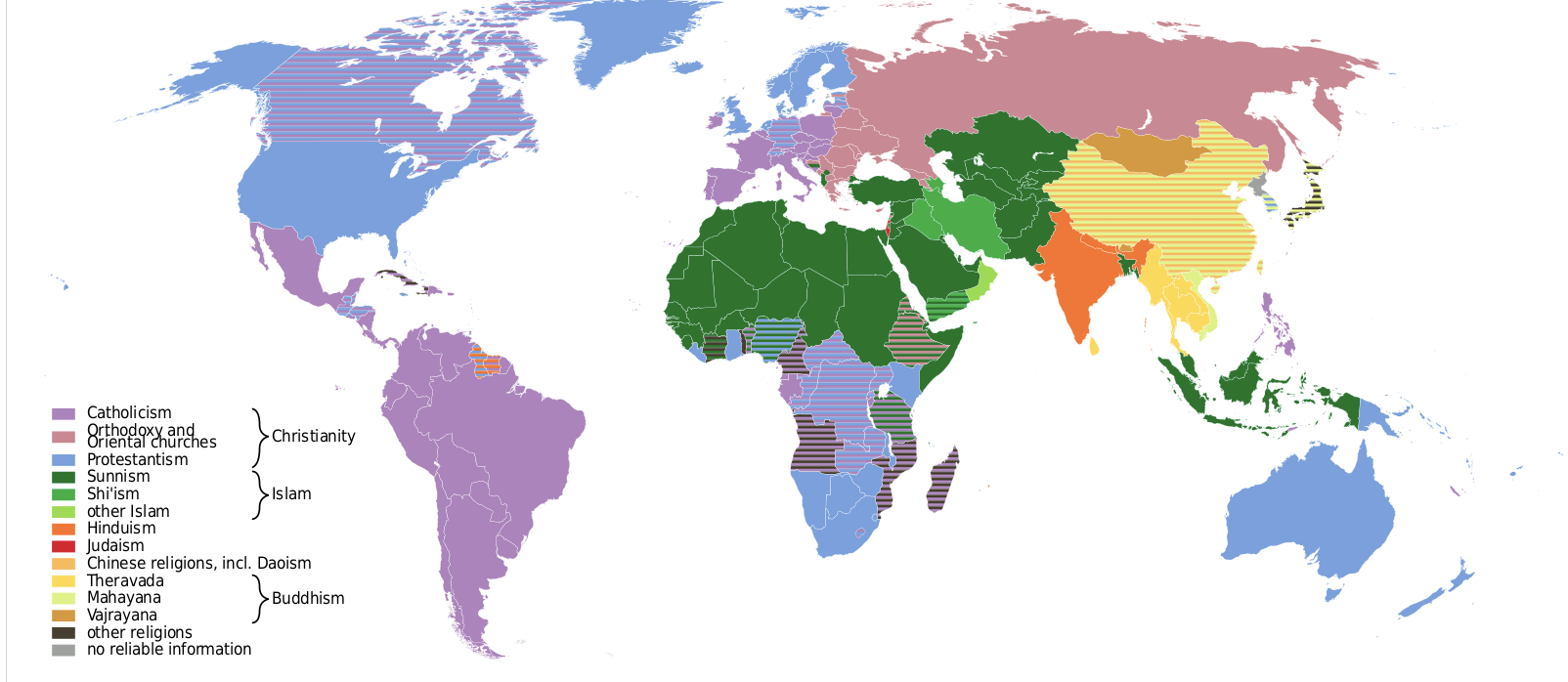
But there can be something as bad as being of the ‘wrong’ religion, and that is being an atheist. In 2014 from the Pew Research Center it was found that laws restricting apostasy and blasphemy are most common in the Middle East and North Africa, where 18 of the region’s 20 countries (90%) criminalize blasphemy and 14 (70%) criminalize apostasy. While apostasy laws exist in only two other regions of the world – Asia-Pacific and sub-Saharan Africa – blasphemy laws can be found in all regions, including Europe (in 16% of countries) and the Americas (29%).
Looking at history we can see a pattern, namely in any nation or region the religion of those in power is frequently used as a justification for oppression and even genocide against those not of their faith. Here are just a few recent examples:
The US based Pew Research Center has been tracking restrictions based on religion and had this to say,
“Over the decade from 2007 to 2017, government restrictions on religion – laws, policies and actions by state officials that restrict religious beliefs and practices – increased markedly around the world. And social hostilities involving religion – including violence and harassment by private individuals, organizations or groups – also have risen since 2007, the year Pew Research Center began tracking the issue.”
The number of nations with restrictions has risen from 40 in 2007 to 52 in 2017. Being in the religious minority, wherever you are in the world, is never easy and can oftentimes be fatal.
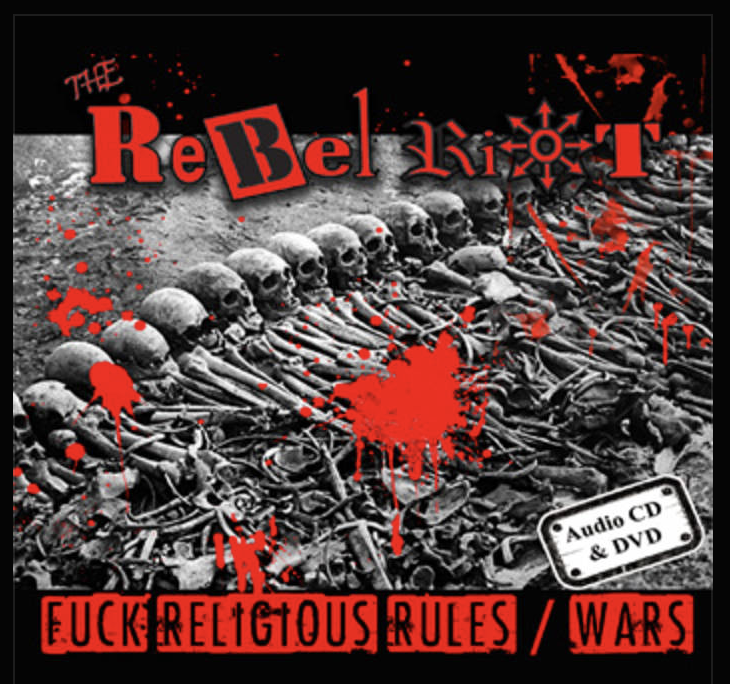
Here is one response to religious othering that many, particularly atheists, might agree with. This song/video titled Fuck Religious Rules/Wars by the Burmese punk band Rebel Riot is a blanket condemnation of all violence based on religious differences
Religion as a privileging force Referring back to the Hydra, it is easy to see that religion has been used as an amplifying force by many of the heads. It has reinforced sexism and misogyny (patriarchy), been used to justify racism and ethnic hatred, it was
Rebel Riot, founded in 2007, is a Burmese punk band. This album was released in 2014.
used amply and often by colonizing forces to subjugate, control, and mollify. In many cultures religion has been used persecute non-heteronormative/cis-normative individuals, it has been used as a tool to placate the poor and have them accept a life of suffering, and more so in earlier historical periods, was used to marginalize the physically or mentally disabled. The outlier head on the Hydra in this respect is ageism, where religion tends to support and honor elders.
All of the privileging forces amplify each other in a myriad of ways, but religion seems to be in a class by itself in terms of its toxic potential. Reading and/or watching debates on the question as to whether the net impact of religion is positive or negative is instructive, with those who argue in favor of the ‘net negative’ impact have much to say about how religion has often been used to justify ‘othering’ and subsequent marginalization.
A major complicating factor is the fact that religion and ethnicity are often woven together in complex cultural ways. A classic example are those who are ethnically/culturally Jewish but choose not to subscribe to the Jewish religion. Similarly, there are many who are ethnically/culturally Muslim but are otherwise non-religious. This conflation of religion and ethnicity is, indeed, a somewhat universal phenomena.
Relevant to all humans and humanitarians
One basic truism in sociology is that who we are is a function of who is seeing us, i.e., our social context; we are as others perceive us. As Erving Goffman put it in his book Asylums, “The self in this sense is not a property of the person to whom it is attributed, but dwells rather in the pattern of social control that is exerted…. This special kind of institutional arrangement does not so much support the self as constitute it.” (1961: p. 168)
Taking a look at a (non-existent) ‘typical humanitarian’, she/he moves through an array of social contexts, each a different audience. Just a few of these audiences relevant to the workplace include
superiors (bosses and bosses of bosses)
peers (those at the same level)
subordinates
members of the affected communities (if relevant)
Though there are important exceptions, as a matter of individual impression management one’s status vis-a-vis religion can be shared or hidden in various social settings. To complicate things even further, presenting oneself as a member of one faith or another (or no faith) is frequently easy to do. As a species we are quite adept at lying to each other (and even to ourselves) when there is some benefit to be reaped.
Depending upon where she/he is deployed, religious status may need to be shared, not shared, or lied about, depending upon the situation. Imagine a Jewish humanitarian being deployed to the Middle East, an atheist being sent to Bangladesh, or a Sunni Muslim being assigned to work in a Shia controlled area. Humanitarian workers must take into account how they will be seen in all contexts and respond accordingly.
Last thoughts on religion
Religious status can be rendered minimally important by both individuals and by organizations through actions, policies and effective impression management (thanks to you, comms!). Most major faith-based INGO’s understand that in order to be effective overt displays of their religiosity must remain restricted to high level insiders and closed settings. World Vision, for example, is a Christian faith based INGO but has long history of being a major player in most humanitarian responses around the globe, earning trust even in the Islamic world by effectively presenting themselves and their efforts as religiously neutral, the very opposite of proselytizing.
That said, circumstances can arise, typically in times of conflict or stress, when religious status can define anyone and any organization, making them a target. Perhaps, yes, the Hydra needs to have some representation of the powerful force of religious persecution. I’ll get the art department to work on that.
As always, please contact me at arcaro@elon.edu if you have any questions, comments, or feedback.
Tom Arcaro is a professor of sociology at Elon University. He has been researching and studying the humanitarian aid and development ecosystem for nearly two decades and in 2016 published 'Aid Worker Voices'. He recently published his second and third books related to the humanitarians sector with 'Confronting Toxic Othering' published in 2021 and 'Dispatches from the Margins of the Humanitarian Sector' in 2022. A revised second edition of 'Confronting Toxic Othering' is now available from Kendall Hunt Publishers
All human lives have equal worth
Humanitarian principles, however broadly defined, begin with the assertion that all human lives have equal worth. Given that premise, our challenge is to understand the social forces which are a threat to that assumption and frequently lead to humanitarian crises.
In previous posts (see here and here) I discuss how the process of ‘othering’ is universal, and throughout history has inexorably lead to the entrenchment and ossification of many ‘privileging forces’ that continue to have massive impact on all global cultures and, necessarily, impact the functioning of the humanitarian ecosystem. I argue that fighting each of these privileging forces individually may seem both necessary and logical, but that to be most effective we must, metaphorically, fight the body of the Hydra, i.e., the process of othering itself. Othering fuels the Hydra’s body and thus all of its heads.
A more just world will be achieved when we acknowledge and honor our differences and simultaneously counter all arguments (and ‘baked in’ social, political, and cultural institutions, norms, policies, and laws) that allow social status differentiation to degenerate into stratification, that is, which justify one status being privileged above another. On a conceptual level, I argue this struggle cannot be unidimensional and/or only focus on one location, situation, or issue, but rather needs to employ the concept of intersectionality. That said, it must be granted that on practical level for any individual at any one point in time, the fight for justice may specific to one head of there Hydra and also that the implementation of any changes must be incremental, specific, and local. Addressing privileging forces is neither fast nor easy. But fundamental social change never is.
“This focus on the most privileged group members marginalizes those who are multiply-burdened and obscures claims that cannot be understood as resulting from discrete sources of discrimination. I suggest further that this focus on otherwise-privileged group members creates a distorted analysis of racism and sexism because the operative conceptions of race and sex become grounded in experiences that actually represent only a subset of a much
more complex phenomenon.”
Her phrase ‘multiply burdened’ is apt, and a bit later in the article she explains,
“Because the intersectional experience is greater than the sum of racism and sexism, any analysis that does not take intersectionality into account cannot sufficiently address the particular manner in which Black women are subordinated.”
Our challenge is to take her phrase “…the intersectional experience is greater than the sum of racism and sexism” and add in all of the other ‘isms’ that make up the heads of the Hydra seen in this illustration.
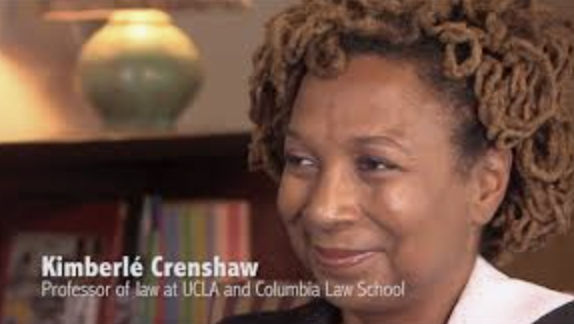
I must add that most of what I discuss in this and my two previous posts was addressed in rich detail by sociologist Patricia Hill Collins in her 1990 book Black Feminist Thought: Knowledge, Consciousness and the Politics of Empowerment. The reader is encouraged to read both Crenshaw and Hill’s works for a better understanding of intersectionality.
Multiply privileged
For this post I offer a flipped view of Crenshaw’s discussion, and explore the many complexities related to the idea of ‘multiple privileges.’ At least one or more of these privileges are possessed by all humanitarians.
One exercise we can do is list our own privileges. Using myself as an example, (moving from left to right on the Hydra) I am a male, white, from the ‘Global north’, straight, living in the upper-middle class, mentally stable and physically able, and old, but not quite elderly. I am ‘status positive’ all the way around. Keeping this all very binary and allowing either a zero or 1 on each of the seven heads, my score would be a 6.5 out of 7 (I am starting the feel the subtle signs of marginalization as I near retirement). What is your total privilege?
Note: Two points. First, each of the seven privileges represented are clearly not binary, and a more thorough discussion would list each, expanding on the shades of privilege possible. Secondly, I am aware that there are other privileging forces, some general and others more culturally or situationally specific. Please bear with me as I proceed with this more narrow view.
Privilege comes from perceived social status. Considering our Hydra and the seven privileging forces illustrated (patriarchy, race/ethnicity, colonialism/paternalism, heterosexual/cisnormativity, classism/class privilege, ableism, and ageism), we can view individuals as having an array of social statues. Most social statuses are ascribed, i.e., granted at birth. Some statuses are achieved and can be earned (e.g., training or educational degrees or getting hired for a job). For all of us, both kinds of statues, ascribed and achieved, impact directly how the privileging forces act upon us during our lives.
In the eye of the beholder
Here we must include the concepts ‘master status’ and ‘identity management.’ All individuals possess an array of statuses, but in any specific social setting one status may become more important than the others, i.e., their situational ‘master status.’ Restated, one’s master status is fluid, and is relative to the specific social setting; it is what the others in the context view as your most salient feature.
For example, if you are white female in a room full of POC females, your gender may be less relevant than your race; your race is your master status in this context. Identity management is critical when examining those statuses which can be hidden or are otherwise not visually apparent. A case in point is that in many circumstances one’s sexuality can be disclosed or not disclosed as a matter of choice by the individual, that is, in some cases we are able to manage our identity with regards to those statues which are not readily apparent. Other examples are one’s religion (or lack thereof), national origin, social class, mental illnesses, etc.
Using the equation below, it is possible to give yourself a privilege score, overall and in a typical work context, based on your various statuses. An individual’s total privileging forces are a function of the intersection between one’s position vis-a-vis the various privileging forces of patriarchy, race/ethnicity, colonialism/paternalism, heterosexual/cisnormativity, classism/class privilege, ableism, and ageism. In short form, TP = f(P*R*C*H*Cl*Ab*A), where TP = total privilege, and the remaining letters in the formula represent the various heads of the Hydra. Anyones TP will vary dramatically over time with the weight given to each variable depends upon the sociocultural context.
Consider how your score changes depending upon the interactional context, even as you move from one part of your day to the next. The best we can do in any one moment is to (1) be aware of our privilege score overall, (2) understand both the immediate and longer term social contexts in which we function, (3) understand how our privileges are perceived by those with which we are interacting, (4) and work to acknowledge relative privileges and how these may impact the interactions. We must constantly ‘take the role of the other’ and imagine what they see when they see us, and most importantly, what they perceive as our master status.
Checking your privileges
Most are familiar with the concept of white privilege, and, if they present as ‘white’, know to be mindful of the privilege that comes from this status. To an equal extent, I’ll presume, most are aware of male privilege and the need to check same. As we go through the heads of the Hydra, each comes with a corresponding ‘privilege’. Hetero privilege, class privilege, able privilege, age privilege, and so on. All of these must be in the vocabulary of those wishing to be sensitive to the various privileging forces.
Perhaps the most relevant for many humanitarians is ‘Global north’ privilege. Though the majority of humanitarians globally are from the majority world (also referred to as the ‘Global south’), many work for INGOs that are (still) headquartered in the Global north, though this may be changing in part are as reaction to the Grand Bargain agreed to in 2016. Key here is understanding the importance of unit of analysis, i.e., whether one is considering the individual or the organization in which the person works.
All humanitarians need to ask of her/himself questions about status and privilege, but it is also important to think in terms of one’s organization. The reflexive question, ‘am I being paternalistic (racist, homophobic, etc.)?’ must be asked. But equally important, and in terms of sector-wide change, critical, is the question, ‘is my organization being paternalistic (etc.)?’ In the vernacular of sociology we must pay attention to both units of analysis.
Putting it all together
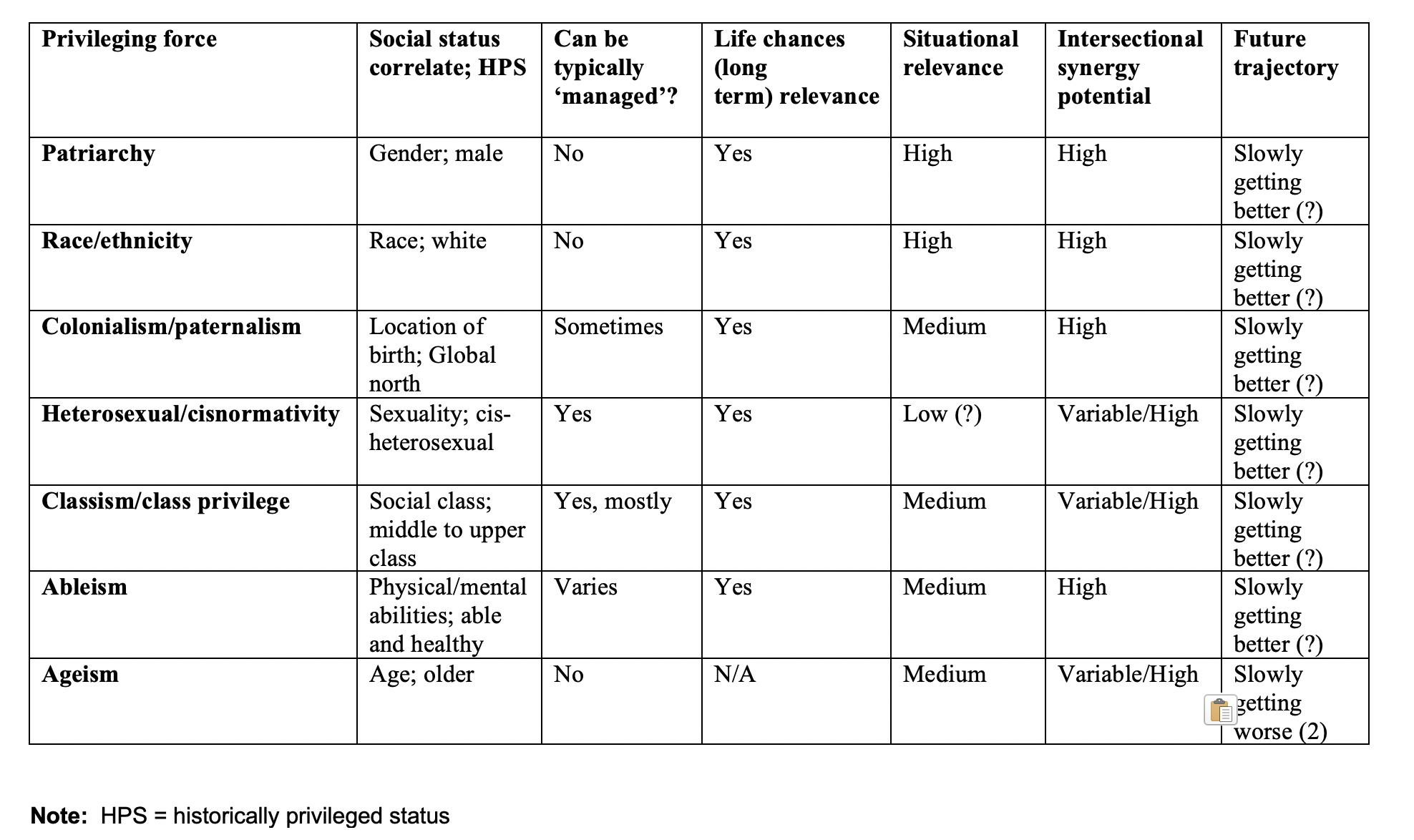
The table to the right offers a summary. Down the vertical axis are the privileging forces and along the horizontal are several questions that can be asked of each.
All of the cells have been filled in tentatively and with a full realization that changes will be (should be) suggested by colleagues and critics; this table is a starting point for discussion.
From left to right this table breaks down the Privileging forces, (1) the social status correlate to this force (and gives the historically privileged status), (2) questions whether the status can be managed, (3) assesses the long term life relevance for the individual, (4) assesses the situational relevance, (5) gauges the ‘intersectional synergy potential’, and finally (6) makes a projection as to the future prospects are for social change to minimize or eliminate each privileging force.
Keeping in mind Crenshaw’s point that each force does not simply add on to the others but rather interacts and creates a multiplicative effect, the ‘intersectional synergy potential’ is the category which cries out for more clarification and explication, perhaps in another post.
As for the future trajectory, the most desired outcome is that in the future, once we have fully understood and defused the process of othering, all of these privileging forces will be neutralized.
All of the above are draft ideas, not ready for prime time; just the opposite. I offer these thoughts hoping that others will actively critique the scheme I have proposed. And that is how productive discussions evolve: dialectically and through back and forth discussion.Thesis generates antithesis, and the tension created yields a synthesis which itself may generate a new antithesis and subsequent new syntheses. Iterative dialogue is critical, vital, and the only productive pathways forward.
Humanitarian principles and intersectionality Above I have argued a fairly obvious point, namely that humanitarian principles begin with the assumption that all lives have equal value and that the process of othering gives rise to an array of privileging forces which are inherently anti-humanistic/humanitarian. Most humanitarians are ‘multiply privileged’ and thus face a challenge regarding how to be proactive in first understanding their statuses and then in addressing this power asymmetry in their actions (1) as individuals, colleague to colleague and (2) when interacting with the beneficiary community. Humanitarians must also be keenly aware of the power differentials between their organization and the organizations with which they work, and that, if working for a Global north based INGO (or other organization, e.g., UN), their master status may be at times that of ‘INGO official.’
Mindful progress forward addressing all of the heads of the Hydra means addressing the entire othering process, not an easy or simple job for those with high overall privilege scores. I suggest we all take lessons from those with lower overall privilege scores, making a special effort to learn from those like Kimberlé Crenshaw hailing from the academic world and, better yet, from those within their own organizational ranks.
This is a work in progress. Feedback, comment, and critique are welcome. Contact me at arcaro@elon.edu.
Tom Arcaro is a professor of sociology at Elon University. He has been researching and studying the humanitarian aid and development ecosystem for nearly two decades and in 2016 published 'Aid Worker Voices'. He recently published his second and third books related to the humanitarians sector with 'Confronting Toxic Othering' published in 2021 and 'Dispatches from the Margins of the Humanitarian Sector' in 2022. A revised second edition of 'Confronting Toxic Othering' is now available from Kendall Hunt Publishers
“…humanitarian action is top-down, externally driven, and relatively rigid process that allows little space for local participation beyond formalistic consultation. Much of what happens escapes local scrutiny and control. The system is viewed as inflexible, arrogant, and culturally insensitive. This is sometimes exacerbated by inappropriate personal behavior, conspicuous consumption, and other manifestations of the ‘white car syndrome.’ Never far from the surface are the perceptions that the aid system does not deliver on expectations and is ‘corrupted’ by the long chain of intermediaries between distant capitals and would-be beneficiaries.” (p. 187)
“Humanitarianism started off as a powerful discourse; now it is a discourse of power, both at the international and at the community level.” (p. 190)
–Antonio Donini “Humanitarianism, Perceptions, and Power” in In the Eyes of Others (Abu Sada, editor; 2012)
Privileging forces
Background
Earlier this month I was honored to be among the 200+ gathered in Berlin for the 32nd annual meeting of the Active Learning Network for Accountability and Performance (ALNAP). Established in 1997, ALNAP is an international sector wide humanitarian network made up of representatives from various related humanitarian organizations and experts who do research in this area.
I served as one of the facilitators in a ‘jigsaw” exercise organized to help the participants link the conference theme of ‘relevance’ to the enduring historical patterns and norms related to patriarchy, race and privilege, colonialism and paternalism, heteronormativity and cisgendernormativity, and classism/ class privilege.
Privileging forces
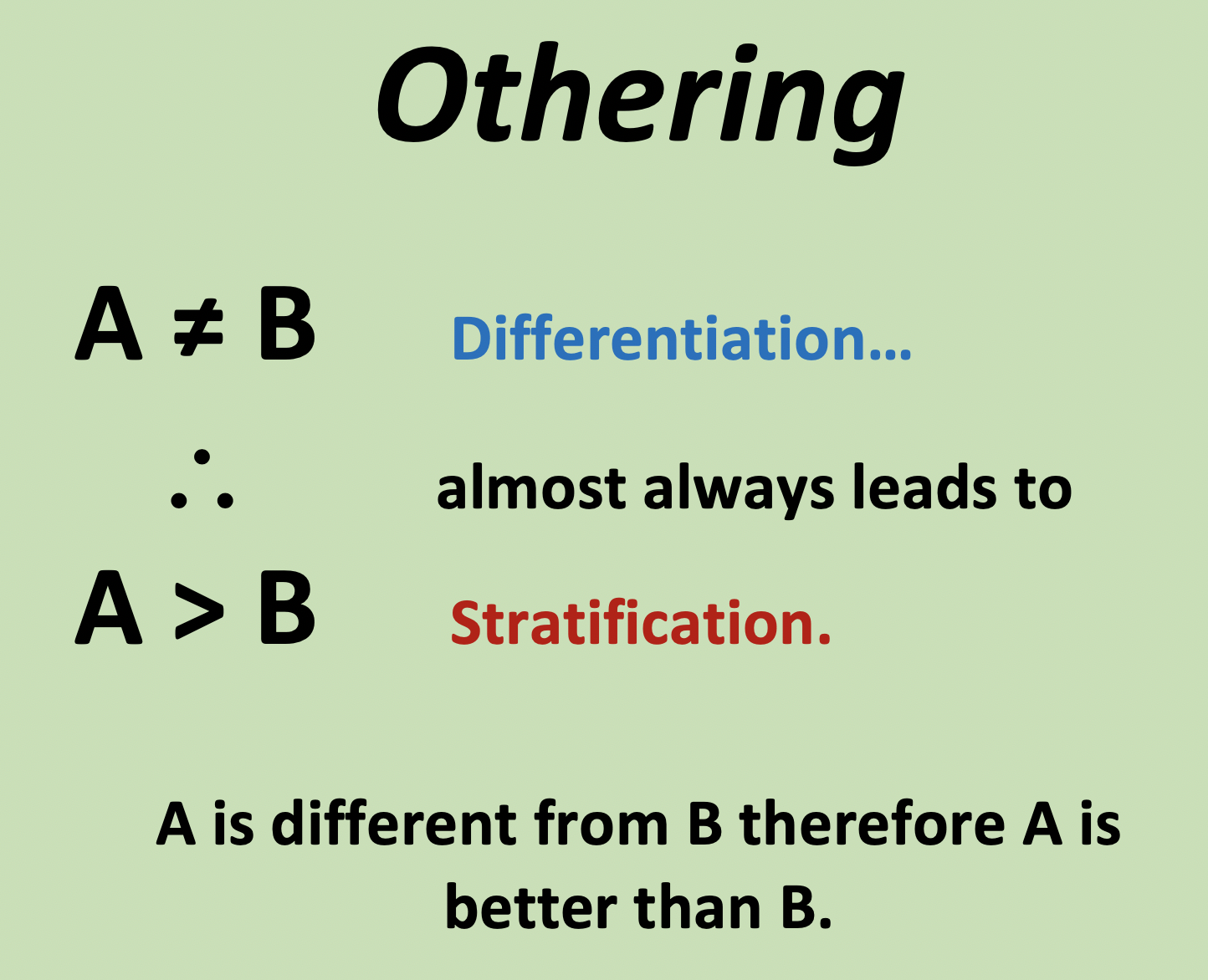
My part was to briefly introduce and frame the topics for the breakout sessions related to these five ‘privileging forces’. In the days before the conference I posted a (long) blog post where I discuss relevance and make the observation that each of these five ‘privileging forces’ have the same origin, namely the universal phenomena of ‘othering’. In short, whenever A is different from B and an asymmetry of power exists, there is a tendency for A to assert dominance over B. Stated alternately, social differentiation tends to degrade into social stratification.
In preparation for the conference, I worked with a close friend and colleague (artist and journalist Dr. Ahmed Al Fadaam) to create an illustration which would add depth to my spoken words. As I noted in Berlin,
“A Hydra, the many-headed serpent in Greek mythology, is a good analogy here for ‘privileging forces’. According to mythology, this dragon-like beast is immortal, and when one of its heads is cut off two more grow in its place. So it is with privileging forces, an ever-present demon humanitarians must fight that has many toxic manifestations. As humanitarians, this epic battle must be fought first in the service of relevance, that is, (to quote from Sophia
Swithern’s ALNAP background paper), ‘… in line with the priority needs of affected people.’
Finally, perhaps we should keep in mind that though fighting these demons individually is a natural impulse, perhaps the body of the Hydra should be attacked most vigorously. I am confident you will find the facilitators of the breakout sessions you are soon to attend are mindful that these privileging forces are all interconnected and even at times create a toxic synergy.”
Common process
The idea of a common process underlying these forces comes from an exercise I have done for many years in my classroom when discussing the phenomena of racism. I give this definition:
“Racism is an ideology of domination and subordination based on the assumption of biological and/or cultural differences between groups and the use of this assumption to legitimize and/or rationalize the inferior or unequal treatment of one group by another.”
I then ask for a definition of sexism, and more astute students will catch on, saying that “Sexism is an ideology of domination and subordination based on the assumption of biological and/or cultural differences between males and females and the use of this assumption to legitimize and/or rationalize the inferior or unequal treatment of females by males.” Next I’ll ask for a definition of ageism, or classism, and get similar answers (e.g., Classism is an ideology of domination and subordination based on the assumption of biological and/or cultural differences of the poor and the use of this assumption to legitimize and/or rationalize the inferior or unequal treatment of the poor by the rich.”). The point is clear; all these ‘isms’ are based on the inexorable process of othering.
Theory wonk observation
In Civilization and Its Discontents Freud asserts Homo homini lupus -man is wolf to man- and goes on to say that,
“The advantage which a comparatively small cultural group offers of allowing this instinct an outlet in the form of hostility against intruders is not to be despised. It is always possible to bind together a considerable number of people in love, so long as there are other people left over to receive the manifestations of their aggressiveness. …I gave this phenomenon the name of “the narcissism of minor differences.” (Source: Sigmund Freud, Civilization and its Discontents, trans. and ed., James Strachey (New York: W. W. Norton, 1961), pp. 58-63.)
Decades later social critic Erich Fromm extends Freuds work in his book The Sane Society, making using of the phrase ‘the lie of civilization’, arguing that,
“Spinoza formulated the problem of the socially patterned defect very clearly. He says: ‘Many people are seized by one and the same affect with great consistency. All his senses are so affected by one object that he believes this object to be present even when it is not. If this happens while the person is awake, the person is believed to be insane. … but if the greedy person thinks only of money and possessions, the ambitious one only of fame, one does not think of them as being insane, but only has annoying; generally one has contempt for them. But factually greediness, ambition, and so forth are forms of insanity, although usually one does not think of them as ‘illness.’These words were written a few hundred years ago; they still hold true, although the defects have been culturally patterned to such an extent now that they are not even generally thought any more to be annoying or contemptible.” (The Sane Society, p.16)
Not equal
The manifestations of ‘othering’ which historically (and currently) underly all of the ‘privileging forces’ mentioned above can be seen as ‘socially patterned defects’, and are the same as the sociological a priori idea from Georg Simmel (discussed in my previous post). I describe these defects as being ‘baked in’ to the social fabric of nations and cultures all over the world, with the humanitarian sector being no exception. The task before us is to reject the rhetoric made famous by the American ‘founding father’ Thomas Jefferson, namely that “all men are created equal.” Humans are diverse is many ways, some of these differences are rooted in our genes and others in socially constructed realities (many seated in and exasperated by the institution of religion) which have created differences and provided ample opportunities for toxic ‘othering.’ The quest for a world marked by more justice must aggressively confront the process of othering; doing otherwise will only serve as a frustrating exercise on cutting off one head with two more talking its place.
Counting heads
The original Hydra image we created had five heads, but soon realized that more were needed, with the current draft having seven heads which includes the addition of Ableism and Ageism. As the jigsaw exercises were processed at the ALNAP gathering, a common refrain was that each privileged force was (1) entrenched in not just global cultures but as well within the humanitarian ecosystem, and (2) though each has its own manifestation, these forces all impact each other and hence make, (3) dealing with each separately the wrong approach; all must be addressed holistically and at their root. I’ll repeat, othering must be confronted. To extend the discussion, one can see the heads of the hydra -patriarchy, racism, colonialism/paternalism, hetero/cisnormativity, classism, ableism, and ageism- as each themselves a hydra. Each has numerous manifestations in different parts of the world, for example the many faces of patriarchy present themselves in all manner of guises.
Our task in recognizing and then fighting all of these hydra is, perhaps, never ending. But as humanitarians what could be more relevant than fighting for all humanity?
Please contact me if you have feedback, comment, or any reaction to these ideas.
Tom Arcaro is a professor of sociology at Elon University. He has been researching and studying the humanitarian aid and development ecosystem for nearly two decades and in 2016 published 'Aid Worker Voices'. He recently published his second and third books related to the humanitarians sector with 'Confronting Toxic Othering' published in 2021 and 'Dispatches from the Margins of the Humanitarian Sector' in 2022. A revised second edition of 'Confronting Toxic Othering' is now available from Kendall Hunt Publishers
Warning: This is a long read at 3900 words and with numerous hyperlinks.
“It seems obvious that relevance should be a basic test of humanitarian assistance. If people don’t receive what they really need in a crisis, something is going wrong.”
Thoughts on being a more ‘relevant’ as a humanitarian worker Being a humanitarian worker frequently involves navigating between many cultures all while responding to the needs of people experiencing some form of extreme crisis. It is tough work, in part because dealing with ‘other’ people demands intellectual and emotional effort focused on the critical goal of maintaining relevance. Critical questions related to relevance include:
Are my actions appropriate, ethical, and addressing the real needs of the affected communities?
Are the actions of my organization appropriate, ethical, and addressing the real needs of the affected communities?
Are the actions of the humanitarian sector as a whole appropriate, ethical, and addressing the real needs of the affected communities?
Addressing these questions is not a quick, easy, or a “one and done’ process. Mindful reflection on relevance must take into consideration a myriad of factors. Most effectively done, at least some of this this reflection should take place in diverse settings where the conversation can include a full range of perspectives, generating new insight on old questions and generating new ones for exploration. One important consideration is how the question of relevance is framed.
Not a monolith
Before we proceed further, some simple truths: Despite the appearance from 35,000 feet, the humanitarian sector is not a monolithic whole. Humanitarians are not a monolithic whole. Parts of the globe, nor the peoples who populate them, are not monolithic wholes. Affected communities are demonstratively not monolithic wholes. Donor entities are not a monolithic whole. Nor are any of the above static entities, unchanging and unconnected to the others. The crises to which humanitarians respond are not monolithic, some are ‘natural’ disasters, others human conflict; each is very different, and each moves along the response, recovery, development continuum at its own pace (or not at all).
Hence, though it is obvious to say, none of the above should be treated, either analytically or in practice as if they were static, isolated, or monolithic wholes.
The same can be said of each of us. We are all much more than just our title or the one role we are playing this moment. We are not static, isolated, or flat, unidimensional beings. By better understanding the complexity in our lives and minds we are better equipped to see complexity in our professional lives as humanitarians. Acting relevant demands nuanced awareness of ourselves and the world in which we live and act.
Must read for all humanitarians
In her background paper for this years ALNAP meeting in Berlin entitled “More Relevant? 10 ways to approach what people really need“, Sophia Swithern offers deep insights into what she calls the ‘relevance question’ and provides detailed and insightful analysis on how the question must be framed. Her introduction begins with a clear statement of problem, and then proceeds to raise some very robust observations and questions:
“It seems obvious that relevance should be a basic test of humanitarian assistance. If people don’t receive what they really need in a crisis, somethingis going wrong.” (page 1)
“The relevance test raises fundamental questions of knowledge, power and culture. How best to understand what’s most relevant when people’s needs are diverse, dynamic and sometimes at odds with expert views? Who gets the power to decide what’s relevant and how? To what extent can humanitarian aid be culturally and contextually relevant, while upholding principles and delivering on time and at scale? Indeed, is it possible for the western- bred humanitarian system to transcend its origins in order to do so? The relevance test also raises inevitable questions about humanitarian politics, structures and the resources of the response. Are current systems getting in the way? What kinds of collaboration are possible? And what kind of funding, staffing and expertise would it take to do things better?” (page 4)
On page 7 she gives us her working definition for relevance, to wit, “…relevance is being in line with the priority needs of affected people.”
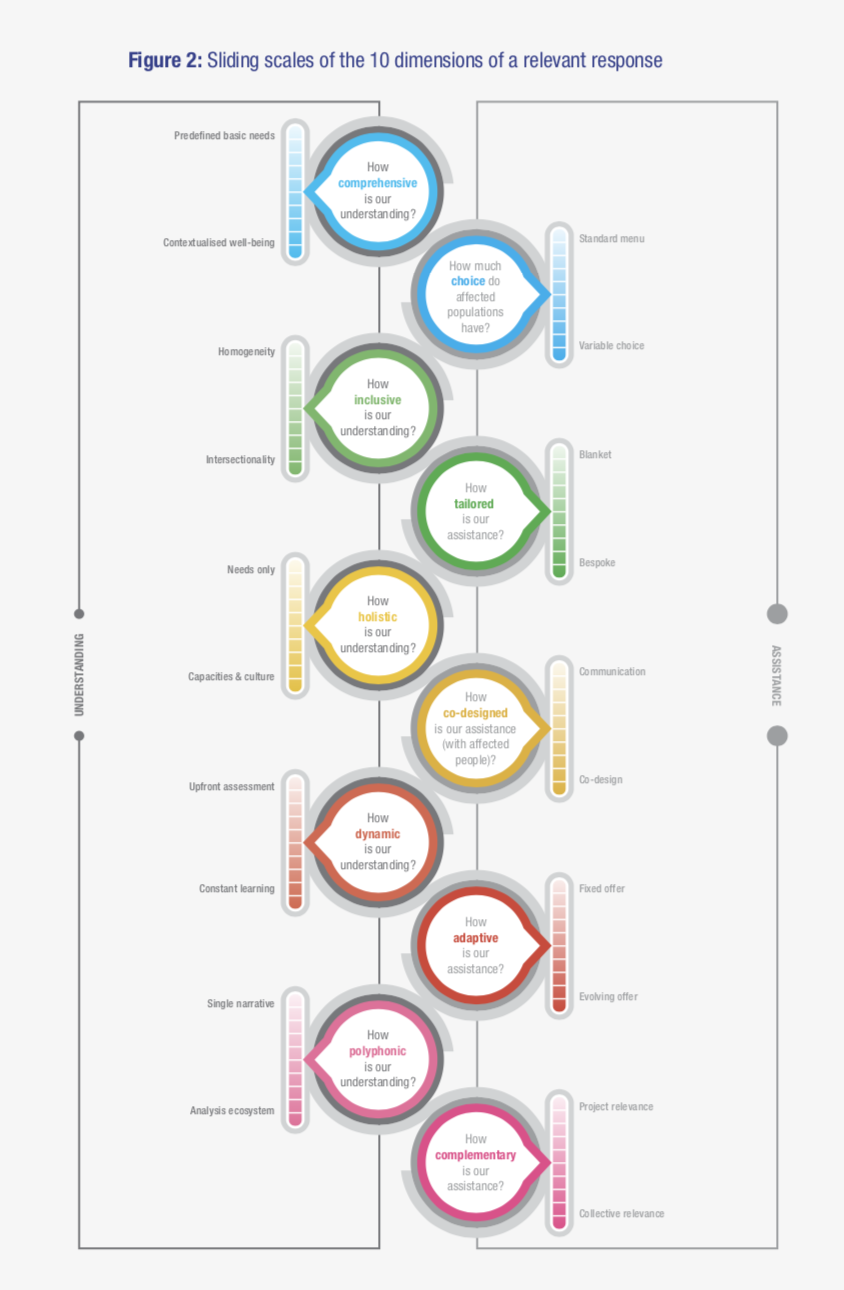
Swithern’s framing of the question provides tools with which we are able to generate useful, response specific questions and possible solutions. The backbone of her framework is the 10 dimensions of a relevant response seen here (click on image to enlarge). She breaks these dimensions down into two categories, understanding and assistance. Each question in turn is refined with a scale depicting the range of possible answers, with one end of the range representing (in most cases) the desired type of answer.
Understanding includes the questions
How comprehensive is our understanding?
How inclusive is our understanding?
How holistic is our understanding?
How dynamic is out understanding?
How polymorphic is our understanding?
Assistance includes these questions
How much choice do affected populations have?
How tailored is our assistance?
How co-designed is our assistance (with affected people?
How adaptive is our assistance?
How complementary is our assistance?
In her concluding remarks Swithern suggests,
“If relevance means a close match between response and what people most need, then as we’ve seen, this forces us to think hard about most aspects of humanitarian action. The relevance test reaches wide and deep.
We have seen how relevance and appropriateness are inextricable: the ‘what’ and the ‘how’ of humanitarian action are both important if people are to have their needs met – for their tangible priorities such as food, as well as their intangible priorities such as dignity. This takes us beyond simplistic ideas of supply and demand and encourages us to think about humanitarian assistance as much relational as transactional.
We have also seen the blurred line between understanding what’s relevant and responding to it, that these are iterative rather than discrete processes. And while there is much room for improvement in understanding needs, there is not a simple equation to be drawn between more information ‘in’ and more relevant response ‘out’. This is not only because of limitations in decision-making and prioritisation, but also because subjectivity and complexity pose limits to how much we can know and provide what’s most relevant.” (emphasis added)
Perhaps the most important point she makes here is that understanding and responding to questions of relevance is an iterative process. This means that answering the relevance question, done well, means ongoing efforts by those who are in a position to guide a humanitarian response. That raises the very important question of power. Who within the humanitarian ecosystem has the position and privilege to ask these questions about relevance in the appropriate contexts and in a timely fashion? One answer to that question is, well, everyone, including donor entities, humanitarians, and the affected community.
Let us turn now to the questions of position, power, and privilege.
Maximizing relevance
Below I addresses a pervasive issue in the humanitarian sector, namely ‘othering.’ Understanding at a deeper level the process of ‘othering’ better can make for more relevant actions, at least that is my hope as I invite you to read the remainder of this post.
Lessons from the Nataruk massacre
There is evidence of violence between groups of hunting and gathering bands 10,000 years ago in Kenya that appear to have included “‘extreme blunt-force trauma to crania and cheekbones, broken hands, knees and ribs, arrow lesions to the neck, and stone projectile tips lodged in the skull and thorax of two men.’ Four of them, including a late-term pregnant woman, appear to have had their hands bound.”‘
Ethological evidence indicates that our closest relative, chimpanzees, are quite capable of attacking and killing rivals, providing support for the premise that inter-group enmity is woven into our basic nature. Our tendency to other is evidenced in every corner of the world all through human history.
‘Othering’ is basic to our species; there has always been an ‘us’ and ‘them’. Perhaps it is best explained as an evolved mechanism functioning to maximize both individual and group fitness, it is an adaptive mechanism. Othering is part of our genetic motherboard.
Othering explained
Though the exact origin, at least for some, is unclear, many scholars agree one of the earliest uses of the term ‘othering’ comes from sociologist Edward Said’s classic 1978 book Orientalism. This term is inclusive of the entire range of marginalizing ‘isms’ and phobias including (but not limited to) ethnocentrism, racism, fascism, sexism, homophobia, Islamophobia, and so on.
The semantic tool here is that Said has turned a noun into a verb, as in ‘to other’ some one or some group, to separate them from us.
“The problem of the twenty-first century is the problem of ‘othering.’ In a world beset by seemingly intractable and overwhelming challenges, virtually every global, national, and regional conflict is wrapped within or organized around one or more dimension of group-based difference. Othering undergirds territorial disputes, sectarian violence, military conflict, the spread of disease, hunger and food insecurity, and even climate change.”
The quotation below from another article by S. R. Moosavinia, N. Niazi, and Ahmad Ghaforian comparing Orientalism to George Orwells Burmese Days presents the concept and also anticipates some points I’ll cover below.
“Orientalism is closely related to the concept of the Self and the Other because as Said points out in his second definition of Orientalism, it makes a distinction between the Occident, i.e. self and the Orient, i.e. the Other, since the analysis of the relationship of the ‘self’ and the ‘other’ is at the heart of Postcolonialism and many define Postcolonialism in terms of the relationship of the self and the Other. For instance, Boehmer emphasizes that ‘Postcolonial theories swivel the conventional axis of interaction between the colonizer and colonized or the self and the Other’.”
As an aside, I recognize the irony that Orwell’s book discusses the origins of one of the most tragic cases of ‘othering’ burning today in Myanmar and Cox’s Bazar.
Othering 101
In the most basic of terms, othering can be stated as follows: If A and B are different, A will posit superiority over B, and if there is an asymmetry of power with A having more, A will impose it’s will on B.
A can be different from B is many ways, and the most critical variables include various social statuses, most ascribed, i.e., assigned at birth and/or otherwise not chosen. These include (but are not limited to), you guessed it, gender, sexuality, body type, race/ethnicity/tribe, religion, age, social class, ability, and colonial status.
Key to mention here is that othering can be something done by one person to another person or group and/or from one group to another. Indeed, unit of analysis matters as you get into the weeds describing and understanding othering.
This dynamic, going from “difference/differentiation” to “one is better than the other/stratification” is virtually inevitable when A is more powerful than B. To wit, gender differentiation has, in the vast majority of cultures, always degenerated into gender stratification, oft times toxically so.
Othering is an inclusive, umbrella-like term, and all forms of marginalization are merely variations on this process. When there is a power imbalance the object of othering (‘B’) tends to be dehumanized, counter- anthropomorphized, having its basic human qualities stripped, and seen as ‘less then.’
The ‘othering’ marginalization process impacts all aspects of the culture such that this dehumanization becomes normalized, baked into every aspect of the culture. When some forms of othering are institutionalized and even celebrated this can lead to an acceptance of othering in other realms. I am thinking here of the ‘national pride’ that is celebrated at the Olympics internationally and here in the US where, in my personal case, it is OK to talk trash about Michigan if you are an Ohio State fan like myself. Indeed, ethnic (‘othering’) jokes seem to be universal across cultures, and as Gershon Legman points out in his book No Laughing Matter, “Under the mask of humor our society allows infinite aggressions, by everyone and against everyone.”
Fast forward to the present and we can make the observation that patriarchy, colonialism/paternalism, heteronormativity, classism/racism are integral features of our global culture, all having their justification based on the simple thought that if A does not equal B then A is greater than B. And if A is stronger than B it can -and typically will- impose its will upon B.
Baked in = sociological a prioris
On a sociological note, that #alnap32 is taking place in Berlin is significant. Sociologist Georg Simmel spent his entire career in this city, and among his major concepts is the idea of sociological a prioris. Kant’s assumption was that humans are not born tabula rasa but rather come frontloaded with certain a priori structures that determine, for example, our concepts of space and time. For his part, Kant has been affirmed and his basic ideas extended by research into evolutionary psychology (as an example the cultural universal of craving sweet, salty, and/or fat foods).
Simmel endorses but also extends Kant by arguing that we live in a social world created by our ancestors, both ancient and even more recent. We live in a world of reified and ossified social structures which we internalize through the process of socialization; they become part of the way we understand, experience and, hence, act in the world. Othering in its many forms is part of the worlds in which we live and act. Sexism, racism, heteronormativity, just to name a few, have been literally baked into our social and cultural worlds. In some cases recognizing the more firmly entrenched othering structures demands a fundamental rethinking of our world, and hence our self. Confronting othering means finding ways to de-ossify existing mental and social structures. No small task, that.
Why othering persists: the better and not so better angels of our nature
While humans can imagine and even wax poetic about perfect justice, we are quite capable of acting otherwise. Though few would openly disagree when offered the observation that “we are all God’s children”, their actions speak otherwise. In US culture we see this clearly within the Evangelical movement which openly supports acts and policies of racism. In Myanmar, those who talk of following in the path of the Buddha end up perpetuating genocide. How does this duplicity happen?
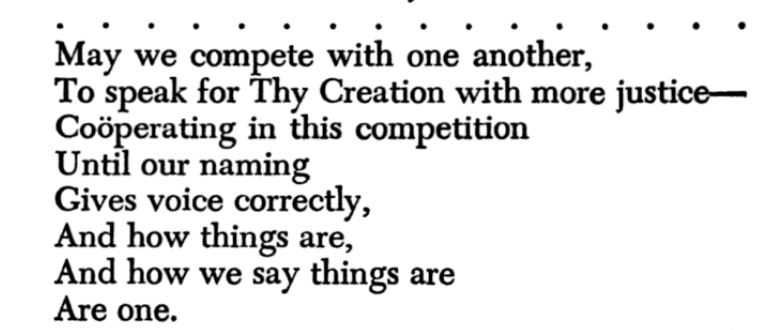
Kenneth Burke’s 1939 poem “Dialecticians Prayer”
In sociology we talk about ‘ideal culture’ and ‘real culture.’ Ideal culture reflects the better angels of our nature. It is seen in our formal documents and more progressive laws. In the US, the Constitution and Bill of Rights are such documents. Internationally, the Universal Declaration of Human Rights represents such lofty ideals.
The rhetoric of our ideal culture statements are driven, stated in psychological terms, by our superego, our conscience. These are the internalized and culturally accepted values which our religions, teachers, parents, and coaches have imparted on us and represent the positive, cohesive bonds that help maintain (relative) social order.
By contrast, our behavior, that is ‘real culture’, is driven by a more buried, primal part of our brain and is guided by fear, mistrust, and selfish motivations, the ‘motherboard’ mentioned above. Herein lies the core source of othering.
When Martin Luther King, Jr tells us, “We shall overcome because the arc of the moral universe is long but it bends toward justice” he is saying that our institutions collectively are slowly getting more progressive, and that some time in the future we will have a more just world. His assumption that the better angels of our nature -our ability to produce ‘ideal culture’ laws and structures- will eventually prevail, may be too optimistic. As we watch a world increasingly fueled by toxic nationalism and even outright fascism, the real culture of our othering tendencies seems to be winning this moral tug of war. Calling on Kenneth Burke’s poem “Dialectician’s Prayer”, we have to be sober to the fact that how things are, and how we say things are, are not one.
Used with permission.
A note on ‘brown on brown’ othering Though any rank ordering of the most toxic manifestations of othering would be difficult to defend, racism is certainly near the top of any list. Examples of racism -manifesting itself in many ways up to and including genocide- are depressingly easy to find as one scans the globe now and back through history. Many of these examples include intertribal (and even intra-tribal) conflicts and evidence of our tribe or group enslaving another. Racism can and has included white on white, white on people of color (POC), and POC on POC. The paradox -and the reality- is that a group can be at the same time the perpetrator of and the object of racism.
Taken up an analytical notch, one person or group being ‘othered’ and marginalized because of one ascribed status (for example race/ethnicity) does not preclude that same person or group marginalizing and othering based on another ascribed status (for example, sexual expression). And that gets used into the topic of the antidote to othering. In the current vernacular, the term being used is ‘woke.’
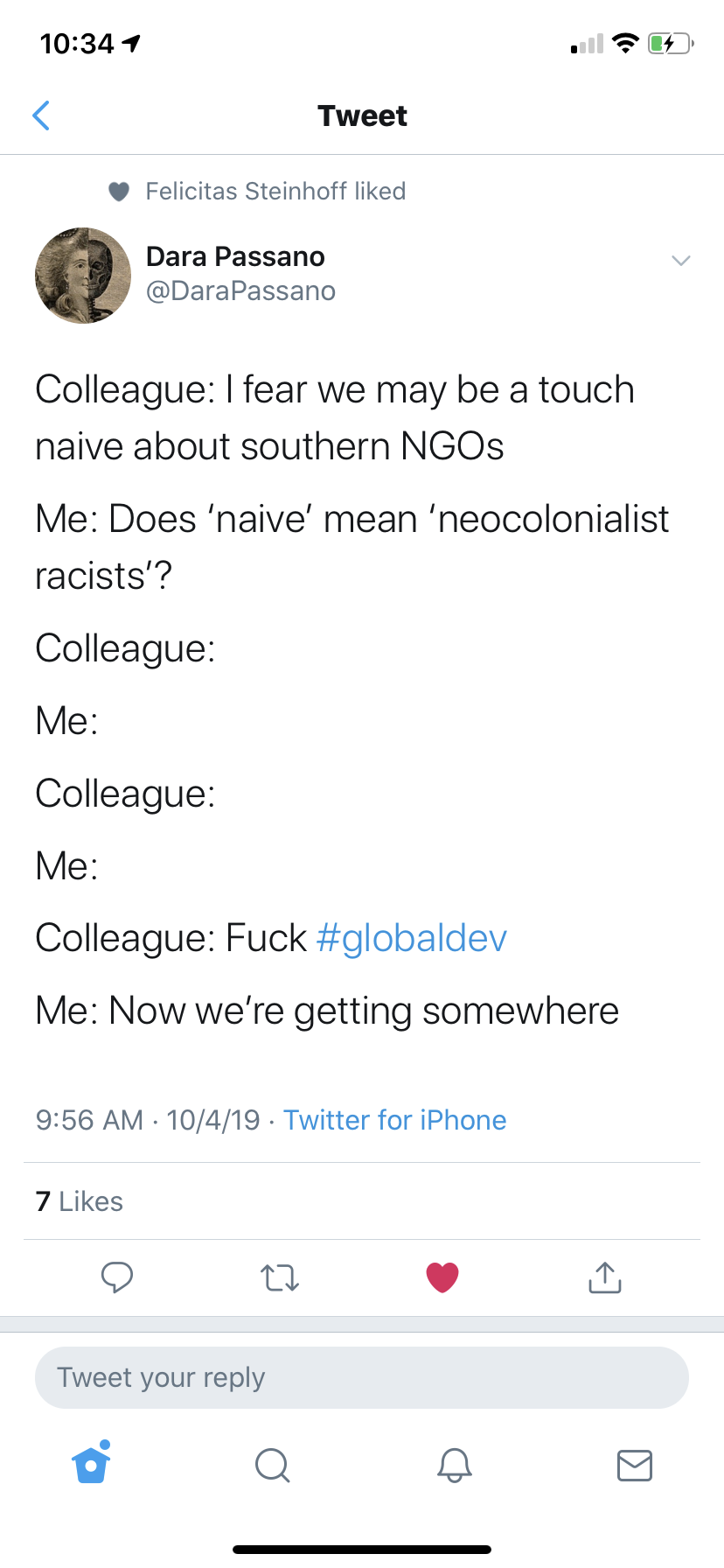
What does it mean for a humanitarian worker to be ‘woke’? For one perhaps painfully accurate answer (and some comic relief) look to the left.
Status, privilege, and being ‘woke’
From the humanitarian worker perspective, one very important factor determining comfort in the workplace is how accepted one feels concerning their various social statuses. There are many statuses, both ascribed and achieved (and some a hybrid) that, depending upon the social context, emerge as ‘master statuses’ which can significantly color how one is viewed, responded to, and ultimately either accepted or marginalized both socially and professionally. Among these statuses are gender, age, race/ethnicity, sexual orientation, religion, level of education, and outstanding physical attributes. Adding to the complexity is the fact of intersectionality, the complex and inherent interconnection of power and marginalization that impacts everyone either directly or indirectly.
Most of us train ourselves to see beyond the surface (to become ‘woke’), but the reality is that life-long socialization into using specific cultural lenses sometimes can make us unaware of some of the assumptions we are making about ‘the other’. Recognizing, owning and then mindfully checking ones’ ethnocentrisms and various privileges is rarely a ‘one and done’ exercise, but rather a lifetime journey, especially for those -humanitarians, for example- who regularly encounter diversity in its many rich and complicated forms. Those with privilege must constantly be not only willing but ever ready to engage in anti-oppressive practices and encourage same in all our workmates.
On a reflexive -and sociological- note I’ll add that having certain ascribed statuses can make the journey toward ‘wokedome’ longer and harder (but all the more necessary!). As a cis, straight, ‘too male, too pale, and too stale’ person, I embrace and, critically, learn from that journey daily.
To be clear, privileges come in many forms, including (but not limited to) race, class, gender, sexuality, age, and nationality, and, yes, being from the ‘global North.’ Can privileges amplify each other if, as in my case, a person has multiple privileged statuses? Of course.
Kimberlé Crenshaw coined the term ‘intersectionality‘ many years ago to help us understand the complex, cumulative way in which the effects of multiple forms of discrimination (such as racism, sexism, and classism) combine, overlap, or intersect especially in the experiences of marginalized individuals or groups.
Perhaps we need a new word to describe the complex, cumulative way in which the effects of multiple privileges combine, overlap, or intersect and thus amplify the power of these privileges in both individuals and groups. Having this word might help us in our never-ending journey toward personal and organizational relevance.
Circling back to relevance: fighting the Hydra
Two main points to conclude. First, understanding ‘othering’, as I point out above, is never a case of, ‘one and done.’ Borrowing from Sophia Swithern, we best think of it was an ‘iterative’ process. I’ll add that it is a process that needs to be done mindfully, systematically, and with a constant awareness of the hurdles that lie along that pathways of implementation. Closing the gap between the ‘is’ and the ‘ought’ takes constant work.
Understanding othering (and acting in response to that understanding) is one dimension of being ‘woke’. Though the term ‘woke’ typically applies to an individual, all avatars of the humanitarian ecosystem -individuals at all levels, organizations (including ALNAP), and donor entities of various stripes) can also become more self-aware, more ‘woke.’ Those in positions of power must have the desire to become constantly more self-aware of their othering and to honing their ability to facilitate this journey among those with which they work. To repeat, this is an interactive process.
Secondly, in her background paper Sophia Swithern offers many on point questions which demand that the reader understand more clearly power, privilege and perspective, to look at the humanitarian sector with eyes wide open, looking for and recognizing ‘baked in’ personal, organizational, and sector-wide structures that marginalize those in the affected community (and perhaps each other). Her lessons shine light on the path forward and highlight the need to see more clearly the impacts of patriarchy, racism, colonialism, paternalism, hetero/cisnormativity, and classism.
The more that individual humanitarians, humanitarian organizations, and donor entities understand the process of othering and how to confront its manifestations the more relevant their actions will be. Swithern urges us to understand what the affected community really needs. I’ll suggest that people really need is to be free from marginalization, from being othered.
A Hydra, the many-headed serpent in Greek mythology, is a good analogy here for ‘othering’. This dragon-like beast is immortal, and when one of its heads is cut off two more grow in its place. So it is with othering, an ever-present demon humans must fight that has many toxic manifestations. As humanitarians this epic battle must be fought first in the service of relevance, of “… in line with the priority needs of affected people.” Finally, perhaps we should keep in mind that though fighting these demons individually is a natural impulse, perhaps the body should be attacked most vigorously.
Post script: Implementaion Not long ago I had the chance to talk with Linda Polman, author of one of the more scathing books about the humanitarian sector, Crisis Caravan. We talked about relevance and about how the sector could improve. She said,
“Everybody inside the aid industry knows what should be done. Everybody knows how it could be better. But to implement all those recommendations, that’s the problem. To think of how it should be better, how it can be better, is not the difficult part, it’s the implementation part.”
True words, those. Talking about change (‘making our response more relevant’) is the easy part. The next step, going from discussion to writing or re-writing policy, procedures, or protocol is much more difficult. But words on documents only become action when implementation happens. The fact that the humanitarian sector is an open and highly complex system made up of thousands of bureaucratic entities, each with their own ossified structures, makes unilateral implementation a difficult and perhaps Sisyphean task. Coordination among and between all entities within the sector must continue and even intensify; we must all get on (and stay on) the same iterative ‘woke bus’.
And that’s why meetings like ALNAP are critically important, helping to facilitate and further inter and intra-sector forward progress on critical topics such as relevance. May we all be up to the task, whatever our parts may be.
Thanks for reading. As always, you can contact me here if you have feedback, questions, comments, or suggestions.
Tom Arcaro is a professor of sociology at Elon University. He has been researching and studying the humanitarian aid and development ecosystem for nearly two decades and in 2016 published 'Aid Worker Voices'. He recently published his second and third books related to the humanitarians sector with 'Confronting Toxic Othering' published in 2021 and 'Dispatches from the Margins of the Humanitarian Sector' in 2022. A revised second edition of 'Confronting Toxic Othering' is now available from Kendall Hunt Publishers
“The humanitarian imperative for me, I don’t want to use a cliché, but it’s really simple in my head: you’re damned if you do and you’re damned if you don’t. That’s it.”
-30 something female humanitarian
Bringing sandwiches to the gates of Auschwitz
Brooding about the humanitarian imperative
I recently re-read Samantha Power’s book Chasing the Flame, again drinking in every word as she chronicles in deep and sensitive detail the life, and death, of UN humanitarian diplomat Sergio Vierira de Mello.
The complete title of Power’s book is “Chasing the Flame: Sergio Vieira de Mello and the Fight to Save the World.” Spoiler alert: he doesn’t.
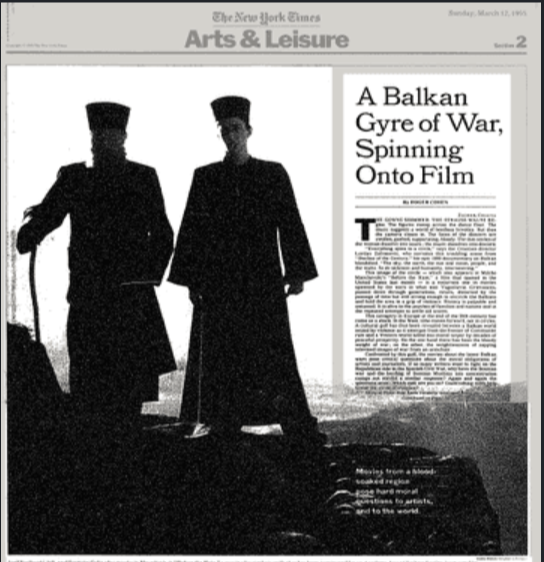
Likely because of my recent research on humanitarian workers, and, in the last several months, into the lives of ‘refugee humanitarians‘, Rohingya women and men living in Cox’s Bazar, I was struck by a phrase Power’s used, a quote from a long-ago published NY Times film review by Roger Cohen. Cohen quotes the filmaker and French intellectual Bernard-Henri Levy,
“There can be no question of making a balanced movie about Bosnia,” says Mr. Levy, who has visited Sarajevo several times since the war began. “We’re living in crazy times. There’s this growing cult of balance, of equidistance, as if the death of a torturer and his victim had the same value. They do not. Bosnia is a just cause and to respond, as we have, to its destruction with the delivery of humanitarian aid is like bringing sandwiches to the gates of Auschwitz.” (emphasis added)
That phrase –bringing sandwiches to the gates of Auschwitz– has gained resonance within the humanitarian sector, and fuels the brooding many of us have as we grapple with the realities of the humanitarian imperative. A quick search led to this very thoughtful essay in World Policy by Dewaine Farria, and here is one version of my own ruminations.
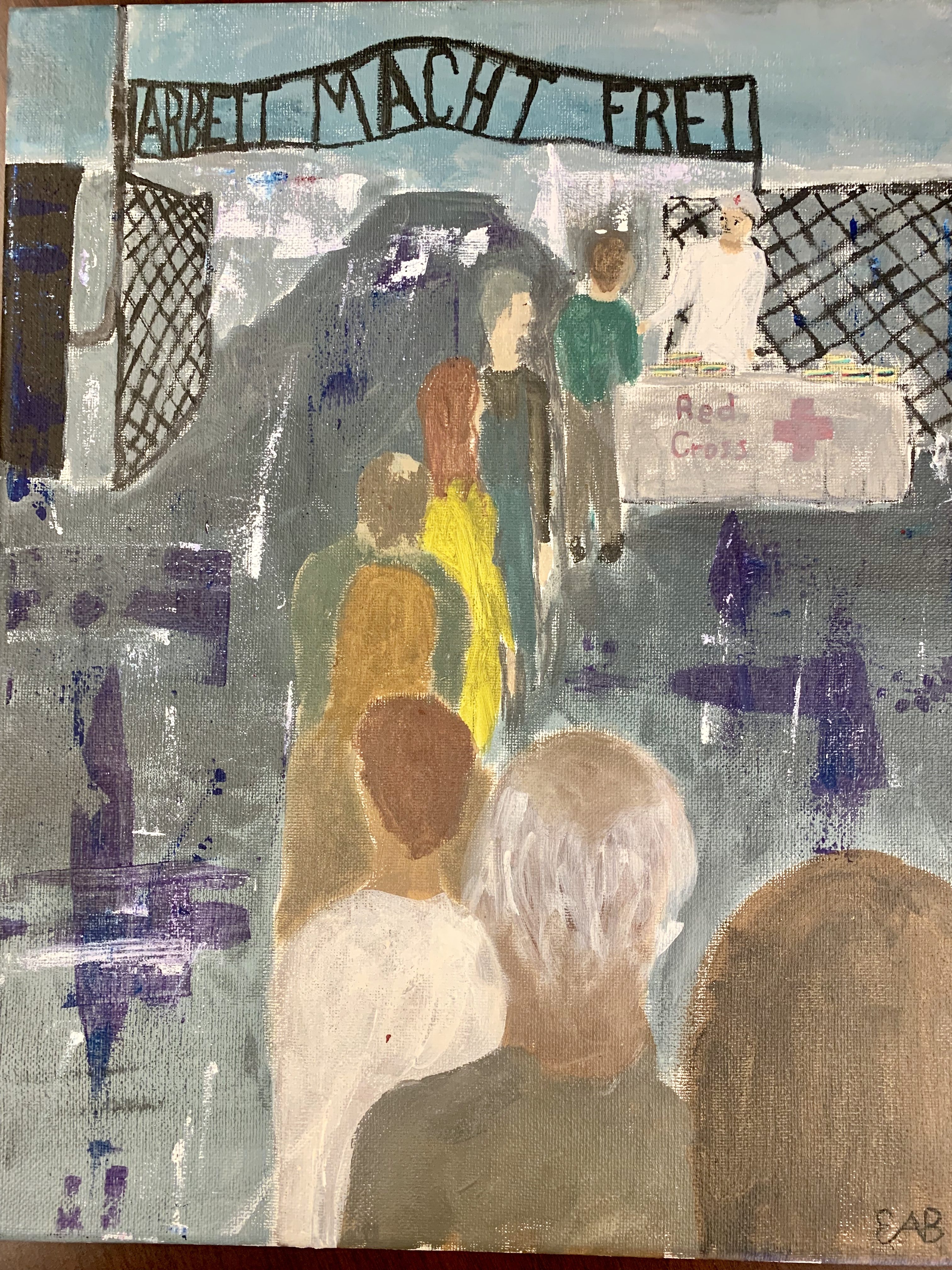
Original painting by Eleanor Arcaro-Burbridge.
As I researched this phrase, I could not find the image I had in my head, so I asked my daughter to try her hand. Her painting is simple and descriptive, and we see an anonymous line of women and men receiving a some food from a Red Cross worker as they enter the one way gates at Auschwitz. Translated from German, the words on the gates say “work sets you free.” True, that: death can be described as the ultimate freedom.
The relevance of a sandwich There can be no question that giving food to a hungry person is a humane act, and most of us will respond in that way because we naturally act in terms of the so-called “golden rule”, doing for others what we would want them to do for us.
The vast majority of humanitarians are, yes, humane, but just like workers in any service profession they strive to do a meaningful, professional, and relevant job.
So, a question: is giving out sandwiches at the gates of Auschwitz relevant?
To be sure, relevance is much harder to define and maintain when trying to understand conflict-based humanitarian crises (e.g., Rohingya) as opposed to ‘natural’ disasters (e.g., the response to Cyclone Idai).
The line between relief and development is always in contencious, and the inexorable blurring from one to the other has come with distressing -yet predictable- regularity. There are many examples. The massive refugee camps in Dadaab, Zaatari, and now, Cox’s Bazar or Sittwe began as temporary responses, but these camps are now long term -can I use this term?- open air prisons.
What does relevance mean in each context, at what phase of the humanitarian response, and to whom? Big questions, all. By addressing the question ‘to whom is it relevant’ we must consider all parties: the many donor entities, governments, the humanitarian actors, but of course, also -and most importantly- I mean the families, children, women, and men who have been affected by the conflict and are now struggling to exist.
I am thinking here of the many Rohingya I have interviewed, all of which appreciate the WFP bags of rice.
Do they appreciate the sandwich (rice)? Yes. It sates the hunger in the short term. But is giving out the sandwich (rice) a ‘relevant response’ in a long term conflict response? Perhaps not. The only relevant response would be, ultimately, addressing the complex geopolitical issues which gave rise to their plight in the first place. The Rohingya want justice, and that is not a material commodity but rather a state of affairs that can only be reached through extensive and complex local, regional, and global political action.
A Victorian parlor maid
As Power’s reports in her book, Sergio himself lamented that at times he felt like “a Victorian parlor maid, seduced and then discarded.” Putting out immediate fires, he was doing something -at least in the short run-, and we all crave that feeling. But in the long run he realized he was but a pawn in the playing out of larger events.
Here’s an example. Talking about her participation in the Sittwe response one aid worker put it this way,
“The [Myanmar] government was playing us like a fiddle, and they did a great job of it. They let time and necessity work, so that international humanitarian actors would step in and provide the basics: shelter, food, water. So what we ended up doing was building a slum. We justified by saying, okay we’re only going to do semi-permanent structures right, we’re not using concrete, we’re not using anything permanent; always in the hope that this situation is going to get sorted out. But what that meant was that we just got poor quality things which are neither here nor there, it’s not a tent, but it’s not a house, somewhere in between. We built slums. We built slums and we contributed to creating an apartheid situation, which recently, is turned into a massive displacement and concerns of genocide.”
Closure possible?
I am thinking hard about relevance as it relates to the humanitarian sector, continually responding to crises around the world. There are no easy, glib answers to the questions I pose to myself and to my students. Issues and ideas buzz around my head like so many flies, and swatting one only creates the illusion of progress; more breed immediately.
But I remain convinced that we -I- must remain ever willing to press the question ever harder, all at the same time knowing I share the same fate as Sergio, futilely trying to ‘save the world’ in the face of forces much larger than anyone can control. I am left to ask: is what I do relevant?
As always, please contact me with feedback or questions here.
Tom Arcaro is a professor of sociology at Elon University. He has been researching and studying the humanitarian aid and development ecosystem for nearly two decades and in 2016 published 'Aid Worker Voices'. He recently published his second and third books related to the humanitarians sector with 'Confronting Toxic Othering' published in 2021 and 'Dispatches from the Margins of the Humanitarian Sector' in 2022. A revised second edition of 'Confronting Toxic Othering' is now available from Kendall Hunt Publishers


 against Myanmar for the genocide against the Rohingya. It begins,
 be normalized among our ‘civilized’ nations? As I search for answers I am reminded of the words of Erich Fromm who, in his book The Sane Society, used the phrase ‘the lie of civilization.’ His point is simple but clear. Though we are more technologically advanced and are making ‘progress’ in terms of our control over nature, as a species were are getting less, not more civilized as in being more ‘civil’ toward each other.
 Follow