A teamhouse Christmas in Kabul

Christmas in Kabul, 2018


Context
Begun in 1971, Médecins Sans Frontières (MSF) remains a major and respected global player in the humanitarian ecosystem with over 45,000 team members providing comprehensive medical care in over 70 countries worldwide. MSF was awarded the Nobel Peace Prize in 1999, and continues to maintain high standards for both medical care and ethical organizational operation. Beginning in the 1980s the MSF movement wisely fissioned into a confederation of [mostly] autonomous associations, each an independent legal entity in the country where they are based.

There are MSF national offices in Australia, Austria, Belgium, Brazil, Canada, Denmark, France, Germany, Greece, Holland, Hong Kong, Italy, Luxembourg, the Netherlands, Norway, South Africa, Spain, Sweden, Switzerland, United Kingdom, and the USA. There are also branch offices in Argentina, the Czech Republic, Republic of Korea, India, Ireland, Kenya, Mexico, and the United Arab Emirates.

Unique among INGOs, in 2017 96% of MSF’s over $1.5 billion global annual budget, and 100% of its budget in Afghanistan, are made possible by private donations, insuring adherence to their basic values of neutrality and impartiality, always demanding “full and unhindered freedom in the exercise of its functions.”

MSF has worked in Afghanistan since 1980, and currently supports MSF the Ministry of Public Health in two maternities in Kabul, and also has projects in Helmand, Kandahar, Khost and Kunduz. In April 2018, a new project opened in Herat supporting the emergency department of the regional hospital there. In October 2015, US airstrikes destroyed the MSF trauma center in Kunduz, and 42 people were killed. MSF staff work in the six provinces of Afghanistan where the organization has projects.

Both before and after that incident, humanitarians working in Afghanistan have endured severe security threats, and Kabul remains unstable in part because of rapid population increases from IDPs and refugees.

Tawhidul, the impromptu party organizer
Read below about a small group of MSF staff who took a short break from their work to attend a hastily organized Christmas party in the MSF compound in Kabul.

I talked with MSF logistics coordinator Tawhidul on Monday, Christmas Eve, following up on a previous interview of ours. We didn’t have much time to Skype, but he mentioned that he decided that the staff should get together for a holiday meal and celebration, and so set about making calls and getting invitations out to them.

In very short order team members volunteered to contribute food to the party.  Tawhid said that since it was a normal work day, cooking would begin as everyone was off duty. The venue for the party was Tawhid’s residence since it is where cooking for the

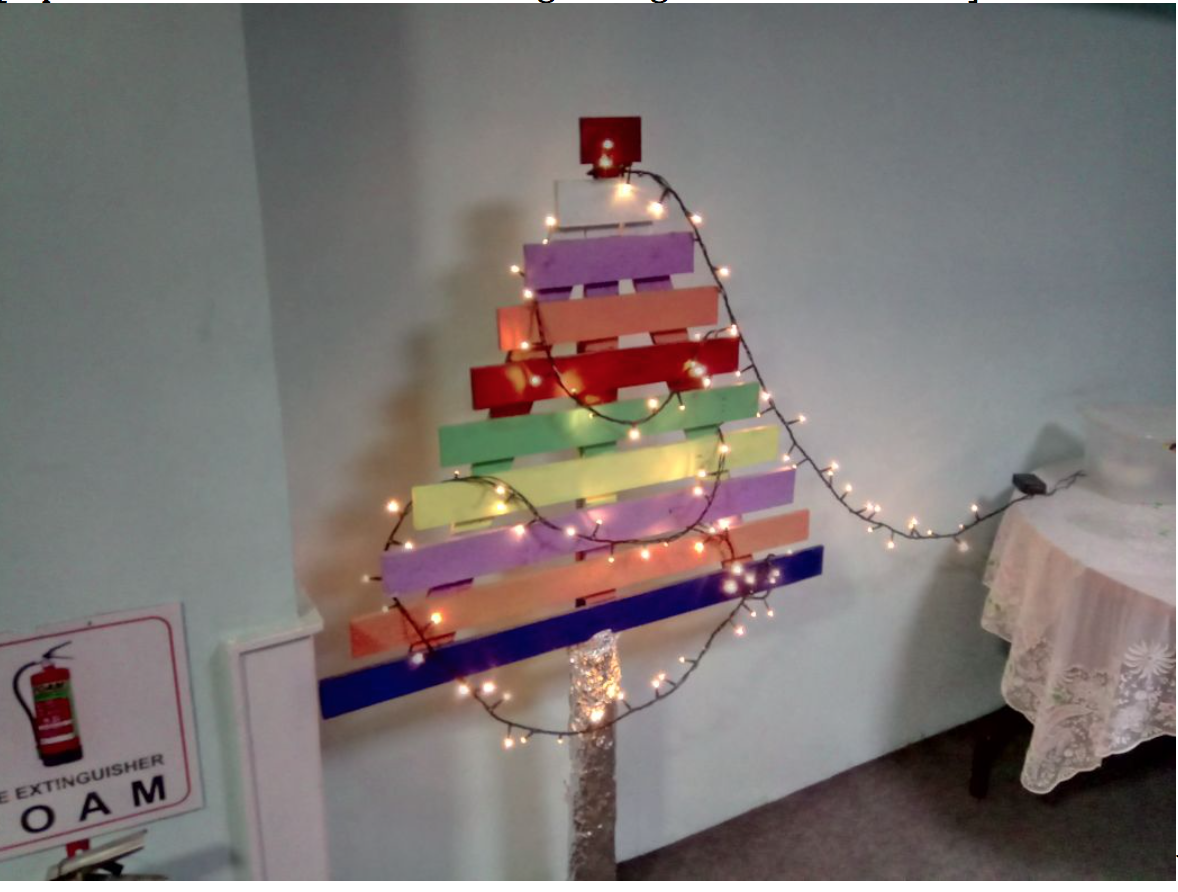
Very festive Christmas tree made from slats of wood, colorful painted, and adorned with lights.

whole team is typically prepared, and they eat many of their meals.  He and I agreed to Skype on Christmas so that I could hear about how the party went.

A blending of cultures
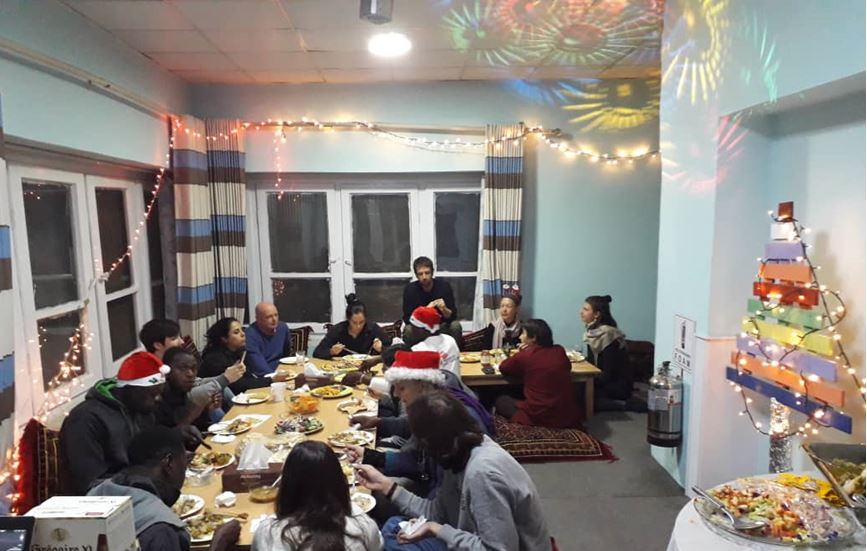
There were 21 people from at least 16 different nations at the gathering, with both global North and South fully represented. Tawhid listed the home nations of those in attendance including Myanmar, Bangladesh (Tawhid!), South Africa, Uganda, Sierra Leone, Nigeria, Belgium, France, the Netherlands, Romania, Italy, Germany, Lebanon, Mexico, Rwanda, and Nigeria.  When I asked if there were any Americans he noted, “The MFS mission in Afghanistan does not allow staff from the United States, Canada, or the UK.

Fair enough.

Although Tawhid had imagined only about 10-15 people at the party, there were more in attendance than planned.  Some flights affecting staff had been canceled due to weather, and they were of course urged to join the festivities.

Their common language was English, and the gathered spent a good deal of time talking about the various Christmas traditions in their respective homelands. They learned about the holiday traditions being practiced in many nations around the globe.

And there was music, of course. The self-appointed DJ for the evening was a team member from Rwanda, so there were a lot of African tunes.

Food!
I’ll admit a bit of ethnocentric surprise when Tawhid mentioned that he had arranged to have roast turkey for the party. Yes, turkeys are raised in Afghanistan, and one was bought, prepared and roasted for the party. Since Tawhid was the host, he had to carve the turkey, his first time doing so. The country representative said ‘he was the party coordinator, therefore he had to do it.’

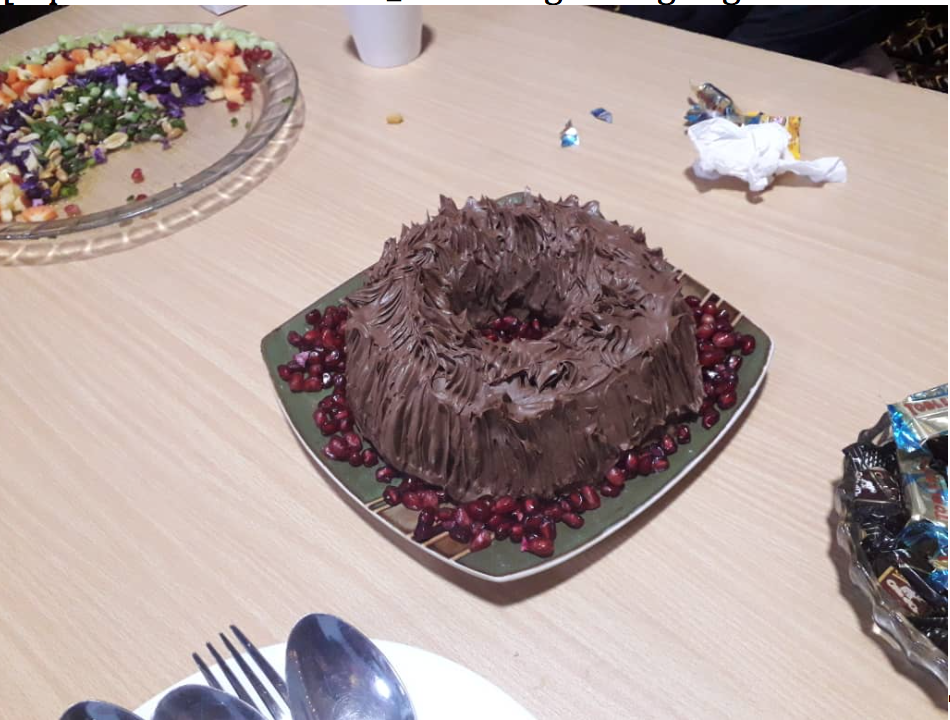
This mix-nut filled chocolate cake, artfully ringed by fresh pomegranate, was made by one of the medical coordinators, Gabbie from Romania.

Other foods included mashed potatoes, quiche, chapatis, two types of salad, beef biryani, vegetable soup, lentils, chocolate cake, and apple pie.

The duty of cutting the cake was given to a South African woman who had just arrived on Christmas Eve in Kabul with two other MSF staff. Tawhid reasoned that since she was so highly motivated to come to Afghanistan just at holiday time she deserved this honor.

Tawhid commented, “The food was all very delicious and everyone was so happy.” Needless to say, no one went home hungry, and the leftovers were stored in the main team house and to be eaten for lunches later in the week.

A team bound together by a commitment to serve
Afghanistan is, arguably, one of the most dangerous conflict zones in the world where humanitarians live and work. The threat of physical danger is ever-present, and the security situation in Kabul dictates an appropriately strict policy regarding movement of

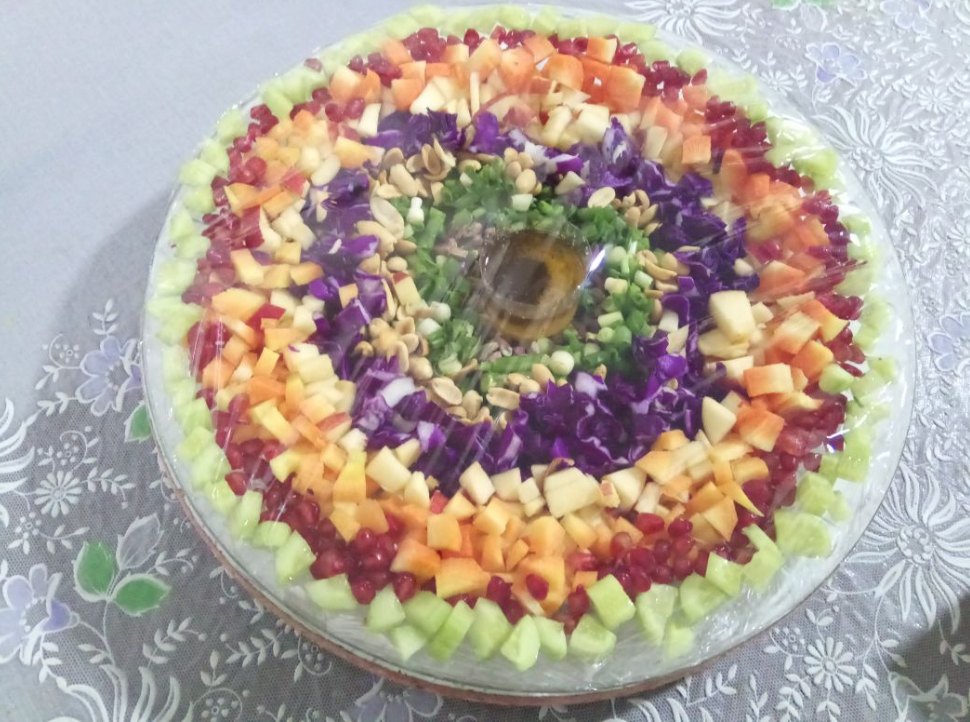
The team members enjoyed this elegantly displayed mixed fruit and nut salad.

MSF staff.

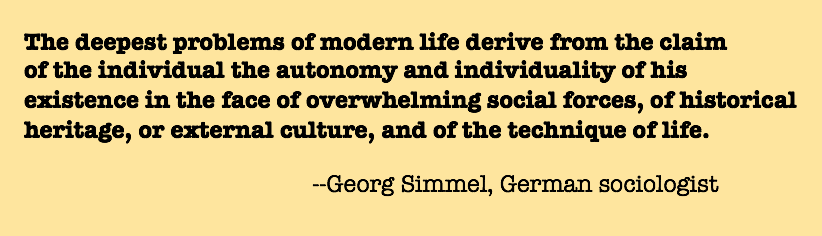
In sociology we call that kind of setting a ‘total institution’, where a large mix of non-related people live 24 hours a day with each other. This kind of intimate setting tends to generate a pseudo-family feeling where people get to know each other very well and create deep bonds of friendship.

Tawhid’s Christmas party is evidence of an intimacy that is critical for us all.  Bound together by a commitment to serve, all having volunteered to be deployed to a conflict zone, these humanitarians clearly earned this night of great food and fellowship.

As I write this, on Boxing Day, the entire staff is back at work living out the mission of their organization, another day on the job…in Kabul.

If you have any comments, questions, or thoughts I can be reached here.

Tom Arcaro

Tom Arcaro is a professor of sociology at Elon University. He has been researching and studying the humanitarian aid and development ecosystem for nearly two decades and in 2016 published 'Aid Worker Voices'. He recently published his second and third books related to the humanitarians sector with 'Confronting Toxic Othering' published in 2021 and 'Dispatches from the Margins of the Humanitarian Sector' in 2022. A revised second edition of 'Confronting Toxic Othering' is now available from Kendall Hunt Publishers

More Posts - Website

Follow Me:
Twitter

Global South or Global North: where are humanitarians from and where do they work?

Updated 14 Feb 2019

Where are humanitarians from and where do they work?

A question
My research into the humanitarian ecosystem in general, and more specifically into the lives of the humanitarian workers themselves, has lead me to many questions.  In the context of this research, perhaps the most globally important questions concern where humanitarians are from and where they work.

In the context of assessing some of the promises made in the ‘Grand Bargain‘, this question is important because it probes into a significant indicator of ownership and agency.

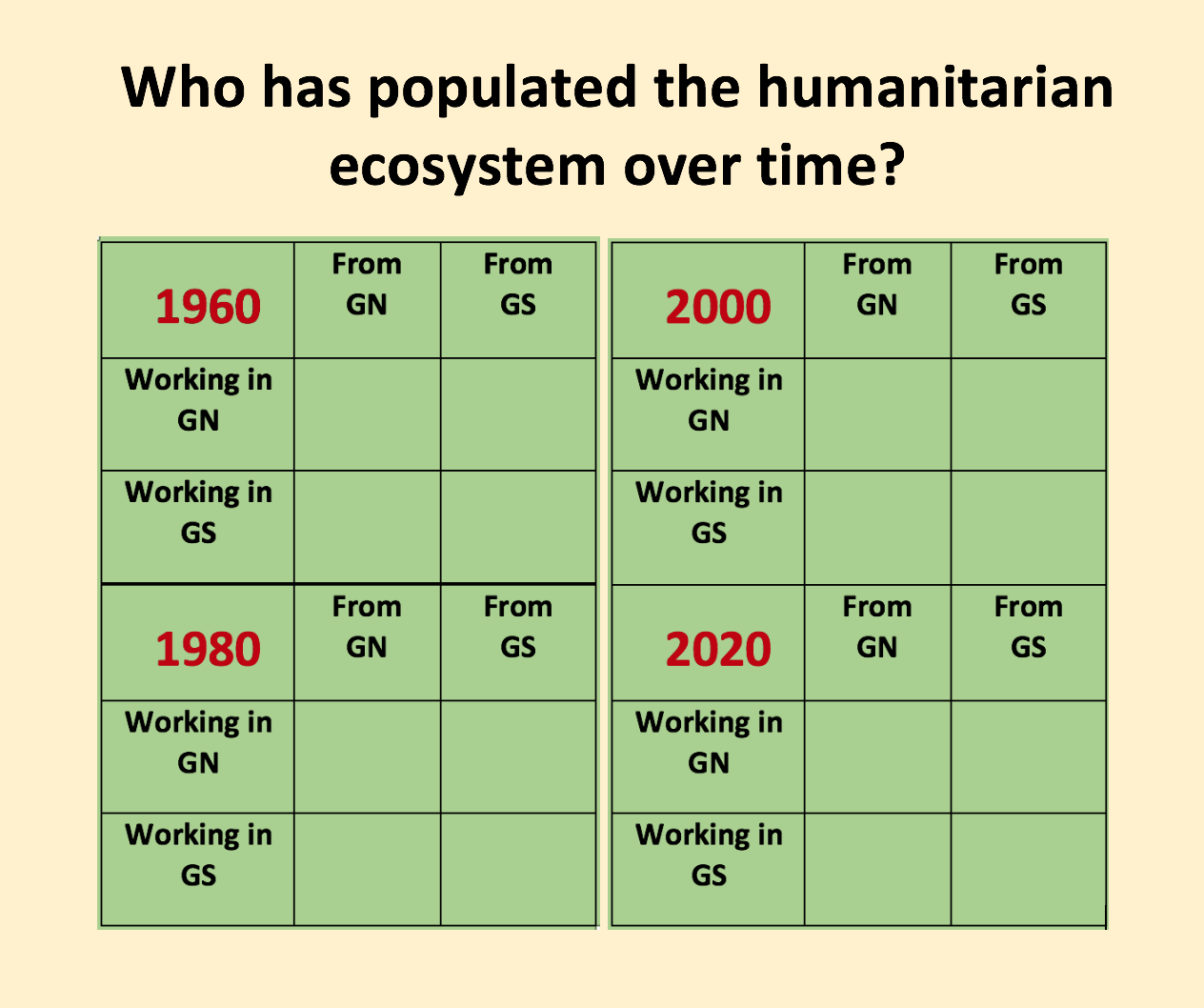
So, below is my question in table form, where GN = Global North and GS = Global South, and the intended goal is to have a percentage in each cell. For example, in 1960, we would need to know, based on the total number of people working in the humanitarian sector, what percentage are from the ‘Global North’ and work in the ‘Global South’, and so on.

Laying this out is the easy part.  Getting reasonably accurate numbers to populate each cell will be challenging, to say the least, especially for 1960, 1980, and, clearly, 2040.

Critical questions of definition
Looking at the above, many questions arise, some are matters of definition, and others more general in nature.

  • What is meant by the ‘humanitarian ecosystem?’  Does this mean both emergency relief for both natural and human-caused disasters and development work?
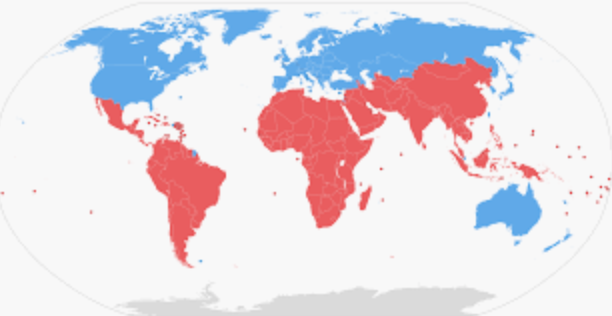
  • How does one differentiate between ‘Global North’ and ‘Global South’?  Why is that differentiation important? Read this excellent article by Canadian political scientist Marlea Clarke for both a history of the term ‘Global South’ and the current issues with usage.
  • In the next 20 years, what geopolitical and climate change factors will impact the humanitarian ecosystem that might drive these numbers in one direction or another?
  • How would these cells look if we added gender into the mix?
  • What are the economic, policy, and larger sociocultural forces driving the change in percentages over the decades?
  • What would be the ideal percentages in each cell, and why?
  • How would percentages in these tables vary over time by region and humanitarian response?
  • How would percentages in these tables vary if separated by natural disaster versus conflict responses?

How many humanitarians are we talking about?
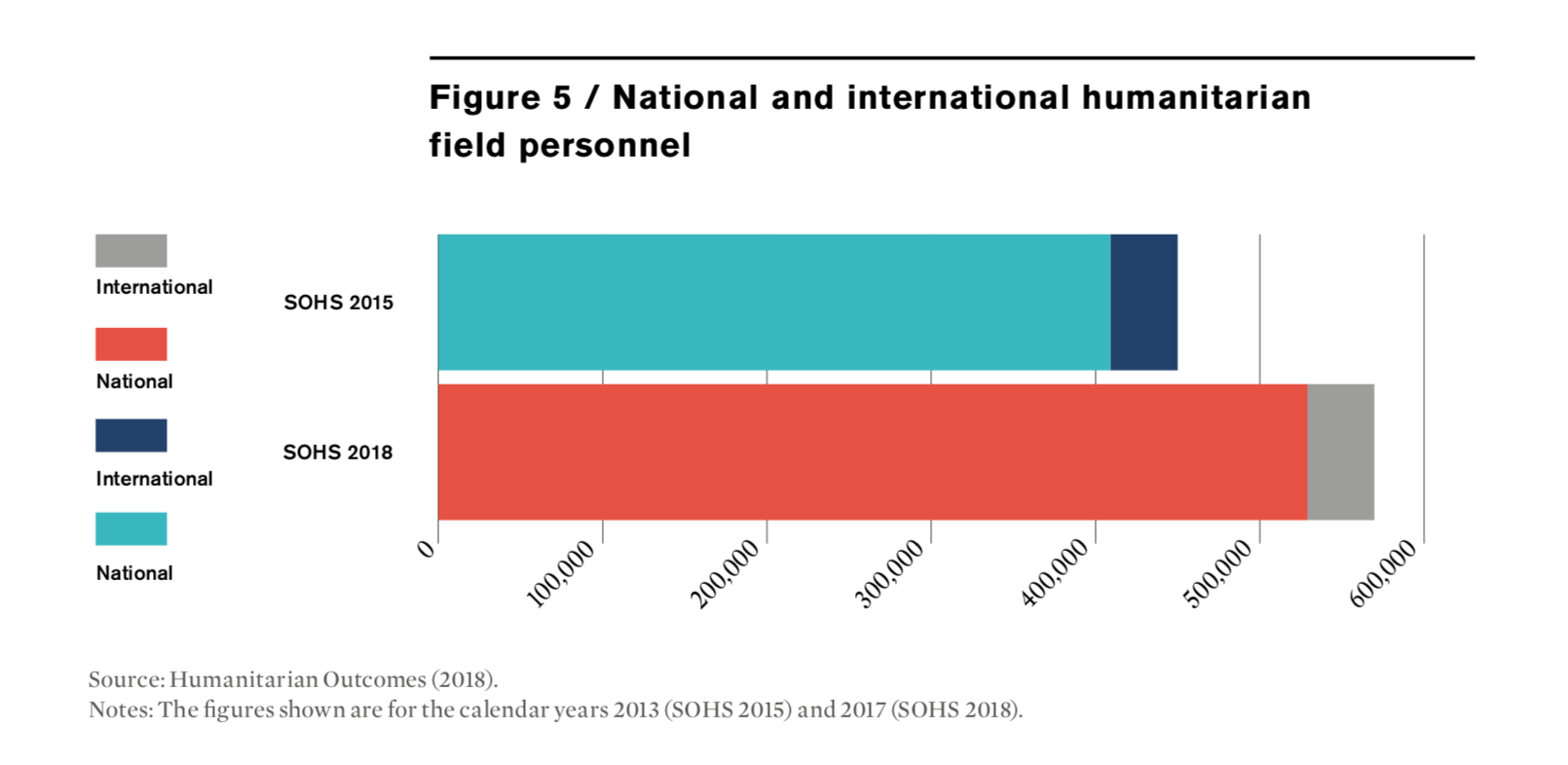
From the 2018 State of the Humanitarian Sector (SOHS) report,

By 2017, humanitarian agencies employed approximately 570,000 people in their operations– an increase of 27% from the last SOHS report (see figure 5). Growing numbers of national humanitarian workers appeared to drive this increase, while the number of international (expatriate) staff remained stable.


I think it is fairly safe to assume that the vast majority of national humanitarians -over 90%-are from and working in the Global South, the the ratio of national to international (expatriate) humanitarian staff is clearly trending toward an even higher percentage of national, and hence presumably Global South, staff. That over one half million humanitarians from places like Jordan, Iraqi, Bengali, Kenyan, and Ethiopia dominate the humanitarian sector is beyond the imagination of most outside the sector where the face of international aid is still that of men and women from Global North.

No answers, but one final and critical point 
Yes, for now the tables above have no percentages, and I am not certain where accurate data exists to populate each cell. My sense is that, given some of the definitional issues with the overall question, filling in these tables with numbers will ultimately be a matter of ‘guestimation.’ We do know that currently an estimated 80%-90% of all humanitarians are from the Global South.

But even if the humanitarian ecosystem overall was populated 85%-95% by Global South staff, would that necessarily have an impact on the true dynamics within the sector?  In the words of one female Iraqi LNGO worker,

“It is not only the number… it is who is in decision making positions.  We in Iraq could have 85% of the positions but not nearly that much power.  The decision making power and the power to be creative is what is important…not just to say yes to whatever we are told… The percentage is important when you can make change and not just be a robot and implement what we are told.”  

Numbers only tell part of the story, and at best they are crude indicators.  At worst they are a smokescreen for ‘business as usual’ unless there is a real shift in power. The language in the Grand Bargain mentions, for example, “More support and funding tools to national first responders” but does not directly make reference to the power differential issue. This must be addressed, I feel, going forward.

Anecdotally, my experience in talking with students, colleagues, as well as those outside academia (friends, and family, etc.) is the stereotype of the humanitarian worker as being from the Global North and working to ‘save’ those in the ‘Global South.’  That this misconception persists is one of the factors that drives my research and writing; I seek to debunk this myth and replace it with a more accurate -and perhaps less racist- understanding of who populates the humanitarian ecosystem.

I invite my fellow researchers and humanitarians to consider the question(s) above.  Contact me if you have any questions, comments, and/or suggestions.

PS.  Yes, the color scheme of this post is bonkers. Sigh.

Tom Arcaro

Tom Arcaro is a professor of sociology at Elon University. He has been researching and studying the humanitarian aid and development ecosystem for nearly two decades and in 2016 published 'Aid Worker Voices'. He recently published his second and third books related to the humanitarians sector with 'Confronting Toxic Othering' published in 2021 and 'Dispatches from the Margins of the Humanitarian Sector' in 2022. A revised second edition of 'Confronting Toxic Othering' is now available from Kendall Hunt Publishers

More Posts - Website

Follow Me:
Twitter

Skyping in as the Grand Bargain unfolds in Iraq

Looking in as the Grand Bargain unfolds in Iraq

The setting
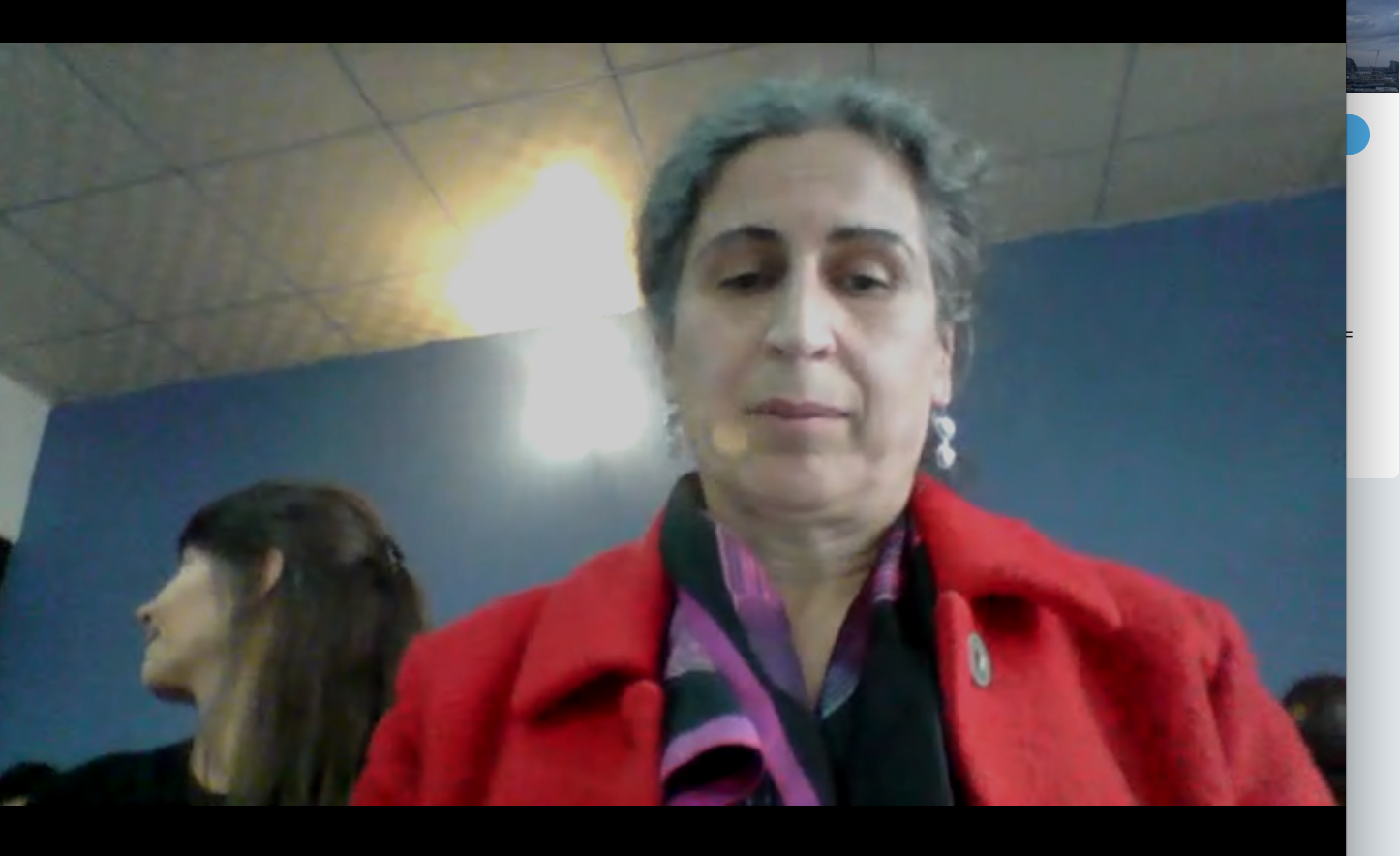
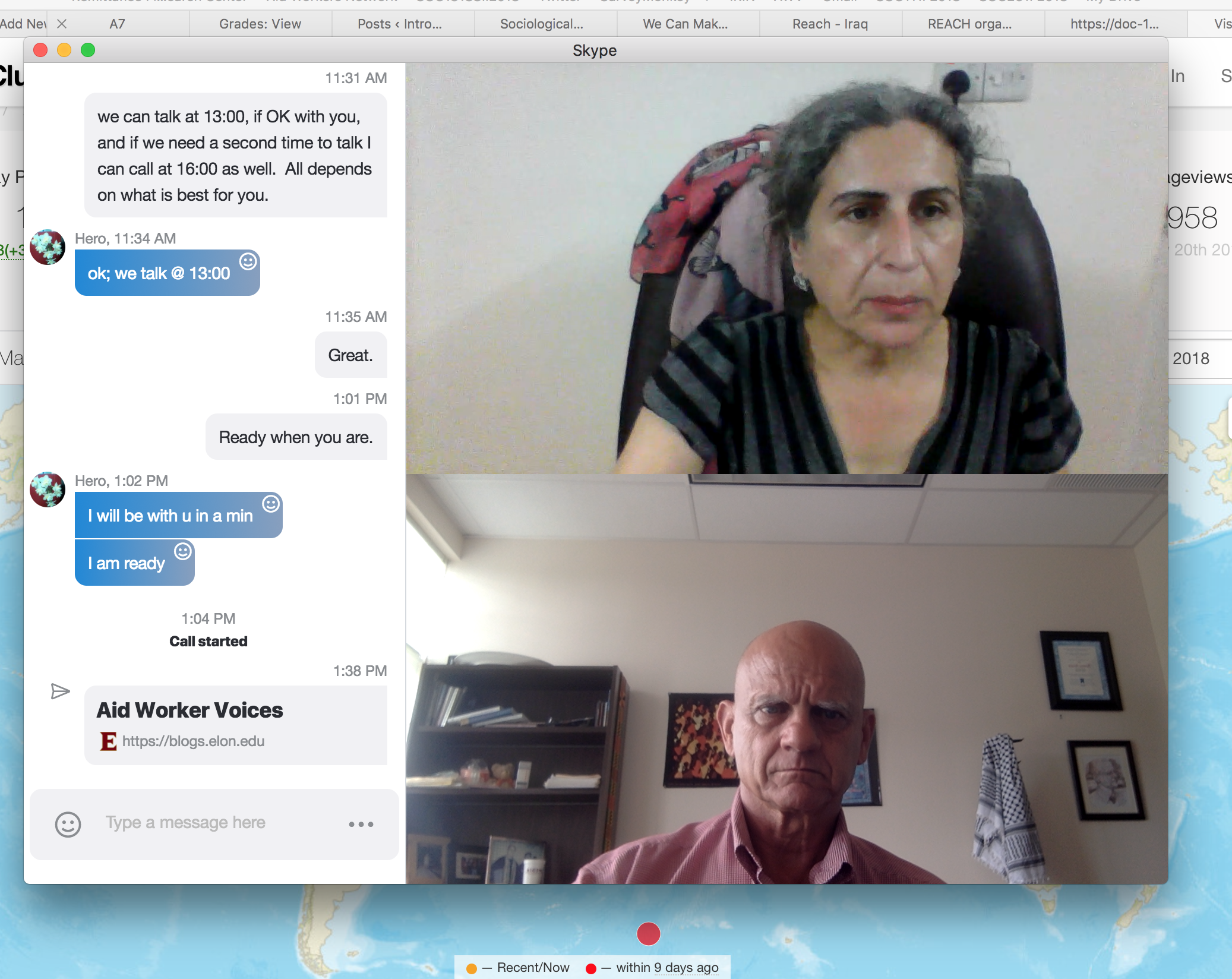
On November 22nd -Thanksgiving Day in the US- I was fortunate to be Skyped into the Grand Bargain Localization Workstream Demonstrator Country Field Mission final report session taking place at the NGO Coordination Committee for Iraq (NCCI) offices in Erbil, Iraq.  I was invited to attend the meeting by Hero Anwar, Deputy Director of Rehabilitation, Education and Community Health (REACH), a LNGO in northern Iraq.  I am working closely with Hero as part of my continuing research on national humanitarian workers. My interviews with her have been extraordinarily useful, as evidenced by my last post.

This is the second such Localization Workstream Demonstrator Country report, the first taking place in Bangladesh in September. There were approximately 40 people in the room, including the the nine member Mission Team which included donors, INGO representatives, and UN officials. Several NCCI members also Skyped in from Baghdad

https://media.ifrc.org/grand_bargain_localisation/home/
Hero Anwar, REACH

I was about to add that who was not represented in the room were members of the affected communities, but that would have been an ignorant statement. All the Iraqis in the room are members of this group.

As preparation for listening in to this meeting, I read the Inter-Agency Standing Committee (ISAC) Mission Report Bangladesh Final. ISAC’s history, as described on their web site:

“The Inter-Agency Standing Committee (IASC) is a unique inter-agency forum for coordination, policy development and decision-making involving the key UN and non-UN humanitarian partners. The IASC was established in June 1992 in response to United Nations General Assembly Resolution 46/182 on the strengthening of humanitarian assistance. General Assembly Resolution 48/57 affirmed its role as the primary mechanism for inter-agency coordination of humanitarian assistance.”

The current ISAC goal is stated thusly:

“The multi-agency Mission was aimed at promoting and facilitating the achievement of the Localization Commitments through understanding what localization means for the various stakeholders, identifying good practices and barriers, and drawing up actionable recommendations for GB signatories and key stakeholders.”

‘Actionable recommendations.’  I’ll have to remember that phrase.

Thoughts listening to the report/discussions
Though the presentations and discussion lasted over three hours, I was only able to listen in to the first hour or so. Let me expand on the notes and conclusions that I wrote as I listened intently to the presentations and Q&A session. As a sector outsider/researcher my views are a wedding of insights I have gained from now several years of interviews and my basic understanding of the world as a sociologist.  In terms of organizational and bureaucratic theory, I have found the German sociologist Max Weber to be very useful.

Champions
My first thought was ‘champions’ are needed, especially at the national level, for there to be meaningful and sustained movement toward the goals of ‘Localization.’

In US higher education we talk of ‘program champions’ or ‘initiative champions’, people who are consistent and even aggressive advocates, and whose personal passion for a particular program or project is always evident. She/he keeps these goals ever-present in their daily work flow.  Success or failure of initiatives depend on having at least one or two people -champions- deeply committed to the cause.

And here’s the key. Real, lasting institutional change is about people and relationships, not organizational structure. In Iraq, Hero is -or could be- such a person because she both understands the ‘big picture’ but is also very good at the ‘people’ part of her job.

Hero flowers in bloom.

Identifying and then supporting champions is not always easy. First, the high turnover in the sector tends to make the nurturing, maturing, and mentoring of junior staff who are potential champions difficult. At the same time, those staff in senior positions may suffer from burnout and a persistent need to focus on the immediate problems within their own organizations. Intra-agency duties need constant attention, and any inter-agency activities, while they may be viewed as worthy and important, must always take second priority. The vast majority of LNGOs are resource poor and chronically underfunded. This leads to the common situation where there is no money to pay for any senior staff to take up ‘big picture’ leadership, and even if an individual has the will to do more and be the ‘champion’, this solution is not sustainable or effective in the long run.  Asking donors for resources to cover these activities is difficult, and so one month leads to the next, with potential champions turning energies only toward accomplishing their own goals.

Communication
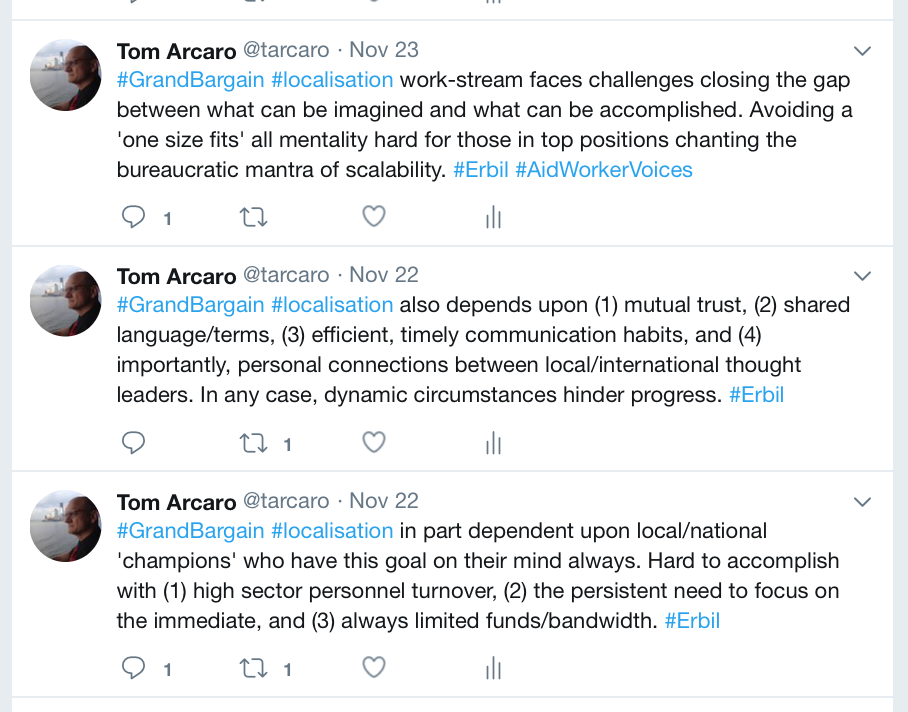
Assuming that one does emerge, moving forward as an effective champion for Grand Bargain ‘localization’ means working with other organizations such as NCCI.  As I noted in a Tweet,

“#GrandBargain #localisation also depends upon (1) mutual trust, (2) shared language/terms, (3) efficient, timely communication habits, and (4) importantly, personal connections between local/international thought leaders. In any case, dynamic circumstances hinder progress.”

Trust is critical and only be developed, I’ll argue, by face to face interaction.  Developing trust means having a common language and shared terms reinforced by effective, efficient, and mutually respectful communication habits made easy by seamless and user-friendly technologies and occasional face to face meetings. Here the issue of asymmetrical passion can arise.  If one party senses the other is ‘dialing in’ their comments, input, etc., the relationship can falter. Champions need partner champions. Thought leaders on both sides of the relationship need to be committed, consistent, collaborative, and focused so that they can work together toward common goals and to address the inevitably changing local and international circumstances.

Each humanitarian response is unique
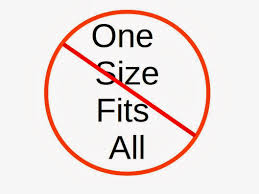
A basic truism of life is that there will be challenges closing the gap between what can be imagined and what can be accomplished, and such is the case for the promises made in the Grand Bargain. One pitfall is avoiding a ‘one size fits’ all mentality, hard for those in top positions chanting the bureaucratic mantra of scalability. Indeed, I think one of the most important skills that a leader must possess is to know when to (1) use proven templates (‘one size fits all’), or (2) when to retrofit template solutions based on local conditions, or (3) when to avoid templates and develop unique solutions based on local conditions.

As the ISCA Localization Workstream Field Mission team moves forward, encouraging thought leaders -both national and international- to be adaptive in their approaches to problem solving seems a sound strategy.

Time and bandwidth
In a followup conversation with Hero she lamented that there are “…so many good reports and studies that we are sent, but sometimes it is hard to find the time to read them all.” If the ‘actionable recommendations’ are to be, well, actionable, there must be the time and energy available to take those actions by those in positions to do so.  This takes funding, money for salaried time devoted to reaching Grand Bargain goals. People like Hero need to have their time freed so that they can use their expertise, social capital, and passion for helping their brothers and sisters to be champions.

And that’s one view from an outsider.  Your feedback is welcome.  Contact me here.


Tom Arcaro

Tom Arcaro is a professor of sociology at Elon University. He has been researching and studying the humanitarian aid and development ecosystem for nearly two decades and in 2016 published 'Aid Worker Voices'. He recently published his second and third books related to the humanitarians sector with 'Confronting Toxic Othering' published in 2021 and 'Dispatches from the Margins of the Humanitarian Sector' in 2022. A revised second edition of 'Confronting Toxic Othering' is now available from Kendall Hunt Publishers

More Posts - Website

Follow Me:
Twitter

More categories to consider

More categories to consider

Being a humanitarian can be a very difficult job, physically, intellectually, and emotionally. Though workers at all levels -from driver to country director- are constantly under pressure to function effectively, those in leadership positions have enormous responsibility. They must take care of those with which they work, and both sets of people for whom they work, namely those in the affected communities and the donor organizations. Much of their job is translating between the cultures and needs of each of these two very different worlds, the needy and the needed. One critically important task is keeping up with all of the complex and constantly changing nomenclature in the grant application world, all part of the ‘alphabet soup’ in the humanitarian sector.

Over time as humanitarian responses mature, shift, and application and reporting requirements change accordingly, those who write (or oversee the writing of) grants and reports must stay current with new and more nuanced ways to describe the affected communities.

More categories to consider
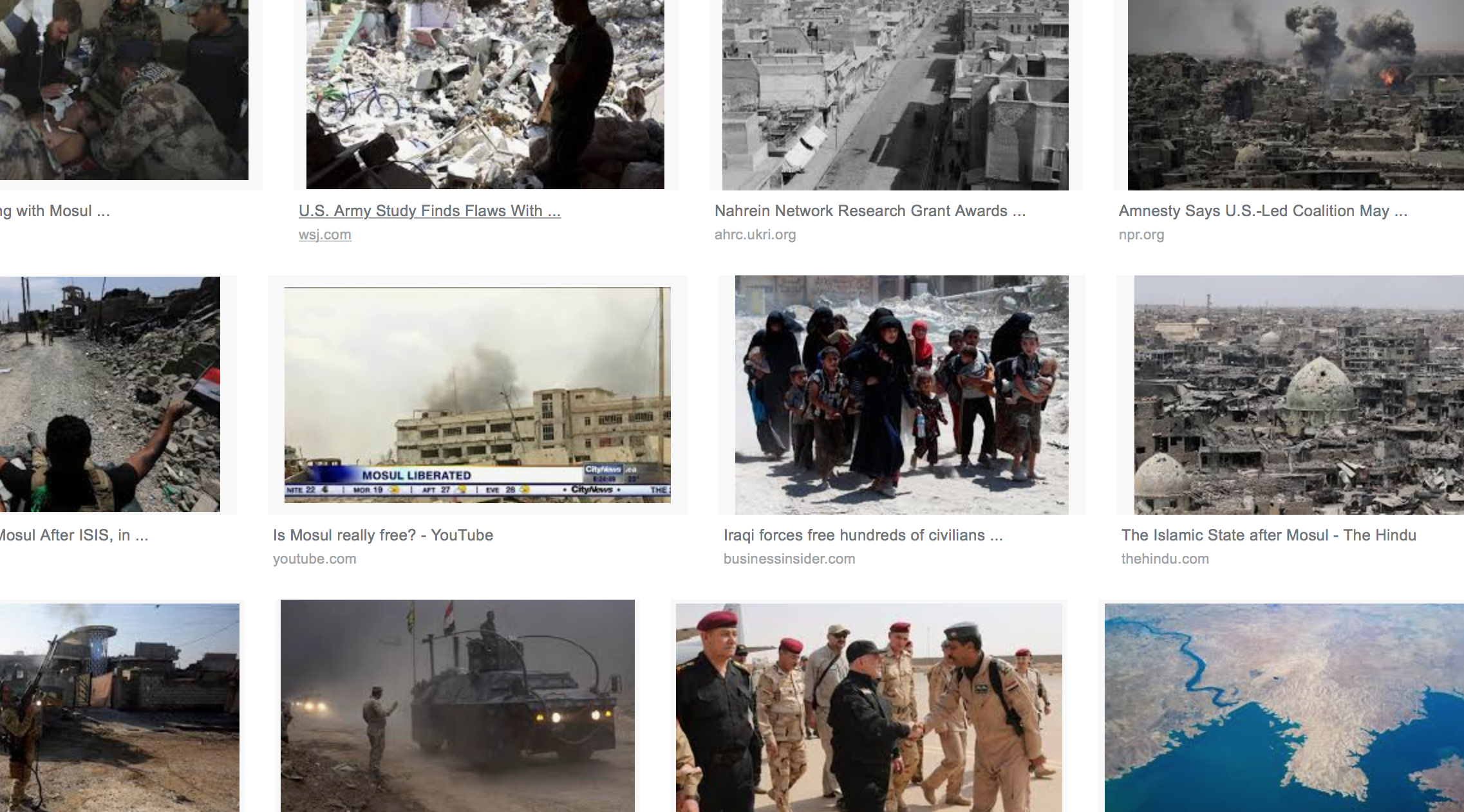
I learned a new term in the last few days.  Several times now I have interviewed an Iraqi humanitarian worker, asking her thoughts about various aspects of her life in the aid sector in northern Iraq.  Her life as a deputy director of her LNGO is extraordinarily stressful, and those of us outside of Iraq can only imagine what the most recent reports out of northern Iraq about mass graves used by ISIL mean for humanitarian workers in that region. Said one aid worker who has worked in the region, “Many of the Iraqis in the humanitarian sector are clearly traumatized at some level.”

According to the UNHCR, the are twice as many IDPs than there are refugees in conflict areas, particularly in the Middle East, and for humanitarians IDPs are a more difficult population to reach and generally have more, and more complex, needs.

In talking about recent grant proposals her organization had applied for she mentioned the terms ‘remainee’ and ‘stayee’ interchangeably, settling most of the time on ‘remainee.’  She also mentioned “returnees”, another new term.  These were new terms to me, so I asked for definition and clarification.

In short, “Remainees are people who lived under ISIL and never left their homes.”  ‘Returnees’ are IDPs who left, for example Mosul, and then retuned to their homes after the Iraqi government declared their homes free of ISIL.

When asked which group -remainees or returnees- it was harder to develop trust with she said,Remainees are harder. They are mistrusted by the government who fear they are ISIS or ISIL sympathizers.”  She noted that when their organization goes into an area that was formerly occupied by ISIL, if they are patient they can earn the trust of the families that remained, with first one or two coming forward and then more as time passes.

It is important to distinguish between ‘remainees’ and ‘returnees’ because grant RFPs may require specific information regarding which groups are targeted.  The needs of remainees and returnees overlap of course; all need livelihoods, WASH [water, sanitation, hygiene], NFIs [non-food items], and infrastructure support, for example, but the needs of the remainees trend to be more intense, especially when it comes to psychosocial support.

My contact noted that dealing with the impact of GBV [gender based violence] was particularly difficult because under ISIL “the rights of women and girls were not respected.”  Her description, of course, is an understatement likely borne of the fact that, as mentioned above, most Iraqi humanitarians are traumatized at some level.

Universal usage
On the global level, the terms ‘remainee’ and ‘returnee’ are not new, of course, and, in addition to in Iraq, have been used in past humanitarian responses in Kosovo, for example.

Each new generation of national humanitarians in Iraq -and elsewhere around the world- must endure and then perpetuate the dehumanizing process of turning human lives into bureaucratically appropriate nomenclature. In Iraq, safe to say, there are few degrees of separation -if any- between the helpers and those whose lives are being assisted, and not infrequently only the passage of time and circumstance separate one role from the other.  As I step back, I can’t help but think that in a larger sense, all Iraqis are remainees.

As always, send me comment, feedback, or critique. Click here to get the process started.


Tom Arcaro

Tom Arcaro is a professor of sociology at Elon University. He has been researching and studying the humanitarian aid and development ecosystem for nearly two decades and in 2016 published 'Aid Worker Voices'. He recently published his second and third books related to the humanitarians sector with 'Confronting Toxic Othering' published in 2021 and 'Dispatches from the Margins of the Humanitarian Sector' in 2022. A revised second edition of 'Confronting Toxic Othering' is now available from Kendall Hunt Publishers

More Posts - Website

Follow Me:
Twitter

“In the big picture, the sector is but a pawn in terms of international politics.”

The context
Stepping back from time to time is very useful for gaining perspective.

Studying the humanitarian sector can draw you into any number of topics, and just keeping up with the latest controversies, Tweet threads, ‘Fifty Shades of Aid‘ Facebook posts, informational web sites, academic journals, and blogs like Aidnography is more than enough to keep this researcher occupied. But being ‘drawn in’ means making it harder -and thus more necessary- to step back occasionally.

And so I have, enjoying a short but intense conversation with a respected silverback in the sector, my colleague J (aka Evil Genius). One comment he made struck me, and I decided to explore further.

We were discussing many topics including my research on national humanitarian workers, critiques of the sector, and the trope ‘moving the needle.” J and I agreed that there is both a great deal wrong…and a great deal amazingly ‘right’ with the sector and, given the time, evidence of both extremes can be found, documented, and discussed ad nauseam.

Among many other nuggets, J offered, “In the big picture the sector is but a pawn in terms of international politics.”

Yup.

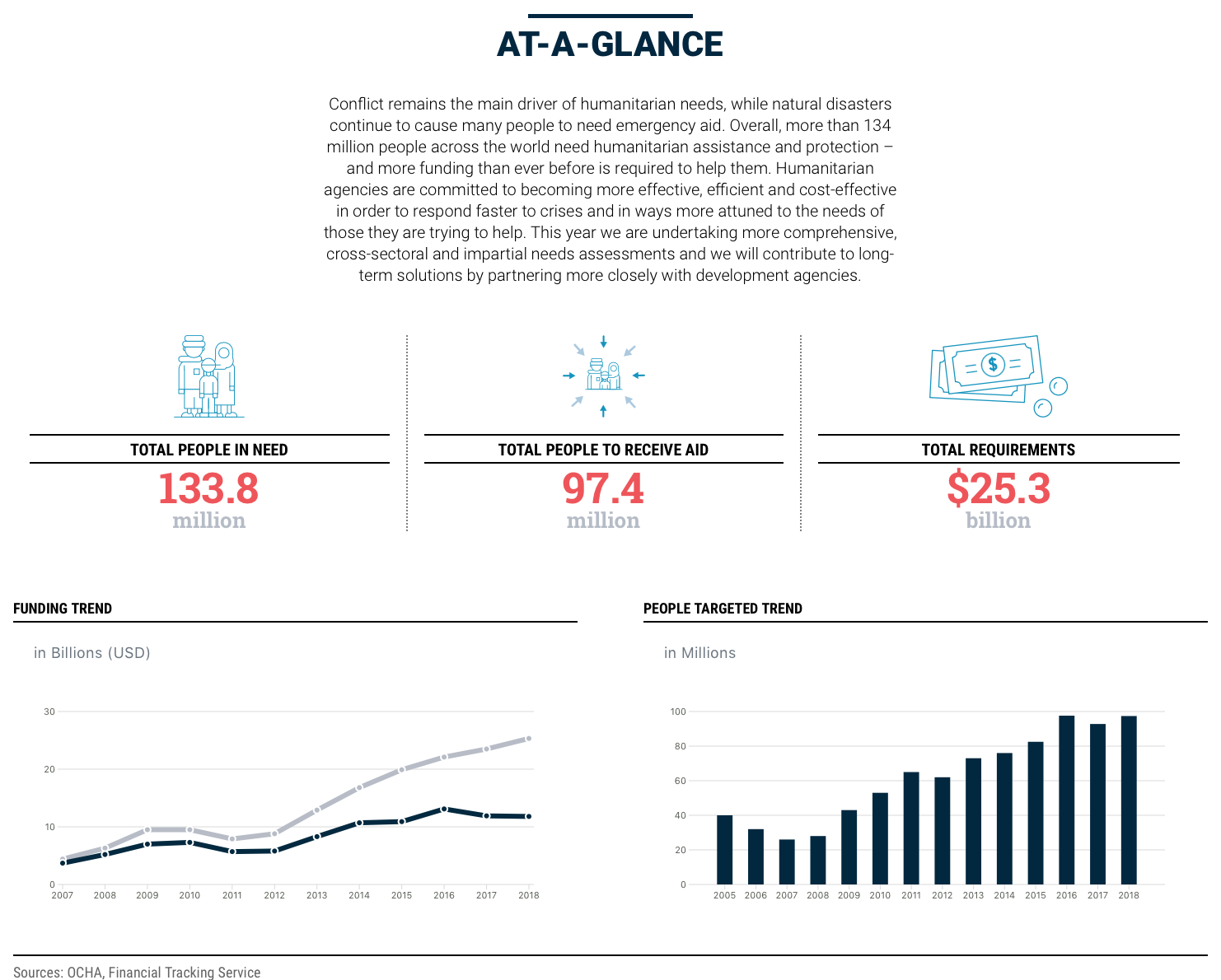
According to the Global Humanitarian Assistance report, $25.3 billion was needed in 2017 for all humanitarian efforts, of which less than half -only 47%- was funded. This $12 billion allowed humanitarian organizations be help only 97 million of the 134 million IDPs, refugees, and, in the case of Iraq, ‘remainees’ in need.

Important to stress is that the vast majority these funds went to human-made disasters -a sterile euphemism for wars- , not natural disasters like typhoons or earthquakes


Compared to what?
$12 billion sounds like a lot of money, but that clearly depends on context.  For the sake of comparison,

  • Apple Corporation posted quarterly revenue of $52.6 billion in 2017, making for $210.4 billion total.  That’s a lot of iPhones, MacBookPros, and smart watches.
  • In the US alone, over $35 billion was spent combined on elective surgery ($16 billion) and Valentine’s Day ($19.6 billion) in 2017. Tummy tucks and breast implants are not cheap.
  • US military spending in 2017 was $610 billion- over 51 times that spent by the entire globe on humanitarian assistance.
  • Nearly $600 billion was sent in remittances -funds sent by migrants to relatives in their home countries- in 2017. This last remittance number is critical. $24.5 million was used in Haiti by the humanitarian sector and $1.43 billion was send from the Haitian diaspora located in the US alone.
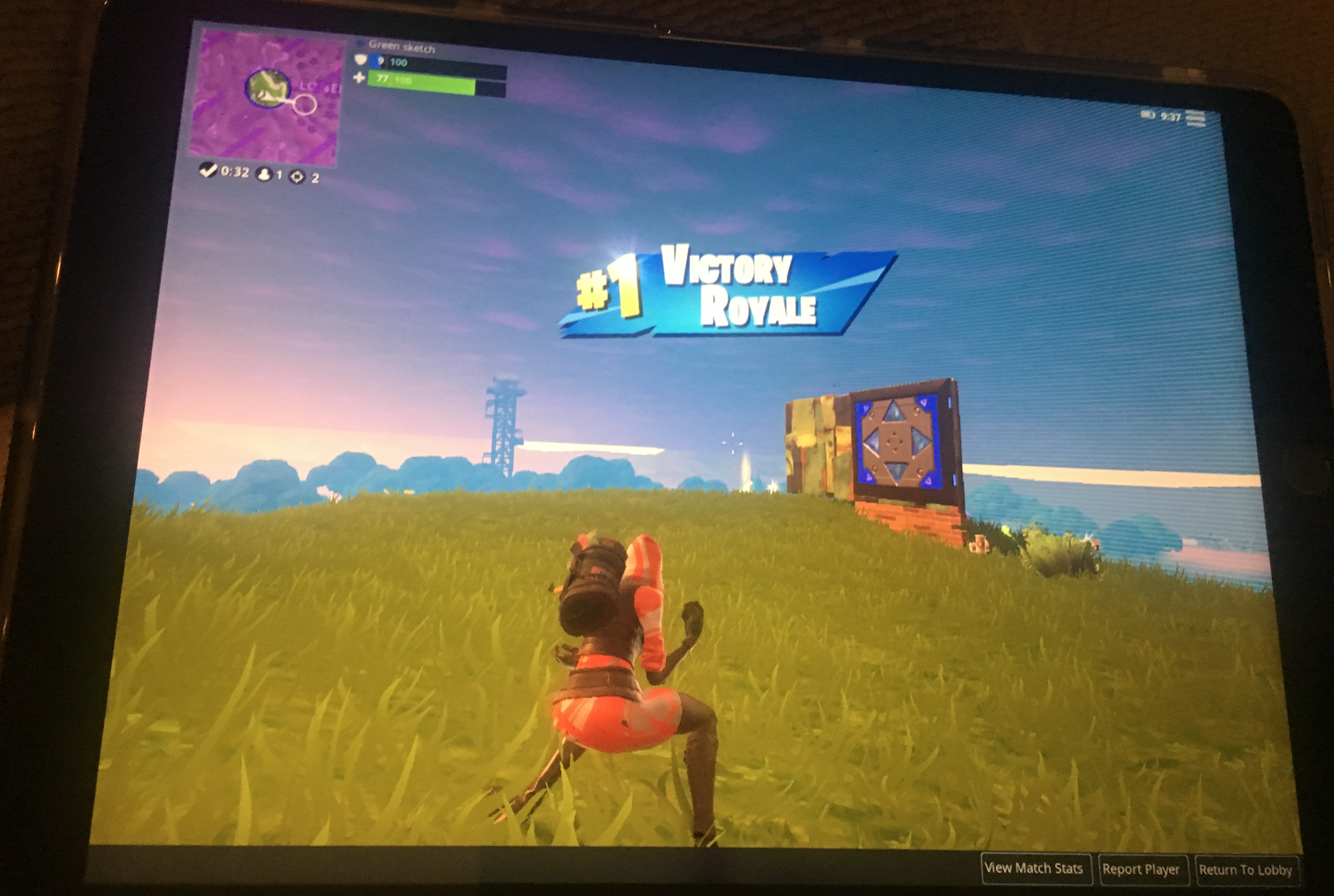
  • Epic games is making at least $3.6 billion per year from their online game Fortnight.
  • And, finally, a comparison pointed out by J himself:  the financial size of the aid sector and the porn industry are about the same …the porn industry makes about $15 billion per year, just a bit more than the $12 billion in humanitarian aid.

My point is this: the money spent on global humanitarian response is, comparatively, a pittance, literally.

A Martian’s view
What I find interesting is looking at this from a total outsider’s perspective, say, a Martian’s. “How is it with so much human misery so little money (comparatively) is devoted to helping humans in need, especially when there is obviously wealth being used for patently non-essential purposes?”, they might ask. And further, “Your actions and priorities indicate that you value your own life far more than the lives of others, but your world religions and major ‘humanitarian’ documents seem to emphasize that all humans have equal value.  How do to reconcile that disparity?”

Indeed, I have been asked these kinds of questions by villagers in rural Chiapas, Mexico and elsewhere in my travels in the Global South. I have found no satisfactory response to the Martian or to those humans I’ve met.

Back to the point about being a pawn
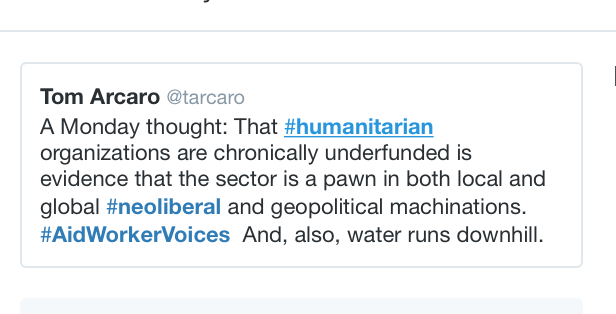
I think the above add at least indirect support to J’s point that ‘the sector is but a pawn in terms of international politics’.  If we -collectively as humanity- really wanted to recognize the “inherent dignity and of the equal and inalienable rights of all members of the human family” we could.  As seen by the numbers above, it appears to be a matter of priorities.  Those in power choose to worship whatever economic and political systems keep them in power, and for many that god is ‘freedom’ under the guide of neoliberalism.  (Details on that for another post.)

Let me expand with one example. Yemen, according to the UN Secretary General, is the worst humanitarian crisis of 2018. The 22 million Yemeni in desperate need are pawns in geopolitical machinations at the highest levels.

Could it be possible that Saudi Arabia or the United States could end the war in Yemen if either wanted to?  Cynically, I’ll respond with, ‘of course.’  Yes, the situation in the Gulf states is very complicated.  Yes, there is much history to consider and numerous cultural and religious factors in play.  But in the end, it can be argued, that in Yemen, just like in Biafra all of those years ago (with countless examples in between) that humanitarian aid is merely a pawn pushed across the global chess board by those jostling for power.

Another example, with an even longer and perhaps even more distressing history, is humanitarian aid being used as a political tool in Palestine, particularly by those in power in the US.

Perhaps the discussion should not be about what is ‘right’ or ‘wrong’ with the sector or how to ‘remake aid’ but rather how to change the macro level forces that have an interest in keeping a good part of the human family marginalized.

And yes, I realize I point this out perched in ‘an ivory tower’


As always, comments, questions, and snark can be directed here.

Tom Arcaro

Tom Arcaro is a professor of sociology at Elon University. He has been researching and studying the humanitarian aid and development ecosystem for nearly two decades and in 2016 published 'Aid Worker Voices'. He recently published his second and third books related to the humanitarians sector with 'Confronting Toxic Othering' published in 2021 and 'Dispatches from the Margins of the Humanitarian Sector' in 2022. A revised second edition of 'Confronting Toxic Othering' is now available from Kendall Hunt Publishers

More Posts - Website

Follow Me:
Twitter

Global citizens, stigmas, and America

Some PSAs produced by my students
As an academic working on the margins of the humanitarian aid and development ecosystem, I am fortunate to be able to teach classes at my university that address global issues. As an end of semester service project assignment, I had my students create PSAs related to issues we discussed.  In preparation we spent time watching many PSAs, some we winced at, some we learned from, others just made us laugh.  The Radiaid.org site was very helpful, as was our close reading of That the World May Know by James Dawes. Below is a sample from my class.

Please email me with any comment or feedback for the students and I will pass it on.


This first one is a critique of my university’s study abroad programs and our rhetoric of ‘global citizenship.’

The creators noted

Our PSA confronts how the term “global citizen” is often thrown around without people actually embodying what a global citizen is, especially when it comes to being educated about what is happening around the world. We hope this PSA causes people to reflect on their own global engagement and start living up to the title that many have given themselves following an experience such as study abroad.


This next one addresses how aid is framed and communicated.  From the students,

Our PSA starts with, “Open your eyes,” and calls for people to recognize the stereotypes of people receiving aid. The call to action is “send aid, not stigmas.” We hope to portray that while important to send effective aid to places that need it, we must ensure that the citizens of these countries are not stigmatized or devalued. The media created for and by aid organizations is often aimed toward collecting donations; problems within a community are framed to seem dire. If people feel heroic for helping a group of people, they are more likely to donate. This strategy becomes problematic when it begins to stigmatize communities and the individuals that live in them.

https://www.youtube.com/watch?time_continue=49&v=vl0MTW3Bh5U


This last one makes a comment in response to the UNHRC study of poverty in the United States.  Among the insights from that report are these:

  • US healthcare expenditures per capita are double the OECD average and much higher than in all other countries. But there are many fewer doctors and hospital beds per person than the OECD average.
  • US infant mortality rates in 2013 were the highest in the developed world.
  • US inequality levels are far higher than those in most European countries
  • Neglected tropical diseases, including Zika, are increasingly common in the USA. It has been estimated that 12 million Americans live with a neglected parasitic infection. A 2017 report documents the prevalence of hookworm in Lowndes County, Alabama.
  • The US has the highest prevalence of obesity in the developed world.
  • In terms of access to water and sanitation the US ranks 36th in the world.
  • America has the highest incarceration rate in the world, ahead of Turkmenistan, El Salvador, Cuba, Thailand and the Russian Federation. Its rate is nearly five times the OECD average.
  • The youth poverty rate in the United States is the highest across the OECD with one quarter of youth living in poverty compared to less than 14% across the OECD.
  • The Stanford Center on Inequality and Poverty ranks the most well-off countries in terms of labor markets, poverty, safety net, wealth inequality, and economic mobility. The US comes in last of the top 10 most well-off countries, and 18th amongst the top 21.
  • In the OECD the US ranks 35th out of 37 in terms of poverty and inequality.
  • According to the World Income Inequality Database, the US has the highest Gini rate (measuring inequality) of all Western Countries


I do hope that you enjoyed these efforts.  Please do contact me if you have feedback.

Tom Arcaro

Tom Arcaro is a professor of sociology at Elon University. He has been researching and studying the humanitarian aid and development ecosystem for nearly two decades and in 2016 published 'Aid Worker Voices'. He recently published his second and third books related to the humanitarians sector with 'Confronting Toxic Othering' published in 2021 and 'Dispatches from the Margins of the Humanitarian Sector' in 2022. A revised second edition of 'Confronting Toxic Othering' is now available from Kendall Hunt Publishers

More Posts - Website

Follow Me:
Twitter

‘Moving the needle’ trope

“How do we weigh the unforeseen and often unforeseeable negative results of our humanitarian interventions?”
-James Dawes, That the World May Know, p. 16

“I sing the song because I love the man.”
-Neil Young

Primum non nocere [first, do no harm], indeed
As background preparation for class I am re-reading William Easterly’s The Tyranny of Experts, and this has lead to re-visiting some fundamental ideas about aid, development, the humanitarian imperative, and, well, what it all means.  This reflection has led me again to the question many of us ask at various stages of our career, namely ‘what difference am I making in the world?’  So, for a bit, I am jumping down that rabbit hole once again, knowing already my destination, but unable to stop myself.

The trope ‘move the needle’ has been used in popular discourse for decades now, and has even achieved cliche status in the business world.  I have heard this phrase used in countless conversations in academic and administrative circles and not infrequently in casual discussions involving the humanitarian aid and development sector. And, of course, a quick search just now yielded no less than a half dozen ‘Twitter handles’ using the phrase ‘moving the needle’ in some form.

But what does ‘moving the needle’ mean in the context of humanitarian aid and development?  Are we/am I ‘making a difference in this world’?

Enter rabbit hole #1
Words are tools to describe and explain to others -and to ourselves- ideas we have in our heads. As ideas go from nascent but increasingly organized clusters of synapses in the brain (deep structure) to verbal or written articulations (surface structure), words must be attached to those ideas and, as Whorf and Sapir taught us long ago, language (both syntax and grammar) do not just passively describe the world they -critically- construct our world.

James Dawes in his book That the World May Know quotes Gilbert Holleufer of the ICRC who told him, “The language disincarnated, it disembodied reality, and they [the affected community] know it. They know we are disembodying their reality, we are dissolving it into words. ….Humanitarian language is part of the threat they have.”

Simply put, words matter.

The phrase ‘move the needle’ is a shorthand way of summarizing a dizzying array of variables, and, as such, necessarily destroys the nuance and complexity underlying these three words, inhibiting and limiting our full understanding of the impact of our actions. Broadly asked, how do the words we use oversimplify and perhaps even skew our understanding of phenomena like ‘charity’, ’empowerment’, ‘aid’ and ‘development’ and ‘move the needle’?

And rabbit hole #2
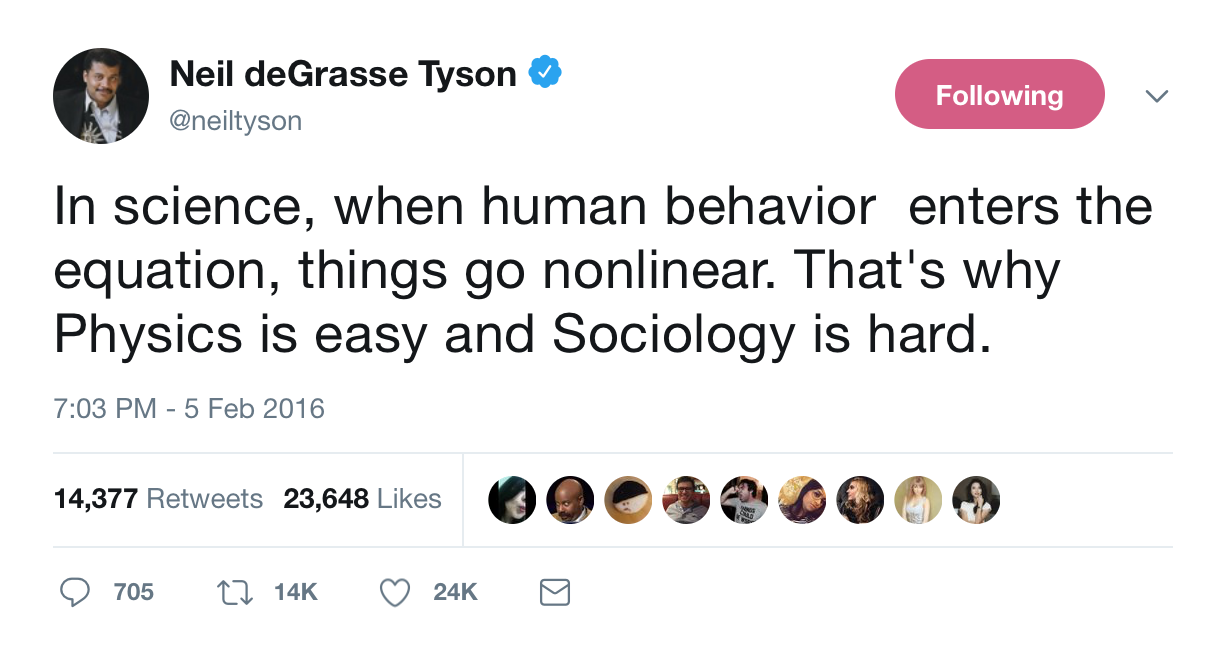
Four years ago I wrote a long blog post where I posit that our global social system is nonlinear and hence, in the long run our collective humanitarian efforts are part of a massive and complex network of forces which are largely beyond our control.  Positive social change is our purpose, but our actions are based on what might be a specious assumption, namely that we can move the needle. See this post for additional thoughts.

In a more recent related post I wrote about neoliberalism and the inexorable moving forward of the many headed hydra of capitalism. One aid worker summarized the point thusly,

“I think humanitarian aid work operates within a system that is built on inequality – we won’t see large scale change happen in the lives of people, in terms of long term development, until we start to challenge the structures and systems that result in this inequity in the first place. And the heart of those institutions is within North America and Europe – until we recognize how dependent we are on the oppression and marginalization of others for our own betterment and benefit (i.e. access to cheap disposable goods, foreign foods and fresh imports, temporary foreign workers to fill low-income job vacancies, etc…), humanitarian aid work is just another cog in this bullshit machinery.”

If our global world is indeed a complex non-linear system, then capitalism is one of the main features of that system.  Moving the needle, if possible, would mean chiseling away at the baked in assumptions most have about how we live our lives in this ‘modern’ world, both as individuals and as nations.

Comic relief rabbit hole #3
The ‘saving one starfish on the beach’ trope is a sentiment that appears in many faith traditions (Judaism, for example) and is captured in this statement by Mark Brayne who said, “…it’s not about changing the world; it’s about changing the square meter you’re standing on.”  Though this comedy sketch by Studio C is intended as just that, comedy, a good game to play is to think of the real life example played out in metaphor by the actors in each of the scenes. The man with the mustache -his name is Jeremy- represents do-gooders everywhere.

In comes sociology
In most popular culture contexts the phrase ‘move the needle’ is used in a one directional sense, from zero impact to great impact. In aid and development work it is more commonly and soberly thought of as being bi-directional, that is, aid -or more commonly development- can also move the needle in a negative direction. Indeed, we can be doing bad by doing good, as Christopher Coyne puts it.

Though the phrase ‘sociocultural impact statement’ is not used in the aid and development world, this is something sociologists have been doing for a long time.  These statements look exactly like an environmental impact statement, and, in the vernacular of sociology, examine all of the manifest -intended- and latent -unintended- consequences of the planned action(s).

Though the Logical Framework Approach has been used in the Global North development sector since the late 1960’s (variations include Goal Oriented Project Planning (GOPP) or Objectives Oriented Project Planning (OOPP)), sociologists have been doing ‘functional analyses’ since the days of Emile Durkheim and more recently in the 1950’s when Robert King Merton gave us more nuanced language.

One basic maxim in sociology and anthropology is that ‘everything is connected to everything else’, and thus it follows that the latent consequences of any action directly or indirectly would impact the entire fabric of the social system where the action gets implemented and, I’ll add, every part of every social system connected to this system. I often tell my students as they do development related ‘gedanken experiments’ (e.g., what if we could 3-d print inexpensive housing?) that the lists of both positive and negative latent impacts are only limited by the researchers’ time and imagination. For those whose intention is to ‘make a positive difference’, learning the latent dysfunctions (unintended negative impacts) can be very consequential and sobering. Sociologists are (and if not, should be) the first line in training professionals doing M&E.

The needle and the damage done
A question. Is MSF (Médecins Sans Frontières) making any difference, ‘moving the needle’ in a positive direction in Yemen? Of course, their comms team tells us with compelling quantitative evidence. Lives saved cannot be argued with. But then we have the ghost of Florence Nightingale over our shoulder asking, how much long term damage has been done by providing aid?  I feel quite certain that she’d point out the absurdity that Saudi Arabia, the very country leading the war, is also a major contributor for aid to its victims.

But what about ‘natural disasters’? Surely the needle can only move in one direction in responses to tsunamis and earthquakes.  But then we read  The Big Truck That Went By: How the World Came to Save Haiti and Left Behind a Disaster and must pause once more.

Is the humanitarian aid sector moving the needle? Yes, arguably -and paradoxically- in both directions simultaneously.

And, yes, by hyperlinking Neil Young’s song I am invoking the metaphor that oil is heroin and inferring that unchecked neoliberalism is at the root of many (most?) humanitarian crises. My take on Young’s lyric at the beginning of this post: I write driven by devotion to all humanity.


Back to the classroom

So, as an academic teaching about the humanitarian ecosystem, am I making any difference? Is my teaching having a net positive impact on my students, and will they go on to make positive changes themselves? Course evaluations near the end of the semester may provide some data, but the real proof of impact must be seen in long term, lasting impacts on student’s actions, and these data are always hard to capture.

The key phrase in the Dawe’s quotation with which I began this post is “…often unforeseeable…” Given that I -we- act within a non-linear system, perhaps we can never know the eventual outcomes of our actions. I’ll make a final nod to Conrad Lorenz and offer the thought that at least on some level I flap my gums (lecture to my students) the same as the butterfly flaps its wings, unaware of the eventual outcome(s).

As always, please contact me if you have any reaction, comment, or suggestion.

Tom Arcaro

Tom Arcaro is a professor of sociology at Elon University. He has been researching and studying the humanitarian aid and development ecosystem for nearly two decades and in 2016 published 'Aid Worker Voices'. He recently published his second and third books related to the humanitarians sector with 'Confronting Toxic Othering' published in 2021 and 'Dispatches from the Margins of the Humanitarian Sector' in 2022. A revised second edition of 'Confronting Toxic Othering' is now available from Kendall Hunt Publishers

More Posts - Website

Follow Me:
Twitter

A conversation with Linda Polman and insights from the field

“Everybody inside the aid industry knows what should be done. Everybody knows how it could be better.  But to implement all those recommendations, that’s the problem. To think of how it should be better, how it can be better, is not the difficult part, it’s the implementation part.”

-Linda Polman


A conversation with Linda Polman and insights from the field
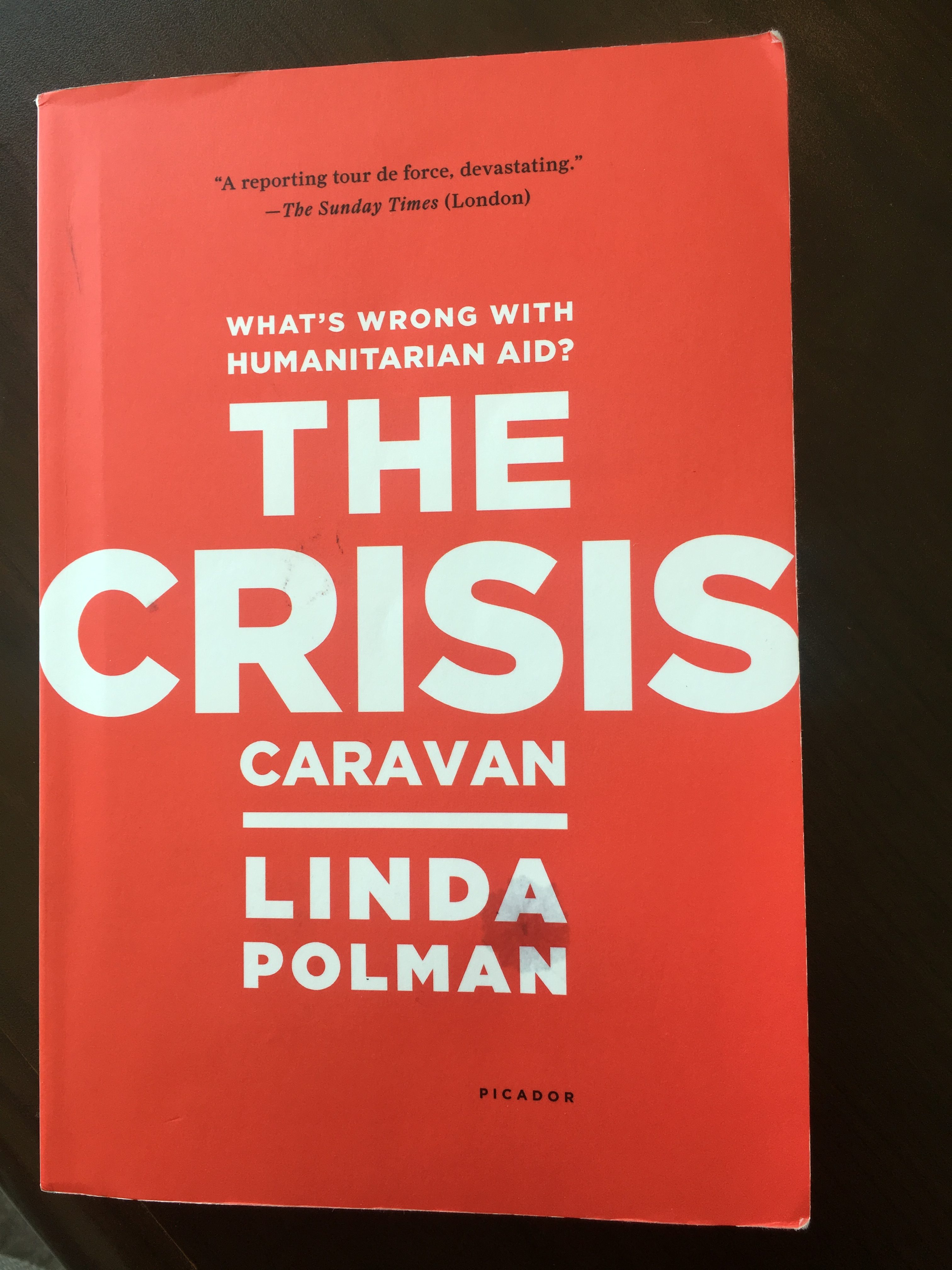
This semester I am again teaching a course on the humanitarian aid industry. Last week we had a special visitor to my class, Dutch journalist and author Linda Polman.  I have been using her book The Crisis Caravan in my class for the last five years and was pleased that she was able to take time this semester to talk with me and my students.

Implementation
One of the biggest takeaways from our half hour conversation was that there is a chronic and perhaps intractable gap between broad stroke policy fixes to the aid sector and the actual implementation of those changes. This is not a new theme, of course.  Just the opposite, most veterans in the sector have had this very discussion more times than they can count. Here are a couple examples:

At the 2016 World Humanitarian Summit in Turkey there was much discussion about more aggressive movement toward ‘localization’ or ‘nationalization’ of the industry, but putting those lofty ideas fully into action is still, to be generous, a work in progress.  My recent research into Filipino and Jordanian aid workers sheds some light onto this issue.

A second example is the recent sector-wide reaction to the #oxfamscandal/#aidtoo controversies (see here for a curated bibliography of media coverage).  Here is the way one management level aid worker now in the Middle East describes this gap:

“As anyone who’s been following the post-Oxfam #aidtoo/#metoo fallout knows, internal reporting mechanisms that make sense in local cultural contexts (and are also effective), along with a contextually appropriate interpretation –> application of “zero tolerance” is the tough part of this issue for most field managers.

Easy enough for executive leadership to say “zero tolerance”, but what does that mean practically, in [MY LOCATION]? Does that mean I summarily fire the driver who commented on the propriety of what one of my female staff chose to wear to the field? (there seems to be a general sense on Twitter that zero tolerance = every accusation results in somebody being publicly fired).

Something that keeps coming up is that female staff are afraid to report because they are afraid of being killed, in some cases by their own families.

It goes to cultural assumptions about gender (obviously) and who is at fault when a man commits harassment or rape. The traditional view is that it is the woman’s fault. And so if an accusation of harassment becomes public, the default assumption will be that the woman “asked for it” because of how she dressed or acted, and is therefore tainted (and deserving of punishment, in extremes case up to and including honor killing).

We have field based accountability systems that (mostly) work well. If local authorities or aid workers (local or expat) abuse or coerce refugees in some way, that is usually picked up. And there are cases under prosecution across the humanitarian community here at this moment as the result. But aid worker on aid worker, especially when it’s local on local, can be very tough to get reported. And in those rare instances when it is reported they prove very difficult to investigate.

I have a small group on my team tasked to come up with recommendations for an mechanism for reporting aid worker on aid worker abuse/harassment that

a) make sense culturally (most INGOs have web-based anonymous reporting, or an international hotline which many, especially local staff, don’t trust)

b) that people will trust as actually anonymous

c) is gender-sensitive (most reporters are female)

d that is sensitive to allegation versus direct witness versus actual survivor (in most cases where reporting happens, it is via a third or fourth party)

e) after all of that, leads to the possibility of actual investigation whether internal or external…

We’ll tackle what “zero tolerance” means in actual practice next.”

Sector insiders know that there are few ‘one size fits all’ simplistic pathways to policy implementation and become, with reason, frustrated when outsiders come at them with a ‘why don’t you just’ comment. When those comments come from a donor who thinks in that Excel-driven M&E certainties should emanate directly from their offices to each particular instance in the field, well, that’s tough to hear, especially given that the purse strings are controlled, of course, by the donors.

“Fixing what is wrong with the aid sector” just not that simple. As Polman pointed out in her conversation with our class, the UN and the other ‘think tank’ organizations have solutions to offer but the reality is getting solutions put in place a constant challenge for practitioners all around the globe. Reflecting on data presented elsewhere in this blog and in Aid Worker Voices, I can say with some confidence that the vast majority of veteran aid and development professionals would agree.

Dunant versus Nightingale
The tendency for all of us to think in monochromatic, binary terms is natural. We want the world around us to make sense and we tend to reduce reality into simplistic language.

Aid sector binaries are many, and include ‘expat’ versus ‘local‘, ‘relief’ versus ‘development’, ‘HQ’ and the ‘field’, and, the most important, ‘Dunant’ versus ‘Nightingale’.  We talked about the ‘Dunant versus Nightingale’ issue as a class both separately and with Polman and came to the obvious conclusion that it is rarely that easy.  It is never as binary as ‘give aid to all who need it’ versus ‘only give aid when you know that it is not going into the war chest of one side or the other or is otherwise prolonging the conflict.’
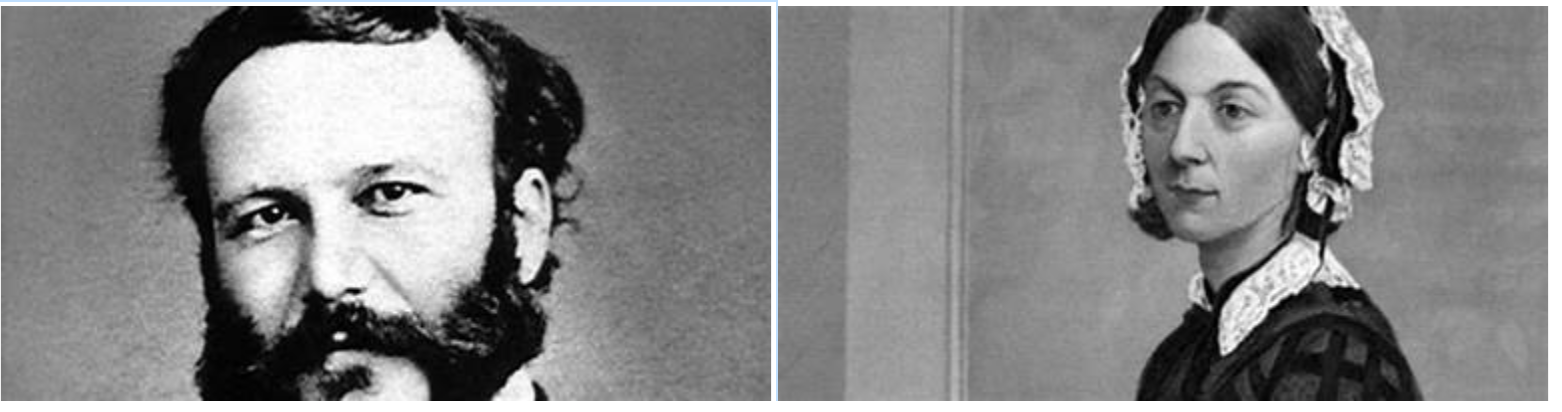
We need look no further than the current situation in Syria to see how muddy the waters are, chronically and acutely so.  Ms Polman makes this argument both in her book and in our conversation in support of a Nightingale approach:

“There are so many victims of wars and other disasters that never receive one cent of aid from us. We say no to aiding people all the time, we are just not talking about it, we all keep this charade up, that we are always there for all victims on this planet, but we’re not, we say no all the time.”

My response just now is, yes, but how can you look away?  Quite imperfectly and incompletely, I write about the humanitarian imperative here, noting that the tug of war between the Dunantists and the Nightingale supporters is never that simple, thus making me roughly the millionth writer/academic who has come to that conclusion.

If you have questions or comments you can contact me here.


Below is a transcript of our class conversation with Linda Polman.
 

Tom Arcaro:          Can we kind of start off with you giving a little bit of an introduction and a background and then maybe giving your blush on that very broad question, ‘what is the humanitarian imperative, and how should we look at that in 2018?’

Linda Polman:          Obviously, it is very deeply embedded in our Christian roots. It’s alms for the poor, it’s aid for people who don’t have anything. I’m sure you are familiar with the story of Henry Dunant and Florence Nightingale, who visited wars in 1850, 1860, and Henry Dunant was the establisher of the International Red Cross. He, by accident, stumbled onto a battlefield there, and he saw tens of thousands of guys dying in the battlefield who were left behind by their armies, because the armies did not bother to send medics with their armies, so he saw all those men dying in pools of blood, all really disgusting, and he decided to help them, he thought they were human beings and they deserved help, so he mobilized all sorts of people from the villages around the battlefield, he paid for that out of his own pockets, plasters and the oranges and the water, he all paid for them by himself. After that he asked himself “Why is there not a professional organization?”

Anyway, he established the International Red Cross, and international organization for humanitarian aid for the war of wounded, and it became very quickly a success because it is so deeply rooted in our Christian society, but from the very beginning, there have always been people against the imperative of the International Red Cross, and Florence Nightingale was the biggest oppose of this whole idea. She thought that aid, humanitarian aid, aid in war zones, should not be for anybody. She said that it’s really important to realize who you are giving aid to, who are those people laying their wounded? Are they the causers of human suffering? If they are, they you should not aid them, because you will only lengthen the wars that they are fighting. So, there has always been a debate about the humanitarian imperative. Should it be for everybody, because every human being deserves aid? Or should it always be attached to restrictions?

Tom Arcaro:             So, if Florence Nightingale had been at Goma, she would not have wanted to treat the Hutu coming in?

 Linda Polman:            Exactly.

 Tom Arcaro:               Yeah.

Linda Polman:            Exactly, yes. Because in Goma, many people were under the impression that all the aid that went to Goma after the genocide was for the victims of the genocide, but the aid actually went to the perpetrators of the genocide, so yes, Florence Nightingale would have been very much against this idea of aiding people over there. Also, because it actually did fuel the war, from all the UNACR camps, where the Hutus were being taken care of, and it was one of the biggest humanitarian aid operations at the time, the most money went there at the time. Thanks to the aid money, the Hutus were able to continue their war against the Tutsis, which were only a few miles away from where the Hutus were. So, I believe that still, even now, 22, 25 years later, we are still suffering the consequences from that period.

Tom Arcaro:               So, is it possible to have, I guess – how would Florence Nightingale have described the humanitarian imperative?

Linda Polman:            She said that responsibility should be where they belong. She says that wars are cost and fared by states, by ministers of war, and she said it’s their responsibility to pay for the mess that they created. Because you make them financial responsible for what they are doing to people, you will shorten wars, because they will have less money to spend on the wars.

Tom Arcaro:               Right, right. So, how do you see it, from your seat? How would you – are you in Henry Dunant’s camp, or are you in Nightingale’s camp, or neither?
Linda Polman:            I’m definitely in the Nightingale camp, definitely, yes. I also believe that it is important to – it all sounds very nice, that you are a humanitarian, and every human being deserves aid, et cetera, but if you look at the damage and harm that aid can do, if you look at the amount of wars that are being fueled by aid money, then I believe you should take responsibility for that, and there is a point where you will have to say no for aid, and we all make a big drama out of that, “You cannot refuse aid to people, because they are all human beings,” but we are saying no to people all the time. There are so many victims of wars and other disasters that never receive one cent of aid from us. We say no to aiding people all the time, we are just not talking about it, we all keep this charade up, that we are always there for all victims on this planet, but we’re not, we say no all the time.

 Tom Arcaro:               Right, right, and so, I immediately think about Syria, and the response there, you know, if we look at the Jordanians and the Turks and the Lebanese and the Iraqis, actually, that are taking in the Syrians, where are they on this academic debate between the Dunants and the Nightingale people? Whose responsibility is it to respond to those Syrian refugees? And how should they be responded to in a way that Nightingale would agree?

Linda Polman:            Well, for the large part, I think those neighboring countries of Syria never had a choice. People just poured in. And also, actually, the history of Syrians in those neighboring countries, they already had families there, they already had friends there, so it would – and they didn’t need visas, they just came, and by the time, I believe, that those countries woke up to the fact that there’s more and more coming, it was already too late. In the end, they did close their borders. Many people are now camping just on the outside of the border, on the Syrian side, hoping that they can still get in, but they cannot. So, for the large part, they didn’t have a choice. Also, they were promised, especially by the European community, that the European community would come and help, financially, that they would share the burden of all those refugees, because the European community has a large interest in keeping refugees in there, in the region, so they promised to send money, which they did only in very small amounts, but that was the deal between the neighboring countries and the European Union.

Tom Arcaro:               Right. We’re asking a question about the follow-up on the Europeans in general, in the Syrians, and of course, that’s happened in various ways, in various degrees. Let me go to a big global question, if we look at the percentage of GDP that the United States puts into humanitarian aid, and I’m looking specifically at the response in Yemen, where our – I think it was $87 billion, pales in comparison with the $500 billon that the Saudis are giving, and if you look the list of countries that are given that have pledged, this last Tuesday, to the UNHCR response to Yemen, the United States is way down on the list, and if you factor in percentage of GDP, we are even farther down on the list. So, my question, I guess, is what is your take on that disparity, and is there anything that the international community can or should do to help equal out the proportion of aid being pledged by different governments?

Linda Polman:            Well, in general, I would say that disaster areas are, most of the time, the responsibility of the superpower that is closest by. America has its own backyard, Europe has its own backyard, and so does Saudi Arabia. It’s in the backyard of Saudi Arabia, so it’s only logical that Saudi Arabia should be the largest aid giver there. But, to be more specific, I believe it was the intention of Saudi Arabia to be the biggest aid, to be the biggest donor in Yemen, because it gives them a lot of power in Yemen. It is not like the Saudi money is going to all the victims, the Saudi money is going to victims that are of use to Saudi Arabia, they are – the aid goes, for the most part, to government forces, for example. A big priority in the aid of Saudi Arabia is patching up wounded government soldiers, the absorbs a lot of aid money. It is also buying followers, it is buying supporters, by sending the aides to areas where Saudi Arabia has allies or has people that are sympathetic to the Saudi course. So, for Saudi Arabia, giving aid to Yemen is very much a weapon of war. They use it to keep people calm, or to buy supporters.

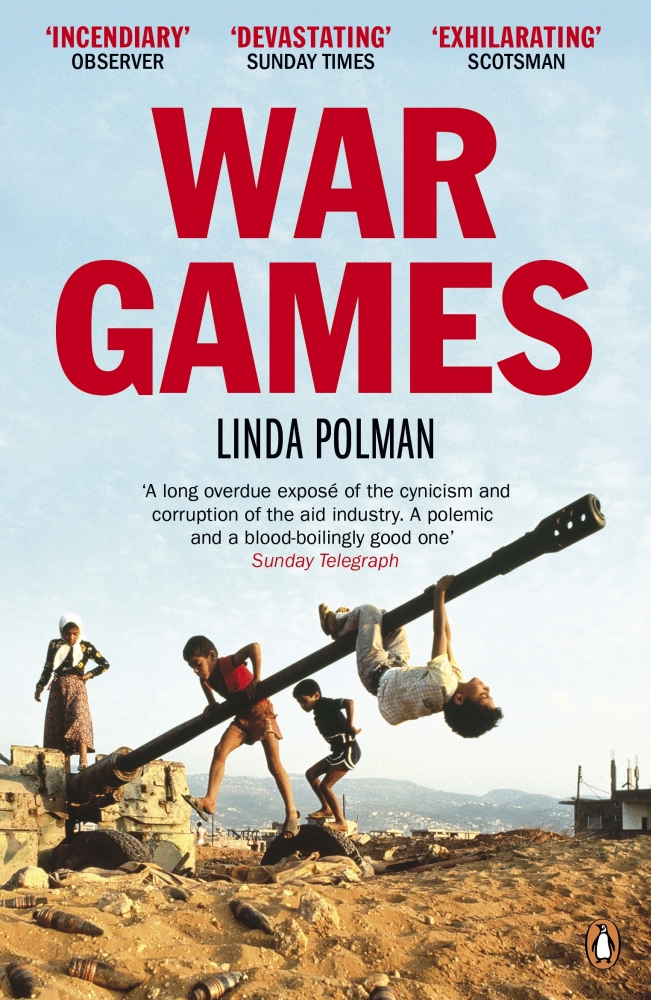
Tom Arcaro:               So, if I heard you correctly just now, you’ve essentially repeated, with different examples, much of what you’ve described back when you published Crisis Caravan, or War Games, as it’s called over there.

Linda Polman:            But that is so much the core of international aid, especially in warzones. It is not given out of charitable feelings, it is not given out of feeling sorry for people, it is not given out of feeling that justice would be done. International aid, humanitarian aid, development aid, is very much an instrument in the foreign policy of our governments. That goes for United States, through US Aid, as a sort of contract with American NGOs, saying if they do not serve the American political agenda, the foreign policy agenda, then they are not getting any American money, any government money. They have to follow the American foreign policy. The same thing goes for European aid organizations. If they do not follow the EU foreign policy agenda, which is abysmal, the anti‑immigration agenda, then they’re not getting money from the European Union. And that has always been the case. International aid has always been an instrument in foreign policy, it is not something that we do out of charity.

Tom Arcaro:               So, you know, we talked about this when we had our test call, the place that people like you, as an outsider, and maybe people like me as academics, outsiders kind of studying it, as we look at the tables in Geneva and maybe Vienna and New York, do those tables appropriately include seats or people like you that have a more objective – you’re not connected to a government, you’re not connect to any INGO, are there seats at the table for people like you, and if not, is that a goal that we should work toward?

Linda Polman:            Well, I have often been invited, after the publication of my book, to come and join forums, to come and join think tanks, for example, and often, it stays with one invitation, after that, I’m not longer welcome. [laughter] The critical voices are not very much appreciated. It’s difficult for them to accept criticism, and it is very, very difficult – even if they agree to the criticism, it is very, very difficult for them to change anything inside that system. Humanitarian aid and development aid is an industry, it’s a gigantic operation involving dozens of donor governments, involving tens of thousands of aid organizations, and involving agenda, foreign policy agendas. It is so difficult to change even small things there, so to have critical voices inside there makes it extra painful for people that want to do good, for people that do want changes, because it makes them realize more of the change is so difficult to establish, so there are opportunities for independent voices to speak, but most of the time, only once, and then, they are no longer invited.

Tom Arcaro:               Right, not invited back, right. And so, that leads to a related question about the Sphere Standards, and the Core Humanitarian Standards, and the Core Humanitarian Alliance, and other efforts like that, that have overarching entities that look at the whole sector and make – you know, come up with guidelines for how to administer aid, and how to involve the affected community. Do you think those efforts are going in the right direction? Are they enough? Is there a place for an additional one or two, you know, bridge kind of organizations that can serve the function of being more critical, and serve the function of making positive change?

Linda Polman:            Well, the thing with all the – Sphere is also like a think tank, you have very many of those bodies inside the aid industry that are called think tanks, and they come with advice for policies, et cetera. But, again, it is so difficult for the aid industry to change itself. Everybody inside the aid industry knows what should be done. Everybody knows how it could be better.  But to implement all those recommendations, that’s the problem. To think of how it should be better, how it can be better, is not the difficult part, it’s the implementation part. So, all those think tanks inside the aid industry come with wonderful recommendations, and the next year, they come with the same recommendations, and et cetera, but the implementation is the problem.

Tom Arcaro:               Right. Well, let me counter that with maybe – yeah, I get your opinion on this. If we look at Turkey a couple of years ago with the World Humanitarian Summit, there seemed to be some rhetoric, at least, around, for example, nationalizing and localizing and moving the economic power from the head offices in Geneva and New York and so on, moving the powerbase more toward the regional and national centers. So, you know, are the summits, like what happened in Turkey, do those produce policy changes going in the right direction? And again, my example is the benchmarks created for more nationalization and localization of aid?

 Linda Polman:            In fact, I was there at that summit in Turkey, and the press releases were a bit different than what actually happened on the ground. [laughter] Like, for example, this whole big thing that it should be more from bottom-up, less Geneva and less NGO CEOs who decide where the money should go to, but more to local organizations and to small organizations. And everybody agreed, and everybody has happy press releases. And, since then, it didn’t change. Since then, there is not more money going to local organizations. So, again, I am making the same point here, to think of solutions is a lot easier than to implement them. It is very, very difficult. And, you see, the problem is that most solutions, or most improvements, inside the aid industry, would involve aid organizations and donors to give up a lot of their sovereignty, a lot of their power. It is now the donors and the large aid organizations who decide where the money goes to, how much money, and what it is spent on, et cetera. And, to improve things, they should let go of that sovereignty, they should let go of that power of their money, and they are not prepared to do that.

Tom Arcaro:               Right.

Linda Polman:            Donors and aid organizations still believe that they are the only ones who know what’s best for people over there, so it’s very difficult for them also to give more power and more money to small, local organizations, but they know it would be better, but they won’t do it.

Tom Arcaro:               Right, right. And so, which leads us in the same spot, things will keep going in the same direction. Let me refer back to the research that I did, and the survey that I did on aid workers, I asked them basically the same question, you know, “What do you see about the future of the sector, and what can be done to improve it?” And some of the more cynical but maybe accurate answers had to do with global neoliberalism, and how that is spreading certainly, you know, in the United States and certainly in much of Europe, with what’s going on. You know, we seem to have no grasp of responding to neoliberalistic tendencies, and a lot of the respondents that I read there, their comments, a lot of the respondents basically pointed out that unless we change the fundamental nature of an economic system which benefits from this low regulatory kind of governmental policy, then nothing is going to change. The analogy that one of them used is that, “We’re just putting out fire, but the fires will continue to be started, because the fundamental system is going to generate those fires.” And so, I guess I’m asking kind of the neo-Marxist question, is it possible to imagine a non-neoliberalistic economic system globally?

Linda Polman:            Imagining that is the only thing that keeps me going. I think you need idealism to make a better world and to want a better world And I’m an old hippie, you know, I think things can be better if we only want it and we only do it. I spent quite a lot of time inside the building of the United Nations in New York, for example. I did a travel story about being in that building, and I traveled around that building for about three weeks, going up and down the escalators, going into offices, and seeing what’s happening there, talking to people in the canteens, et cetera. And there was a certain stage where I walked into a meeting hall, and there was a remembrance service for an economic advisor who was on the payroll of the United Nations, and he had died, and people were giving speeches about him, they were remembering him. And then, I realized that inside that hall, there were about five or six Nobel Prize winners, and they were all on the payroll of the United Nations, they were wonderful minds, you know? So, there’s a lot of people who know how things can be better. The United Nations has all of the solutions the world needs to be a much nicer place. The only thing that we need to do is take those solutions off the shelves and implement them.

 Tom Arcaro:               Right.

Linda Polman:            Without being too nasty, this decision coming, for example, now, the whole thing in Yemen, it’s arms dealers, the fact that Saudi Arabia is able to do what it’s doing in Yemen without anybody commenting on it, it’s because it’s a very good customer for our arms dealers, for our arms industry. Then, you get into big oil business, you get into the people smuggling business, so yes, the world could be a much nicer place, if we would be much more of a hippie. [laughter]

Tom Arcaro:               [laughter] Well spoken, well spoken. My inspiration for thinking along those lines comes from the opportunity I have had to study and then visit the Zapatistas down in Chiapas, Mexico. If you read what [Subcomandante] Maros has written, and others have written, he talks about the capitalistic hydra and how it needs to be recognized and addressed at a fundamental level. I think the people like that, who are speaking with and for the indigenous communities around the world, I think they might have a different perspective that we can learn from, and I think your answer to that would be, “Yes, but we need to listen, and we need to have a resolve to continue to demand answers to fundamental questions.”

Linda Polman:            Yeah.  One of the recommendations I would like to give to the younger generation, people who are much younger than me, be much more political, be involved in the politics of your own country, you know? Don’t believe that the change should be there. You should change the foreign policy and the local policy with your own government. Be political. Join a political party. Join lobby groups. If we want Saudi Arabia to behave better, if we want it to stop murdering people, then we should stop selling arms to Saudi Arabia, but we do not. We sell billions and billions. So, part of the solution for Yemen is, in fact, inside the United States. Part of the solution is also inside of the European Union. Europe is the second biggest arms dealer to Saudi Arabia. So, we all lick the heels of Saudi Arabia, because they spend billions of dollars in our economies. So, that is the way forward, to influence our politicians, to influence our politics lots of things that are wrong in the world, hunger in the world, poverty in the world, the solution lies within the United States and within the European Union. If we behave better, if we are more honest, if we are more willing to share with the rest of the world, then the world will be a better place, so be political, influence your own policy team.

Tom Arcaro:               Right. And I’m hearing and agreeing with what you’re saying, but at the same time, we see a wave of populism, both in our country, here in the United States, and even, to a certain extent, in the UK, with the BREXIT decision. How do you respond to those populist movements, and have a more humanitarian and positive perspective? How do you persuade people to go in that direction, rather than the populist direction?

Linda Polman:            I’m sure that more souls can be won, but I also know that that movement, the humanitarian movement, is so big already. Look at the globalist movement. Look at the movement that young people in America have in their fight against NRA [National Rifle Association], for example. And as far as Europe goes, I will never forget in 2015, that summer, when hundreds of thousands of refugees walked into Europe, they walked through Europe. Official aid organizations, nor governments, were there to do anything for them, they just ignored them. Hundreds of thousands of people, many of them barefooted, you know? No money, nothing to drink, nothing to eat, all of them had routes that were several thousands of kilometers long.  There were civilians, there were tens of thousands of civilians there, waiting for those refugees, feeding them, giving them warm hats to wear, giving them shoes to wear, giving them water, putting them up, there were tens of thousands of ordinary people helping those refugees. More than a million of the refugees were accepted into Europe, and they found friends here, they found people who are willing to help them and were willing to mix them into the local population. So, the movements of people who wanted to better the world is big. Look at the natural environments movements. There are so many people who wanted better worlds. So, yes, there are populist movements, but there are also a lot of common sense movements, and people who want the best for other people.

Tom Arcaro:               Thank you for that, thank you for that. Last chance for questions. Linda, I feel – I very much appreciate your time. It was just an absolute gift to be able to talk with you for a bit, and I appreciate very much this time and the insights that you shared with the students, so thank you, thank you.

Linda Polman:            You’re very welcome, and I hope that my skepticism does not put people down. I hope that everybody will get involved, that people will go for this better world. Don’t listen to me. [laughter]  Do your thing, and do what is best for other people. Think, be political, and do your best. So, don’t let my cynicism or skepticism drag you down.


Tom Arcaro

Tom Arcaro is a professor of sociology at Elon University. He has been researching and studying the humanitarian aid and development ecosystem for nearly two decades and in 2016 published 'Aid Worker Voices'. He recently published his second and third books related to the humanitarians sector with 'Confronting Toxic Othering' published in 2021 and 'Dispatches from the Margins of the Humanitarian Sector' in 2022. A revised second edition of 'Confronting Toxic Othering' is now available from Kendall Hunt Publishers

More Posts - Website

Follow Me:
Twitter

What is the ‘humanitarian imperative’?

[Updated 7-6-18]

The humanitarian imperative
As part of my spring semester course on the humanitarian aid and development sector I have asked my students to do no less than arrive at an understanding of what the ‘humanitarian imperative’ is, based on our many readings, class discussions, and their own research.

Here’s their current assignment:

Warning:  Difficulty level  = high
For this post I ask you to define, discuss, and critique the ‘humanitarian imperative’, making a special effort to do so through the lens of race, class, gender, and other sources of privilege and marginalization.

Some questions to consider might include

  • To what extent is the ‘humanitarian imperative’ solely a Western concept?
  • How is our natural human empathy-and the impulse to act on same- expressed in various contexts and cultures?
  • How is our empathy connected with the concept of the humanitarian imperative?
  • Historically, to what degree is the articulation by the aid sector of the humanitarian imperative inherently biased by race, class, gender, and other sources of privilege and marginalization?
  • At the present, to what degree is the articulation by the aid sector of the humanitarian imperative inherently biased by race, class, gender, and other sources of privilege and marginalization?
  • As evidenced in their mission statement and/or by their actions, how is the ‘humanitarian imperative’ articulated in the various INGOs that we have covered so far in class?

So, only fair that the professor have an answer as well, yes?


My preliminary thoughts


A first point: we care about those around us

That empathy is an inborn human quality seems affirmed by a great deal of research, and only those who argue for a radical and unfounded ‘blank slate‘ understanding of human nature would disagree.  Ethologists have long encountered and documented behaviors that are best interpreted as deep empathy among many species, and ours is no exception.

As a central part of our humanity, we smile when those around us laugh and feel sadness when those around us weep (not to mention yawn when those around us yawn!).

Mirror neurons, though only discovered in this century, were long anticipated by sociologists like GH Mead who argued we all learn to be human by ‘taking the role of the other’, by Max Weber’s verstehen approach, and GH Cooley who gave us the ‘looking-glass self’ concept. Directed by our mirror neurons, we literally feel what those around us feel.  Sympathetic understanding is not a vacuous phrase but rather an empirical fact.  We have, as Marc Hauser argues, ‘moral minds.’

It will surprise perhaps few that there are countless articulations of this caring in virtually every major religion and philosophical thought system around the world.  We are compelled to ‘do unto others as we would have them do unto us.’  Though most in the West know this as the Gold Rule, this sentiment is definitely not exclusive to the three major Abrahamic religions of Islam, Judaism, and Christianity.  Indeed, philosopher Stephen Anderson points out,

“That many people from a variety of situations seem intuitively to have discovered the values articulated by the Golden Rule would seem to imply that the Rule is not the exclusive possession of one culture or of a group of cultures, but taps into a universal moral recognition.”

In many major world religions the ethos of serving and ‘giving back’ to one’s community is woven into the very fabric of the faith.  Indeed, zakat is one of the five major pillars of Islam. Perhaps on an international/political level the Responsibility to Protect doctrine is an organizational manifestation of the “Golden Rule’ sentiment.

Back in 1859 Henri Dunant, co-founder of the Red Cross movement, felt moved to respond to the wounded at Solferino, but he was neither the first nor certainly not the last compelled to action by the suffering of others.  I submit that his was a universal and natural reaction, and can be found in humans throughout history and all over the globe. To some extent, though, he was an exception because he was not only moved -we all are- he was moved to act.  Not all of us take that next step, turning caring into action.

So my first point is that, in the broadest sense, the ‘humanitarian imperative’ is part of all our humanity, it us not just an Western concept and is articulated in many ways across the globe.  Just recently a young female humanitarian wrote a short note that voices this sentiment very well and illustrates that frequently our empathetic impulses encompass others beyond our immediate lives.

“Inequality. I look at my daughter sleeping on my lap and the only difference between her and the Syrian child being carried in a suitcase, is luck. We are not fleeing war, we have food to put on the table, we are healthy, and we only have minor worries. We don’t face starvation in Yemen, we don’t have to cross the Mediterranean on a boat. My heart breaks for the families who, for no fault of their own, have to see their children suffer. I feel guilty for being so privileged. I wish I could do something.” 


A second point: racism, sexism, and classism are woven into the very fabric of all our institutions, all our modern cultures
As sociologist Georg Simmel taught us long ago, we live in a world created by generations that came long before ours. Virtually all aspects of both our material and non-material culture –locally, nationally, and globally- are in various stages of reification and ossification, and take the form of structures that dominate our world and our minds.  The most important and impactful structures were created as articulations of that long, complex, and ever unfolding dance between biology and culture.  As E.O. Wilson famously put it, “We exist in a volatile and dangerous combination of Stone Age emotions, medieval beliefs, and god-like technology.”

Our forms of government, education, religion, our media, and, perhaps most importantly, our economic systems evolved and developed in the long-ago past, a central core set firm by time and capable of, generally speaking, only surface changes in structure. That these institutions were formed largely based on the interests and visions of those in power (“The ruling ideas of any age are ever the ideas of the ruling class,” noted Marx) seems a solid assertion, and this helps us understand a basic and critical point. Could it be that racism, sexism, and classism are woven into the very fabric of all our institutions, all our modern cultures?  [Note, a colleague pointed out to me that I should add ‘heterosexist’ as well to the list above.  I agree, and that topic indeed is another important addition to the conversation.]

I will argue yes.

Long ago social differentiation gave way, perhaps inexorably so, to social stratification. Gender differentiation has universally morphed into into the structural sickness of gender stratification. The concept of race so prominently in play as a justification for the rape of Africa, the Americas, and much of Southeast Asia during the period of active colonization by the European powers remains dominant, a classic example of when those in power define something to be true it becomes ‘true’, a reality that impacts us all but most dramatically and tragically the lives of the victims of racism. [Note: to the extent that our world is diminished by racism, we are all victims.  As Desmond Tutu pointed out long ago, “freedom is indivisible”.]

The humanitarian imperative
The hydra that those striving to enact the humanitarian imperative must confront has many heads: sexism, classism, racism, neoliberalism, and soft and hard colonialism among them. And each head has many faces, some of which are seductive, but all of which serve to diminish our collective dignity.

The fact that racism, sexism, and classism are woven into the very fabric of all our institutions and cultures can be seen in what sociologists call ‘institutional racism/sexism/classism’.  Examples are easy to identify, as least for me here in the United States. A quick and very incomplete list would include whitewashing in movies and the media in general, a criminal justice system that fills prisons with people of color and the poor and lets corporate criminals literally get away with murder and theft,  an educational system with systemically biased testing mechanisms, a government still unwilling to remove Confederate statues in public areas, and an economic system that even now, in 2018, pays and promotes women and people of color lower than their white, male counterparts.

Race, gender, and class bias are everywhere, permeating every aspect of our culture and impacting every aspect of our lives, quite obviously much more so for all those marginalized.  William Easterly describes how racism was baked into the aid and development sector in his chapter ‘Race, War, and the fate of Africa’ in The Tyranny of Experts.

These deeply seated inequalities must be addressed or at the very least acknowledged by humanitarians as the sector moves forward. Said one aid worker,

“I think humanitarian aid work operates within a system that is built on inequality – we won’t see large scale change happen in the lives of people, in terms of long term development, until we start to challenge the structures and systems that result in this inequity in the first place. And the heart of those institutions is within North America and Europe – until we recognize how dependent we are on the oppression and marginalization of others for our own betterment and benefit (i.e. access to cheap disposable goods, foreign foods and fresh imports, temporary foreign workers to fill low-income job vacancies, etc…), humanitarian aid work is just another cog in this bullshit machinery.” 

Is dismantling the ‘whac-a-mole’ game possible?
Work in the aid sector can sometimes feel like the amusement park game ‘whac-a-mole’.  As soon as you tamp down one problem another immediately pops up, an endless series of temporary ‘victories’ and new problems. The only real solution is to dismantle the game, and to address holistically the sources of inequality and marginalization.  Smash the patriarchy/racist structures/bourgeoisie indeed.

All lofty goals, perhaps, but the reality is that needs must be met now in the many crises around the globe, and most humanitarian energy is being expended toward real people in real need in the moment.  We are indeed caught in the trap of being forced to only ‘put out the fire closest to us’, complicit in allowing the hydra mentioned above unlimited access to matches and petrol.

In the end -both individually and collectively- we respond to the humanitarian imperative, acting on our empathy and chosing not to look away, and all within institutional systems created by those long dead.

From here?
I’ll end on a positive note.  Public scholar Steven Pinker asks us to see the long view and to recognize that we humans are getting less violent and more civil as the centuries pass.  In 2011 he published On Better Angels of Our Nature and just this spring offers an update in Enlightenment Now: The Case for Reason, Science, Humanism, and Progress.  His arguments are based on painstakingly thorough research taking into account data from a wide variety of sources. Pinker affirms the words of Martin Luther King, Jr. who said,  “Let us realize the arc of the moral universe is long, but it bends toward justice.”  I recently started to learn about the NGO Namati which focuses on legal empowerment.  Their name is an homage to ML King, Jr’s statement; ‘namati’ in Sanskrit means to shape something into a curve.  Their efforts at addressing whac-a-mole through legal means have borne substantive fruit in many nations.

Can the reified and ossified structures that created and support inequality and marginalization in all its forms be eroded and turned more humane?  Can there be freedom from ‘othering’?  Can science and reason rise above echo-chamber rancor? Pinker has evidence that argues yes, and I agree.

But, like my female friend notes above, it is still damned frustrating to live in a world where gross inequalities exist and pathways to dignity are cut off to so many.

Please contact me with comments or questions.  If one of your questions is, “why didn’t you answer all the questions you asked your students?” all I can say is that I’m still working on it….

Note: the  ‘hydra’ imagery has been used by many writers, none more poetically, powerfully, or politically than Subcomandante Galeano.  I owe much to SupGaleano for his writings about neoliberalism.


Tom Arcaro

Tom Arcaro is a professor of sociology at Elon University. He has been researching and studying the humanitarian aid and development ecosystem for nearly two decades and in 2016 published 'Aid Worker Voices'. He recently published his second and third books related to the humanitarians sector with 'Confronting Toxic Othering' published in 2021 and 'Dispatches from the Margins of the Humanitarian Sector' in 2022. A revised second edition of 'Confronting Toxic Othering' is now available from Kendall Hunt Publishers

More Posts - Website

Follow Me:
Twitter

A brief thought about #oxfamscandal

A brief thought about #oxfamscandal

A moral voice for humanity?
I wrote this in a blog post over a year ago,

In Aid Worker Voices -the book based on this blog analyzing the data from over 1000 survey responses and other interviews from aid workers globally- I argue that, collectively, the global community can be viewed as having a “collective consciousness,” assuming sociologist Emile Durkheim and others are right.  Pushing this idea one step further and employing the notion of globalization –with its myriad and highly charged definitions– if humanity can be said to share a collective consciousness then the aid worker community is the conscience of that consciousness, the part that embodies both the knowledge and the judgement to speak as the moral voice for humanity.

At my university, I am teaching a class right now focusing on the aid sector.  Since our semester began, the Oxfam scandal has occupied much of our time. I have had my students look at, among other things, the long list of articles and links aggregated by professor Denskus on his blog Aidnography.  My students have been assigned various writing assignments, and one student, Jason Phillips, recently made this observation,

The aid sector obviously has the intent to bring more good to the world than bad, but the Catholic church did too, and that never stopped the ongoing worldwide priest child abuse scandal.

Excellent, perhaps even critical point, that.

Some ask, how could OXFAM, with all of the massive social capital it has built up over the years, be now found guilty of having a long standing “culture of acceptance” regarding sexual exploitation and abuse and gender based violence (SEA/GBV)?  How could a sector -and now the scandal is sector-wide- populated by so many people who chose this career because they wanted to “help others” be guilty of such egregious behavior?

The same question must be asked of the Catholic church.

And the same conclusion must be arrived at, namely that entrenched values, policy, and corporate norms (both written and unwritten) have supported and even encouraged a wide range of misdeeds, perhaps the most destructively impactful among them being SEA/GBV.  Women have always known and experienced these impacts much more acutely than males, though in the case of the Catholic church, young boys were clearly also a target of those in power.

There’s plenty of guilt to go around, but, yeah, it’s mostly men
But, of course, it is not just the Catholic church and the aid sector which have major and systemic issues with SEA/GBV.  That patriarchy and a deeply racist colonial mentality make SEA/GBV all too common in all major global institutions is a given.  The tragic fact is women have been victims of SEA/GBV throughout human history across virtually all cultures (perhaps more so in ‘modern times’).

We are all products of our culture and engage with the world as we’ve been taught. Those in positions of privilege  -male, ‘white’, from the Global North’, you name it- are especially blind to social structures and injustices from which they benefit.  I am reminded of Marx who said long ago that “The ruling ideas of any age are ever the ideas of the ruling class.”  His concept of false consciousness fits well here.  Those in power [read: men] see ‘no problem’ with treating women in a fundamentally misogynistic fashion, taking advantage of the power asymmetry woven into the social structures.  

Forward progress?
Each new age holds renewed hope for a more just world.  Perhaps now, at this moment, the blinders that have allowed endemic, culturally embedded sexism are more rapidly being removed.  Some argue that the #MeToo movement created a ferment that allowed for these aid sector scandals to now come to the surface.   I, for one, hope this episode will not wane as new issues catch our global attention.  But for this movement to be sustained and create real change it will take a great deal of work and a deep commitment to finding policy antidotes that address this cancer with more than just band-aids.  

The solution ‘smash the patriarchy‘  is, perhaps, the solution.  But the avatars of patriarchy are many, and forward action may seem a bit like a round of Whac-a-mole at times.  That said, to paraphrase Edward R. Murrow, difficulty is an excuse history seldom accepts.

As a sober note, I’ll add that I live in a nation that elected a President who by deed, word, and action endorses SEA, so my hopefulness is, to say the least, tempered by the harsh reality that deeply held beliefs likely cannot be undone quickly.

Colleagues weigh in on this post
This important point comes from a friend and aid worker in the UK who read an earlier version of this post.  She notes, “I spent time and energy over the years to clarify that international development is not religious missionary work, and I feel the parallel with the Catholic church may blur things.”  

She goes on to observe that, “I see the risk for a renewed call for “purity” and “sanctity” in int’l development. I see the rationale for it, but I disagree. Precisely because it’s a systemic issue wider than int’l dev, there is no such a thing as purity. We’d better smash the patriarchy instead!”   Agreed.

Another friend and colleague, this one in the US, weighed in.  She observed, “I think it’s a strong article, but I fear that lumping all of aid into this Oxfam scandal is misleading.  There are initiatives within the development world that TRY to directly take on gender disparities.  USAID, for example, includes in every solicitation I’ve seen in recent months/years, a whole requirement on promoting gender equality with the expectation that the awardee will be responsible for implementing a gender-diverse and promoting program.”  Again, agreed. I hazard that there are no ‘big box’ aid organizations that lack similar policies. How do we more effectively close the gap between policy and reality?

I’ll add more to this post soon, but in the meantime you can reach me here.


Post script

A minor observation
Though the saturation coverage of the #oxgfamscandal continues, and there is no lack of opinion from from all over the world, many ‘well informed’ people have no knowledge of this scandal.  When I asked a class of students (mostly first and second year) if they had heard of this story not only were they were totally unaware, many of them had no or only a vague sense of what an “OXFAM” was.  I asked several colleagues in a wide array of disciplines the same question I got the same responses.

Though I am not surprised at this ‘ignorance’, it does make me pause and re-realize that the cacophony of information that occupies major swaths of the typical person’s bandwidth can’t include everything.  We all tend to ‘put out the fire that is closest to us,’ and many here in the US are focused on all-too-frequent school shootings, partisan politics, and the NCAA basketball season, among other trivial and not-so-trivial ongoings.

Tom Arcaro

Tom Arcaro is a professor of sociology at Elon University. He has been researching and studying the humanitarian aid and development ecosystem for nearly two decades and in 2016 published 'Aid Worker Voices'. He recently published his second and third books related to the humanitarians sector with 'Confronting Toxic Othering' published in 2021 and 'Dispatches from the Margins of the Humanitarian Sector' in 2022. A revised second edition of 'Confronting Toxic Othering' is now available from Kendall Hunt Publishers

More Posts - Website

Follow Me:

Twitter