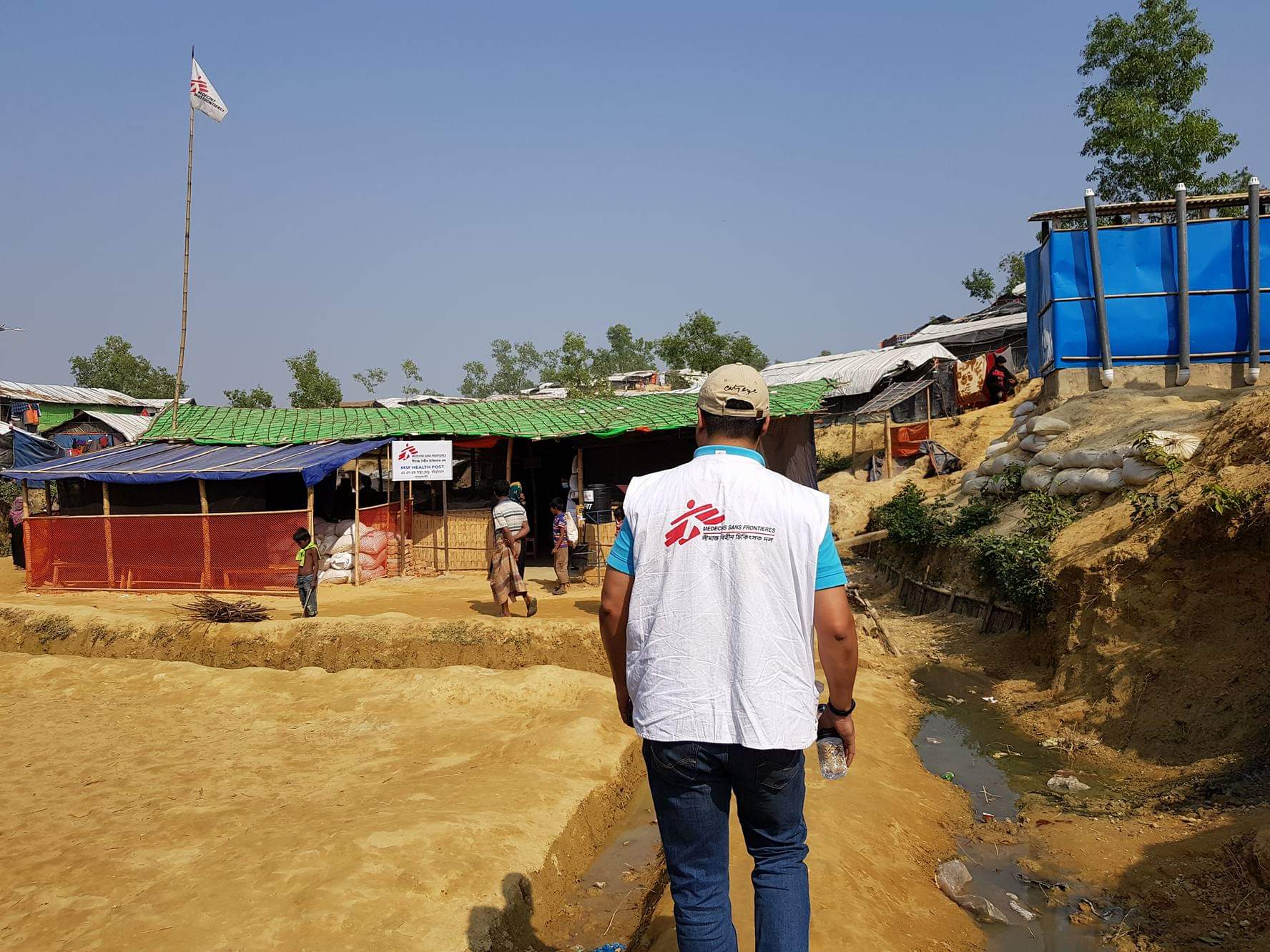
Killing the humanitarian space one bullet at a time

Killing the humanitarian space

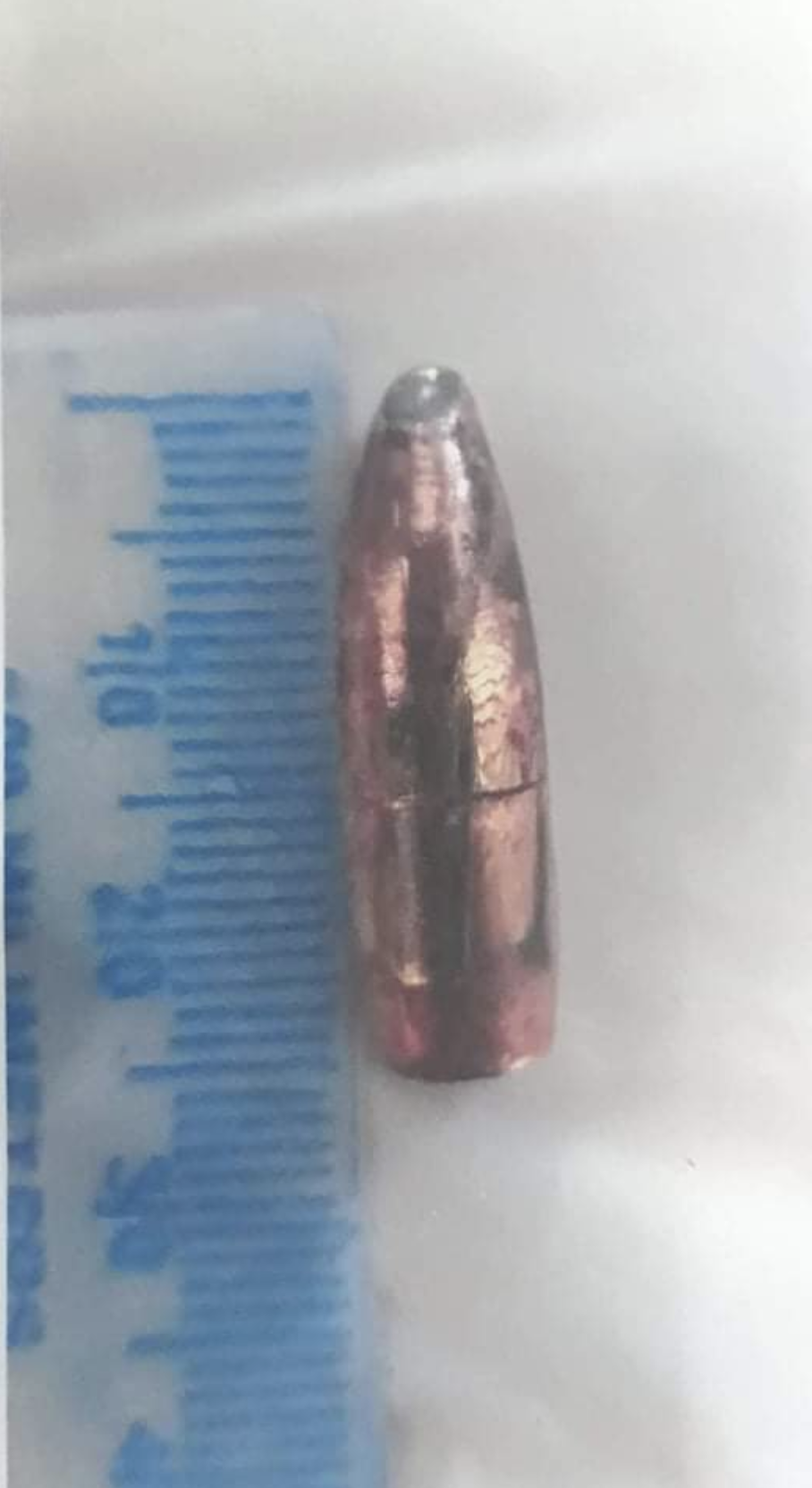
This bullet was taken from the body of the WHO driver. Diameter- 7.62 mm, Length- 25mm, Type- M-23 (machine gun)

Far from sacred
The international press is reporting today that a WHO (World Health Organization) vehicle carrying COVID-19 test swabs from Sittwe to Yangon was fired upon and the driver was killed. The bullet taken from the body appears to be a M-23 (machine gun) slug produced by the Myanmar defense factory. There is little doubt this round was fired by a Tatmadaw [Myanmar military] soldier. Here is an article from the local press describing the incident in more detail, with both sides, the AA and the Tatmadaw being blamed.

Here is one definition of the ‘humanitarian space’:

“’Humanitarian space’ refers to an operational environment that allows humanitarian actors to provide assistance and services according to humanitarian principles and in line with international humanitarian law.” (OCHA, United Nations Office for the Coordination of Humanitarian Affairs)

In this ‘civil war’ between the Arakan Army and the Tatmadaw it is clear that the humanitarian space, once respected in conflict zones around the globe, is not at all sacred.  Indeed, I wonder what the Tatmadaw does hold sacred except for the hyper nationalistic and racist myths chanted like so many false prayers by their leaders.

All news can be spun, and in a statement from State Counselor Aung San Suu Kyi says she is very proud for those on the front line, including Tatmadaw officers and soldiers who are carrying out their responsibilities and that she is very sorry for the loss of civilians and damage.

“With shock and sadness”
The shrinking of the humanitarian space has been happening for decades, and there may be little that can be done to reverse this downward spiral.

Recent events in Myanmar clearly give distressing signals, and the international humanitarian community is responding immediately and demonstratively to this most recent incident. Here is the statement that was issued today (21 April). The call for a global ceasefire by the UN seems to have had limited impact both in Myanmar and elsewhere.

In response to the joint statement made by these 16 INGOs one humanitarian worker asked,

“I fully agree with and welcome the statement by INGOs above but wonder why it wasn’t made long ago with the large number of civilan deaths, injuries, house burnings, torture etc.”

There will be other reactions (the Embassy of Canada to Myanmar‘s Fascebook page, for example), but the question remains whether these statements will make any substantive difference in either the short or long run.


Note: I will be updating this post in the coming hours ands days.

Tom Arcaro

Tom Arcaro is a professor of sociology at Elon University. He has been researching and studying the humanitarian aid and development ecosystem for nearly two decades and in 2016 published 'Aid Worker Voices'. He recently published his second and third books related to the humanitarians sector with 'Confronting Toxic Othering' published in 2021 and 'Dispatches from the Margins of the Humanitarian Sector' in 2022. A revised second edition of 'Confronting Toxic Othering' is now available from Kendall Hunt Publishers

More Posts - Website

Follow Me:
Twitter

An open letter to Win Myint and Aung San Suu Kyi

An open letter to Win Myint and Aung San Suu Kyi


19 April 2020

Dear President Win Myint and Myanmar State Counselor Aung San Suu Kyi,

I respectfully request that you read my words.

I write to you because you are in positions of power in Myanmar. I urge you to take immediate actions to halt all warfare in your nation.

Who am I to ask you to take these peace-oriented actions?

I am nobody. I am everybody. I am the voice of humanitarians everywhere. I am a sociologist who has devoted his life to understanding the human condition and working for a world where all humans are able to live with dignity and peace.

Your military has a long history of waging war against a wide range of ethnic minorities, and your nation is currently  charged with the crime of genocide in the International Court of Justice. Just now as I write this letter I am getting updates from Kyauktaw and elsewhere in Myanmar showing pictures, videos, and written descriptions of the horror being experienced by many innocents due to actions taken by the Tatmadaw.

I know that in January of 1948 when Burma (now Myanmar) became independent you were one of many newly formed nations around the world. The fall of colonial empires, especially the British, gave rise to the birth of many
newly formed nations in the ’40’s, 50’s, and 60’s in Southeast Asia, sub-Saharan Africa, Central American, South American, the Middle East, and elsewhere.  Most of these new nations had their borders drawn hastily and with little concern for tribal or ethnic homelands. In some cases major ethnic groups were rent apart, finding themselves stateless, living in separate nations. The Kurdish people are a perfect example, with some in Iraq, others in Iran, and still others in Syria and Turkey.

The vast majority of these new nations -Burma among them- had ethnically mixed populations. The leaders of each had to decide how to deal with a variety of cultural and ethnic groups now living under one government. Two types of leadership strategies emerged. One path was to be inclusive of all cultural and ethnic groups, with Zambia, Ghana, and, most recently in 1989, Namibia being examples. The second path, the one chosen by Burma, was exclusionary, marginalizing minority ethnic groups, this path inexorably destined to generate continuous waves of conflict.

This second path is morally deficient, in violation of the Universal Declaration of Human rights and against all basic humanitarian principles. We are all one human family, regardless of race, ethnicity, or culture. Under the exclusionary path you have chosen for Myanmar only death wins. Nations deserve to have their sovereignty respected only if the rights of all within its borders are honored. This is not the case in Myanmar.

I beg that you renounce your current adversarial and inhumane path and instead commit to following in the footsteps of those leaders who have chosen the humanitarian option, honoring the right to freedom and dignity of all ethnic groups within Myanmar’s borders. I also beg that you invite back, with full rights as citizens, all those who have fled Myanmar to find temporary shelter in Malaysia, Bangladesh, Thailand, and elsewhere.

Sadly, I could write a similar letter to heads of state all over the world and even to my own President, Donald Trump. I am writing to you specifically, though, because I am bearing witness to the news stories and updates sent daily from Myanmar, stories I cannot ignore.  In this current environment where COVID-19 makes clear we all all one global community -certainly in the eyes of the coronavirus- we must reflect deeply on the fact that humanity is the only true nation.

I hold no grand illusion that my short note will suddenly change your minds or your national policies; my words will not stop the killing and rape. Though I have full knowledge, as I noted above, that ‘I am nobody’, I am certain that my words do represent the sentiment of all true humanitarians. Indeed most spiritual and intellectual thought leaders across the globe reject racism in all its forms.  I ask you to consider joining this group and walk forward with us together into a new future where wars are a relic of the past.

My best wishes to you as you consider my words, neigh, the words of all who hold human dignity as a sacred right.

Respectfully,


Dr. Thomas Arcaro
Elon University
Elon,  NC 27244 USA


Tom Arcaro

Tom Arcaro is a professor of sociology at Elon University. He has been researching and studying the humanitarian aid and development ecosystem for nearly two decades and in 2016 published 'Aid Worker Voices'. He recently published his second and third books related to the humanitarians sector with 'Confronting Toxic Othering' published in 2021 and 'Dispatches from the Margins of the Humanitarian Sector' in 2022. A revised second edition of 'Confronting Toxic Othering' is now available from Kendall Hunt Publishers

More Posts - Website

Follow Me:
Twitter

COVID-19 response: ‘acute on chronic’ for the entire humanitarian sector

“In any case, these interrelations between the three communities, all with different cultures and nationalities, proved that there exist people with a sincere understanding of other people, no matter where they are in the world. It proves that there always exist significant people who transcend government ideologies.”

–Behrouz Boochani, A Letter from Manus Island

COVID-19 response: ‘acute on chronic’ for the entire humanitarian sector

8 minute read

[Updated 4.7.20;5:20PM EST]

A global crisis
The humanitarian sector is reacting to a massive ‘acute on chronic’ situation as the COVID-19 pandemic impacts all aspects of ‘normal’ humanitarian work. UN entities (e.g., IOM, WFP) and all major INGOs scramble to react to this viral tsunami and to coordinate response with each other, major donor entities, and with affected governments on all continents.  Supply chains are strained or broken, funding is even more uncertain, and affected populations are in varying states of even more extraordinary duress. Refugees and IDPs, especially those in camps behind guarded fencing, brace for what could be devastating outbreaks.

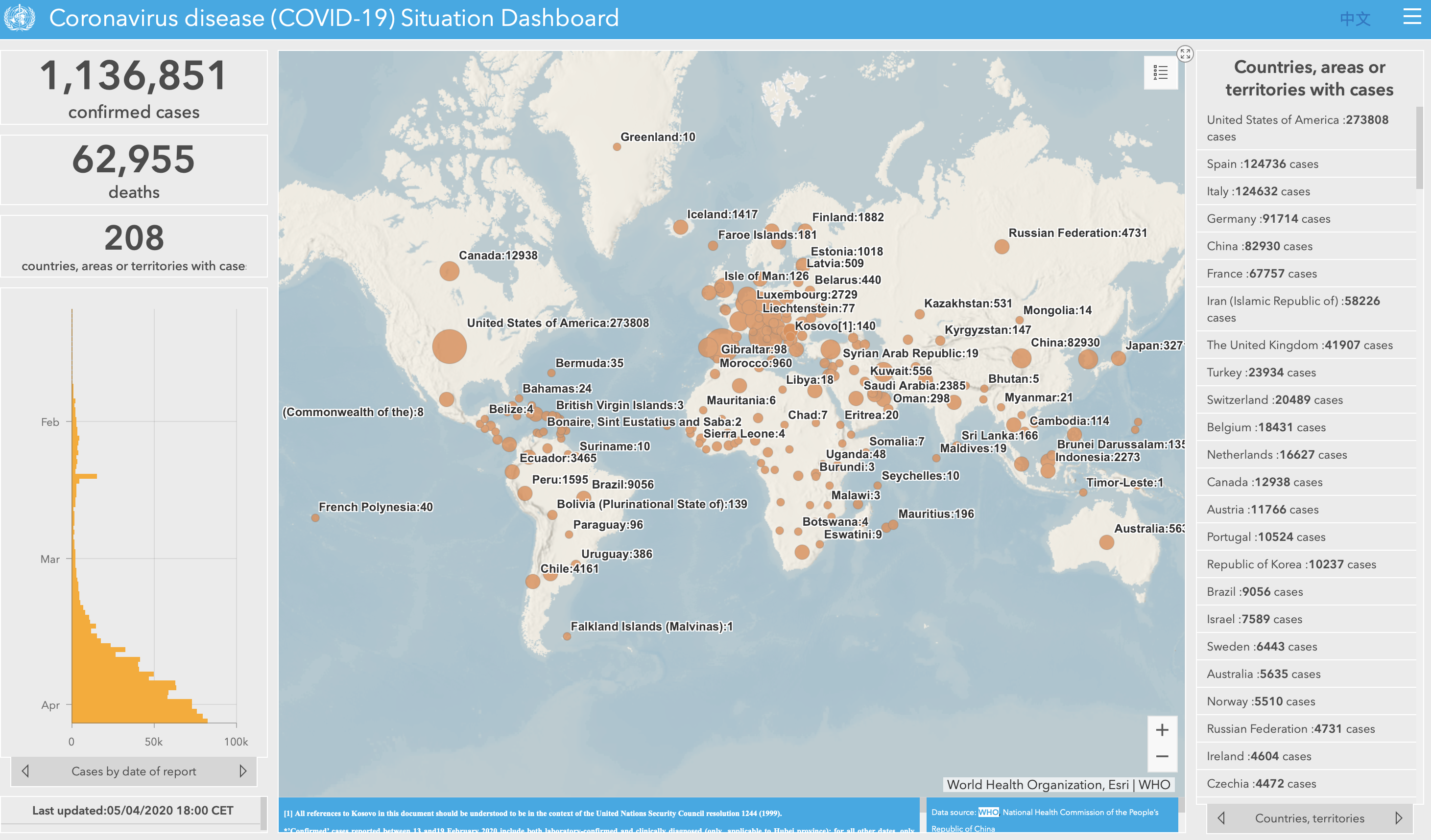
As I write this, the World Health Organization reports over 1,136,851 confirmed cases of COVID-19, and every projection I have seen guarantees the numbers will rise precipitously in the coming days, weeks, and even months.

Forecast modeling done just over a month ago put estimates at anywhere from 550,000 to 4.4 million cases globally. According to writer Tomas Pueyo, we are still in the ‘hammer phase’ where strong, enforced governmental actions
designed to slow the spread of the virus must be put in place to be able to ‘flatten the curve’ and minimize both human and economic loss. Here in the US in my home state of North Carolina, Governor Cooper put in place a 30 day ‘stay home’ order, allowing only ‘essential personnel’ permission to travel. He was urged on by hospital administrators who are trying to keep our state from entering a crisis phase such as in New York City.

As of now, of now the United States now has more cases than any other nation, and the numbers will rise quickly in near future.

Acute on chronic
I first encountered the phrase ‘acute on chronic’ reading Paul Farmer’s Haiti After the Earthquake. With this short phrase he accurately describes the impact of the 2010 earthquake on Haiti: acute on chronic, a sudden, violent shock on a population already compromised by long term poverty and political instability. At first I thought this phrase was a good description for what is happening globally relative to the COVID-19 impact, but at a deeper look ‘acute on chronic’ seems too flat and unidimensional to capture all that is happening in various contexts around the globe.  In places like Syria and Myanmar where there are active conflict zones the situation is exceptionally complicated, and the affected communities are suffering in ways that defy description. Perhaps acute on acute on chronic is more accurate, but that still seems to fall short of an accurate description.

COVID-19 alone is bad, but the short and long term economic impacts of the necessary social distancing have led to a global economic meltdown which some are calling the worse economic situation since the Great Depression in the 1920′ and 30’s.

A view from ‘the field’
How are humanitarians feeling about what this rapidly morphing global event?  Here is one data point, a view from a national humanitarian serving in Cox’s Bazar, Bangladesh:

“When COVID-19 was detected in the world people [here] became curious and concerned about what is going to happen in Bangladesh. The first case was identified in Bangladesh on 8th March. After that tension and fear is felt everywhere, MSF staffs are not out of this; they are very much anxious about the situation. 80% of discussion of total discussion about COVID-19. Many staff are thinking that MSF should have taken [additional] steps when they heard. Some staff were concerned that we received expats and sent them to COX [refugee camps] ,  because it might cause the infection in the community. After March 17 MSF decided to bring all the expats under the 14 days quarantine before starting the work.

Anyway, fear is still running around the staff. In this situation, MSF asked the staff to have their choice whether they want to work or not. Everyone choose to work for 2 reasons. 1. Fear of losing job and 2. Working for  humanity. As you know the supply chain in world is broken, so MSF is not out of this, but we always maintain eprep (emergency preparedness), so we collected some PPE and other materials from the Emergency Response preparedness cache.

MSF is ready to receive patients. MSF has prepared an Isolation unit and prepared an emergency team giving them proper training. MSF also gave training how to use the PPE and other [equipment] in an efficient way. MSF doesn’t have facility to test [for COVID-19], but can collect samples and can send them to government facility for testing. So far I think MSF is still not allowed to collect sample but MSF is trying to get approval. Hopefully, MSF will get approval before the situation get worse.

I think we are facing another problem. The Prime minister announced that no refugees can come out from the camp. Our biggest hospital is out of the camp though it is close to the camp and we receive huge amount of OPD and IPD patient. I am not sure whether they will be stopped to come out or not to get general treatment.

The general situation:

People in Bangladesh are in panic as they don’t trust government statistics and their measures. Still they have only limited facilities to test COVID-19. They are not testing anyone who are complaining corona but are getting calls. Only eight phones are provided to complain about corona. If they get 4000 calls, they test only 100 among them. Some of the intellectual think government’s policy is ‘not test no corona’. Some people are dying with the symptoms with corona but they’re not in the statistics as they were not tested.

The other issue is countrywide lock down. Many people lost their job. Almost half of the people are day laborer who earn first, then eat. They are in serious conditions; they say, ‘we are not dying from corona but hunger.’ Today is 7 days of the lock-down, people are going out slowly, they are not caring about the ARMY and Police. They said, ‘give me food first, then ask me to stay in HOME.’ The government is giving some relief but it is very limited. I assume that it is about 10% of what people need.

So I am very concerned for other people that many casualties will be appeared in April.”

The people in Bangladesh are struggling to stay safe, but those already economically marginalized are having difficulty coping.  The World Bank is pouring funds into Bangladesh, but there is uncertainty as to how broad an impact these temporary funds can have.

Long term positive impact:  a ‘reboot’?
It is cliche -but perhaps true- that from crises there are lessons to be learned. And perhaps even in a sector whose raison d’ etre is responding to all manner of natural and human made disasters, new insights will be gained. But this pandemic just now in early April feels bigger and more daunting in its scope than any other single event our global culture has ever faced.  Here’s how one veteran humanitarian put it,

“…the pace of work is crazy. I’m home but it’s one of the toughest deployments so far.”

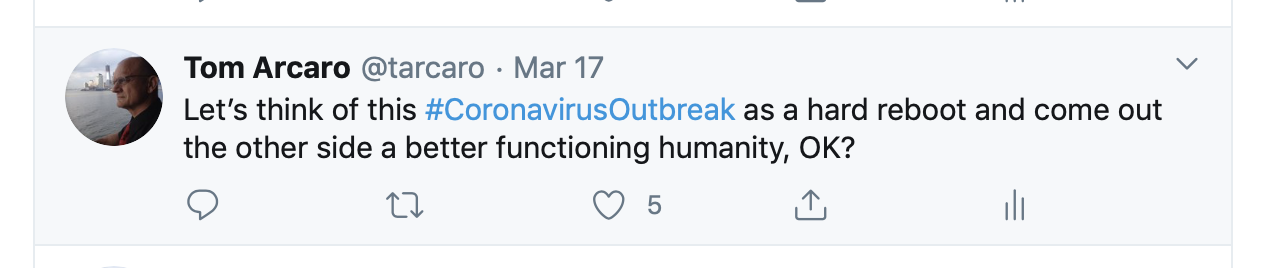
Many pundits assert that life post-COVID-19 will look very different, and perhaps thinking about the current situation as a ‘hard reboot’ of the global system can lead to some optimism. Can we come out the other side a better functioning humanity?

One primary lesson is that we are one human family, with all our sociocultural, economic, intellectual, and even spiritual lives intermixed, inextricably and permanently. You might be able to name a part of our social world that not impacted by this pandemic, but you’ll strain yourself doing so. Even if you do come up with an answer, think longer and you’ll likely see one.

Another part of this lesson is that our fates are all connected, and blind isolationistic policies are counterproductive. World travel is a given, and as far as pandemics go we are only as strong as our weakest link. In my own nation, one outcome of this pandemic may be that our leaders will see that universal health care is a must, and finally the US can join the rest of the Western world in recognizing health care as a basic human right.

Another lesson might be learning that capitalism and neoliberalism are ill-suited for responding quickly to pandemics.  It is hard to monetize prevention and preparation. In the same vein, the disproportionate impact of this pandemic on the already marginalized -as described by the humanitarian quoted above- will serve to shed light on our dysfunctional and unjust global economic system that has pooled extreme wealth into fewer and fewer pockets.

A better functioning humanity
As for the humanitarian sector, post-COVID-19 it will be stronger, one hopes, but only time will tell. My view is that the biggest change needs to come in the form of much more aggressive funding streams, perhaps addressing the failing of the traditional systems. Prevention is key, but one wonders how events globally might have been different -and less fatal- had there been a humanitarian system with the flexibility and resources to immediately respond to outbreaks in various nations around the world.

A ‘better functioning humanity’ has a robust, competent, and professionally staffed pan-national response mechanism able to respond to existential threats, a UN on steroids, if you will. This entity I am imagining would effectively coordinate and deploy the many INGOs and national NGOs in response to global disasters such as pandemics. One step further, the nations of the world would see the wisdom in ceding some degree of sovereignty so that this mechanism could move swiftly and efficiently in responding to any global existential threat.  A better functioning humanity will be just that, a global system that operates on the assumption that, to quote Paul Farmer once more, “Humanity is the only true nation,’ a world populated by, as Kurdish refugee Behrouz Boochani would say, “significant people who transcend government ideologies.” If we can imagine such a mechanism we can make it happen, right?

I won’t hold my breath.

Contact me with your comments or questions at arcaro@elon.edu

Tom Arcaro

Tom Arcaro is a professor of sociology at Elon University. He has been researching and studying the humanitarian aid and development ecosystem for nearly two decades and in 2016 published 'Aid Worker Voices'. He recently published his second and third books related to the humanitarians sector with 'Confronting Toxic Othering' published in 2021 and 'Dispatches from the Margins of the Humanitarian Sector' in 2022. A revised second edition of 'Confronting Toxic Othering' is now available from Kendall Hunt Publishers

More Posts - Website

Follow Me:
Twitter

One humanitarian’s story: thoughts from ‘C’ about the sector

Warning: long read, 5100+ words

One humanitarian’s story: thoughts from ‘C’ about the sector


One woman, one story
I have had many Skype visitors to my “Global Citizen/Humanitarian sector” sociology class over the years, humanitarians all.  In a previous post I discuss five of these guests, but below I go deeper into the encounter we had with a humanitarian who, chooses to go by simply ‘C’.

Although she is ‘only one person’ her experiences will resonate with many who share her demographic profile: white, 30ish, female, and from the global North, the United States, no less. Please note as you read her statements that her tone, cadence, pauses, and stress on certain words and phrases brought her words to life in ways that cannot be conveyed adequately in the bare text you will read below. There was emotion in her voice as she spoke to us, and we could see that emotion on her face. Though the computer screen was flat, her words created rich, three dimensional images for my students and me.

The class and I asked her a series of questions, and below, with my comment at the end, are the gifts of insight and reflection she gave to us.

How has your race, gender, or global North status impacted your life as a humanitarian?
With this first question we went straight to an issue we’d talked about numerous times during our semester. This question -and her answers- led to others, mostly asked by my students. In a previous discussion I had told C that we had talked about the iconic article by Teju Cole that uses the phrase ‘white-savior industrial complex.’

C:  “Yes, I can talk about the ‘white savior complex’.

You can have the tendency to get drowned by the really academic concepts and theory behind it, but, I would like to share with you guys that there are very real consequences to this phenomena, in terms of how we run our operations and how we run our programs. Yeah, it’s not just a theoretical debate.

And for me, in simple terms, I guess it comes down to a matter of the fundamental lack of perspectives that we tend to have being from the global North and being a person of non-color.

Yes, we give a lot of lip service in our proposals about how we’re going to be doing needs-based assessments and discussions with community stakeholders and beneficiary consultations to prove that we’re really trying to position ourselves as partners in communities, and there’s a lot of words [in proposals]written to that effect.

The game is kind of rigged from the beginning. Donors already have very specific objectives and they have predefined global policies on how these objectives need to be reached. Our projects are really tightly defined by budgets and log frames where we say we are going to promote behavioral change from X to X percent, so we are already coming into the game with our idea of what’s right and what’s wrong and how we’re going to fix things.  That causes a lot of problems.

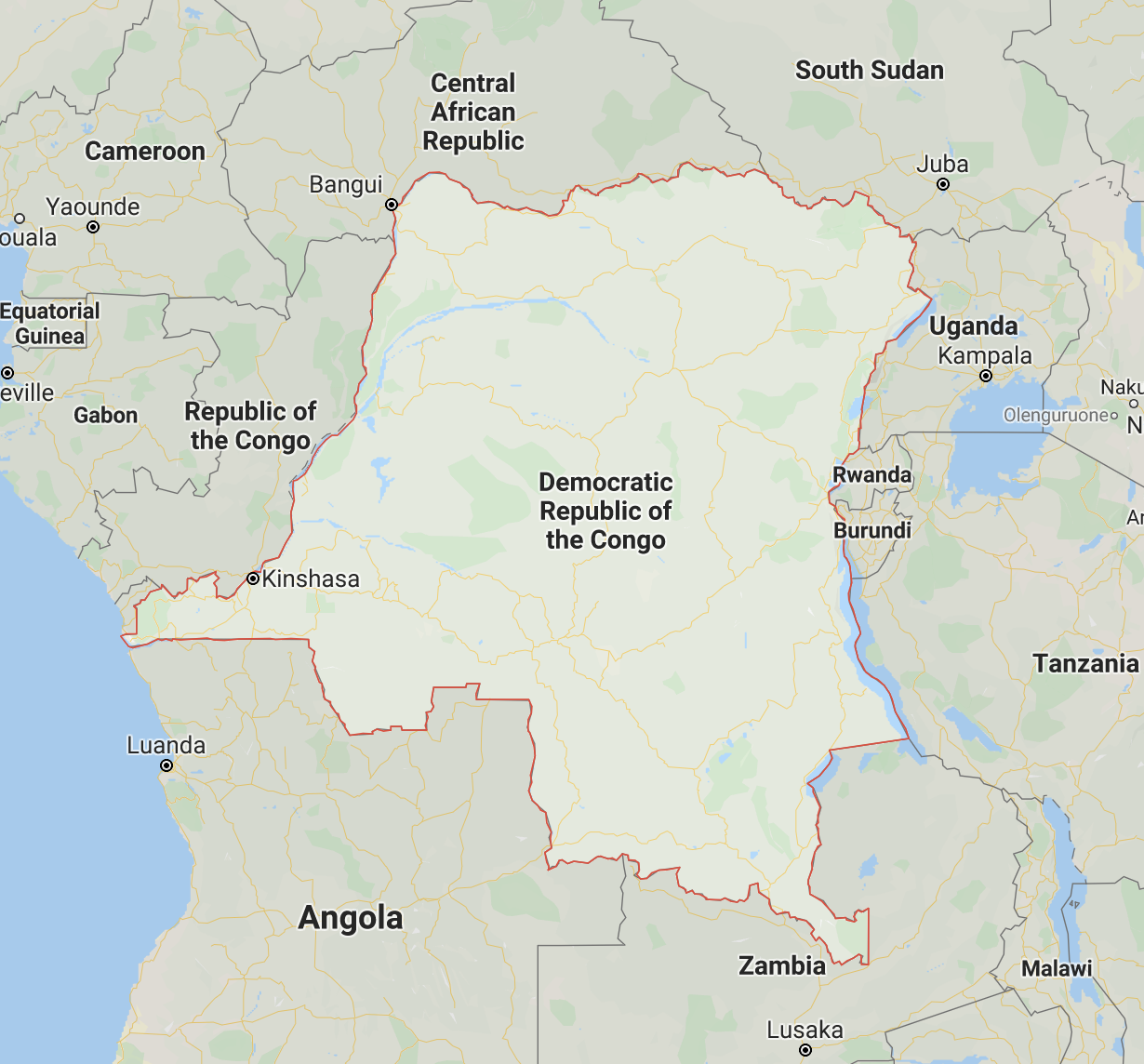
I can give you a practical example. When I was working in Congo, we had a project where we were trying to convince moms who had  severely ill children to come to the hospitals to get treatments. Here you are white, from the West…of course it makes sense, if your baby’s dying of starvation, you’re going to bring them to the hospital to get the best care and try to keep them alive; so from our perspective it’s a non-point, nothing to discuss.

We were running into the ground on this; we weren’t meeting our donor objectives in terms of number of babies saved per month.  Moms just weren’t coming in, and again, you assume this role of almost an insult, you know, that we’re providing these services and moms aren’t taking advantage and, you know, ‘how can they be so callous to let their babies die and not come in for treatment’.  It’s such a simple question.
It’s a pretty patronizing stance when it comes to what we’re trying to accomplish.

And it just wasn’t working.  We finally sat down six months in – which was way too long – to try to get out of our perspective and our preconceived notions of what’s right and how frustrating the community was being and started asking questions about why mothers weren’t coming.

We got very humbled in the response; we got a different perspective that we just weren’t in a position to understand the first. The moms were saying ‘look, it’s a two to three day a trip to the hospital. We don’t have transport, it’s expensive, so I’m going to have to spend money to get to the hospital. What am I going to eat for the week that I’m there while my kid is in treatment? What happens if my kid dies? How am I going to pay for the body to get back to the village? What’s going to happen to my other five kids at the house? Who’s going to take care of them? Who’s going to go out to the field to get their food? If I take this baby, who’s probably going to die, to your hospital, I’m putting the other five at risk.’

Yeah, okay, that makes a lot of sense, that makes a lot of sense.

The issue there was lack of perspective and coming in thinking you know what’s right, these people don’t, why can’t they agree with you? That positioning is really harmful. It’s a positional question that makes us misunderstand.  It becomes a non-starter in terms of our projects, and it’s [white savior complex]something you’ve really got to consider all the time.”

Student question: “Do you think there can be a solution to that? Because we’re [from the global North] always going to have our way of viewing the world; and even with people like you and other people who are more educated on the white savior complex. It’s like our professor likes to say it [white savior complex] is ‘baked in’ to our world; or it’s almost like there is no real way that I can see it being extracted from the whole humanitarian aid sector, so I was wondering your opinion on that.”

C:  “That’s a really good question. I don’t think it is something that can be solved. It’s something that you just have to be aware of all the time. When you’re drafting your proposals, when you’re drafting your log frames, when you are doing your stakeholder consultations in the community, you’ve just got to have it in the back of your head; what is my position in this. ‘What is my perspective and am I getting in the way of hearing other people’s experience and are we designing the projects for the donor, or are we designing the project based on really being humble about our perspective not being the only one?’

And that’s a really hard thing to do, because everybody needs to be involved right? It’s not just the community field officers, it’s not just program managers, it’s not just coordination ; everybody’s got to be aware of their own background and identity coming into this. So that makes it really hard. To answer your question, I don’t think it can be solved.”

Student question: “[Regarding]the story that you were telling, what ended up being the resolution to that? You said that intervention happened six months into the project. What was the funding like and what was the donor response? Did you keep doing the same thing even though it was ineffective?”

C: “Very good questions. The program was a year and a half long, so six months into it we only had a year left to try to make changes to the project based on this new perspective we were finally listening to.

We sat down with the donor and said look, we are not reaching the objectives, this is why. We didn’t take this into account when we first designed the program. Can we work together and figure out a little bit more time to try to make this better?

Luckily we had a donor that was pretty flexible. That’s not the case with everybody. So we put into place programs to help with transport, we put into place programs to help support moms having food in the hospital, we tried to decentralized some of the services that we had at the hospital. We tried to get more happening at the rural clinics, so they didn’t have to come quite as far.

It didn’t fix the problem, but it helped. It improved by the end of the program period, but we didn’t meet our original defined targets. And the lesson learned there was we needed to listen more, and I mean really listen, not the bullcrap needs-assessment stuff that we say we do to make the proposal look pretty, but I mean really listen to people and put down our own opinions.”

Student question:  “What were the numbers? What was the starting goal; how many babies you were trying to save?”

C: “How many babies are we trying to save…isn’t it just a normal way to say it… Yeah, that’s pretty much what we had as the title of our projects sometimes. We were looking at about 5000 kids and an area covering half of the Democratic Republic of Congo.”

Professor: So let’s segue from there and talk maybe a little bit about being a woman in this field, and being a global Northerner.

C: “As for me being a woman, I would like to share with you some experiences. Two different levels of challenge. The more obvious one, cultural norms. Different country, different religion, different way of seeing a woman, that’s the more obvious one. Then there’s the slightly more insidious challenge, which is with my global North colleagues. 

So of the more obvious one. Working in Afghanistan and Pakistan, as a woman, I’m not allowed to shake a man’s hand or look him in the eyes. And that -you know I’m American- we look people in the eyes when we’re discussing serious things. Just try it one day, try to have a serious conversation and look at somebody’s shoulder. It’s a really difficult thing to do. It took me months before I could train my body to react this way. And it was necessary, because if I didn’t, it was extremely insulting and it caused problems in a conversation.

So on one hand, I can’t look somebody in the eyes, and on the other hand, I’m negotiating a multimillion dollar project for this group of communities. We’re talking about security access, military issues, serious stuff, and I can’t shake their hand. So it really took adjustments on my part to make this happen. 

But, on the other hand, something that was very cool that my male colleagues did not have the opportunity of, in Afghanistan, I had guys working with me who have been in Afghanistan longer than me, years, and they have never been invited by local colleagues to eat, they had never seen or heard anything about the wives, the daughters and the families, that whole personal side, with our local colleagues. They didn’t have access to this because you didn’t speak about it; [as a male] you didn’t get to ask about wives or anything, it was just a taboo thing. As a woman, I had the best of both worlds; I was like this third gender. It was very strange because with my Afghan colleagues in the office, we could converse. And I was also invited to homes and got to go and share dinners with wives, with kids, with the daughters, and it was something that my male colleagues never had access to. So that was actually pretty cool.

I would say for the more insidious stereotyping, in the job, it was with my Northern colleagues. So, number one, there’s way more women in the development sector, than there are in emergencies. The hardcore teams that are coming in after a disaster or right when a conflict breaks out, it’s pretty much 99.9% guys. There are not a lot of women there.

Which, I admit when you go out to a bar, I can wear a potato sack and not have taken a shower for a month and I can still get all my drinks paid for, because I’m the only woman for miles. That’s convenient.

On the other hand it is very difficult to be taken seriously and I would say one of the hardest things was the stereotype that women are emotional, and that men are much calmer under crisis. So this stereotype is like on cocaine in the field, because, let’s say you have to have a base evacuation, and so people are fearing for their life, people are panicking; so in order to make the right decisions in that kind of context, you have to stay very, very calm. This necessity, as a woman, is compounded by having to prove that I can stay calm and not get emotional.  But it’s like, if I had a male colleague, a field colleague, in the same position, we’re both stressed out, we’re both scared – if he gets emotional, it’s the stress of evacuation and the AK47 stuck in your face and that does something to you, you get stressed out. If I get stressed out, it’s immediately ‘ah you know women, they’re a bit emotional, difficult in a crisis situation.’ So you really have to play a lot harder, if that makes sense. That kind of eats on you after a while, because you have to swallow a lot and you have to have a poker face that isn’t natural in some settings. So that has been a tricky one.”

Professor:  One student just now raised the issue of the psychological stresses and mental illness. On a survey directed to ‘global South’ national humanitarian workers, one of our questions is, to what degree is your job emotionally taxing?  And the vast majority of the respondents say it’s either somewhat or very emotionally taxing. Then I asked the second question whether or not psychological counseling services are available to staff. A huge number say no, it’s not available to national staff and, if it is available, it is not available in adequate form. So I guess back to you, as we can see by your c.v., you’ve been in a lot of different places, in high stress situations. What counseling was available at the time and what long-term counseling is available to international staff?  Also, you mentioned that there’s a divide between the national staff and the international staff. The national staff are reporting high emotional stress and minimal support to deal with that emotional stress. Regarding this, what was your experience in terms of that as an international humanitarian?

C: “I’m very happy to say that there’s been a lot of progress in the past ten years. When I first started, you could not say that you needed help, you couldn’t say that you were stressed, you couldn’t say that it was difficult, because you would be seen as weak, and then they would question whether you’d be able to hold your own for the next mission. So you just had to shut the hell up and move on, and that was it for years. Slowly, they started realizing that in terms of long term, keeping staff, avoiding people burning out, having stability and consistency on the projects, they needed to be better about helping people process what they’ve been through. Just in the past five years, they’ve really made huge steps in most of the organizations that I have been either working for, or as partners with, full time psychologist on staff, people coming in.

Particularly if there’s been a crisis; so let’s say we had to evacuate the whole base, everybody’s shaken up. When you think you’re gonna die, there’s physical reactions. Your head can say one thing and your body is doing something else and you can’t control that. In your mind – the mind is a funny thing. Some people will forget. Like we’re talking about something that happened the day before and people will forget the entire last 24 hours. They just won’t – it won’t be in the memory. Other people will freeze and it will take days for them to move a muscle. Other people shut down. Other people pretend, or seem to be fine with things, and it comes out ten years later. So it’s really important after an emergency incident that you have the debriefing, and organizations are getting way better about that.

Again, sadly, it’s very much a privilege for expats compared to local staff. I would argue that local staff, they’re in the shit. We get evacuated and we can go back to our home countries; we can take two weeks of R and R, cocktails on the beach, massage, forget everything, destress, relax. But the staff, they’re stuck. We can’t move them out of their country of origin if – sorry to curse – if shit hits the fan. We can’t help them, we can’t pull them out, so they’re stuck. We’ve dealt with this stressful incident and a lot of people end up just throwing themselves into work and trying to manage for their families, for their kids. They’re dealing with whatever mess just went down and they don’t have the same kind of options. So, I would argue there’s way more need with local staff. So, we’re still quite slow on that regard.” 

Student question: I was wondering, have you seen with diagnosis’s of PTSD, and the treatments following that, any gender differences in terms of response or treatment protocols?

C: “That’s a good question. I’m not sure about the gender differences. To be very honest with you guys, I just got diagnosed with it two months ago. I didn’t think I had any problems, I mean, I was saying you’ve got to be hard and poker faced and I didn’t think there was anything wrong with me, and I freaked out one day at a movie. There was a movie playing and some people were attacking this factory and I just freaked, I almost jumped out of the hotel window, I was panicking. And I said oh my gosh there’s something really not normal about this. So to answer your question, I don’t know because I am just getting into this process myself. And it took me a really long time to understand what was wrong; and I was one of those where it’s just kind of simmered and I didn’t pay attention to it and it exploded really weirdly years later. So I would come back to you on that in about a year once I’ve gone through treatment and I’ll tell you all about it.” 

Student question: Obviously PTSD is a really serious issue, have you ever found that in the two months of knowing that you have it, that people try to invalidate because you aren’t like a soldier or something like that? Sorry if that was a heavy question.

C:  “No, no, you guys are making me think here. I have found that — to be honest with you, no one has ever made me feel that it’s less than what soldiers have been through. Probably because I don’t talk about it with anybody, so that makes it hard to be compared. I’m very surprised that I’m talking with you guys like this…so there’s that. So no, is the short answer for that. At least I haven’t felt that.”

Professor: The first time we talked, I remember you reflecting on your experience in Myanmar dealing with the Rohingya crisis. If you feel comfortable, can you recount that story to the students and talk about the ethical ‘big picture’ issues that you faced? These go directly into what I wanted them to get out of the Dawes [That the World May Know: Bearing Witness to Atrocity] book. So if you feel comfortable doing that, that would be great.

C: “I think if I look back on everything, it wasn’t the evacuations or the weapon roadblocks, those weren’t the things that messed me up the most. I think the thing that was the biggest struggle was my experience in Sittwe. Sittwe is in Rakhine State, where the majority of Rohingyas were living in Myanmar. 

The humanitarian imperative for me, I don’t want to use a cliché, but it’s really simple in my head: you’re damned if you do and you’re damned if you don’t. That’s it. 

So I arrived, it was 2013 and they just have had this big conflict, so the majority of the Rohingyas got pushed out of Sittwe. It was maybe 400,000 people that had been set up in these temporary camps on the outside of the town.

But when I arrived, this was maybe nine months after this had happened, people were still really hopeful that things were going to work out and they would be able to move back to their homes in downtown Sittwe. 

And the [Myanmar] government was playing us like a fiddle, and they did a great job of it. They let time and necessity work, so that international humanitarian actors would step in and provide the basics: shelter, food, water. So what we ended up doing was building a slum. We justified by saying, okay we’re only going to do semi-permanent structures right, we’re not using concrete, we’re not using anything permanent; always in the hope that this situation is going to get sorted out. But what that meant was that we just got poor quality things which are neither here nor there, it’s not a tent, but it’s not a house, somewhere in between. We built slums. We built slums and we contributed to creating an apartheid situation, which recently, as you guys are aware, is turned into a massive displacement and concerns of genocide.

And we built these semi-permanent ghetto cities with the basics, because people needed to survive, right?  When we got there the question was, okay monsoon season is coming, nobody’s got shelters, there were cholera outbreaks. Except the [Myanmar] government said that cholera didn’t exist because they’re a developed country. So we couldn’t use the word cholera, we had to use the phrase ‘acute watery diarrhea.’ So, acute watery diarrhea was starting to breakout because people didn’t have water, people didn’t have sanitation access, so something had to be done. We had to move on this. But as we moved we saw that we were just one by one hammering the nails into this coffin, which was they will never be able to move back to downtown.

The situation administratively and geographically is starting to solidify around them, to separate them. And it was the most frustrating situation to be in, because we weren’t stupid, we saw it coming, we saw where this was going. On a daily basis you saw where this was going. But you couldn’t not move forward with your projects. So you’re really stuck between a rock and a hard place. It was really difficult.”

Professor: Yeah you’re answering in wonderful and, I’m certain, very emotional detail. When you described it to me the first time, I thought you came up with the most brilliant analogy. You said that the humanitarian sector was playing checkers and the government was playing chess; you guys were just dealing in this simplistic short-term situation and the Myanmar government was using you as little pawns on a chessboard to reach their long-term goals.

C: “Absolutely. For me, this is one of the biggest problems about the humanitarian industry. Again, I don’t think it’s something that can be fixed, but we just have to realize that the position that this puts us in every single time there’s a conflict…humanitarian industries are built around six month projects, one year projects. That includes everything involved: budget, staff turnover, institutional memory disappears after six months because you’ve got new waves of people coming in. Our donors, they want their objectives met in eight months, twelve months.

Somebody like the government of Myanmar that’s a dictatorship, you know, these guys know how to sit and let’s things cook for fifty years. They’re on a fifty year plan, you know. And so they have got nothing but time to let these things play out and to move and nudge in the direction they want to go, and we don’t have that. So how can you negotiate on an even playing field when they’ve got that kind of time behind them, to wait and to maneuver? You can’t.”

Student question: Is it easy to feel like you’re not fulfilled, or as a humanitarian, that you’re running in place. I don’t know if it’s my personality, but I feel like [working in] this sector would feel like you’re running into a wall over and over. I guess my question is, how do you keep going back on these missions? Or what gives you the motivation, other than the humanitarian imperative, like with the understanding of the bureaucratic way the sector is set up, what compels you to like keep trying?

C: “Well here is my mercenary side that comes out to answer this question. Right off the bat, I’ll tell you …there’s a mortgage that needs to be paid and this is the only job I’ve ever done. So I know that there will always be conflicts, so I’m guaranteed employment for as long as I need it, in terms of the salary. 

So I will be very honest with you that that [working in this sector] is an important part for me, that I don’t know what else I could do if I wanted to change. I jumped into this right after college. So even if I wanted to get out of it, I wouldn’t know what to do. And the salary is there, and I think I got very good over the years at putting my ethical concerns into little boxes and putting them on a shelf and just pretending like I could try to do better next time. I don’t know if that strategy has been a real solid way to go, but it was what I was doing to keep going on the missions. I’m painting a really dark picture here. There have been good moments in this job for sure; so, I hold on to those I guess.”

Student question: Do you not feel disillusioned by the sector?  The whole class, we’ve been talking about the paradoxes that exist like what you describe with the Rohingyas or the Myanmar government. It seems like all these missions will be contributing to somebody’s trauma.

C: “How I ran into Tom was, after Congo I took a two year break and I, yes, considered myself very disillusioned and struggling. Struggling to figure out whether I’m gonna go back to work in this industry or not and how to get over all the hang-ups I have. You know all these little boxes just kind of fell off the shelf at one point and exploded, and I’m really struggling. So I Googled ‘disillusioned aid workers- what do you do next?”. I was feeling really lost and alone, and I was so surprised and happy to realize that not only am I not alone, but I am a cliché, because according to the findings of Aid Worker Voices, in the age bracket of 28 to 35, humanitarians who quit because  of disillusions are women. Okay, I am normal. Yes, I really appreciate…it was just a relief to know that I’m not the only one struggling with this and to have come across Tom’s work.

So yes, disillusioned, but here’s the thing right, just despite all of the problems in this industry, despite how rigged it is, despite so many things that need to be questioned. It’s not — conflicts are not gonna stop, war is not gonna end tomorrow and natural disasters are only going to increase as we move forward. So, there will, I think, always be a need for this industry. 

But coming back to your first question, we’re not going fix everything in this industry. But if you are coming into it and you know all the right questions to ask in terms of keeping in the back of your mind who you are, keeping in the back of your mind everything that’s challenging about this industry. Then maybe it can get better if people are just constantly asking these questions and pushing, pushing, pushing, pushing, pushing for reform; and already we have Sphere Standards that really put a benchmark to try to improve service delivery. Every decade or so there’s some significant improvements. And this sounds lame, but I think that if people know to question, then it can go somewhere better and it needs to, and it’s gonna stay as an industry considering where we’re all going, so yeah.”

Professor: You’ve said so much in such a passionate and articulate way, and I think we’re all very thankful that you’re taking this time. But I do feel like I need to process it myself and process it with them. I can’t tell you how appreciative I am on behalf of the class. I think we’re all appreciative of your openness, your candor, and your gift of presence here in the class, so thank you very much.

C: “Thank you guys for your patience.”

So much to unpack
C’s words were dense with both emotion and content, each of which deserve to be unpacked carefully. As she mentions, I have written about many of these topics elsewhere on this blog; none of the issues she raises are unique. That said, what C does offer is a very personal and human dimension, a rare gift.

Without exception every humanitarian I have talked to over the years recoils when the label ‘hero’ gets thrown their way. I am absolutely certain that C would respond the same way, though she will have to live with the fact that my students saw her as precisely that, both for what she has done in ‘the field’ but also -and perhaps more importantly- for disclosing to us her PTSD diagnosis. As one student said, “It got real.”

All said and done, I am not sure what ‘moving the needle’ really means in the context of the humanitarian sector. As a career educator, I will claim some knowledge about what it means to impact student’s lives in a positive fashion. C’s words ‘moved the needle’ for my students, no doubt.

Please contact me here if you have any comments, feedback, or suggestions.

Tom Arcaro

Tom Arcaro is a professor of sociology at Elon University. He has been researching and studying the humanitarian aid and development ecosystem for nearly two decades and in 2016 published 'Aid Worker Voices'. He recently published his second and third books related to the humanitarians sector with 'Confronting Toxic Othering' published in 2021 and 'Dispatches from the Margins of the Humanitarian Sector' in 2022. A revised second edition of 'Confronting Toxic Othering' is now available from Kendall Hunt Publishers

More Posts - Website

Follow Me:
Twitter

Mobile and wifi access a basic human right? Yes!

“The first thing a refugee asks for upon arrival at a camp is not water or food, but the Wi-Fi password. A smartphone has become a basic humanitarian need because it allows displaced people to connect with loved ones they’ve been separated from.”

-Turkish telecom CEO Kaan Terzioglu at DAVOS, 2018


Mobile and wifi access a basic human right?
Just now I am writing in a local coffee shop, surrounded by colleagues, students, and staff at my university, literally 100% of whom are connected via cell and/or wifi. In the global north where I live connectivity is essential, even vital, for day to day life.

Is the same true for the rest of the world, especially those who are now refugees?  More specifically, in our globalized world, is cell and wifi access essential and therefore a basic human right?

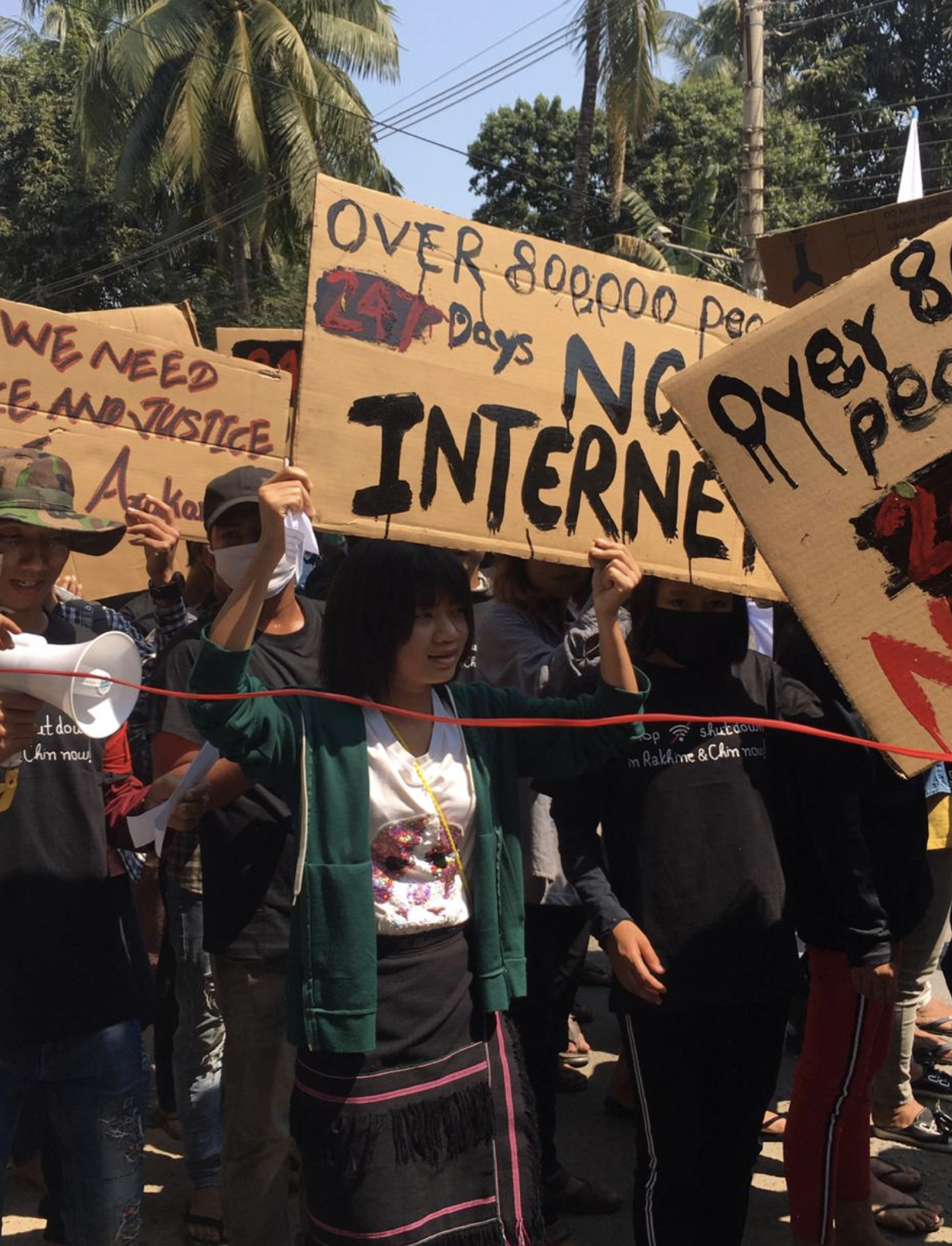
Protesting in Myanmar
22 February 2020

I’ll argue absolutely yes.

Rohingya denied
Over two months have passed since the government of Bangladesh directed the Bangladesh Telecommunication Regulatory Commission (BTRC) to order telecom companies to stop selling SIM cards and shut down mobile phone services to almost one million Rohingya refugees living in refugee camps.

Within days of this action Human Rights Watch took the position that this action is bound to have negative impacts, stating,

“Bangladesh authorities have a major challenge in dealing with such a large number of refugees, but they have made matters worse by imposing restrictions on refugee communications and freedom of movement.”

I posed this statement to a Rohingya contact in the refugee camp in Cox’s Bazar,

“The issue as I understand it is that the Bangladeshi government wants to cut down on activism in the camps and it is heavily restricting cell phone usage and WiFi access. This is cutting down on communication both within the camp and from the camp to the outside world including friends and relatives, but also people who are interested in understanding and helping the Rohingya.”

He responded ‘Correct.’ All of the Rohingya refugees I have talked with disagree with the new restrictions, and now, more than two months later, their frustrations are rising. They are being denied the right of connectivity and freedom of communication, and this is an additional source of strain in their lives.

One Rohingya refugee describes the situation,

“We don’t have internet access. Authorities and even Bangladeshi public seize phones of Rohingya if they find.”

Another added,

“A few days ago I was arrested by police for using a cell phone while I was working in the office. I need cell phone in office time to send reports, details and data, use Whatsapp and gmail. But they didn’t have a look while I was encircled by police. That’s our life in camp. Then I was given a fine.”

He went on to say,

“About WiFi, a refugee isn’t allowed to use it. But some Bangladeshis around camp buys WiFi then sells the password to the refugee for the profit.”

Happening now in Myanmar
On February 3 the Ministry of Transport and Communications in Myanmar issued a directive to internet and telecommunications providers to cease mobile and wifi access in five townships.  The MToC cited security requirements and public interest as the justification for this action.  In a joint statement dated 13 February, 28 organizations joined Human Rights Watch in calling on the government of Myanmar to immediately lift restrictions on cellular and wifi access. Similar actions have been taken by the government of India in Jammu and Kashmir, with this region now without access for over 200 days.

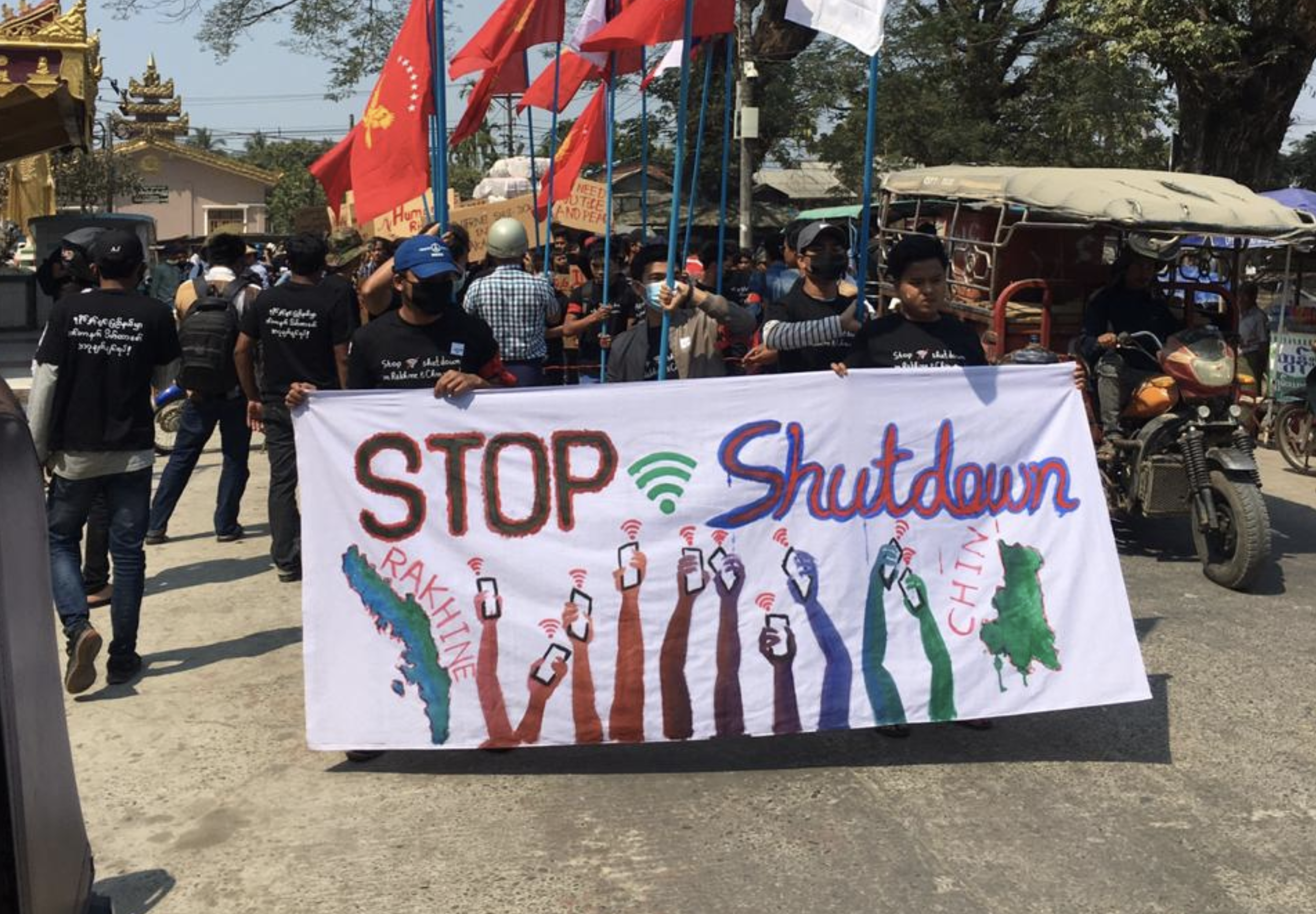
In Myanmar there were protests against this stoppage of mobile and wifi access. Various groups, mostly university students, held protest marches in Sittwe and Yangon.

Protest in Sittwe
22 February 2020.

How important is connectivity?
Control over mobile and wifi access is “an increasingly popular authoritarian tool” and this trend runs counter to basic human rights.

In 2016 the UNHCR published Connecting Refugees: How Internet and Mobile Connectivity can Improve Refugee Well-Being and Transform Humanitarian Action where they took a strong position, stating in their “Vision of Connectivity for Refugees”,

“UNHCR aims, through creative partnerships and smart investments, to ensure that all refugees, and the communities that host them, have access to available, affordable and usable mobile and internet connectivity in order to leverage these technologies for protection, communications, education, health, self-reliance, community empowerment, and durable solutions.”

“Refugees deem connectivity to be a critical survival tool in their daily lives and are willing to make large sacrifices to get and stay connected.”

In the concluding section to this document they state,

“If and when refugees are reliably connected to the internet and are able to purchase mobile connectivity, not only will they be better equipped to support themselves and their communities, but also they will find every area of humanitarian support boosted by the increased sharing of information and better communication.”

These examples of how connectivity is important are listed (p.31):

  • Protection (e.g., asylum process, hotlines and incident reporting, etc)
  • Community based protect (e.g., “Have greater access to information and be in a better position to identify its needs and lobby effectively for help and support.”
  • Education (e.g., being able to access educational resources)
  • Health (e.g., monitoring and reporting health needs)
  • Livelihoods and self reliance (e.g., allowing for online businesses and remote work)

To this list I’ll add that access to cell and wifi is essential all over world, and especially in the ‘global South’ (the majority world) regarding the transmission of remittances. According to the World Bank, in 2018 $529 billion was sent to low and middle income nations around the globe, significantly dwarfing the $27.3 billion in humanitarian assistance that same year. Slowing, or worse yet, cutting, the flow of remittances by limiting wifi and cell connectivity will have a major -and in some cases life and death -impact.

Finally,

“Indeed, all areas of humanitarian response – from food and nutrition to water, sanitation and hygiene, to camp management and coordination – will benefit from a connected refugee population as services and communication with populations of concern will be easier and more reliable. Large- scale innovation in service delivery will become possible. The challenge and opportunity is to get refugees connected so that this transformation can begin.”

In 2017, this from OCHA,

“This year, a record-breaking 65 million people are on the run, having been displaced by conflict and violence. If averages prove true, most of these people will remain displaced for 19 years or more.

Whether a displaced person lives in a camp or a host community, their connectivity to mobile services and the Internet is not only a lifeline but also a key to success.”

From UNHCR https://www.unhcr.org/5770d43c4.pdf

Renew discussion with Bangladeshi government?
Should the retractions on cell and wifi access in the Rohingya refugee camps be lifted?  If you ask the Rohingya they will certainly say yes. Given the position strongly in favor of connectivity by the UNHCR outlined above, humanitarian work, I am forced to assume, is hindered on many fronts. The efforts of humanitarian workers are handicapped both by having weaker cell and wifi access in the camps and by dealing with an affected community now increasingly stressed.

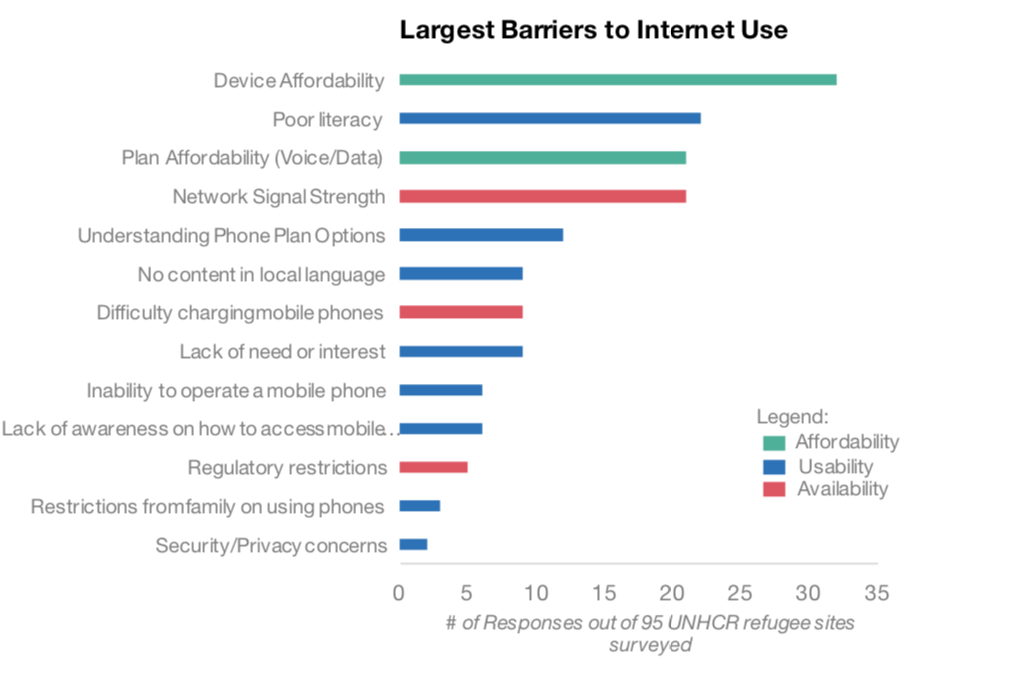
Though ‘regulatory restrictions’ does appear on the UNHCR list of “Largest Barriers to Internet Use”, perhaps in the case of the Rohingya since September, this barrier should be listed as number one.

What are the responsibilities of the host nation?
For many decades now Bangladesh has been doing an enormous job hosting refugees from Burma, and it is certainly their right to control what goes on within their borders. But should limits to their power be considered when the exercising of these powers deny basic rights to Rohingya refugees, and if so, what body has the right to interfere? No small questions, these.

The statement that connectivity is a basic human right is surely open to question. And it certainly raises the larger question of what entities can and should use their power to control such access. In a humanitarian response we must ask ‘who controls the lives of refugees, housed in large camps, with restricted mobility and no way of knowing how long they might be forced to stay in these conditions?’

Let me know your comments and feedback. Contact me at arcaro@elon.edu.


Tom Arcaro

Tom Arcaro is a professor of sociology at Elon University. He has been researching and studying the humanitarian aid and development ecosystem for nearly two decades and in 2016 published 'Aid Worker Voices'. He recently published his second and third books related to the humanitarians sector with 'Confronting Toxic Othering' published in 2021 and 'Dispatches from the Margins of the Humanitarian Sector' in 2022. A revised second edition of 'Confronting Toxic Othering' is now available from Kendall Hunt Publishers

More Posts - Website

Follow Me:
Twitter

Open letter to my elected officials regarding Myanmar

Updated 9-25-19

I have added three parts to this post.  First are some relevant links and then I comment on the overall situation.


Relevant links (provided by The International Campaign for the Rohingya), especially for those in the US:

Acute on chronic
The phrase (used by Paul Farmer describing the earthquake that hit Haiti) ‘acute on chronic’ does not even begin to capture the complex array of issues facing the Rohingya. Among them:

There may be reason for optimism as more scrutiny concerning war crimes is put on the leadership within Myanmar.

Current issues in Myanmar (Burma) put on display the complexities inherent in any humanitarian response to a conflict situation. Make no mistake: how the international community responds here and now is a measure of our collective humanity.

One key issue is the struggle between national sovereignty and the UN’s power to intervene. Indeed, whether and when to invoke Responsibility to Protect remains a vital issue. That the UN did not act in August of 2017 as the latest genocidal actions were taking place against the Rohingya represents a systemic failure of the system, a failure that shines a light on the fact humanity is still fractured into an array of ‘me first’ nations, most prominently displayed by the actions of the highest leadership in the United States and the UK. We must transcend populism, nationalism, and facism if we are to survive.

We are all Rohingya. We are all Zapatistas. We are all Palestinians. We are all Sioux. We are all Yanomami. And the list goes on. We are all humans and must learn the treat each other as brothers and sisters and, importantly, as environmental stewards, insuring a healthy world for our grandchildren.


Current news out is that The Prime Minister of Bangladesh, Sheikh Hasina Wazed plans to put forward a four point proposal to the UN regarding the Rohingya.

The four-point proposal is solid and I hope is given the most urgent attention by those in power in the UN.

That said, the content of her fourth point (4. International community must ensure that the root causes of Rohingya problem are addressed and atrocity crimes committed against the Rohingyas are accounted for.) could be the same for countless marginalized groups in conflict zones (both hot and ‘cold’) around the world. Indeed and demonstratively so, the UN must address the ‘root causes’ of racial/ethnic/tribal/religious ‘othering’ that make it possible for whatever groups are in power (in the case the Buddhist majority) to impose their will, even to the point of genocide. History is distressingly full of this pattern where the powerful use racial/ethnic/tribal/religious ‘othering’ to normalize injustices.

As humanity -those who share one world and one fate- we must break this cycle of othering by ruling elites, and in so far as the UN represents our collective humanity, forward movement must start there.


Open letter to my elected officials who are charged with hearing and representing the views of their constituents, myself included.

[Note:  I have sent this message in emails to all listed below. I will also Tweet out the url to this letter to all governmental officials listed below.]

To:

My North Carolina US Senators

Thom Tillis (R-NC)
Richard Burr (R-NC)

My district (6th) representative in the US House of Representatives

Mark Walker (R-NC)

President Donald Trump


From:

Thomas Arcaro
Burlington, NC


Senators Tillis and Burr, Representative Walker, President Trump,

I write to call your attention to the need for the urgent action regarding the ongoing genocidal behavior of the government of Myanmar.  On September 16 the detailed findings of the United Nations Independent International Fact-Finding Mission on Myanmar were submitted for action to the United Nations Human Rights Council. Here is a key quotation from that report:

“Against a background of domestic impunity, accountability can only be advanced by the international community.” 

The threat of more genocidal actions is real and imminent. Refugees from Myamnar need the help of the international community, and that means strong response from a world leader, our nation, the United States.

The documentation of genocidal actions completed by representatives of the United Nations is thorough, compelling, and unequivocally names the Myanmar government as the main perpetrator. This genocidal action has produced over 1.2 million refugees, mostly ethnic Rohingya living in refugee camps in neighboring Bangladesh. It has also produced at least 128,000 internally displaced persons (IDPs) living in internment camps in Rakhine, Myanmar.

I have been communicating with many Rohingya now living in refugee camps located in Cox’s Bazar, Bangladesh. They wish to go back to their homes, but not before they have full citizenship and are recognized as having equal rights in Myanmar (Burma). Going home must happen only after there is assurance that those who committed the genocidal acts are brought to justice and they can be confident that no further state supported persecution will occur.  This means having United Nations oversight at all stages of repatriation, for both short and long term.

I urge the following actions:

  • Urge Sally Craft, the United States Ambassador to the United Nations and leader of the delegation of the United States to (1) advocate for even more immediate and direct action by the UN to this situation, and (2) pressure the UN Security Council to seriously consider invoking the so-called Responsibility to Protect provision.
  • Targeted economic and diplomatic sanctions by the US government against Myanmar
  • Influence the World Bank to restrict development funding to Myanmar
  • Use diplomatic channels to encourage other nations to respond more responsibly to human rights violations in Myanmar
  • Encourage State Department travel bans to Myanmar
  • Use diplomatic pressure to encourage the government of Bangladesh to work closely with the UN, major humanitarian INGO representatives, and the Rohingya leadership to ensure optimal refugee camp conditions
  • Create and enforce a stronger embargo on military aid to Myanmar, including training
  • Block any trade with military linked companies
  • Facilitate the detailed identification, prosecution, and punishment of those guilty of war crimes by urging and supporting action by the International Criminal Court.
  • Insist on a United Nations Human rights advisor in Myanmar’s capital, Yangon
  • Accept more refugees, especially the extremely persecuted Rohingya, and encourage other nations to do same

The situation in Myanmar and Bangladesh demands our attention. The world looks to the United States for action and leadership, and as a standard-bearer for human rights.  The actions I encourage you to take as representatives of the US government are neither simple nor uncontentious, but they are right and moral actions.

Please know that I will be watching your office relative to the above, and will base my vote in November, 2020 on what actions you do or do not take.

Respectfully yours,


Dr. Thomas Arcaro
Burlington, NC


Tom Arcaro

Tom Arcaro is a professor of sociology at Elon University. He has been researching and studying the humanitarian aid and development ecosystem for nearly two decades and in 2016 published 'Aid Worker Voices'. He recently published his second and third books related to the humanitarians sector with 'Confronting Toxic Othering' published in 2021 and 'Dispatches from the Margins of the Humanitarian Sector' in 2022. A revised second edition of 'Confronting Toxic Othering' is now available from Kendall Hunt Publishers

More Posts - Website

Follow Me:

Twitter

Bringing sandwiches to the gates of Auschwitz

“The humanitarian imperative for me, I don’t want to use a cliché, but it’s really simple in my head: you’re damned if you do and you’re damned if you don’t. That’s it.”

-30 something female humanitarian

Bringing sandwiches to the gates of Auschwitz

Brooding about the humanitarian imperative
I recently re-read Samantha Power’s book Chasing the Flame, again drinking in every word as she chronicles in deep and sensitive detail the life, and death, of UN humanitarian diplomat Sergio Vierira de Mello.

The complete title of Power’s book is “Chasing the Flame: Sergio Vieira de Mello and the Fight to Save the World.” Spoiler alert: he doesn’t.

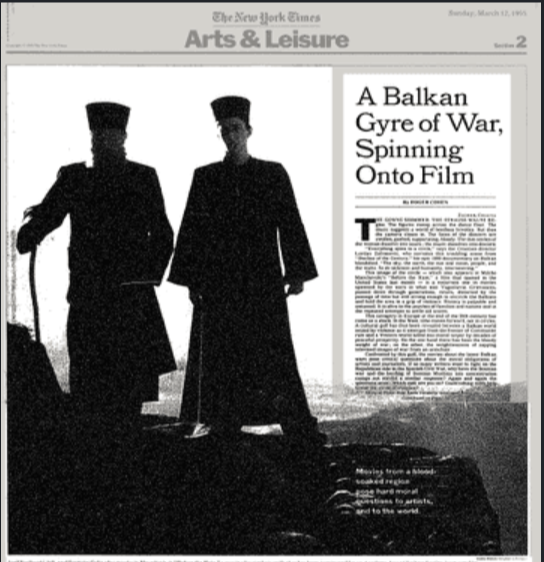
Likely because of my recent research on humanitarian workers, and, in the last several months, into the lives of ‘refugee humanitarians‘, Rohingya women and men living in Cox’s Bazar, I was struck by a phrase Power’s used, a quote from a long-ago published NY Times film review by Roger Cohen. Cohen quotes the filmaker and French intellectual Bernard-Henri Levy,

“There can be no question of making a balanced movie about Bosnia,” says Mr. Levy, who has visited Sarajevo several times since the war began. “We’re living in crazy times. There’s this growing cult of balance, of equidistance, as if the death of a torturer and his victim had the same value. They do not. Bosnia is a just cause and to respond, as we have, to its destruction with the delivery of humanitarian aid is like bringing sandwiches to the gates of Auschwitz.” (emphasis added)

That phrase –bringing sandwiches to the gates of Auschwitz– has gained resonance within the humanitarian sector, and fuels the brooding many of us have as we grapple with the realities of the humanitarian imperative. A quick search led to this very thoughtful essay in World Policy by Dewaine Farria, and here is one version of my own ruminations.

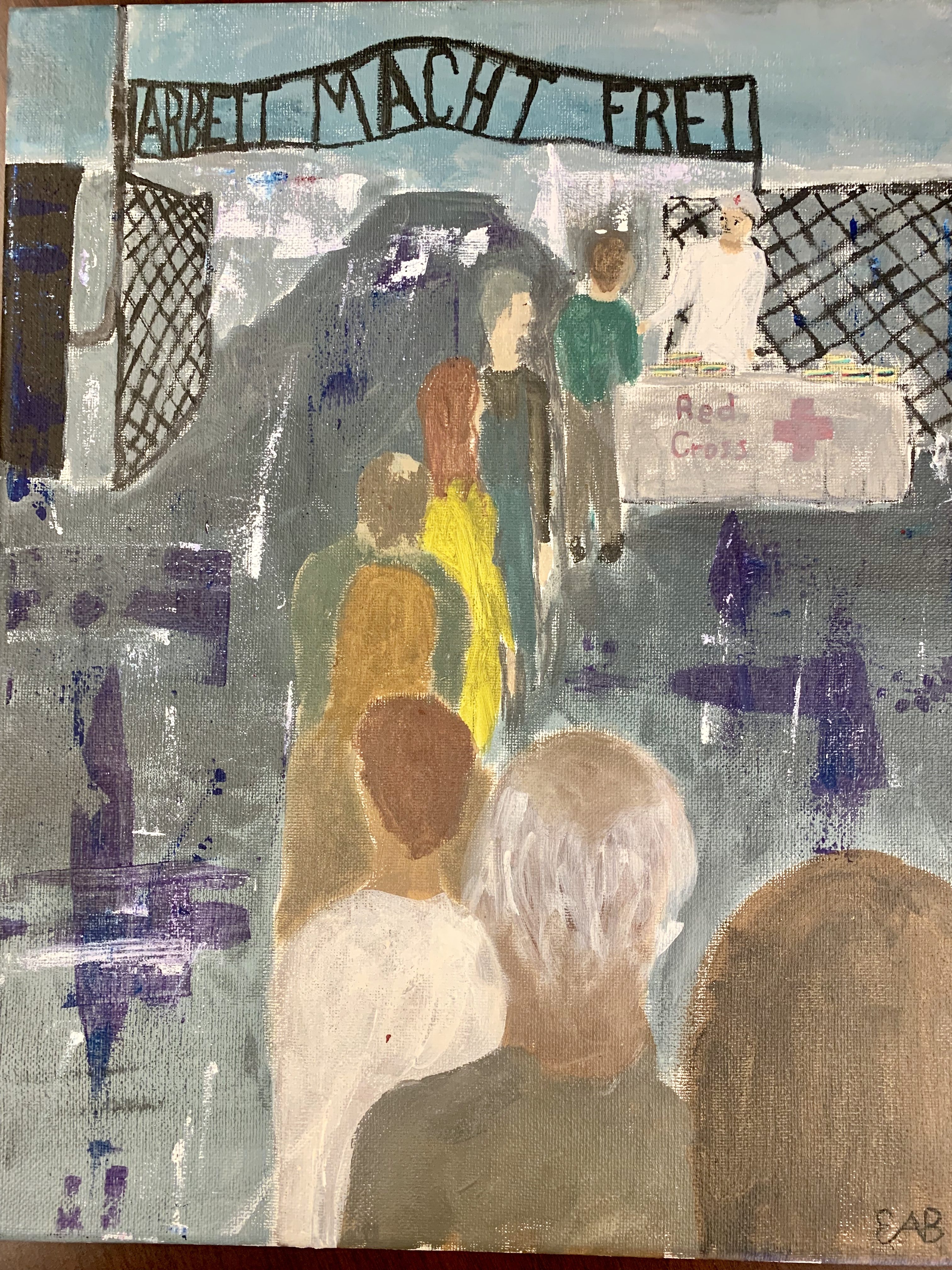
Original painting by Eleanor Arcaro-Burbridge.

As I researched this phrase, I could not find the image I had in my head, so I asked my daughter to try her hand.  Her painting is simple and descriptive, and we see an anonymous line of women and men receiving a some food from a Red Cross worker as they enter the one way gates at Auschwitz. Translated from German, the words on the gates say “work sets you free.” True, that: death can be described as the ultimate freedom.

The relevance of a sandwich
There can be no question that giving food to a hungry person is a humane act, and most of us will respond in that way because we naturally act in terms of the so-called “golden rule”, doing for others what we would want them to do for us.

The vast majority of humanitarians are, yes, humane, but just like workers in any service profession they strive to do a meaningful, professional, and relevant job.

So, a question: is giving out sandwiches at the gates of Auschwitz relevant?

To be sure, relevance is much harder to define and maintain when trying to understand conflict-based humanitarian crises (e.g., Rohingya) as opposed to ‘natural’ disasters (e.g., the response to Cyclone Idai).

The line between relief and development is always in contencious, and the inexorable blurring from one to the other has come with distressing -yet predictable- regularity.  There are many examples. The massive refugee camps in Dadaab, Zaatari, and now, Cox’s Bazar or Sittwe began as temporary responses, but these camps are now long term -can I use this term?- open air prisons.

What does relevance mean in each context, at what phase of the humanitarian response, and to whom? Big questions, all. By addressing the question ‘to whom is it relevant’ we must consider all parties: the many donor entities, governments, the humanitarian actors, but of course, also -and most importantly- I mean the families, children, women, and men who have been affected by the conflict and are now struggling to exist.

I am thinking here of the many Rohingya I have interviewed, all of which appreciate the WFP bags of rice.

Do they appreciate the sandwich (rice)? Yes. It sates the hunger in the short term. But is giving out the sandwich (rice) a ‘relevant response’ in a long term conflict response?  Perhaps not. The only relevant response would be, ultimately, addressing the complex geopolitical issues which gave rise to their plight in the first place. The Rohingya want justice, and that is not a material commodity but rather a state of affairs that can only be reached through extensive and complex local, regional, and global political action.

A Victorian parlor maid
As Power’s reports in her book, Sergio himself lamented that at times he felt like “a Victorian parlor maid, seduced and then discarded.” Putting out immediate fires, he was doing something -at least in the short run-, and we all crave that feeling.  But in the long run he realized he was but a pawn in the playing out of larger events.

Here’s an example. Talking about her participation in the Sittwe response one aid worker put it this way,

“The [Myanmar] government was playing us like a fiddle, and they did a great job of it. They let time and necessity work, so that international humanitarian actors would step in and provide the basics: shelter, food, water. So what we ended up doing was building a slum. We justified by saying, okay we’re only going to do semi-permanent structures right, we’re not using concrete, we’re not using anything permanent; always in the hope that this situation is going to get sorted out. But what that meant was that we just got poor quality things which are neither here nor there, it’s not a tent, but it’s not a house, somewhere in between. We built slums. We built slums and we contributed to creating an apartheid situation, which recently, is turned into a massive displacement and concerns of genocide.”

Closure possible?
I am thinking hard about relevance as it relates to the humanitarian sector, continually responding to crises around the world. There are no easy, glib answers to the questions I pose to myself and to my students. Issues and ideas buzz around my head like so many flies, and swatting one only creates the illusion of progress; more breed immediately.

But I remain convinced that we -I- must remain ever willing to press the question ever harder, all at the same time knowing I share the same fate as Sergio, futilely trying to ‘save the world’ in the face of forces much larger than anyone can control. I am left to ask: is what I do relevant?

As always, please contact me with feedback or questions here.


Tom Arcaro

Tom Arcaro is a professor of sociology at Elon University. He has been researching and studying the humanitarian aid and development ecosystem for nearly two decades and in 2016 published 'Aid Worker Voices'. He recently published his second and third books related to the humanitarians sector with 'Confronting Toxic Othering' published in 2021 and 'Dispatches from the Margins of the Humanitarian Sector' in 2022. A revised second edition of 'Confronting Toxic Othering' is now available from Kendall Hunt Publishers

More Posts - Website

Follow Me:
Twitter

Aid worker voices in the classroom

Aid worker voices in the classroom

Our semester ends
As a career academic it is my deep privilege to touch the lives of countless bright undergraduates. My goal in every class is to not just share knowledge but more so to pass on the flame of passion for knowing more about the world in which we live.  For many years I have taken inspiration from Mahmood Mamdani, author of Saviors and Survivors. In the beginning pages he says,

“In contrast to those who suggest that we act as soon as the whistle blows, I suggest that, even before the whistle blows, we ceaselessly try to know the world in which we live — and act. Even if we must act on imperfect knowledge, we must never act as if knowing is no longer relevant. ”

I put Mamdani’s words prominently at the beginning of all my course syllabi and, throughout each semester, I try my best to engage my students to live these words.

Again this spring I taught a course titled “Being and Becoming a Global Citizen” and, as aways, we began with a detailed critique of the ‘global citizen’ trope.  In our journey to better understand the humanitarian ecosystem, the central focus of the course, we also probed the idea of the ‘humanitarian imperative’, getting into much debate and discussion, very prominently including the storied Dunant versus Nightingale quandary.

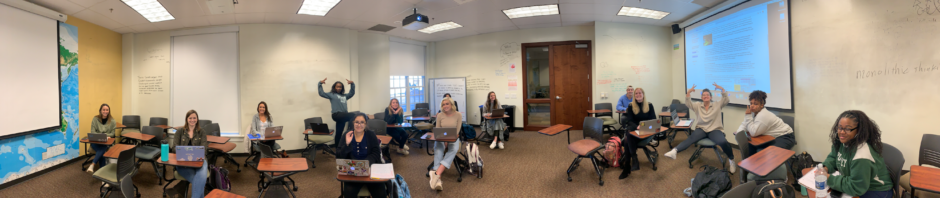
My many years of research into the sector has brought me in contact with some amazing humanitarians, so in my effort to bring our course material to life I invited several as guests to class via Skype. Each speaker made time in their busy days -typically 30-45 minutes- to offer their insights and respond to questions from the class. To each speaker our class owes a deep debt of gratitude, and though all guests received ‘thank you’ emails from my class, there is no way to repay adequately what we received. Our commitment is to honor their gifts by holding close what was learned from each.  Several members of the class are considering careers in the humanitarian sector (one has an internship with the IRC this summer), and so hearing from ‘real’ humanitarians afforded deep, sobering insights.

We had five speakers this term and some of what each had to offer is described below.


Calling in from the UK: A militaristic, neo-liberal agenda
On a social media site I came across this comment by a young woman from Israel named Liat,

“And I am asking – should we continue as aid workers ignoring the war economy that our governments are part of? With all respect to “neutrality” (which relates to the countries we work in, and not our own countries, or correct me if you think I’m wrong), when will we start talking about war economies? How long will this militaristic, neo-liberal agenda keep controlling the field of humanitarianism?”

After reaching out to Liat I learned that she had worked as a humanitarian (‘in the field’) for a few years and now taking a break to further her education at the London School of Economics (LSE), staring down at the sector from 35,000 feet.

And thus her question in the comment above.

After contact and conversation, she accepted an invitation to speak to class, and we learned more about her comment, framing part of our talk using background lecture and reading material about global capitalism/neoliberalism as it relates to the humanitarian sector.  One student, in her ‘thank you’ note to our guest wrote,

“Thank you so much for taking time out of your day to talk with us about such a serious, important, and complex topic as humanitarian work and it’s connection to the global military and political economy. It particularly struck me when you mentioned that the countries that provide the most aid are also the ones that provide the most weapons. Put another way, the West funds, in one way or another, both bombs and band-aids, destruction and development, which is sobering to realize. However, like you said, it is important to understand this context to get a realistic perspective and not give into pessimism. Again, thank you for your time and I wish you well in your studies!”

Indeed, as we traveled through the course the sense of pessimism about global affairs in general and the state of the humanitarian response specifically was at times hard to avoid.  Liat was adamant, though, that my students not dwell on the negative and stay the course with their undergraduate enthusiasm and optimism.

But remaining optimistic is a challenge.  My students were struck when Liat passed on her observations that when she was in South Sudan it was sometimes “…cheaper to buy a weapon than food” and that all too frequently SGBV, including rape, is used as a purposeful act of war.


Calling in from Jordan: The iron cage of rationality
Our second guest was a repeat from a year ago when I last taught this course. Lillie, a self described “Jersey girl working in Jordan” captured beautifully in a poem a concept from sociologist Max Weber. Her visit to class allowed her to recall what led her to write the poem, and my students listened closely.

The iron cage of rationality, in short, observes that not being able to make that which is real measurable we tend to make that which is measurable real. Humanitarians everywhere experience the reality that the numbers on spreadsheets represent flesh and blood people whose pain is sometimes ‘brutalized with an algorithm.’

Elsewhere on this blog in a post titled “The tension between the humanitarian bureaucracy and the humanitarian mission” I parse out this idea in detail, including Lillie’s poem in full.

Throughout the remainder of the semester we constantly referred back to this chronic tension, and the students referenced Lillie’s visit to our class frequently.  For my part I attempted to leverage this learning moment to reinforce material related to understanding how bureaucracies work…and don’t.

Calling in from Afghanistan: Logistics coordinators save lives
Arranging these Skype visits involved much coordination, and all involved challenging time zone issues, none more so than when Tawhidul called in late at night (8.5 hour time difference) from Kabul.

I have known Tawhidul, a Bangladeshi national who works for MSF, for almost a year now and have had many conversations with him about his experiences as a humanitarian. I have written two posts about Tawhidul that you can find here and here.

As a logistics coordinator, Tawhidul had many stories to tell about challenges he has had getting supplies from source to target location. He charmed -and informed- the class by detailing a situation in South Sudan where his team had to use donkeys to transport some medical supplies. No worry that, but where in the budget do you put the food purchased for these beasts of burden? In the line item for ‘fuel’, of course. He also mentioned several other examples ranging from using camels to get supplies over a mountain pass in Yemen to securing space on commercial airliners getting supplies to Afghanistan.

From Tawhidul we learned how any INGO is a team of many parts, each mutually dependent upon the other. Also, and more importantly, we learned that lives depend upon how well the logistics coordinator does his/her job; each member of the team having a critical role.


Calling in from Mozambique: An author and humanitarian?  Yup.
The semester would not be complete without a visit from my long time collaborator and friend, the veteran humanitarian whose non be guerre is J, aka Evil Genius. Impressive to the class was that J Skyped in from Mozambique where he is currently part of his organization’s response to cyclones Idai and Kenneth.

In addition to all of the common readings for the class, each student was required to select a humanitarian sector related book from a long list that I have compiled. Four of the students chose books by J (Honor Among Thieves, HUMAN, Cross-Border, and Letters Left Unsent) and did mini-presentations, relating book content to course topics. As the author, J was able to answer their questions about the characters, story lines, and also about the process of writing itself which J described as one of the ways he processes his experiences as a career humanitarian. He explained that through fiction the reader is put in a position of having to interpret and, he hopes, this reading provokes thought and reflection that might not come from scouring only academic, non-fiction accounts.

One of J’s books that was read by all of my students was Missionary, Mercenary, Mystic, Misfit, and along with reading my post discussing this book, the students learned about what sociologist Erving Goffman calls the ‘moral career’.  Both with J and with several of our other guests we talked about stages of self identity each went through during their careers as humanitarians.

Our class had read and talked about the stages of response to natural disasters, and having a report from someone on site provided them with rich additional insight and detail. We learned that at one point there were as many as 600-700 INGOs from around the globe present in Mozambique, and we discussed the massive coordination challenges these numbers represent and how the cluster system is one response to this challenge.

Calling in from France: Ethical dilemmas, White Savior complex, and PTSD

I met ‘C’ after she emailed me having reading my book Aid Worker Voices and wanting to thank me for making her feel ‘normal’ (as in her experiences, emotions, and overall situation were somewhat typical of the humanitarians in my study). In a long conversation we talked about her deployments in the DRC, CAR, Afghanistan, and Myanmar.

What particularly struck me was how she described the ethnical dilemma she experienced while working with Rohingyan IDPs in Myanmar.  She used the very apt analogy that the aid sector was ‘playing checkers while the Myanmar government was playing three dimensional chess, using the sector for its own very long term goals. She noted that from her view she was helping to facilitate an apartheid situation, only doing long term harm to the Rohingya.  I felt the presence of Nightingale’s ghost as we spoke.

We stayed in contact after that first conversation, me telling her about my class and she talking about her life just now between deployments. When she asked if she could be a guest in my class I quickly said yes.  The last couple class meetings of the semester were devoted to James Dawes’ That the World May Know, and having her share her stories from the field, especially as they related to out class content, seemed timely.

In a future post I will write in more detail about her visit to class, but here are the questions she and I agreed we might want to touch upon:

  • What ethical dilemmas that you have faced?
  • How has your race, gender, or global North status impacted your life as a humanitarian?
  • Why did you become a humanitarian
  • Do you ‘enjoy’ what you do?
  • What is the psychological/emotional impact of your work?
  • Where do you see your career heading?

We talked for over 45 minutes, covering all of the questions above and more, the students asking a range of very incisive questions reflecting the learning they had accomplished over the semester.

Here is what one student wrote,

“Finally, one of the biggest takeaways from the course is the idea that both racism and sexism are ‘baked into’ our national and global social systems. Dr. Arcaro said this in the beginning of class and he has consistently reminded us of it throughout. One of the best examples of this is the GBV that is perpetrated by humanitarian aid workers themselves. When OXFAM had a huge scandal surrounding its workers sexually exploiting the affected community, their humanity and imperfection became abundantly clear: Aid workers are PEOPLE. People come with baggage, preconceived understandings, hangups, misogynistic leanings, and racist worldviews. The fact that the media portrays humanitarian aid workers as all angels does a disservice to the sector and its beneficiaries. C spoke briefly about this as well when addressing the White Savior Complex. When I asked her what she believed could be done to fix it or solve this issue, she gave one of the best responses I could think of. She basically said that since we are never going to get over the racist and sexist ideologies that have been socially constructed from neoliberal agendas for years, what we have to do is be overly thoughtful and aware of our privilege at all times. She described small, simple fixes such as actually listening to the affected community first before writing proposals to donors (which she conceded is not always possible). But also adjusting to the needs of the community and being flexible instead of forcing Western ideals of what is right and wrong on them, which aids in the disintegration of their culture.

When asked about being a female in this sector she noted both the positives and negatives, both examples coming from her time in Afghanistan. As a female she was culturally restricted from looking at men in the eye, learning to focus on their shoulder even while talking about very serious topics that, in her home culture of the US, would demand eye to eye contact.  As a positive, she noted that, unlike her male counterparts, she was invited to the homes of her national staff co-workers, able to share meals and meet their families on a very informal basis. I found her observation that she was functionally a ‘third gender’ while in Afghanistan to be particularly striking.

Near the end of our conversation one student asked about gender differences in how PTSD was dealt with in the sector. [As a point of context, earlier in our conversation one student disclosed her own journey dealing with mental health issues.]  C responded by disclosing that she had been diagnosed with PTSD and was currently in treatment. It is a gross understatement to say that this was a significant moment for both C and the class, and we were moved by how even more ‘real’ the conversation had become.  As I mentioned above, I’ll write more detail in a later post.

Five guests, five faces that I hope will stay with my students 
The semester has ended, but if their final exam essays are any indication my students gained enormously from our Skype sessions. Here are the words from one,

“I did not realize the impact that going into aid work can have no matter who you are. C talking to us rather candidly about that provided more insight than I could have ever hoped for. In January I imagined aid workers as either these super human beings that could do anything or

these stereotypical white people going into the field just for the pictures with the little black and brown people. But, talking to all these different aid workers (J, Tawhid, C) really put a little perspective on the field. For one, not everything is hands on work like in the case of Tawhid. People have to crunch numbers, order supplies, and be the driving forces from behind the scenes. And there are some people that have to see the atrocities that happen on the field like the three narrators of  Emergency Sex. People like C and Heidi are still dealing with the impact of their aid work in the forms of depression or PTSD. Aid work is not pretty. In all, the biggest change has been learning that humanitarian aid is not as cut and dry as I previously thought.”

Another student noted,

“Our in-class Skype guests were super important in the process of understanding the course curriculum. The sociological topics we study in this class are so uniquely “human” that it requires an injection of the human experience being told first hand in order to fully grasp the breadth of each key concept.  Skyping with humanitarian aid workers allowed for a more fluid, collaborative & interactive class setting and allowed us to ask questions to humanitarian aid workers who were currently in the field, one working in the supply chain facet of the aid sector, and one even taking time off the heal from the psychological effects of working in the aid sector. It was so importantly supplemental to understanding the key concepts of the course.” 

Thank you again to all five of our guests.  Each contribution was deeply appreciated and made an impact.

If you have any comments or questions, please reach out to me via email.


Post Script
Thanks to my students this semester for joining me in this journey of discovery and for asking great questions all semester.

Tom Arcaro

Tom Arcaro is a professor of sociology at Elon University. He has been researching and studying the humanitarian aid and development ecosystem for nearly two decades and in 2016 published 'Aid Worker Voices'. He recently published his second and third books related to the humanitarians sector with 'Confronting Toxic Othering' published in 2021 and 'Dispatches from the Margins of the Humanitarian Sector' in 2022. A revised second edition of 'Confronting Toxic Othering' is now available from Kendall Hunt Publishers

More Posts - Website

Follow Me:
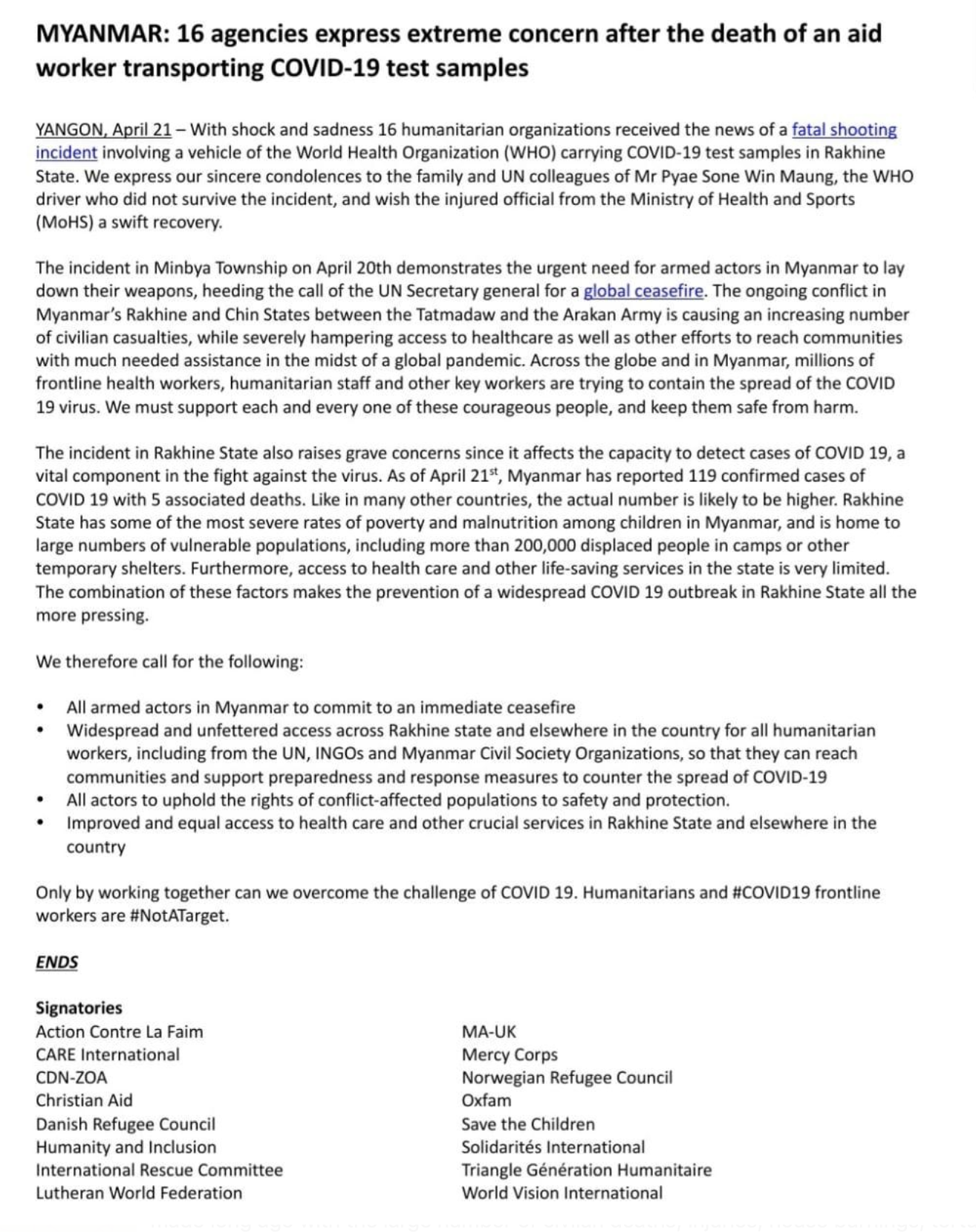
Twitter

Book review and commentary: Cross-Border by J

Book review and commentary: Cross-Border by J

Cross-Border
This most recent publication by Evil Genius author ‘J’ is a fast read that does what all well told stories do, it leaves you wanting more and raises more questions than it answers, engaging the imagination in very positive ways. J makes the characters three dimensional, and each comes alive for the reader in ways that make them real, relatable, and very human.  Settings are described carefully, providing authentic and nuanced details that allow the reader to easily transport themselves to each location.

I’ll let J himself give you a tease (from the Amazon page):

Larry was the consummate headquarters bureaucrat. As head of World Aid Corps’ (WAC) grant management unit, he lived his life among fluorescent-lit cubicles in Washington D.C., looking at spreadsheets and checking reports, content to let others have the glamor and spotlight of the field. But when Tracy walked out and the WAC’s cross-border programme in southern Syria went into meltdown all in the same week, something had to give.

One important message in this book is that in their own way everyone in a humanitarian organization ‘save’s lives’, and those pouring over spreadsheets and overseeing grants are especially critical players in moving forward any INGO’s central mission.

But let me step back to answer a question some might have, namely who is this mysterious author going by the simple nom de guerre ‘J’?

An industry insider with over 25 years in the sector, he has vast experience both in the ‘field’ and back at his organization’s HQ. Readers of J’s books can easily assume he is from the US since all of his characters are Americans and the fictional INGO “World Aid Corps” that appears in most of his books has headquarters in Washington, DC.  He does give us an ambiguous message about his background, using the British spelling of ‘programme’ in his own description (above).

From my perspective as a professor who teaches about the humanitarian ecosystem, I see Cross-Border as a must read for young undergraduates who want to understand more deeply how the sector works.

J’s protagonist ‘Larry’ is a complex character, and many humanitarians, especially those in mid to upper management positions, will identify with his situation and how he reacts to challenges in both in his personal life and at work to those who question the importance of his job. Larry displays the weaknesses -and strengths- that we all possess.

Set in Washington and Amman, Cross-Border gives the reader a unique glimpse of the inner workings of the bureaucratic and organizational structure of a typical ‘big box’ INGO. Industry insiders will nod and smile as they read, seeing much truth revealed.  Those outside the humanitarian sector -my students, for example, will learn from Cross-Border essential lessons, perhaps most importantly that many -or even most- ‘real’ humanitarians dwell in cubicles, not in the over-romanticized ‘field’.

Cross-Border is vintage ‘J’.  It is a fast, engaging read that could have been written only by a seasoned industry insider with a story-teller’s knack for detail, drama, and hard truths. If this is your first exposure to J’s writing and you want more, you have many treasures before you including Disastrous Passions, Missionary, Mercenary, Mystic, Misfit, Honor Among Thieves, and HUMAN.  Click here for links to all of these books. J’s only non-fiction offering to date, Letters Left Unsent, is a compilation of J’s blog posts over the years and is an excellent overview of issues experienced by humanitarians everywhere.

Tom Arcaro

Tom Arcaro is a professor of sociology at Elon University. He has been researching and studying the humanitarian aid and development ecosystem for nearly two decades and in 2016 published 'Aid Worker Voices'. He recently published his second and third books related to the humanitarians sector with 'Confronting Toxic Othering' published in 2021 and 'Dispatches from the Margins of the Humanitarian Sector' in 2022. A revised second edition of 'Confronting Toxic Othering' is now available from Kendall Hunt Publishers

More Posts - Website

Follow Me:
Twitter

A profile of Tawhidul, a humanitarian


And now, A profile of Tawhidul, a humanitarian

“I really like working for my organisation. This is not for the money, of course, it is to see different parts of the world and how people are suffering … and how I can help.”
-Tawhidul Hamid

This is a profile of one humanitarian worker, but his story is not unusual. Indeed, there are countless national humanitarian workers all over the globe with stories very similar to his.  Worldwide there are over 500,000 humanitarian workers, and approximately 90% of them are national workers.

My goal is to have both the larger academic and global communities know more about national aid workers. A common stereotype I have encountered both among my students and colleagues is that aid workers are global North white people that are sacrificing their lives and ‘saving the world.’ From my research, I know that most humanitarian aid workers are Jordanian, Filipino, Bengali, Kenyan, Iraqi, and so on; they are mostly from the global South. And their voices need to be heard.

Introducing Tawhidul Hamid
Born in Bangladesh, Tawhidul (more informally, Tawhid) Hamid is a Logistics Coordinator (Supply) for Doctors Without Borders/ Médecins Sans Frontières (MSF) currently deployed to Kabul, Afghanistan. He was previously deployed for MSF in Amsterdam as a supply chain consultant, in South Sudan as a logistician (supply), in Yemen, and, significantly in Uzbekistan.  While working Uzbekistan, he met his wife with whom he now has two young children.

Tawhid was born into a middle class family in Cox’s Bazar, Bangladesh. The home he grew up in was so close to Myanmar that he could see Rohingya villages across the river. As a young man he was educated at Cox’s Bazar Government High School and then Cox’s Bazar Government College, moving then to university where are received his undergraduate degree in accounting from National University of Bangladesh and his MBA in Human Resources from a private university in Bangladesh. Married and father of two, he is frequently away from his family as he is deployed or traveling as part of his job as a humanitarian.

This picture of Tawhid (below) shows a typical humanitarian at work. This picture of him in a MSF warehouse in Kabul, Afghanistan is not glamorous or flashy, and there are no

Tawhid examining inventory in a MSF warehouse in Kabul, Afghanistan.

beneficiaries in need of healthcare/humanitarian assistance in sight; the opposite of poverty porn.

This view of humanitarian work reflects the day in and day out background effort necessary to make aid happen.  For every MSF doctor doing surgery there is a small army of people like Tawhid making this surgery possible.  The humanitarian ecosystem is just that, an interwoven array of mutually interdependent organizational roles all contributing toward the larger mission.

Most of what the public sees on glossy brochures or on 30 second PSA’s (public service announcements) is one small, non representative view into humanitarian world. The bulk of the work being done in countless cubicles, warehouses, and cramped offices.

To an outsider, the job title ‘logistics coordinator’ may not sound essential, but the simple fact is that if Tawhid does not do his job effectively people can die. The medicines and supplies that he makes sure are available to the medical staff must be sourced from many places around the world. These supplies have to be delivered in a timely fashion to MSF clinics and treatment centers, and sometimes this job presents challenges.  Tawhid has to deal with everything from helping to secure permissions for the airline transfer of supplies across international borders to arranging for local transport of supplies from one location to another.

He tells the story of when he was stationed in South Sudan of needing to get medical supplies to a very remote location and having to use donkeys to transport these goods.  Food purchased for the donkeys, after some discussion, was deemed ‘fuel’ when it came time to account for transportation costs. In Yemen he recalls having to use camels to get some supplies over a mountain pass, supplies that meant life or death to those in need at the MSF facility.

What happened in 1991
So, back to Tawhid’s story.  Why MSF?  Why humanitarian work?

His story goes back to late April, 1991 when as a young boy of 10. Luckily, he was not among the 138,000 casualties from a Category 5 cyclone that struck Bangladesh, causing massive flooding and leaving 10 million people homeless.  Though he and his family were faced with disaster, the humanitarian aid they received was very welcome but, as I learned, his experience observing the humanitarian response had lifelong impacts for Tawhid.

“That time I kind of got introduced to humanitarian work, seeing them doing the job”.  When I asked him if he could remember the names of any organizations that came to assist he noted that,  “I don’t remember the names, but I could remember two logos. One of them is MSF, one of them is UN. It was indeed UNHCR.”  He was introduced to humanitarian work and also to….chocolate.

“The first chocolate I ever ate. It was given in my school and it was given by a NGO worker. I still remember that, yeah.”

And then just a few years later, “When I was in high school in Cox’s Bazar City, the UNHCR office was right very close by. I used to see the UNHCR office and I used to dream like when I will grow up and work with these people. That was my dream actually.”  In 2005 after taking the time and effort to learn English and gaining computer skills, he got a job

Tawhid is visiting newly built MSF outreach clinic in Balukhali Refugee camp-2017

with UNHCR doing data processing, and his career as a humanitarian was begun.

“Of course, Bangladesh being a developing country, there are issues with the job, but we were very fortunate that we were learning English. They [the UNHCR] needed a combination few things to do in that project. One of them is people have to be local so that they could communicate to the Rohingyas. Second, also, they need to know little bit English so that they can do the things in English, and the third is particularly that they need to know computer work so that they can enter the data. Once it was done and the project got closed, I moved again and went to college and started studying. Then I got introduced to MSF. I worked in MSF for one year. After one year, the project got closed. At the same time, UNHCR needed logistics officer and I got selected. So, that is how I ended up again in UNHCR and I worked there for 3 years.”

He then went back to MSF, and has been with them ever since.

Tawhid was, from a very early part of his life, attracted to helping people in need. From what I have learned interviewing many humanitarians, his story is indeed very common among national humanitarian workers, transitioning from being part of the affected community to the role of assistance facilitator and provider.  The line separating these two roles -the helper and the helped- is tenuous in much of the world, and life circumstances can change all too quickly. There is no data on this to my knowledge, but I would hazard the guess that the majority of national humanitarians have traveled this same path, giving back to their country of origin with a care and compassion that comes naturally when acting in service to one’s own home nation.

Working in a conflict zone
This happened a day before one of our interviews. I asked Tawhid about his deployment now in Kabul, arguably one of the most dangerous spots on the globe.  He said,

“Yeah, it’s – sometimes, it’s only the highly motivated that can work in this conflict zone [and] can help. Of course, we know that there is a risk but, you know, if we think about risks also in Bangladesh, there was a road traffic accident last week where a number of people got killed, it’s more than the number of casualties in Afghanistan. We know that where we are going, we are saving lives. Someone needs to go there, so, that’s how we come to decisions.”

He noted further,

“Yeah, about the work we do … we are saving lives here, so there’s the motivation and you don’t need more than that. I can give you many examples. Like several weeks ago, there was an eight year old kid came to our clinic. There was a blood donation program going on, so he came to give the blood together with his father. He said. ‘I was saved by this hospital when I was very young kid. So, now, I’m here to donate my blood.’  So, of course, we didn’t take his blood because he’s not 18, but that’s the motivation we get.”

We also talked about his previous work for MSF in Cox’s Bazar dealing with the Rohingya emergency response.  He offered,

“Yeah, it’s difficult, yeah, it’s heartbreaking. So, last year and around this time – exactly one year ago when I was in person at the border where the people are crossing. So, we are hearing the gunshots and see the smoke from the other side of the border and people are crossing, so, it’s heartbreaking. It’s really heartbreaking. So, I was put in that position that time, so, what I did is I requested for mental health support for our staffs. Not only for the patients, the staff themselves were also traumatized by seeing these people, the woman got rapped and the gunshot wounds; people keep coming. So, it was a traumatizing situation. There, not only our mental health personnel but the rest of our staff got psychosocial First Aid Training, so that they can help all these traumatized people.”

Mental health
We talked about mental health issues among humanitarian workers and agreed that this is a major issue. Though MSF is fairly good at providing psychosocial support for their staff, there are countless National NGO’s without the human or financial resources to provide this care.  For his part, Tawhid said that he uses yoga, meditation, exercise, and support from close friends and family to stay focused.  Taking time for mental health reasons is not always possible, though, since “…there was no time for it because it was quite busy working around the clock assisting these people.

Though a quiet man by nature, Tawhid is very social when it comes to media, having started more than one Facebook group to facilitate conversation among his colleagues in the humanitarian sector.  This came up in our conversation when I asked about mental health and resilience in general, so he talked about that and then went on with pride talking about his country mates.

“I have a [Facebook] group for the Bangladeshi expats working in different countries. We just discuss what is going on, where we are, and such things. I created it myself, so I am kind of an admin for that group. What I see is that when the Bangladeshi expats, they are not easily scared off. When they go to a different country and see that there are quite a lot of things going on like the war or something, most of the times they survive whereas I think that the other expats are more stressed and more frightened than Bangladeshi people. What I find is that the Bangladeshi people grow up struggling. They know how to fight. That is something good for us to maintain. When we go to different environment, we can adapt to the environment easily.”

Although his statement may be motivated by national pride, the general principle is sound.  Those who have survived great trauma, when allowed the opportunity to become humanitarians, generally will be substantial assets to whatever organizations with which they work.

I had a chance to talk with Tawhid over the holiday break, and you can read more about his deployment to Afghanistan here.

More to come
This one quick look at Tawhid is just that, one quick look, but one from which much can be learned.  In the coming weeks I’ll add to his story and to other national humanitarians in Afghanistan, Iraq, and beyond.  In the meantime, you can contact me here if you have feedback or questions.

Tom Arcaro

Tom Arcaro is a professor of sociology at Elon University. He has been researching and studying the humanitarian aid and development ecosystem for nearly two decades and in 2016 published 'Aid Worker Voices'. He recently published his second and third books related to the humanitarians sector with 'Confronting Toxic Othering' published in 2021 and 'Dispatches from the Margins of the Humanitarian Sector' in 2022. A revised second edition of 'Confronting Toxic Othering' is now available from Kendall Hunt Publishers

More Posts - Website

Follow Me:
Twitter